
How Much Does It Cost to Replace a Battery in a Toyota

Replacing a Toyota car battery typically costs between $150 and $350 for most models, but hybrid batteries can run $1,000 to $3,000. The final price depends on your specific Toyota model, battery type, and whether you do it yourself or hire a pro. Always check for warranties and core charges to avoid surprises.
Key Takeaways
- Average Cost Range: For most non-hybrid Toyotas (Camry, Corolla, RAV4), expect to pay $150-$350 for a quality replacement battery installed.
- Hybrid Premium: Replacing the high-voltage battery in a Toyota Prius or Hybrid model costs significantly more, often $1,000 to over $3,000.
- DIY Saves Money: You can save $50-$100 on labor by replacing a standard 12V battery yourself, but hybrids require professional handling due to high voltage.
- Key Cost Factors: Your total bill is affected by battery type (AGM vs. standard), your region’s labor rates, and whether the old battery has a “core charge” deposit.
- Signs You Need a New Battery: Slow engine crank, dim headlights, dashboard warning lights, and age (3-5 years) are the most common indicators it’s time for a replacement.
- Warranty Matters: Many new Toyotas have battery warranty coverage (often 36 months/36k miles). Check your owner’s manual before paying out of pocket.
- Recycle Your Old Battery: Most auto parts stores and repair shops will recycle your old Toyota battery for free, which is both eco-friendly and often required by law.
📑 Table of Contents
- Your Toyota Won’t Start: Now What?
- Understanding Toyota Battery Types: It’s Not One-Size-Fits-All
- Toyota Battery Replacement Cost: A Model-by-Model Breakdown
- What Factors Change the Final Price?
- DIY vs. Professional Installation: Weighing Your Options
- Protecting Your Investment: Maintenance and Smart Buying Tips
- Beyond the Battery: Other Ownership Costs to Consider
- Conclusion: A Manageable Repair with Informed Decisions
Your Toyota Won’t Start: Now What?
You turn the key, or push the start button, and instead of the familiar roar of the engine, you hear a ominous click, a slow groan, or nothing at all. Your heart sinks. That sinking feeling usually means one thing: your car’s battery is dead or dying. For a Toyota owner, a reliable vehicle is a point of pride, but even the most dependable Camry, Corolla, or RAV4 is not immune to a failing battery. It’s a universal automotive problem, and the first question on every driver’s mind is the same: how much does it cost to replace a battery in a Toyota?
The answer isn’t a single number. It’s a range that depends on your specific model, the type of battery it needs, and who installs it. A simple 12-volt battery for a gasoline-powered Toyota is a straightforward, affordable fix. But if you drive a hybrid like a Prius, you’re dealing with a much more complex—and expensive—high-voltage battery system. This guide will pull back the curtain on Toyota battery replacement costs. We’ll break down pricing for every major model, explain the factors that influence the bill, and give you the knowledge to make a smart, cost-effective decision, whether you’re a DIY enthusiast or prefer to leave it to the pros.
Understanding Toyota Battery Types: It’s Not One-Size-Fits-All
Before we talk dollars and cents, we need to understand what we’re replacing. Not all Toyota batteries are created equal. The primary distinction is between the standard 12-volt battery that starts your gas engine and powers accessories, and the high-voltage traction battery found in hybrid and plug-in hybrid models.
Visual guide about How Much Does It Cost to Replace a Battery in a Toyota
Image source: i.ytimg.com
The Standard 12-Volt Battery
This is the battery in your gasoline-powered Toyota and also the auxiliary battery in hybrids (which powers the electronics, not the motor). It’s the classic lead-acid or, more commonly now, AGM (Absorbent Glass Mat) battery you find at any auto parts store. Its job is simple: provide a huge burst of power to the starter motor to crank the engine. When it fails, the symptoms are classic—slow cranking, dimming lights when you start the car, and eventually, a complete failure to start. Replacing this is usually a quick job, often taking less than an hour for a professional.
The Hybrid High-Voltage Battery
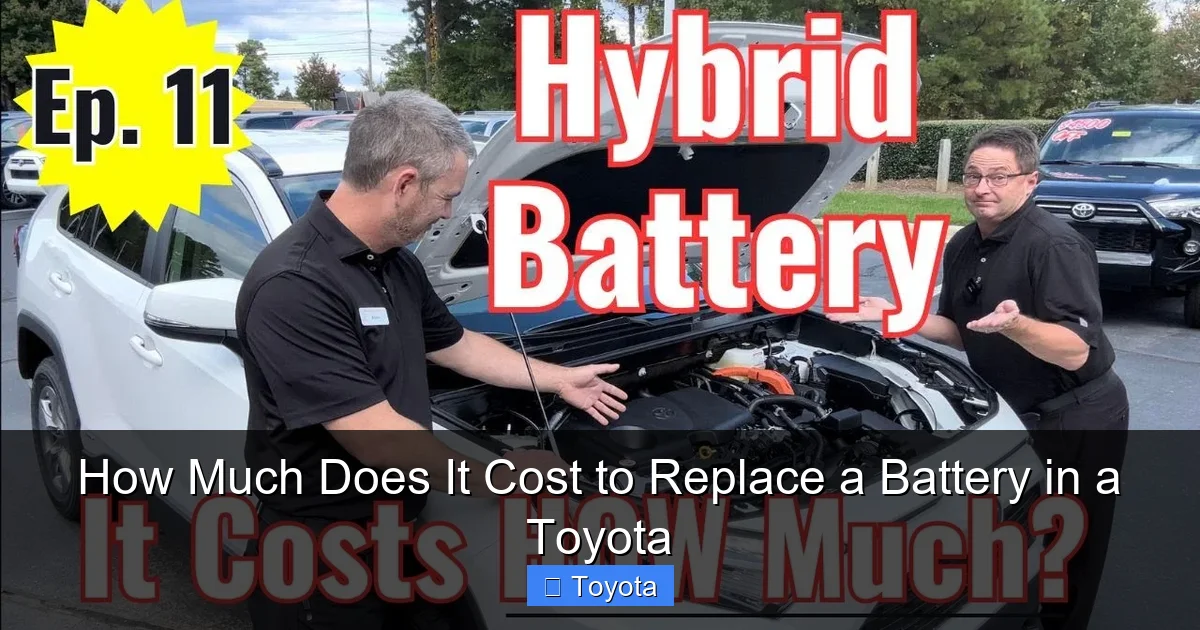
This is a completely different beast. In Toyota’s Hybrid Synergy Drive system (found in the Prius, Camry Hybrid, RAV4 Hybrid, etc.), there is a large, high-voltage (typically over 200 volts) nickel-metal hydride (NiMH) or lithium-ion battery pack. This battery works in tandem with the gasoline engine, storing energy from regenerative braking and providing electric power to the drive motor. It’s a critical, complex component of the vehicle’s powertrain. Failure of this battery means your hybrid will not move under electric power and will likely have severely reduced performance and fuel economy, eventually not starting at all. Replacing it is a major repair, involving high-voltage safety protocols, specialized diagnostic tools, and often a complete module replacement.
Toyota Battery Replacement Cost: A Model-by-Model Breakdown
Now for the numbers. We’ll split this into two clear categories: standard 12V batteries for gasoline models and hybrid traction batteries. Prices are estimates for 2023-2024 model years and can vary by region, retailer, and specific battery brand/grade. Labor costs are estimated based on a standard shop rate of $100-$150 per hour.
Visual guide about How Much Does It Cost to Replace a Battery in a Toyota
Image source: i.ytimg.com
Gasoline-Powered Models (Sedans, SUVs, Trucks)
For popular models like the Camry, Corolla, RAV4 (non-hybrid), Tacoma, and Tundra, the cost structure is similar. You are paying for the battery itself and about 0.5 to 1 hour of labor.
- Toyota Camry / Corolla: A quality replacement battery (AGM) will cost $120-$200. With professional installation and a small disposal fee, the total typically lands between $180 and $300.
- Toyota RAV4 (Non-Hybrid): Similar to the Camry in size and battery requirements. Expect a total installed cost of $200 to $320.
- Toyota Tacoma / Tundra: Trucks often use slightly larger batteries to handle bigger engines and accessories. Parts plus labor usually range from $220 to $350.
- Toyota Sienna (Non-Hybrid): As a minivan, it has high electrical demands. Budget $200 to $340 for a complete replacement.
Pro Tip: Retailers like AutoZone, Advance Auto Parts, and O’Reilly offer free battery installation with purchase at many locations. This can shave $50-$100 off the total if your Toyota’s battery is easily accessible (usually in the engine bay). Always call ahead to confirm.
Hybrid Models (Prius, Camry Hybrid, RAV4 Hybrid)
Here’s where costs skyrocket. You are not buying a simple parts store battery. You are buying a remanufactured or new hybrid battery pack, often with a multi-year warranty.
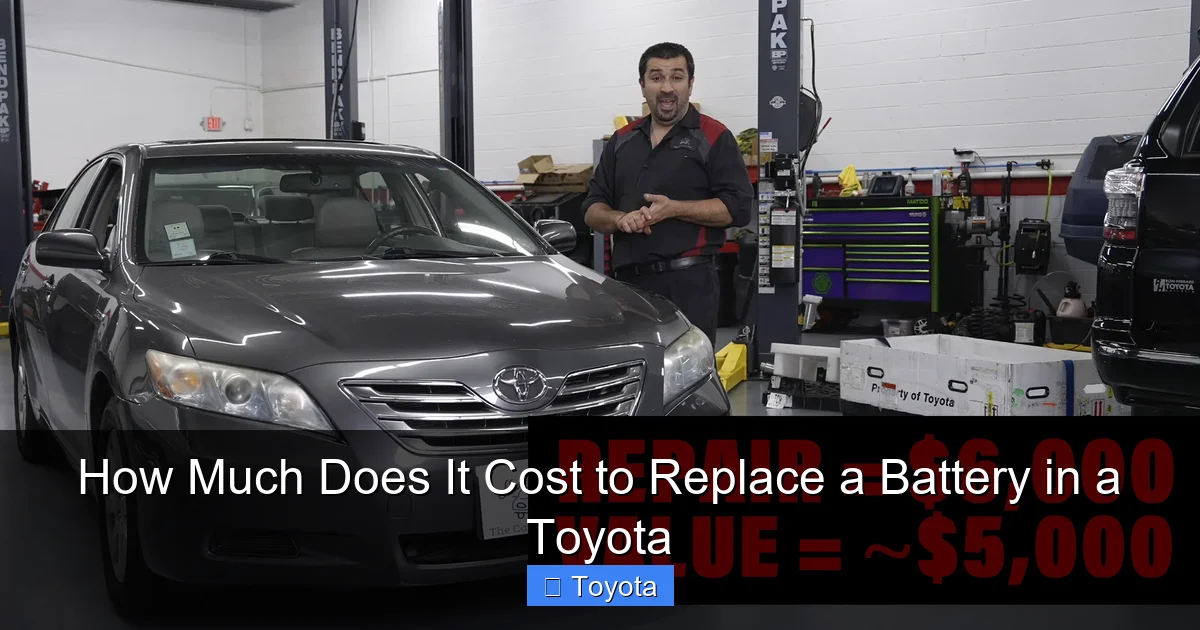
- Toyota Prius: The most common hybrid battery replacement. A remanufactured pack with a 1-3 year warranty typically costs $1,200 to $1,800 installed. A brand-new, dealer-sourced pack can exceed $2,500 to $3,500+. Labor is more complex and can take 2-4 hours.
- Toyota Camry Hybrid / RAV4 Hybrid: These use similar battery technology to the Prius but in a different configuration. Replacement costs are comparable, usually in the range of $1,400 to $2,200 for a quality remanufactured unit with labor.
- Toyota Highlander Hybrid / Venza: Their larger battery packs can push costs to the higher end of the hybrid spectrum, sometimes $1,800 to $2,800+.
Important Note on Hybrids: Some shops offer a “rebuild” service where they replace only the bad cells or modules within your existing pack, which can be cheaper ($800-$1,500). However, a full pack replacement with a good warranty is often the more reliable long-term choice. Never attempt to diagnose or replace a hybrid traction battery yourself. The voltage is lethal and requires specialized training and safety equipment.
What Factors Change the Final Price?
You might look at the model ranges above and wonder why your friend paid $250 for their Corolla battery while a quote for your identical RAV4 was $310. Several variables influence the final bill.
Visual guide about How Much Does It Cost to Replace a Battery in a Toyota
Image source: carscoops.com
Battery Type and Brand
Within the standard 12V category, there are standard flooded lead-acid batteries and more advanced AGM batteries. AGM batteries are more expensive ($50-$100 more) but offer better performance, longer life, and are required for vehicles with Start-Stop systems or high electrical demands (many newer Toyotas). Opting for a premium brand with a longer warranty (e.g., 4-5 years vs. 2-3 years) will also increase the upfront cost but may save money in the long run.
Your Geographic Location
Labor rates are not uniform. A dealership in major metropolitan area like Los Angeles or New York will charge significantly more per hour than an independent mechanic in a smaller town. Similarly, the cost of the battery itself can have regional price fluctuations due to supply and demand.
The “Core Charge”
This is a deposit (usually $10-$20) that’s added to the price of a new battery. It’s refundable when you return your old, defective battery. If you forget to bring your old battery in, you essentially pay a non-refundable fee. Always ask if the quoted price includes the core charge and what the policy is for returning the old battery. Most shops will deduct it from your total upon pickup.
Where You Buy and Who Installs
As mentioned, big-box auto parts stores often offer free installation, making them a great value for standard batteries. Dealerships will be the most expensive option for a 12V battery but may be necessary if your car is under a specific warranty or if the battery is in a difficult location. For hybrids, dealerships or specialized hybrid repair shops are the only safe options, and their pricing reflects the expertise and equipment required.
DIY vs. Professional Installation: Weighing Your Options
For a standard 12-volt battery, this is a legitimate question. For a hybrid battery, it is not. The choice depends on your skill level, tools, and risk tolerance.
When DIY Makes Sense (Standard 12V Only)
Replacing a standard car battery is one of the simplest automotive tasks. It usually involves: 1) Opening the hood, 2) Disconnecting the negative (black) cable first, then the positive (red), 3) Removing any hold-down clamp, 4) Lifting out the old battery, 5) Placing the new battery, 6) Reconnecting positive first, then negative, and 7) Securing the clamp. If you have a basic socket wrench set and can lift 30-40 pounds, you can do it. You will save the full labor cost, typically $50-$100. Just be sure to purchase the correct battery size (group size) and type (AGM vs. Flooded) for your specific Toyota. Your owner’s manual or the old battery’s label will have this info.
Why You Should Always Call a Pro (Standard & Hybrid)
Even for a simple job, there are reasons to professionalize it. First, improper installation can cause sparks, damage sensitive vehicle electronics, or lead to a loose connection that leaves you stranded again. Second, professionals will often perform a complimentary charging system check (alternator, starter) to ensure your new battery isn’t being killed by a faulty component—a common oversight. Third, they handle the safe disposal and recycling of the hazardous old battery. For hybrid batteries, the professional route is the only route. The high-voltage system can cause severe injury or death if mishandled. The diagnostic and replacement process requires insulated tools, high-voltage safety gear, and a deep understanding of the hybrid system. The cost reflects this critical safety and technical expertise.
Protecting Your Investment: Maintenance and Smart Buying Tips
A battery replacement is an expense you want to be infrequent. With proper care, a quality 12V battery can last 4-6 years. Here’s how to get the most from your investment and avoid common pitfalls.
Simple Habits for a Longer Battery Life
Extreme temperatures are a battery’s worst enemy. In very hot climates, park in the shade or a garage when possible. In cold climates, consider an insulated battery blanket if you park outside. Short, frequent trips don’t allow the alternator enough time to fully recharge the battery. If you primarily drive short distances, occasionally take a longer highway drive (20+ minutes) to top up the charge. Keep battery terminals clean and free of white, crusty corrosion. A mixture of baking soda and water with a wire brush can clean them. Apply a thin layer of dielectric grease to the terminals after cleaning to prevent future corrosion.
How to Choose the Right Replacement
Don’t just buy the cheapest battery. Match the specifications. Your Toyota’s owner’s manual specifies the required Cold Cranking Amps (CCA) and reserve capacity. Buying a battery with lower CCA than specified can lead to poor starting performance, especially in cold weather. For vehicles with Start-Stop systems, an AGM battery is mandatory—using a standard flooded battery will cause system errors and premature failure. When selecting a battery, look at the warranty. A pro-rated warranty (e.g., 3 years free replacement, then pro-rated for up to 5) is better than a simple “3-year full replacement” from a no-name brand. Stick with reputable brands like Interstate, DieHard, AC Delco, or the OEM Toyota battery.
What to Do Before You Buy
Always get your battery tested first. Most auto parts stores and repair shops will test your charging system and battery for free in minutes. This confirms the battery is the problem and not, say, a failing alternator. It also tells you the battery’s remaining health. If it tests as “bad” or “very weak,” replacement is needed. If it tests as “weak” or “marginal,” you might have a parasitic drain (something drawing power when the car is off) that needs fixing first, otherwise your new battery will die quickly. This is a crucial step to avoid a repeat problem. While you’re having it tested, it’s a good time to ask about other maintenance. For instance, if you’re committed to keeping your Toyota in top shape, you might also inquire about the cost to change the oil in your car, as regular oil changes are fundamental to overall engine health and can indirectly affect battery charging efficiency.
Beyond the Battery: Other Ownership Costs to Consider
As a Toyota owner, you’re likely thinking about long-term reliability and total cost of ownership. A battery is just one piece of the puzzle. Other maintenance and repair costs can add up. For example, if you’re passionate about your vehicle’s appearance, you might eventually consider cosmetic upgrades. The cost to wrap a Toyota Camry can range from $2,000 to $5,000, offering a unique look without permanent paint. For those with a workhorse like a Tacoma, protecting the bed might lead you to research the cost to paint a Toyota Tacoma bed liner or the entire truck, which can be a significant but worthwhile investment for durability. Being aware of these potential future expenses helps you budget holistically for your vehicle’s entire lifespan.
Conclusion: A Manageable Repair with Informed Decisions
So, how much does it cost to replace a battery in a Toyota? For the vast majority of Toyota sedans, SUVs, and trucks on the road, the answer is a very manageable $150 to $350 for a quality 12-volt battery, installed. This is one of the most common and least expensive repair items in your vehicle’s lifecycle. The key is to confirm the diagnosis, choose the correct battery for your model’s requirements, and decide if the DIY route is right for your skill set. For hybrid owners, the conversation shifts to a major powertrain component repair, with costs starting around $1,200 and exceeding $3,000. In that case, securing a solid warranty on the replacement pack is as important as the price itself. By understanding these costs, the factors that influence them, and implementing simple maintenance habits, you can ensure your Toyota starts reliably for years to come, turning a potential stressful surprise into a straightforward, planned maintenance item.
Frequently Asked Questions
What are the symptoms of a failing Toyota battery?
The most common signs are a slow, labored engine crank; dim headlights, especially when the engine is idling; a clicking sound when you turn the key; and the illumination of the battery warning light on your dashboard. If your Toyota is over 3-4 years old and you experience any of these, get the battery tested immediately.
How often should I replace the battery in my Toyota?
Most standard 12-volt batteries last between 3 to 5 years. Hybrid traction batteries are designed to last the life of the vehicle, often warrantied for 8-10 years or 100,000+ miles, but they can fail prematurely. Your driving habits and climate will affect lifespan. Regular testing during annual inspections is the best way to know its health.
Can I jump-start my Toyota if the battery is dead?
Yes, you can jump-start a Toyota with a dead 12-volt battery using another vehicle and jumper cables, or a portable jump starter. Follow the instructions in your owner’s manual precisely, connecting the clamps in the correct order (positive to positive, negative to a bare metal ground point on the dead car’s engine block or chassis, NOT the negative terminal). For a failed hybrid battery, jump-starting will not work; the vehicle requires a tow and professional repair.
Is the battery replacement cost different for a Toyota hybrid vs. a regular model?
Yes, dramatically. A standard 12-volt battery for a gasoline Toyota costs $150-$350 installed. Replacing the high-voltage traction battery in a Toyota hybrid (Prius, Camry Hybrid, RAV4 Hybrid) costs $1,200-$3,500+ installed because it is a complex, high-capacity component integral to the drivetrain.
Will my Toyota’s warranty cover a new battery?
It depends. New vehicles typically have a bumper-to-bumper warranty that covers defects in materials for the battery for a limited time (often 36 months/36,000 miles). If your battery fails within this period due to a defect, it may be covered. However, normal wear-and-tear failure after the warranty period is not covered. Check your specific warranty booklet. Hybrid traction batteries usually have a separate, longer warranty (e.g., 8 years/100,000 miles).
Do I need to program or register a new battery in my Toyota?
For most older Toyota models with standard 12-volt batteries, no programming is needed. Simply disconnect the old one and connect the new one. However, many newer Toyota models (especially from 2018 onward) have battery management systems that may require a “registration” or “learning” procedure using a scan tool after a battery replacement to optimize charging. A professional shop will handle this. Hybrid batteries always require extensive diagnostic and calibration procedures after replacement, which is part of the professional labor cost.