
How Much Does It Cost to Wrap a Toyota Camry?

Wrapping a Toyota Camry typically costs between $2,500 and $5,500, depending on the wrap type, finish, and installer expertise. Factors like full vs. partial wraps, premium materials, and custom designs significantly impact the final price.
Thinking about giving your Toyota Camry a fresh new look? A vinyl wrap might be the perfect solution. Unlike a full paint job, which can cost thousands and permanently alter your car’s original finish, a wrap offers a reversible, customizable, and often more affordable way to transform your vehicle’s appearance. Whether you’re aiming for a sleek matte black, a bold racing stripe, or a head-turning chrome finish, wrapping your Camry can make a serious style statement.
But before you dive in, it’s important to understand the real cost of wrapping a Toyota Camry. Prices can vary widely based on several factors—from the type of vinyl used to the complexity of the design and the expertise of the installer. While some online ads promise “cheap car wraps” for under $1,000, those deals often come with hidden costs, low-quality materials, or poor workmanship that leads to peeling, bubbling, or fading within months. On the other hand, premium wraps from reputable shops can run over $5,000, especially if you’re going for a custom design or specialty finish.
In this guide, we’ll break down everything you need to know about how much it costs to wrap a Toyota Camry. We’ll explore the different types of wraps available, what influences pricing, how to choose the right installer, and tips to get the best value for your money. Whether you’re a first-time wrapper or a car enthusiast looking to upgrade your ride, this article will help you make an informed decision—without breaking the bank.
Key Takeaways
- Full vehicle wraps for a Toyota Camry range from $2,500 to $5,500, with most owners paying around $3,500 for a high-quality vinyl wrap.
- Partial wraps (hood, roof, or mirrors) cost $500 to $1,500 and are ideal for accents or branding without full coverage.
- Vinyl quality matters—cast vinyl lasts longer and looks better than calendered vinyl, especially in harsh weather.
- Professional installation is essential to avoid bubbles, peeling, and premature wear; DIY kits often lead to costly redos.
- Color and finish choices affect price, with matte, gloss, satin, and specialty finishes like chrome or carbon fiber adding $200–$800.
- Location and shop reputation influence cost—urban areas and top-tier installers charge more but deliver superior results.
- Maintenance is minimal but important—regular washing and avoiding abrasive cleaners help preserve the wrap’s lifespan of 5–7 years.
📑 Table of Contents
- Understanding Car Wraps: What You Need to Know
- How Much Does It Cost to Wrap a Toyota Camry?
- Additional Costs to Consider
- DIY vs. Professional Installation: Is It Worth It?
- How to Save Money on a Toyota Camry Wrap
- Maintaining Your Wrapped Toyota Camry
- Final Thoughts: Is Wrapping Your Camry Worth It?
Understanding Car Wraps: What You Need to Know
Before we get into pricing, let’s clarify what a car wrap actually is. A vinyl car wrap is a thin, adhesive film applied to the exterior of your vehicle to change its color or finish. It’s not paint—it’s a removable layer that protects your original paint while giving your Camry a completely new look. Wraps are commonly made from PVC-based vinyl and come in a wide range of colors, textures, and finishes.
One of the biggest advantages of a wrap is its versatility. You can go from classic white to fiery red, switch to a stealthy matte gray, or even mimic expensive finishes like carbon fiber or brushed metal—all without permanently altering your car. And if you ever decide to sell your Camry, you can simply remove the wrap (if applied correctly) to reveal the original paint underneath, potentially increasing resale value.
But not all wraps are created equal. The quality of the vinyl, the skill of the installer, and the preparation of the vehicle all play crucial roles in how long the wrap lasts and how good it looks. A poorly installed wrap can start peeling at the edges within months, while a professionally done one can last 5 to 7 years with proper care.
Types of Vinyl Wraps
There are two main types of vinyl used in car wraps: cast and calendered. Understanding the difference is key to knowing why prices vary.
Cast vinyl is the premium option. It’s made by pouring liquid vinyl onto a casting sheet, allowing for extreme flexibility and durability. Because it’s thinner and more pliable, cast vinyl conforms better to curves and complex body lines—perfect for a vehicle like the Toyota Camry, which has smooth contours and subtle contours around the doors and fenders. Cast vinyl is also more resistant to UV rays, shrinking, and fading, making it ideal for long-term use. Most high-end wraps use cast vinyl, and it’s typically what you’ll find in the $3,000–$5,500 price range.
Calendered vinyl, on the other hand, is made by rolling heated vinyl through rollers. It’s thicker, less flexible, and more prone to shrinking over time. While it’s cheaper—often used in budget wraps under $2,000—it doesn’t stretch as well and can crack or peel, especially in hot climates or on curved surfaces. Calendered vinyl is better suited for flat panels or short-term applications, like event promotions or temporary branding.
For a Toyota Camry, which has a mix of flat and curved surfaces, cast vinyl is almost always the better choice if you want a professional, long-lasting result.
Full vs. Partial Wraps
Another major factor in cost is whether you’re doing a full wrap or a partial one.
A full wrap covers the entire exterior of the vehicle—doors, hood, roof, trunk, fenders, and bumpers. This gives you a complete transformation and is what most people think of when they hear “car wrap.” Full wraps are ideal if you want a dramatic change in color or finish, or if you’re using the car for advertising or personal branding.
A partial wrap, by contrast, covers only specific areas. Common partial wraps include the hood, roof, side mirrors, or rear spoiler. These are popular for adding accents—like a black roof on a white Camry for a “floating roof” effect—or for highlighting performance features. Partial wraps are significantly cheaper, usually ranging from $500 to $1,500, depending on the size and complexity.
Some owners also opt for custom graphics or decals, such as racing stripes, tribal patterns, or company logos. These can be added to either full or partial wraps and typically cost an extra $200 to $800, depending on the design intricacy and the number of colors used.
How Much Does It Cost to Wrap a Toyota Camry?
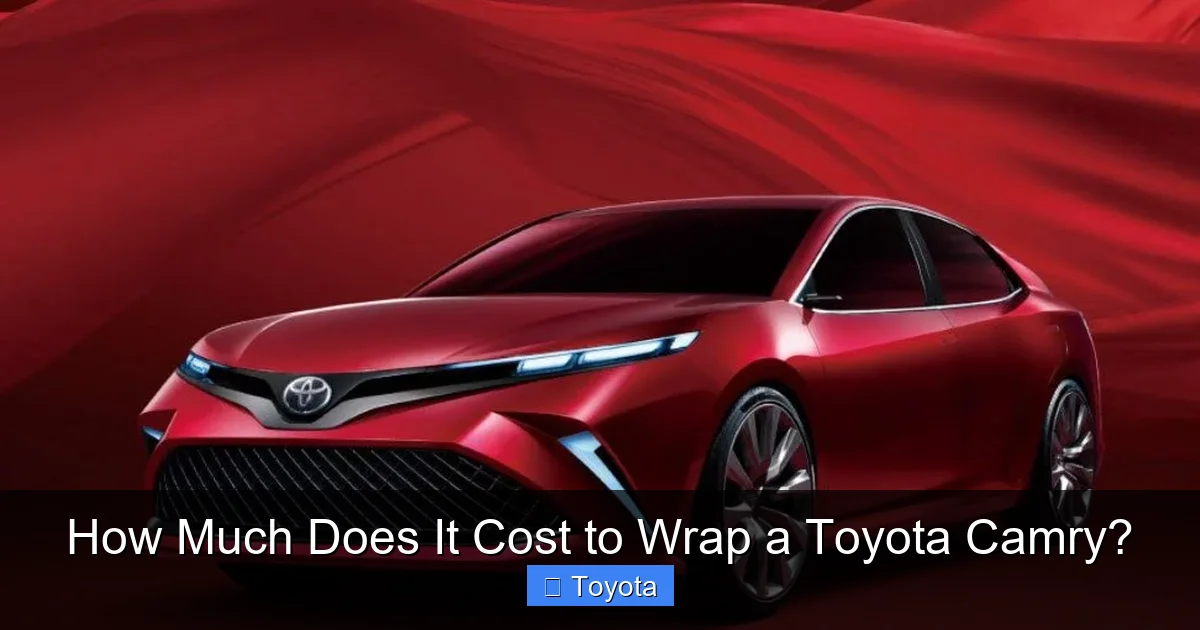
Visual guide about How Much Does It Cost to Wrap a Toyota Camry?
Image source: autopricingnearme.com
Now, let’s get to the heart of the matter: how much will it actually cost to wrap your Toyota Camry?
On average, a professional full wrap for a Toyota Camry costs between $2,500 and $5,500. Most owners end up paying around $3,500 for a high-quality, cast vinyl wrap with a standard color like gloss black, matte gray, or satin red. This price includes materials, labor, and basic prep work like cleaning and removing emblems.
But why such a wide range? Let’s break down the factors that influence the final cost.
1. Wrap Type and Coverage
As mentioned, full wraps are more expensive than partial ones. Here’s a rough breakdown:
– Full wrap: $2,500–$5,500
– Partial wrap (hood + roof): $800–$1,500
– Mirror caps only: $150–$300
– Custom graphics (e.g., stripes): $200–$800
The Toyota Camry is a midsize sedan with a relatively straightforward body shape, which makes it easier (and cheaper) to wrap than a sports car with complex curves or a large SUV. However, its size still requires a significant amount of vinyl—typically 60 to 70 square feet for a full wrap.
2. Vinyl Quality and Brand
Not all vinyl is created equal, and brand matters. Premium brands like 3M, Avery Dennison, and KPMF offer high-performance cast vinyl that’s designed to last. These brands are more expensive but deliver better color retention, flexibility, and durability.
For example:
– 3M 1080 Series: $1,800–$2,500 for materials (full wrap)
– Avery Dennison Supreme Wrapping Film: $1,600–$2,200
– Generic or off-brand vinyl: $800–$1,200 (but often lower quality)
While it’s tempting to go for the cheaper option, investing in a reputable brand can save you money in the long run by reducing the risk of premature failure.
3. Finish and Color
The finish you choose also impacts cost. Standard gloss colors are usually the most affordable, while specialty finishes add a premium.
– Gloss finishes: Base price (no extra charge)
– Matte or satin finishes: +$200–$400
– Chrome, brushed metal, or color-shift vinyl: +$500–$800
– Custom prints (e.g., carbon fiber, wood grain): +$300–$600
For example, a gloss black wrap might cost $3,200, while the same wrap in matte black could be $3,600. A chrome wrap, which requires special handling and is more prone to scratching, might push the total to $4,500 or more.
4. Labor and Installation
Labor is often the biggest variable in wrap pricing. A skilled installer charges $50 to $100 per hour, and a full wrap can take 15 to 25 hours to complete—especially if the car needs extensive prep work.
Factors that increase labor time (and cost) include:
– Removing and reinstalling trim, emblems, and door handles
– Dealing with deep scratches or paint imperfections
– Complex designs or multi-color layouts
– Wrapping around tight corners or recessed areas
In major cities like Los Angeles, New York, or Chicago, labor rates are higher due to demand and cost of living. You might pay $4,000–$5,500 in these areas, while in smaller towns, the same job could cost $2,500–$3,500.
5. Shop Reputation and Experience
Not all wrap shops are equal. A reputable installer with a portfolio of high-quality work will charge more—but you’re paying for expertise, not just materials.
Look for shops that:
– Have certified installers (e.g., 3M Preferred or Avery Dennison Certified)
– Offer warranties (typically 3–5 years on materials and labor)
– Provide before-and-after photos of similar vehicles
– Use climate-controlled facilities to prevent dust and debris
While a mom-and-pop shop might offer a lower quote, a poorly installed wrap can cost you more in the long run if it needs to be redone.
Additional Costs to Consider
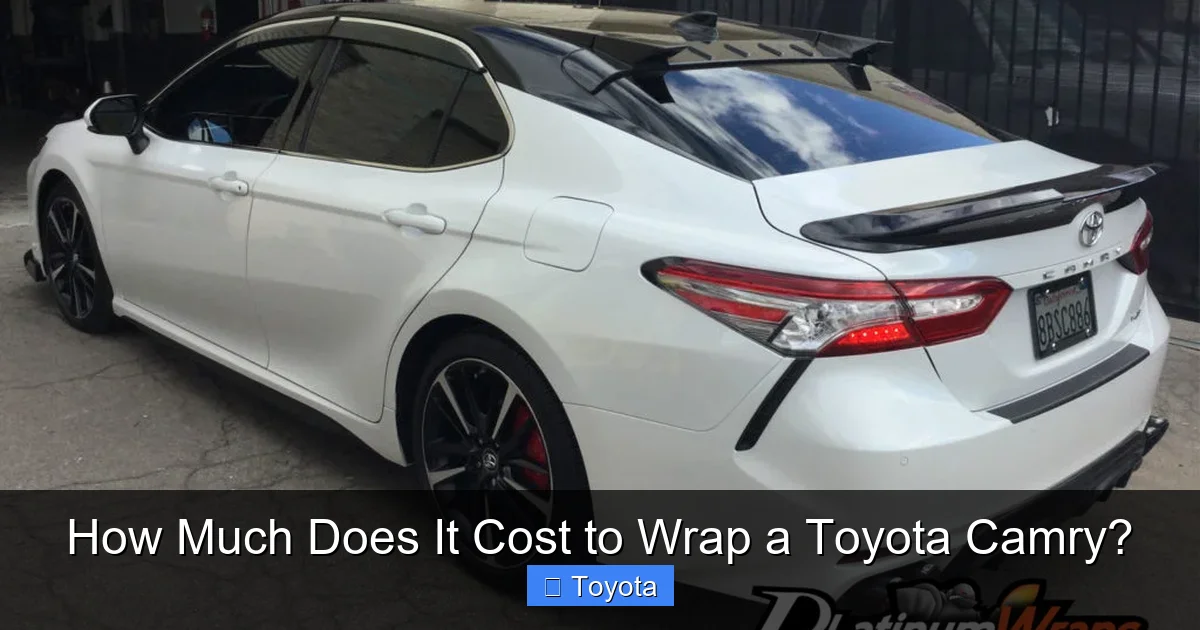
Visual guide about How Much Does It Cost to Wrap a Toyota Camry?
Image source: platinumwraps.com
Beyond the base wrap price, there are a few extra costs you should budget for.
Paint Correction and Prep Work
Before applying a wrap, the car’s surface must be clean and smooth. If your Camry has swirl marks, scratches, or oxidation, the installer may recommend paint correction—a process that involves polishing the paint to remove imperfections. This can add $200 to $600 to your total cost, depending on the condition of the paint.
While not always required, paint correction ensures the wrap adheres properly and looks flawless. Skipping it might save money upfront, but imperfections can show through the vinyl, especially with gloss finishes.
Emblem and Trim Removal
Some wraps require removing emblems, door handles, and trim pieces to ensure a seamless look. This adds labor time and may cost an extra $100 to $300. Some shops include this in their quote, while others charge separately.
Warranty and Maintenance
Most professional wraps come with a warranty covering defects, peeling, or fading—typically 3 to 5 years. However, the warranty often requires regular maintenance, such as hand washing and avoiding automatic car washes with brushes.
You may also want to invest in a wrap-specific sealant or coating ($30–$60) to protect the vinyl from UV rays and environmental damage. While not mandatory, it can extend the life of your wrap.
Removal Costs
If you decide to remove the wrap later, expect to pay $300 to $600 for professional removal. DIY removal is possible but risky—using heat guns or solvents incorrectly can damage your original paint.
DIY vs. Professional Installation: Is It Worth It?
Visual guide about How Much Does It Cost to Wrap a Toyota Camry?
Image source: shunauto.com
You might be tempted to save money by buying a DIY wrap kit online. Prices for full-wrap kits start around $800 for generic vinyl, and there are plenty of YouTube tutorials promising “easy” installation.
But here’s the reality: wrapping a car is extremely difficult, even for experienced DIYers. The Toyota Camry has curved panels, tight gaps, and complex contours that require precision and skill. One mistake—like a bubble you can’t smooth out or a misaligned panel—can ruin the entire look.
Professional installers use tools like heat guns, squeegees, and knifeless tape to ensure a flawless finish. They also work in clean, dust-free environments to prevent debris from getting trapped under the vinyl.
While a DIY kit might save you $2,000 upfront, a failed installation could cost you even more to fix. In most cases, professional installation is worth the investment for a vehicle you plan to keep for several years.
How to Save Money on a Toyota Camry Wrap
That said, there are smart ways to reduce the cost without sacrificing quality.
1. Choose a Standard Color and Finish
Opt for a popular color like black, white, or gray in a gloss or satin finish. These are often cheaper and faster to install than custom or specialty options.
2. Bundle Services
Some shops offer discounts if you combine services—like a full wrap with paint correction or ceramic coating. Ask about package deals.
3. Get Multiple Quotes
Don’t settle for the first estimate. Get quotes from at least three reputable shops and compare what’s included. Make sure they’re using cast vinyl and offering a warranty.
4. Consider a Partial Wrap
If you’re on a tight budget, a partial wrap can still make a big visual impact. A black roof or carbon fiber hood can give your Camry a sporty look for under $1,000.
5. Time Your Purchase
Some shops offer seasonal promotions or discounts during slower months (like winter). Call around and ask if they have any current deals.
Maintaining Your Wrapped Toyota Camry
Once your wrap is installed, proper care will help it last as long as possible.
– Wash by hand using a pH-neutral car soap and a soft microfiber mitt. Avoid automatic car washes with brushes.
– Rinse thoroughly to remove dirt and grime that can scratch the surface.
– Use a wrap-safe wax or sealant every 3–6 months to protect against UV damage.
– Avoid parking under trees or in direct sunlight for long periods to prevent fading.
– Address stains quickly—bird droppings, tree sap, and bug splatter can damage vinyl if left too long.
With proper care, a high-quality wrap can last 5 to 7 years. After that, you can remove it and either rewrap or return to the original paint.
Final Thoughts: Is Wrapping Your Camry Worth It?
So, how much does it cost to wrap a Toyota Camry? The answer depends on your goals, budget, and expectations. For most owners, a professional full wrap using cast vinyl will cost between $3,000 and $4,500—a significant investment, but one that delivers a stunning transformation and protects your original paint.
While it’s more expensive than a cheap paint job, a wrap offers greater flexibility, reversibility, and customization. And compared to a full repaint (which can cost $4,000–$8,000 and devalue the car), a wrap is often the smarter choice.
Whether you’re looking to stand out on the road, protect your Camry’s resale value, or simply try a new look, a vinyl wrap is a worthwhile upgrade. Just remember: quality matters. Choose a reputable installer, invest in premium materials, and take care of your wrap—and your Camry will turn heads for years to come.
Frequently Asked Questions
How long does a Toyota Camry wrap last?
A high-quality vinyl wrap on a Toyota Camry typically lasts 5 to 7 years with proper care. Factors like climate, maintenance, and vinyl quality affect longevity. Regular hand washing and avoiding harsh conditions help extend its life.
Can I wash my wrapped Camry in an automatic car wash?
It’s not recommended. Automatic car washes with brushes can scratch or peel the vinyl. Instead, wash your wrapped Camry by hand using a soft mitt and pH-neutral soap to preserve the finish.
Will a wrap damage my original paint?
No, a professionally installed wrap protects your original paint from scratches, UV rays, and minor abrasions. When removed correctly, the factory paint underneath should remain intact and undamaged.
Can I wrap a Camry with existing paint damage?
It’s possible, but not ideal. Deep scratches or rust can show through the vinyl. Most installers recommend paint correction before wrapping to ensure a smooth, professional result.
Is a wrap cheaper than a paint job?
Generally, yes—especially for custom colors or finishes. A full repaint can cost $4,000–$8,000 and may reduce resale value, while a wrap costs $2,500–$5,500 and is reversible.
Can I remove the wrap myself?
Technically yes, but it’s risky. Improper removal with heat guns or solvents can damage your paint. For best results, have a professional remove the wrap to ensure your Camry’s finish stays pristine.