
Why Is My Tire Pressure Light Still on After Filling Tires Toyota Camry

Filling your Toyota Camry’s tires to the correct PSI doesn’t always turn off the tire pressure light. The most common reason is that the Tire Pressure Monitoring System (TPMS) sensors need to be manually reset or recalibrated after inflation. Other causes include a faulty sensor, a slow leak, or a dead sensor battery. This guide covers all potential issues and provides step-by-step solutions to finally get that light off.
You just filled your Toyota Camry’s tires to the perfect 32 PSI (or whatever your door jamb sticker says). You close the valve stems, get in the car, and… the tire pressure warning light is still glaring at you from the dashboard. It’s incredibly frustrating, right? You did exactly what the light told you to do, so why won’t it turn off? This is one of the most common Toyota Camry dashboard mysteries, and the answer usually lies in understanding how the Tire Pressure Monitoring System (TPMS) actually works. It’s not just a simple switch that turns off when pressure is correct; it’s a computer system that needs to be told, “Hey, we’re good now.” Let’s break down every possible reason, from the simple fix you can do yourself to the problems that need a professional.
Key Takeaways
- The TPMS needs a reset: After inflating tires, the system often requires a manual reset via the dashboard button or drive cycle to recognize the new pressure.
- Sensor damage is common: A bent or broken TPMS sensor from a pothole or curb impact can fail, keeping the light on even with perfect pressure.
- Temperature affects readings: Cold weather can lower pressure, triggering the light even if you recently filled the tires; heat from driving then normalizes it.
- Check for slow leaks: A nail or puncture might be slowly losing air, causing pressure to drop again shortly after filling.
- Spare tire matters: If your Camry has a full-size spare with a TPMS sensor, its low pressure will also trigger the warning light.
- System faults occur: Rarely, a problem with the vehicle’s TPMS control module or a weak battery can cause persistent false alerts.
- Professional help is available: Dealerships and tire shops have diagnostic tools to read individual sensor data and pinpoint the exact faulty component.
📑 Table of Contents
- How the Toyota Camry TPMS Actually Works
- Reason 1: The System Simply Needs a Reset or Recalibration
- Reason 2: A Faulty or Damaged TPMS Sensor
- Reason 3: You Have a Slow Tire Leak
- Reason 4: Extreme Temperature Changes
- Reason 5: System Glitch or Electrical Issue
- Step-by-Step Troubleshooting Guide for Your Camry
- Conclusion: Getting Back to a Light-Free Dashboard
How the Toyota Camry TPMS Actually Works
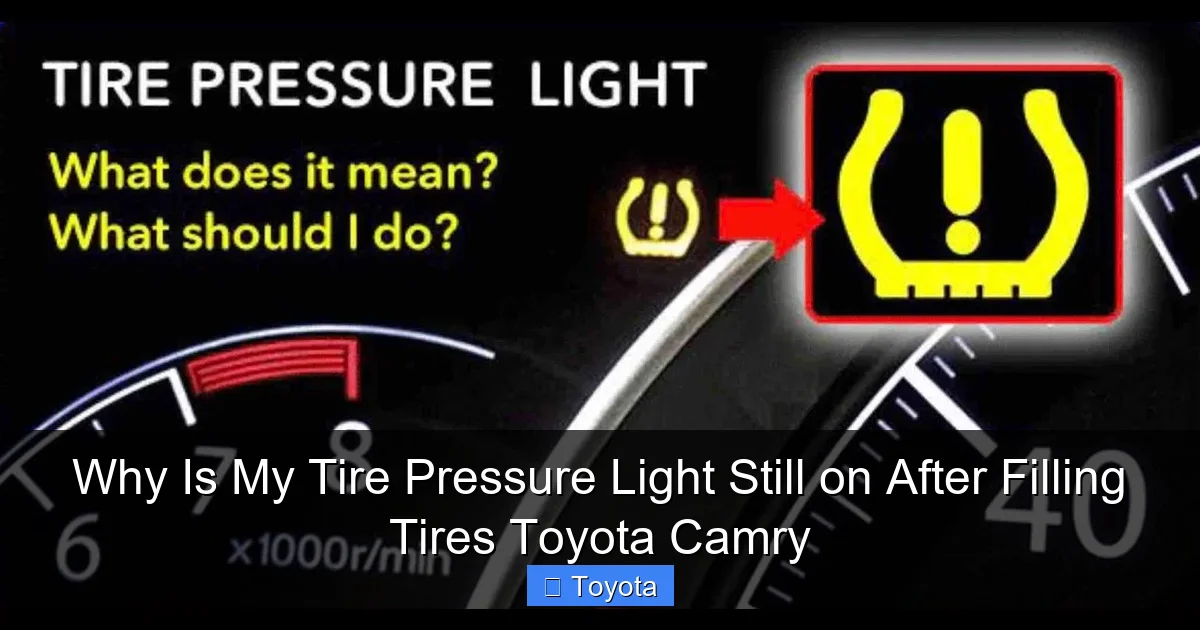
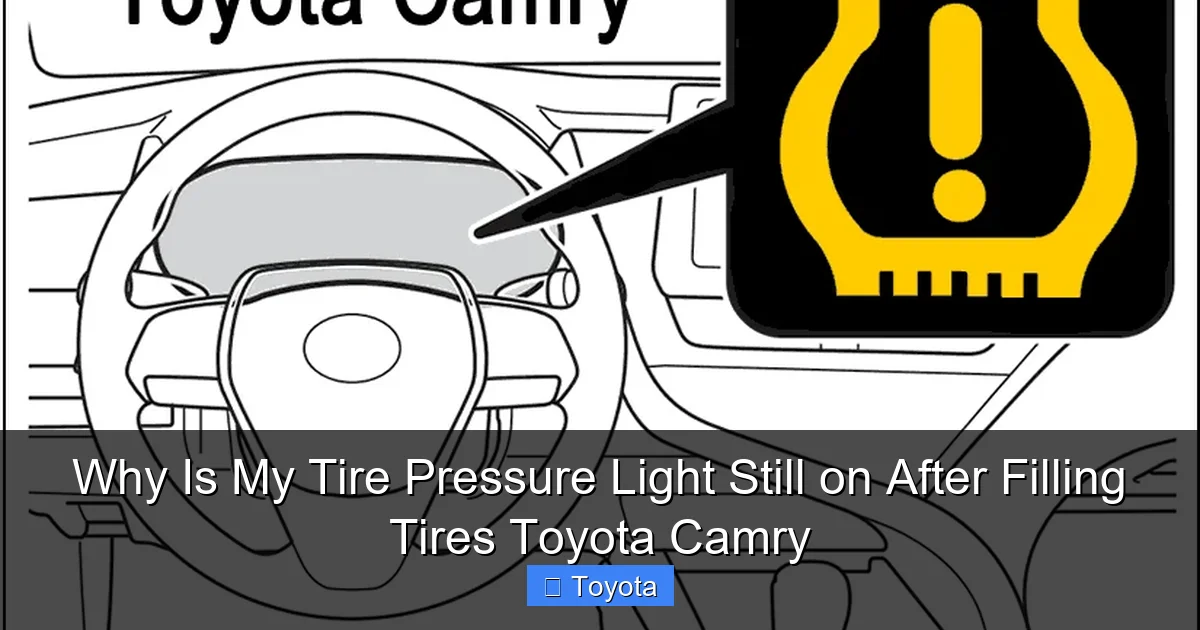
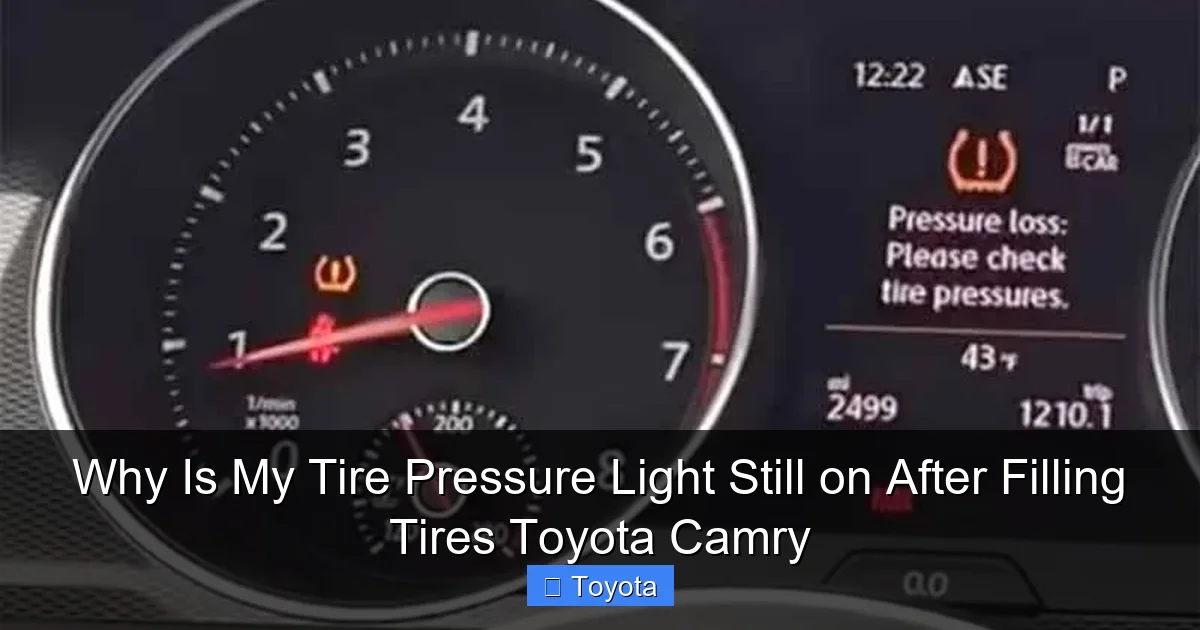
Before we dive into solutions, we need to understand the “why.” Your Camry uses a direct TPMS. This means each wheel has a small electronic sensor mounted inside the valve stem or on a band near the wheel’s center. These sensors constantly radio the tire’s pressure and temperature data to the car’s computer. When pressure drops 25% below the recommended level, the system triggers the yellow, horseshoe-shaped warning light on your dash.
The Reset and Recognition Process
Here’s the critical part most people miss: the system doesn’t constantly monitor for “correct” pressure. It monitors for “significant change.” When you add air, the sensor detects a rapid pressure increase. However, the main computer needs a clear, stable signal from all four (or five, including the spare) sensors to confirm everything is within range. Sometimes, it just needs a few minutes of driving to “see” the new, stable pressures. Other times, it requires a manual reset to start a new learning cycle. This is why the light often stays on immediately after filling—it hasn’t completed its verification process yet.
Reason 1: The System Simply Needs a Reset or Recalibration
This is the #1 culprit, especially after seasonal temperature changes or after you’ve manually inflated the tires. The TPMS has essentially “forgotten” what correct pressure looks like and needs to be reprogrammed.
Visual guide about Why Is My Tire Pressure Light Still on After Filling Tires Toyota Camry
Image source: i.ytimg.com
The Drive Cycle Method
Often, you just need to drive. After filling your tires, drive your Camry at speeds above 40 mph for at least 10-15 minutes. This allows the sensors to transmit consistent data, and the system should automatically recalibrate and turn the light off. If the light persists after a good highway drive, move to the next step.
The Manual Reset Button Method
Most Toyota Camrys (2012 and newer) have a dedicated TPMS reset button. It’s usually located under the dash, to the left of the steering column, or sometimes in the glove box. The exact location for your specific model year is in your owner’s manual. Here’s the standard procedure:
- Ensure all tires are inflated to the exact pressure listed on the driver’s door jamb sticker (not the sidewall!).
- Turn the ignition to the “ON” position (do not start the engine).
- Press and hold the TPMS reset button until the tire pressure light blinks three times, then release.
- Start the engine and drive for 20-30 minutes. The light should blink again during calibration and then turn off once complete.
Pro Tip: If you can’t find the button, your Camry might have a menu-based system. Check your vehicle settings on the multi-information display for “TPMS Calibration” or “Tire Pressure” options. You can also learn how to check tire pressure via the Toyota app, which may display sensor readings.
Reason 2: A Faulty or Damaged TPMS Sensor
TPMS sensors are electronic devices with a small battery that lasts about 7-10 years. They are also mounted on the wheel, exposed to road salt, curbs, potholes, and tire mounting/dismounting stress. They can and do fail.
Visual guide about Why Is My Tire Pressure Light Still on After Filling Tires Toyota Camry
Image source: dash-lights.com
Signs of a Bad Sensor
A failed sensor will either send no signal or a corrupt signal, which the system interprets as low pressure. The light will stay on solidly. You might also notice:
- The light comes on randomly, even when pressures are perfect.
- Your tire pressure readings on the dash are blank, show dashes (—), or are wildly inaccurate for one wheel.
- The problem started after hitting a major pothole or curb.
Diagnosis and Replacement
You cannot diagnose a bad sensor with a standard tire gauge. You need a TPMS scan tool that reads each sensor’s unique ID, pressure, and battery life. This is what professionals use. If a sensor is dead, it must be replaced. Since the sensor is part of the valve stem assembly, it requires removing the tire from the wheel, which is why it’s typically a tire shop job. Replacing one sensor often means replacing the valve stem seal and reprogramming the new sensor’s ID to your Camry’s computer. This is a perfect time to also consider if other dashboard lights are acting up, as it could point to a broader electrical issue, though that’s less common.
Reason 3: You Have a Slow Tire Leak
This is the “obvious but overlooked” reason. You filled the tire, but it has a puncture from a nail, screw, or a damaged wheel bead. The air leaks out slowly, and within hours or a day, the pressure drops below the threshold again, and the light comes back on.
Visual guide about Why Is My Tire Pressure Light Still on After Filling Tires Toyota Camry
Image source: tiregrades.com
How to Check for a Leak
Do a thorough visual inspection of the tread and sidewall. Look for any foreign objects embedded in the tire. Check the valve stem for cracks or damage. The best test is a “soapy water test.” Mix dish soap with water in a spray bottle. With the tire fully inflated, spray the entire tread, sidewalls, and especially the valve stem area. Look for steady bubbles forming, which indicate escaping air. Also, don’t forget to check your spare tire! Many Camrys have a full-size spare with its own TPMS sensor. If that spare is low, it will trigger the light just like a regular tire.
Reason 4: Extreme Temperature Changes
Physics is at play here. For every 10°F drop in temperature, tire pressure decreases by about 1-2 PSI. If you filled your tires on a warm afternoon and then faced a cold morning, the pressure could have dropped enough to trigger the light. The inverse is also true: driving heats the tires and air inside, increasing pressure. Your system might trigger when cold, then turn off as you drive and the tires warm up. This on-again, off-again behavior is a classic sign of temperature sensitivity.
What to Do
Always check and adjust tire pressure when the tires are “cold”—meaning the car hasn’t been driven for at least three hours or driven less than a mile. Use the pressure on your door jamb sticker, not the max pressure on the tire sidewall. If the light comes on only during very cold snaps and turns off after driving, it’s likely just temperature. You may need to add a pound or two of air during winter to compensate.
Reason 5: System Glitch or Electrical Issue
While less common, sometimes the problem isn’t the tires or sensors at all, but the brain of the system. A weak car battery can sometimes cause communication errors with the TPMS module. A fault in the wiring or the module itself can also send a false signal. If you’ve ruled out all tire-related issues (pressure, leaks, sensors) and the light persists, this becomes a possibility. Corroded battery terminals are a frequent culprit for various dashboard warnings. You might also notice other strange electrical quirks. For issues beyond simple resets and sensor replacement, consulting a professional with advanced diagnostics is necessary. They can check for stored fault codes in the TPMS control module.
Step-by-Step Troubleshooting Guide for Your Camry
Let’s put it all together into an action plan. Follow these steps in order.
Step 1: The Immediate Post-Fill Check
After filling, drive for 15-20 minutes at highway speeds. Did the light go off? If yes, problem solved—it just needed a drive cycle. If no, proceed.
Step 2: Verify Exact Cold Pressure
Park the car for several hours. Use a reliable digital tire gauge to check all four tires (and the spare) when cold. Inflate/deflate to match the exact PSI on the driver’s door jamb sticker. Do not use the pressure on the tire itself. Reset the TPMS using the button or menu procedure described earlier. Drive again. If the light returns, proceed.
Step 3: The Soapy Water Leak Test
Perform the soapy water test on all tires and valve stems. Also, physically inspect for nails. If you find a leak, have the tire repaired or replaced. After repair, you must reset the TPMS again.
Step 4: Professional Diagnosis
If steps 1-3 fail, you likely have a faulty sensor or a system glitch. Take your Camry to a reputable tire shop or dealership. They will use a scan tool to read each sensor’s data. They can tell you which sensor (if any) is not communicating or has a low battery. They can also check the TPMS module for codes. Replacing the faulty sensor(s) and reprogramming the system is the final fix. While there, ask them to check your car battery health, as a weak battery can cause communication issues.
Conclusion: Getting Back to a Light-Free Dashboard
That persistent tire pressure light on your Toyota Camry is more than just an annoyance; it’s your car’s way of telling you something is wrong with its critical safety system. While the solution is often a simple recalibration after you’ve done the right thing by adding air, it can also point to a failing sensor, a slow leak, or even the effects of weather. The key is systematic troubleshooting: verify pressures, look for leaks, attempt a reset, and know when to call in the pros with the right tools. Don’t ignore it—proper tire pressure is vital for safe handling, braking, fuel economy, and tire lifespan. By understanding your Camry’s TPMS, you can solve this mystery quickly and get back to confident, worry-free driving.
Frequently Asked Questions
Can I drive my Toyota Camry with the tire pressure light on?
Yes, but only for a short distance and with caution. Driving on significantly under-inflated tires is dangerous—it causes poor handling, increased braking distances, and can overheat and destroy the tire. Check your pressures immediately and address the issue.
How much does it cost to fix a TPMS sensor on a Camry?
Replacing a single TPMS sensor (including parts and labor) typically costs between $100 and $250 at a tire shop or dealership. Prices vary by model year and whether you get an OEM or aftermarket sensor. The cost includes mounting, balancing, and system reprogramming.
Will disconnecting the battery turn off the tire pressure light?
No. Disconnecting the battery may reset some systems, but the TPMS light is designed to stay on until the system verifies all sensors report correct pressure. You must perform the specific TPMS reset procedure after correcting the pressure.
Why does my tire pressure light come on and go off by itself?
This is almost always due to temperature changes. Cold morning air lowers pressure, triggering the light. As you drive and the tires heat up, pressure rises, and the light may turn off. It can also indicate a very slow leak that only triggers when pressure dips just below the threshold.
Does the Toyota Camry have a TPMS reset button?
Most model years from 2012 onward do. The button is usually located under the dashboard, to the left of the steering wheel, or inside the glove box. Consult your owner’s manual for the exact location and procedure for your specific year.
Can a bad TPMS sensor cause other problems?
Not typically. A failed sensor will usually just cause the TPMS warning light to stay on. It shouldn’t affect engine performance, transmission, or other major systems. However, a severely weak car battery can sometimes cause communication errors that might trigger multiple dashboard warnings, including TPMS.