
How to Charge a Jeep Key Fob

Charging a Jeep key fob is essential to maintain its remote functions and avoid being locked out. Most modern Jeep key fobs with push-button start use a built-in rechargeable battery charged via a USB port, while older models often have a replaceable coin cell battery. This guide covers how to identify your key fob type, the correct charging methods, troubleshooting failed charges, and long-term maintenance tips to keep your key fob reliable. Understanding whether your fob needs a charge or a battery replacement is the first step to solving any connectivity issue.
There’s nothing more frustrating than walking up to your Jeep, pressing the unlock button, and hearing nothing but silence. That little piece of plastic and circuitry, your key fob, is your gateway to your vehicle. When it dies, you’re effectively locked out of your own adventure. But here’s the good news: for many modern Jeep models, the solution is as simple as plugging it in. Charging a Jeep key fob is a straightforward process, but it’s one that many owners are unfamiliar with because it differs from the old-school habit of just popping in a new coin battery. This guide will walk you through everything you need to know, from identifying your key fob type to mastering the charging process, troubleshooting hiccups, and practicing smart maintenance to keep your fob powered up and ready for the trail or the school run.
We’ll break it down in simple, friendly terms. No need for a mechanic’s degree here. Just clear instructions and practical advice. Whether you drive a newer Wrangler 4xe, a Grand Cherokee, or an older model, understanding your key fob’s power source is the first step to never being stranded with a dead remote again. Let’s get into it.
Key Takeaways
- Not all Jeep key fobs charge: Only key fobs with a push-button start and a USB port have a rechargeable battery. Others use a replaceable CR2032 or similar coin cell battery that cannot be recharged.
- Look for the low battery warning: The most common sign is a flashing red key icon on your Jeep’s instrument cluster. Reduced remote range and intermittent operation also signal a weak battery.
- Use the correct USB cable and port: Charge with a standard USB-A to micro-USB or USB-C cable (depending on your model) plugged into a vehicle USB port or a wall adapter. Avoid using fast chargers or power banks that deliver excessive voltage.
- A full charge takes several hours: For a deeply depleted battery, expect a 3-4 hour charge using a standard 5V/1A USB port. The key fob’s indicator light (if present) will typically show charging status.
- If charging fails, replace the battery: A rechargeable battery typically lasts 2-3 years. If it won’t hold a charge, the battery is likely dead and needs replacement by a dealer or locksmith.
- Preventative care extends life: Avoid exposing the key fob to extreme temperatures, store it away from other electronics, and don’t press buttons unnecessarily to conserve charge.
- Keep a spare key fob programmed: Always have at least one backup key fob programmed to your Jeep. If your primary fob dies completely, you can use the spare to start the vehicle and then charge the primary.
📑 Table of Contents
- Understanding Your Jeep Key Fob: Rechargeable vs. Replaceable Battery
- How to Know When Your Jeep Key Fob Needs a Charge or New Battery
- Step-by-Step: How to Charge Your Jeep Key Fob
- Troubleshooting: Why Your Jeep Key Fob Won’t Charge
- Pro Tips for Long-Term Key Fob Care and Maintenance
- Conclusion: Keeping Your Jeep Connected
Understanding Your Jeep Key Fob: Rechargeable vs. Replaceable Battery
Before you even think about finding a charger, you need to know what kind of key fob you have. Jeep has used two primary types of key fobs over the years, and the method to restore power is completely different for each. Trying to charge a fob that needs a new battery is pointless, and trying to replace the battery on a rechargeable model can damage it. So, let’s identify your fob.
How to Identify a Rechargeable Key Fob
Rechargeable key fobs are standard on Jeep models equipped with the push-button start system (also called Proximity Keyless Entry & Push-button Start). These fobs are typically larger, more streamlined, and often have a small plastic cap on the back that hides a USB port. Look closely at the fob; you might see a tiny USB symbol next to a small rectangular or oval opening. This is your charging port. Common Jeep models with this type include the 2020+ Jeep Wrangler (including 4xe), Grand Cherokee L, Grand Cherokee 4xe, and many recent Compass and Renegade models with the optional remote start package.
These fobs contain a built-in lithium-ion battery, similar to your smartphone. It’s designed to be recharged hundreds of times. The vehicle’s own USB ports (both the one in the center console and the one in the rear cargo area) are your primary charging sources. You will not find a removable battery compartment on the back; the entire back piece is usually one solid shell that must be carefully pried open by a professional if battery replacement is ever needed.
How to Identify a Replaceable Coin Cell Battery Fob
This is the classic key fob design. It’s smaller, often rectangular with a distinct seam around the middle. You can easily open it by sliding a small flathead screwdriver into the seam and twisting. Inside, you’ll find a small, round coin cell battery, almost always a CR2032. These fobs are common on older Jeep models without push-button start, like the JK/JKU Wrangler (pre-2020), older Cherokee (KL) models, Patriot, and Liberty. They are also sometimes found as a spare fob for newer models without the proximity system.
These batteries are not rechargeable. They are single-use lithium batteries that provide a consistent voltage for months or years. If your fob is this type and it’s not working, you do not charge it—you simply replace the CR2032 battery. Attempting to recharge one is dangerous and will not work. For more information on replacing batteries in other brands, you can read our guide on how to change the battery in a Honda Civic key fob, which illustrates the universal process for this fob style.
How to Know When Your Jeep Key Fob Needs a Charge or New Battery
Your key fob will give you warning signs before it dies completely. Recognizing these early signals saves you from the inconvenience of a total failure. The symptoms differ slightly between rechargeable and replaceable battery fobs, but the core issue is the same: insufficient voltage.
Visual guide about How to Charge a Jeep Key Fob
Image source: jeepfixes.com
The Universal Red Key Warning Light
This is your Jeep’s primary alert system. When you start your vehicle, the instrument cluster performs a check. If it detects a low key fob battery, a red icon that looks like a key with an exclamation point or a flashing key outline will illuminate on the dashboard. It may stay on for a few seconds or flash continuously while driving. This is not a warning about your ignition key; it’s specifically for the key fob’s internal battery. If you see this, take action immediately. For rechargeable fobs, plug it in at your next stop. For replaceable battery fobs, plan to swap the CR2032 as soon as possible.
Decreased Remote Range and Intermittent Function
The first practical sign you’ll notice is that you have to be much closer to your Jeep for the remote lock, unlock, trunk release, or panic alarm buttons to work. What used to work from 50 feet away might now only work from 10 feet away, or only when you’re pointing the fob directly at the vehicle. Buttons may require multiple presses. This happens because a weak battery can’t power the fob’s radio transmitter with enough strength. If you find yourself waving the fob around or walking right up to the door, the battery is on its last legs.
Complete Failure and “No Key Detected” Messages
This is the final stage. The key fob’s battery is so depleted that it cannot communicate with the vehicle at all. When you press the start button with a dead fob in a push-button start Jeep, you’ll see a message on the dashboard like “Key Not Detected” or “No Key Fob”. In older models with a traditional ignition, the fob might still need to be present in the vehicle to start, but if it’s completely dead, you might face starting issues. At this point, a rechargeable fob needs an extended charge (possibly overnight), and a replaceable battery fob needs a new CR2032 immediately.
It’s important to note that sometimes a “No Key Detected” message can also be caused by a faulty key fob, a dead vehicle battery, or a malfunctioning keyless entry module. But in the vast majority of cases, especially if accompanied by the other symptoms, it’s simply a dead fob battery. If you’ve replaced the battery or charged the fob and the problem persists, you may need to reprogram the key fob. Our detailed guide on how to reprogram a Jeep key fob covers that process in depth.
Step-by-Step: How to Charge Your Jeep Key Fob
Alright, you’ve confirmed you have a rechargeable key fob (the one with the USB port) and it’s showing signs of a low battery. Let’s get it powered up. The process is intentionally simple, mirroring how you charge your phone. However, there are a few best practices to ensure it charges safely and effectively.
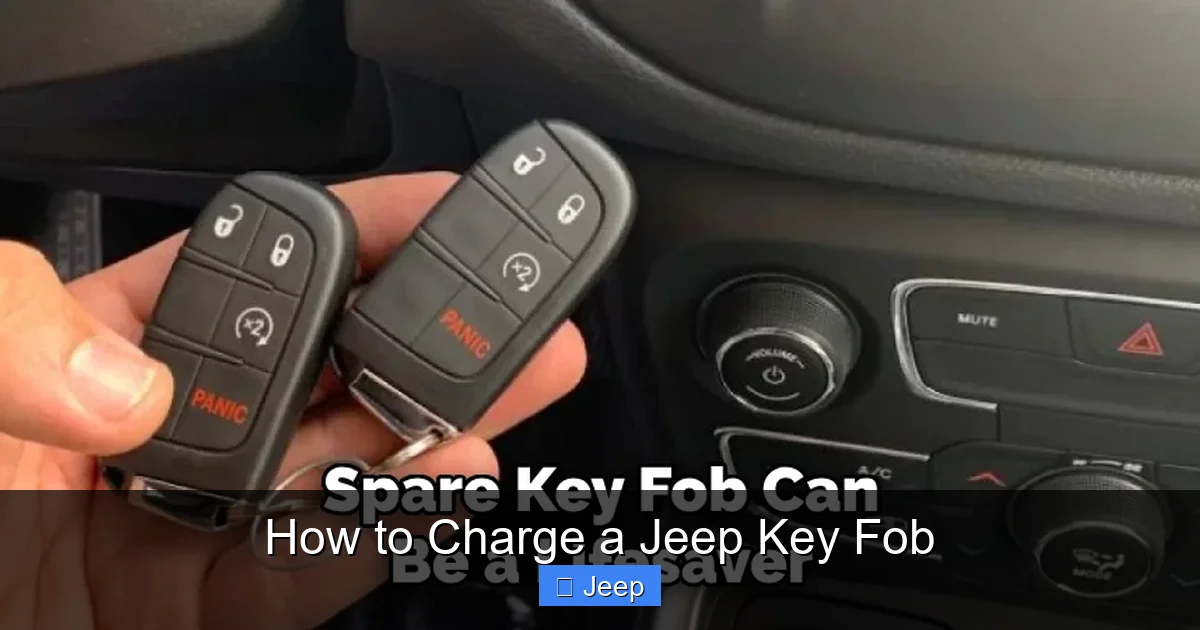
Visual guide about How to Charge a Jeep Key Fob
Image source: jeepfixes.com
What You’ll Need
The beauty of charging a Jeep key fob is that you likely already have everything you need. You require:
- Your Jeep key fob (with the USB port).
- A USB charging cable. This will be a USB-A to micro-USB or USB-A to USB-C cable, depending on your Jeep’s model year. Check the port shape. Many newer Jeeps use USB-C. The cable that came with your fob is ideal, but any good-quality data/charge cable will work.
- A power source. This can be:
- A USB port in your Jeep (the one in the center console is best, as it’s powered even when the vehicle is off).
- A standard USB wall charger (like a phone charger).
- A computer’s USB port.
Avoid: Using high-speed “quick charge” or “power delivery” wall adapters (like those for laptops) that output 9V, 12V, or 20V. Your key fob’s charging circuit is designed for a standard 5V input. Using a higher voltage charger can damage the battery or circuitry. Stick to basic 5V/1A or 5V/2.1A adapters.
The Charging Process
Follow these simple steps for a safe and complete charge:
- Locate the USB Charging Port: Turn your key fob over. Find the small plastic cover on the back. It’s usually a thin, rectangular piece. Use your fingernail or a small, flat plastic tool (like a guitar pick) to gently pry this cover open. It should snap off. Do not use metal tools that could scratch the fob.
- Connect the Cable: Plug the correct end of your USB cable (micro-USB or USB-C) into the exposed port on the key fob. It will only fit one way, so don’t force it.
- Plug into a Power Source: Connect the USB-A end of the cable to your chosen power source—a Jeep USB port or a wall charger plugged into an outlet.
- Check for an Indicator Light: Many Jeep key fobs have a small LED light near the USB port. When connected to power, this light should illuminate, often in red or amber, to indicate charging is in progress. It may turn green or go out when fully charged. If your fob has no light, don’t panic; it may still be charging.
- Let it Charge: Allow the key fob to charge for at least 3-4 hours for a deeply depleted battery. A full charge from zero typically takes this long on a standard 5V port. You can leave it connected overnight without issue; the fob’s internal circuit will stop charging once the battery is full.
- Disconnect and Test: After charging, unplug the cable from the fob and the power source. Snap the port cover back on securely. Test all functions—lock, unlock, trunk release, and panic button—from a normal distance. Start your Jeep to ensure it’s recognized.
Charging in a Pinch: Emergency Options
If you’re away from home and your key fob dies, you have options. You can use a friend’s phone charger and cable, or a public USB port (like in an airport or coffee shop). Some power banks also work, but ensure they have a standard 5V output setting. Remember, the goal is to get enough charge to make the fob functional again, not necessarily a full 100%. Even 15-20 minutes of charging might provide enough power for a few button presses or to start the car if it’s already in proximity.
If you have a Jeep with a traditional key slot (a rare feature on some older models), a completely dead fob might still work if you insert it into the slot, as the physical insertion can sometimes provide a minimal connection. However, this is not a standard feature on most push-button start Jeeps. In a true emergency where the fob is dead and you have no charge, you may need to use the hidden mechanical key inside your fob (if equipped) to unlock the door, and then use the “key fob backup” procedure (usually placing the dead fob against the start button) to start the engine. Consult your owner’s manual for your specific model’s backup starting procedure.
Troubleshooting: Why Your Jeep Key Fob Won’t Charge
You followed all the steps, but your key fob still won’t hold a charge or function after plugging it in. Don’t panic. There are a few common culprits and solutions.
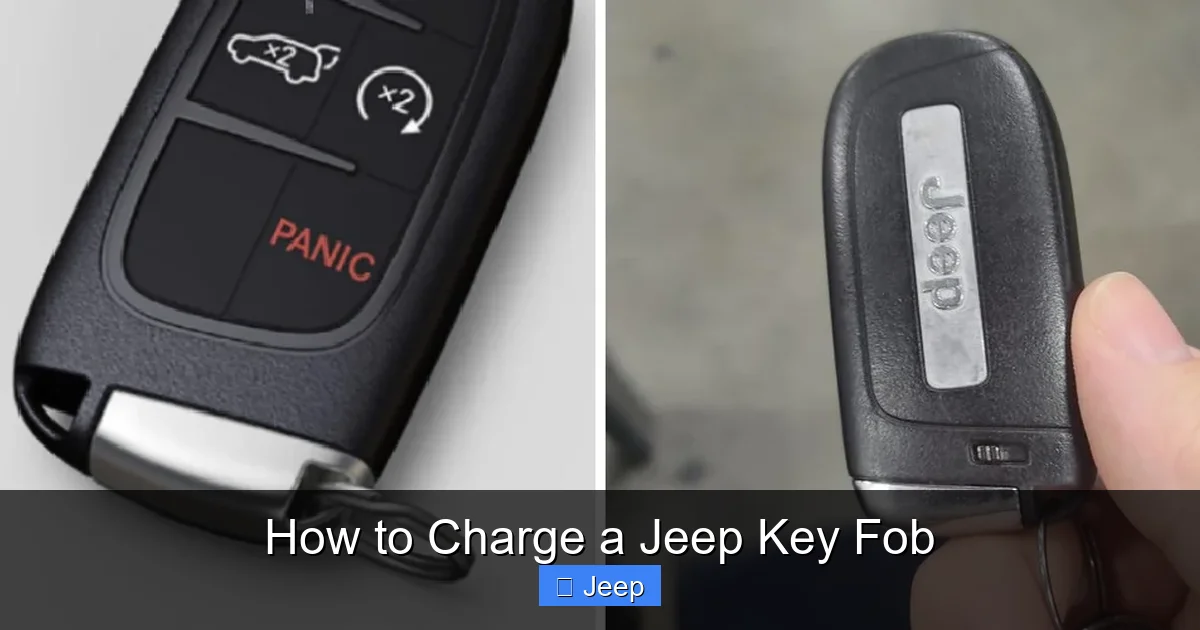
Visual guide about How to Charge a Jeep Key Fob
Image source: jeepfixes.com
Issue: No Light Illuminates When Plugged In
Possible Causes & Fixes: First, rule out the simple stuff. Is the USB cable good? Try a different cable you know works for charging a phone. Is the power source active? Test the USB port or wall outlet with your phone. If the port is in your Jeep, ensure the vehicle’s battery isn’t completely dead, as some USB ports only work when the ignition is on or in accessory mode. If the fob’s port is dirty or clogged with lint, gently clean it with compressed air or a soft brush. If none of this works, the fob’s internal charging port or circuitry may be damaged. This often happens from rough handling or liquid exposure. At this point, the fob likely needs professional repair or replacement.
Issue: Charges but Dies Very Quickly
Possible Causes & Fixes: This usually means the internal lithium-ion battery has reached the end of its lifespan. These batteries degrade over time, especially if consistently drained to zero or exposed to extreme heat/cold. A battery that can’t hold a charge beyond a few hours or minutes is failing. Unfortunately, the battery is not user-replaceable in most Jeep rechargeable fobs. It requires disassembly and soldering skills. Your best course is to contact a Jeep dealer, a locksmith, or an automotive electronics specialist. They can replace the internal battery for a fee, which is often cheaper than buying a new fob. If your fob is very old (5+ years), replacement is the most practical option. You can learn about the general cost of replacement in our article on how much a new key fob costs.
Issue: Intermittent Charging or Connection
Possible Causes & Fixes: The problem could be a loose USB port on the fob itself. The tiny port can become worn or the solder joints can crack. Gently wiggle the cable while it’s plugged in; if the light flickers on and off, the connection is faulty. The port may need to be re-soldered. Alternatively, the cable’s connector could be worn out. Again, try a different cable. If the problem persists, the fob needs professional attention.
When to Reprogram After a Battery Issue
Normally, disconnecting and reconnecting a rechargeable battery does not require reprogramming. The fob’s memory is non-volatile. However, if you had to completely replace the key fob’s internal battery or if you are using a new, unused replacement fob, it will need to be programmed to your Jeep’s security system. This is a security feature. If your fob was working, you charged it, and it’s still not being detected, the battery issue was likely just a symptom of a deeper electronic failure. A new fob will always need programming. Our step-by-step guide on reprogramming a Jeep key fob details the process, which often requires a dealer scan tool or a professional locksmith with the proper software.
Pro Tips for Long-Term Key Fob Care and Maintenance
Preventative care is the best way to avoid key fob drama. A little attention goes a long way in ensuring your fob lasts for years and is always ready when you need it.
Smart Storage Habits
Where you keep your key fob matters. Never leave it in direct sunlight on the dashboard or in a hot car. Extreme heat is the number one killer of lithium-ion batteries, causing them to swell and degrade rapidly. Similarly, prolonged exposure to freezing temperatures can reduce capacity. Store it in a pocket, purse, or shaded cup holder. Also, keep it away from strong magnetic fields and other electronic devices. While the risk is low, storing it directly against a phone or tablet for extended periods isn’t ideal. A simple cloth pouch or the dedicated slot in your center console is perfect.
Conserve Charge with Simple Habits
The key fob’s radio transmitter uses power every time you press a button. Avoid the habit of pressing the lock button multiple times out of habit or to “check” if it’s working. One firm press is sufficient. Also, be mindful of the remote start function if your Jeep has it; using it frequently will drain the fob’s battery faster than just lock/unlock functions. If you know you won’t be driving for a week or more (like before a long vacation), consider removing the fob’s battery if it’s the replaceable type, or giving it a full charge if it’s rechargeable before storing it.
Regular Inspection and Cleaning
Every few months, give your key fob a quick once-over. Check the physical condition. Are there any cracks in the casing? Is the USB port cover (if applicable) intact and sealing properly? Dust and debris can work their way into the button mechanisms and the charging port. Use a soft, dry toothbrush to gently clean around the buttons and the charging port area. For the exterior, a slightly damp cloth is fine. Never use harsh chemicals or submerge it in water, even if it’s labeled “water-resistant” (most are not).
Have a Spare and Keep It Programmed
This is the ultimate insurance policy. Most Jeep owners can purchase a second key fob from the dealer or a reputable locksmith. Have it programmed to your vehicle and store it in a safe place at home. If your primary fob dies completely, you have a ready-to-go backup. You can then take your time to charge or repair the primary one. Programming a spare is much easier than trying to get a new fob made in an emergency. For more on this process, read our article on how to get a new key fob for your car.
Conclusion: Keeping Your Jeep Connected
Your Jeep key fob is a small but critical component of your driving experience. Understanding its power source—whether it’s a rechargeable lithium-ion pack with a USB port or a replaceable CR2032 coin cell—is the foundational knowledge that empowers you to solve any “dead fob” problem quickly. For rechargeable models, the process is wonderfully simple: locate the port, connect a standard USB cable, and let it charge for a few hours. The red key light on your dash is your early warning system, giving you time to act before a complete failure leaves you stranded.
Remember to practice good habits: store the fob away from extreme heat, avoid unnecessary button presses, and keep a spare programmed and ready. If charging doesn’t revive your fob, the internal battery may be at the end of its life, requiring professional replacement. By following the clear steps and maintenance tips outlined in this guide, you can ensure your key fob remains a reliable partner for all your journeys, from daily commutes to off-road adventures. A charged fob means a ready Jeep, and that means more time on the road and less time worrying about being locked out.
Frequently Asked Questions
How often should I charge my Jeep key fob?
You shouldn’t need to charge it on a regular schedule. Instead, charge it only when you notice symptoms of a low battery, like reduced remote range or the red key warning light on your dashboard. With normal use, a full charge should last several months.
Can I use any USB cable to charge my Jeep key fob?
You must use a cable with the correct connector (micro-USB or USB-C) for your fob’s port. The cable itself should be a standard data/charge cable. Avoid using damaged cables or high-voltage “fast chargers” meant for laptops, as they can damage the fob’s circuitry.
What does it mean if my key fob won’t hold a charge after I plug it in?
This usually indicates the internal lithium-ion battery has degraded and can no longer store energy. These batteries have a limited lifespan of about 2-3 years. The fob will likely need a professional battery replacement or a full fob replacement.
Is it bad to leave my Jeep key fob charging overnight?
No, it is perfectly safe. The fob has an internal charging circuit that automatically stops charging once the battery is full. Leaving it plugged in overnight will not overcharge or damage the battery.
Can a completely dead Jeep key fob still start the car?
Yes, most Jeep models with push-button start have a backup procedure. You typically place the dead fob directly against the start button (on the steering column or dashboard) and press the button. The vehicle’s antenna can often read the fob’s signal at very close range even with a weak battery. Check your owner’s manual for the exact procedure for your model.
My key fob got wet. Can I still charge it?
If the fob was submerged, do not attempt to charge it. Water can cause short circuits. Dry the fob thoroughly with silica gel packets or in a low-heat, dry environment for 48 hours. If it was only slightly damp and now works, you can charge it. If it’s malfunctioning after getting wet, it likely needs professional repair or replacement.
