
Can I Refinance My Tesla Loan?

Yes, you can refinance your Tesla loan, but it comes with specific challenges due to Tesla’s direct lending model and vehicle depreciation. Refinancing can lower your monthly payment or total interest, but you’ll need good credit and equity in your vehicle. It’s crucial to compare offers from credit unions and banks, as Tesla Finance rarely offers refinance options directly. Always run the numbers to ensure the savings outweigh any fees.
Key Takeaways
- Refinancing is possible but not through Tesla Finance: Tesla does not refinance its own loans; you must seek a new loan from an external lender like a credit union or bank.
- Equity is the biggest hurdle: Due to rapid depreciation, many Teslas have negative equity (owe more than the car’s value), making approval difficult.
- Strong credit is essential: Lenders will require a good to excellent credit score (typically 700+) to offset the risk of financing a high-value EV.
- Shop around for the best rates: Credit unions often offer the most competitive rates for auto refinancing, especially for members.
- Calculate the true savings: Factor in any application or title fees to ensure the lower interest rate actually puts money back in your pocket over the loan term.
- Consider alternatives first: Making extra payments on your existing loan or requesting a modification from Tesla Finance might be simpler solutions.
- The process mirrors standard auto refinancing: You’ll apply, get approved, and the new lender pays off your Tesla loan, leaving you with a new payment schedule.
📑 Table of Contents
- Can I Refinance My Tesla Loan? The Short Answer
- How Car Loan Refinancing Works: The Basic Blueprint
- The Potential Benefits of Refinancing Your Tesla Loan
- The Unique Challenges of Refinancing a Tesla Loan
- The Step-by-Step Guide: How to Refinance Your Tesla Loan
- Smart Alternatives to Refinancing Your Tesla
- Conclusion: Is Refinancing Your Tesla Loan Right for You?
Can I Refinance My Tesla Loan? The Short Answer
You bought your Tesla, and you love it. The instant torque, the tech-filled cabin, the fact you’re driving the future. But then you look at that monthly payment. Maybe your financial situation changed. Maybe interest rates dropped. Maybe you’re just wondering if there’s a way to free up some cash each month. The question pops into your head: Can I refinance my Tesla loan?
The direct answer is yes, you can refinance a Tesla loan, but with some very important caveats that are unique to Tesla’s financing structure. Unlike many traditional automakers, Tesla sells cars directly to consumers and primarily handles its own financing through Tesla Finance. This streamlined approach is great for buying, but it means Tesla Finance itself does not offer refinancing options for its existing loans. To refinance, you must go through a third-party lender—a credit union, a bank, or an online lending platform.
This guide will walk you through everything you need to know. We’ll break down how the process works, the specific benefits and challenges of refinancing a Tesla, a step-by-step plan, and smart alternatives. By the end, you’ll know exactly if refinancing your Tesla is a smart financial move for you and how to do it if it is.
How Car Loan Refinancing Works: The Basic Blueprint
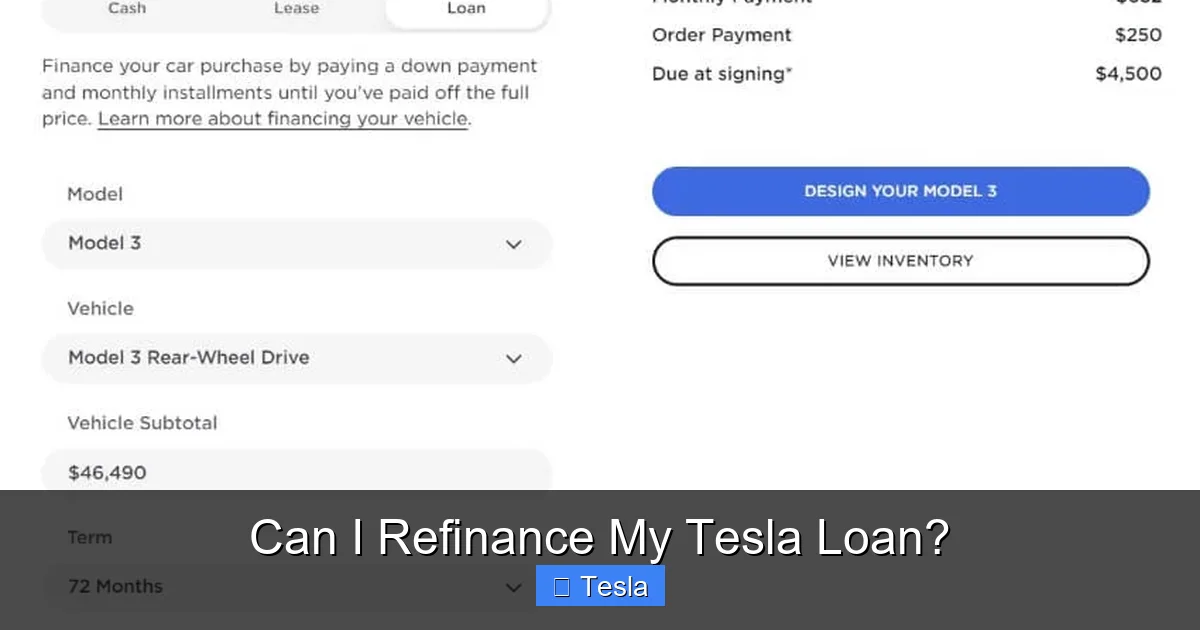
Before we dive into Tesla specifics, let’s refresh the core concept of refinancing any auto loan. Refinancing means you take out a brand new loan to pay off your existing auto loan. The new loan has its own terms: a new interest rate, a new monthly payment, and a new payoff date.
Visual guide about Can I Refinance My Tesla Loan?
Image source: images.theimpactinvestor.com
Comparing the Old Loan vs. The New Loan
Think of it like this: your original Tesla loan is a contract you signed with Tesla Finance. Refinancing means you’re breaking that contract (with their approval, of course) and replacing it with a new contract from a different lender. The goal is almost always to get better terms. You might refinance to:
- Lower your monthly payment: This is achieved by extending the loan term (e.g., going from a 48-month to a 72-month loan) or by securing a lower interest rate.
- Save money on total interest: If you can qualify for a significantly lower interest rate and keep a similar term, you’ll pay less interest over the life of the loan.
- Change your cosigner: Perhaps you initially needed a cosigner and now your credit is strong enough to remove them.
- Switch lenders: You might want to leave Tesla Finance for a lender with better customer service or online tools.
The new lender will pay off your Tesla Finance loan directly. You never see that money; it’s a transaction between the two financial institutions. Once that payoff is complete, you begin making payments to your new lender according to the new agreement.
The Potential Benefits of Refinancing Your Tesla Loan
So, why go through the hassle? For Tesla owners, the potential rewards can be substantial, but they depend heavily on your original loan terms and current market conditions.

Visual guide about Can I Refinance My Tesla Loan?
Image source: images.ctfassets.net
1. Achieving a Lower Monthly Payment
This is the most common reason. Tesla vehicles are premium products, and their monthly payments can be high. If you’re feeling the pinch, refinancing to a longer term can provide immediate payment relief. For example, if you have 36 months left on a $550 monthly payment, refinancing to a 60-month term at a similar rate could drop that payment to around $330. This extra cash flow can be a game-changer for your monthly budget.
2. Saving Thousands in Interest
If you financed your Tesla when interest rates were higher (or your credit wasn’t as strong), refinancing to a lower rate can save you a significant amount of money. Let’s use a practical example. Suppose you bought a Model 3 for $45,000 with a 5-year loan at 6.5% interest. Halfway through, you still owe $20,000. If you can refinance that $20,000 for a new 3-year term at 4.5%, you’ll save over $600 in interest. That’s real money back in your pocket.
3. Removing a Cosigner
Many first-time EV buyers or those with shorter credit histories needed a cosigner to secure their Tesla loan. If your credit has improved substantially since then, refinancing allows you to take full ownership of the loan, removing the cosigner’s financial obligation and strengthening your own credit history with on-time payments.
Pro Tip: Before you start, check your credit score for free online. Knowing your score gives you a realistic idea of the rates you might qualify for. For a deeper dive into managing your auto loan payments, our article on can you pay more on your car loan explains how extra payments can also reduce interest costs.
The Unique Challenges of Refinancing a Tesla Loan
Refinancing any car loan has hurdles. Refinancing a Tesla loan has some extra-special ones, primarily stemming from the vehicle’s value and Tesla’s financing model.
Visual guide about Can I Refinance My Tesla Loan?
Image source: images.squarespace-cdn.com
Challenge #1: The Equity Gap (Negative Equity)
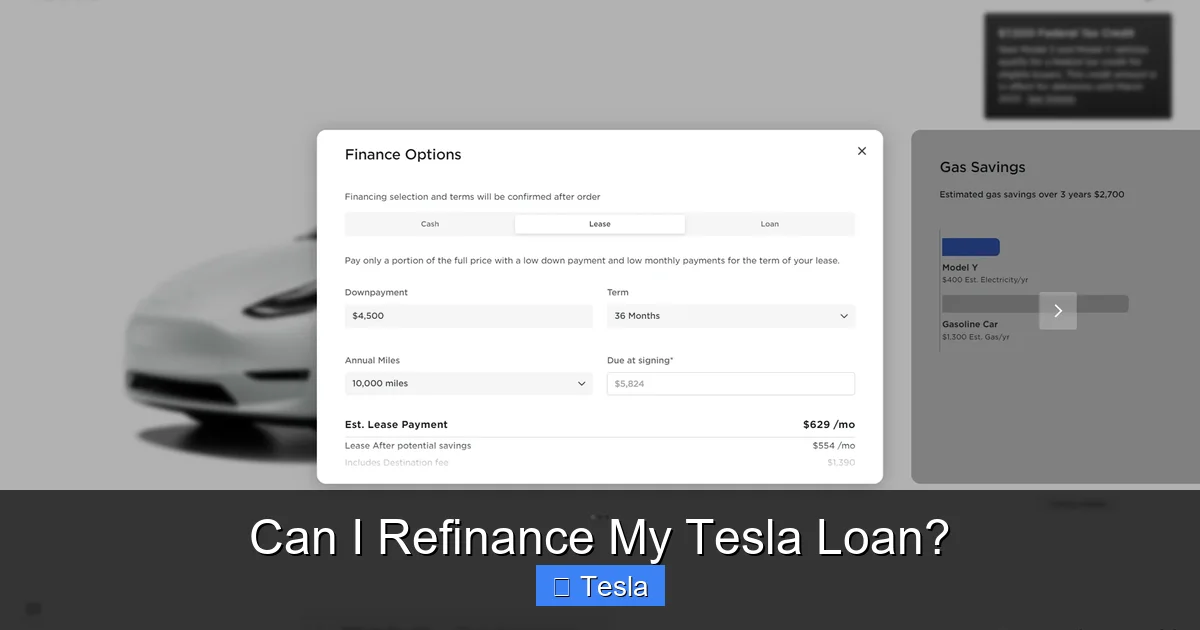
This is the single biggest obstacle. New cars depreciate the moment they’re driven off the lot. Electric vehicles, especially from a fast-evolving brand like Tesla, can depreciate even faster due to rapid technological advancements and frequent model updates. It’s very common for owners to be “upside-down” or have “negative equity” on their Tesla loan in the first few years—meaning they owe more than the car is currently worth on the private market.
Lenders are wary of negative equity. If you default, they repossess the car and sell it to recoup their loss. If the car’s value is less than the loan balance, they lose money. Therefore, most lenders will not refinance a loan if the car’s value is less than the loan amount. They typically want to see at least 5-10% positive equity.
Challenge #2: Tesla Finance’s Direct Lending Model
As mentioned, Tesla Finance doesn’t refinance. This isn’t a problem in itself, but it means you have to do more legwork. You can’t just call up Tesla and ask for a better rate. You must source your own new lender, submit a full application, and manage the payoff process yourself. Some borrowers prefer the one-stop-shop convenience of traditional dealership financing, which can include refinance options through the captive lender (like Toyota Financial or GM Financial). Tesla doesn’t play that game.
Challenge #3: High Vehicle Value & Specialized Lenders
A well-equipped Tesla Model S or X can easily cost $80,000-$100,000+. Not all lenders are comfortable financing such high loan amounts, especially on a used EV. You may need to seek out lenders that specialize in larger loan amounts or have specific programs for electric vehicles. Your local community bank might have a lending cap that’s too low. Credit unions, however, are often excellent sources for larger auto loans and are generally more flexible with EV financing.
Challenge #4: Potential for Higher Insurance
This isn’t a direct refinancing hurdle, but a crucial consideration. Some newer lenders, especially those specializing in EVs, may require you to carry higher levels of insurance coverage (like higher liability limits or gap insurance) as a condition of the loan. Be sure to factor any potential insurance premium increase into your “savings” calculation.
The Step-by-Step Guide: How to Refinance Your Tesla Loan
If you’ve assessed your equity, checked your credit, and believe you have a shot, here is your actionable roadmap.
Step 1: Gather Your Information & Check Your Credit
Before you talk to any lender, get your ducks in a row. You’ll need:
- Your current Tesla loan account number and payoff amount (request this from Tesla Finance; it’s typically valid for 10-30 days).
- The vehicle’s VIN (Vehicle Identification Number), found on your registration or the driver’s side door jamb.
- The current mileage on the odometer.
- Your driver’s license and proof of income (pay stubs, tax returns).
- A current, accurate estimate of your Tesla’s market value. Use sites like Kelley Blue Book (KBB), Edmunds, or check recent sold listings on Tesla’s own used inventory site or Facebook Marketplace for a realistic private-party value.
Simultaneously, pull your free credit reports from AnnualCreditReport.com. Dispute any errors immediately. A clean report is key to getting the best rate.
Step 2: Shop Around & Get Pre-Approved
Don’t just apply with one lender. Apply for pre-approval with 2-3 lenders within a short time window (14-45 days). Multiple “hard inquiries” for the same type of loan in this period typically only count as one inquiry for your credit score. Start with your local credit union—they are often the most competitive. Then check a few online lenders that specialize in auto refinancing (like LightStream, AutoPay, etc.). Compare the Annual Percentage Rate (APR), the total loan cost, and the monthly payment. For more on the timing of refinancing, you might read our piece on when you can refinance a car loan, which covers waiting periods and other timing considerations.
Step 3: Apply & Provide Documentation
Once you choose a lender, submit a full application. You’ll upload or email the documents from Step 1. The lender will verify your income, pull your credit, and appraise the vehicle (often using the VIN and mileage you provided).
Step 4: Review & Accept the New Loan Terms
If approved, you’ll receive a loan agreement. Read it meticulously. Confirm the interest rate, loan amount (which should match your current payoff amount plus/minus any fees), monthly payment, loan term, and any fees (origination, documentation). Ensure there is no prepayment penalty.
Step 5: The Payoff & Transition
This is the critical handoff. The new lender will typically send the payoff check directly to Tesla Finance. Do not send it yourself. Once Tesla Finance receives the full payoff amount, they will:
- Close your loan account.
- Release the lien on your car title.
- Mail the title (or an electronic lien release) to your new lender, or to you if instructed.
This process can take 2-4 weeks. Continue making your payments to Tesla Finance until you receive confirmation that the loan is paid in full. Your new lender will contact you with your first payment due date and instructions.
Smart Alternatives to Refinancing Your Tesla
Refinancing isn’t your only option to improve your Tesla loan situation. Consider these paths first, as they can be simpler and faster.
Alternative 1: Make Extra Principal Payments
The most powerful tool you have is paying extra toward your loan’s principal. Even a small, regular extra payment can dramatically shorten your loan term and reduce total interest. You can usually make extra payments anytime through your Tesla Finance online account. There is no prepayment penalty. This is a fantastic strategy if your goal is to save money and build equity faster, rather than just lowering the monthly payment. Our guide on paying more on your car loan details the best strategies for doing this effectively.
Alternative 2: Request a Loan Modification from Tesla Finance
While Tesla Finance doesn’t refinance, in cases of genuine financial hardship, they may offer a loan modification. This could involve temporarily reducing your interest rate or extending your term directly with them. This is not a guaranteed option and requires you to contact their customer service and explain your situation with documentation. It’s a long shot, but a possible one if you’re struggling to make payments.
Alternative 3: Sell or Trade-In Your Tesla
If your equity situation is poor and refinancing is impossible, sometimes the best move is to sell the car. If you can sell your Tesla for more than you owe, you pocket the difference. You can then use that cash as a large down payment on a less expensive vehicle or even a used Tesla with a more manageable loan. Be aware that selling a car with a loan involves the lienholder in the transaction. For detailed steps on this process, especially if there’s a title loan involved, our article on selling a car with a title loan explains the general mechanics, which are similar for any outstanding loan.
Conclusion: Is Refinancing Your Tesla Loan Right for You?
Refinancing your Tesla loan is a viable financial strategy, but it’s not a one-size-fits-all solution. The path is clear: you must go through an external lender, have good credit, and—most critically—have positive equity in your vehicle. For many Tesla owners in the first few years of ownership, that equity requirement is the showstopper due to rapid depreciation.
Before you dive into applications, do your homework. Check your car’s current value against your loan payoff. Check your credit score. Run the numbers with a refinance calculator. Compare the total cost of your existing loan to the total cost of a potential new loan, including all fees. If the math shows clear, substantial savings and you meet the equity and credit criteria, then moving forward with a credit union or bank is a smart move.
If you find you’re upside-down or your credit isn’t where it needs to be, don’t despair. Focus on making extra principal payments to build equity and improve your credit profile. In 12-18 months, you may be in a much stronger position to refinance successfully. Your Tesla is a fantastic asset, and managing its loan wisely is just part of the ownership experience. Make the decision with your eyes open, and you’ll keep that electric smile on your face for years to come.
Frequently Asked Questions
Does Tesla Finance offer refinancing for its own loans?
No, Tesla Finance does not provide refinancing options for existing Tesla loans. To refinance, you must obtain a new loan from an external lender such as a credit union, bank, or online lending platform.
How long do I have to wait before I can refinance my Tesla?
Technically, you can refinance as soon as your original loan is established and you have a payment history, but most lenders prefer to see at least 6-12 months of on-time payments. More importantly, you need sufficient equity in the vehicle, which often takes longer to build due to Tesla’s depreciation curve.
Will refinancing my Tesla loan hurt my credit score?
Applying for a refinance involves a hard credit inquiry, which can lower your score by a few points temporarily. However, if approved, your new loan may lower your monthly payment, making it easier to pay on time and ultimately improving your credit over the long term. The impact is usually minor and short-lived.
Are there fees to refinance a Tesla loan?
Yes, potential fees include an application or origination fee from the new lender (often 1-2% of the loan amount) and state-specific title and registration fees to transfer the lien. Always calculate these costs against your interest savings to ensure the refinance is worthwhile.
Can I refinance a Tesla loan if I have negative equity?
It is extremely difficult. Most lenders require the vehicle’s value to be higher than the loan balance (positive equity). With negative equity, you would need to pay the difference in cash at closing to qualify, which defeats the purpose of refinancing for most people.
What documents do I need to refinance my Tesla?
You’ll need your current Tesla loan payoff quote, the vehicle’s VIN and mileage, your driver’s license, proof of income (pay stubs, W-2s), and proof of insurance. The new lender will also pull your credit report.
