
Why Is My Jeep Wrangler Overheating?

Your Jeep Wrangler overheating is a serious issue that can cause catastrophic engine damage. Common causes include coolant leaks, a faulty thermostat, a broken water pump, a clogged radiator, or a failed cooling fan. Off-roading puts extra strain on the system. Immediate action is critical—pull over safely, shut off the engine, and never open a hot radiator cap. Regular maintenance is your best defense against this costly problem.
So, you’re out enjoying your Jeep Wrangler—maybe on a scenic highway drive or tackling a rocky trail—and you notice the temperature gauge creeping up. Your heart sinks. That little red zone is the last thing you want to see. An overheating Jeep Wrangler isn’t just an inconvenience; it’s a ticking time bomb for your engine. The iconic, rugged Wrangler is a marvel of engineering, but its cooling system faces unique challenges, especially if you take it off the pavement. Let’s dive deep into why this happens, what you can do about it right now, and how to prevent it from happening again. We’ll break it down simply, so you can understand your rig better and avoid a very expensive tow bill.
Key Takeaways
- Pull Over Immediately: If the temperature gauge enters the red zone, find a safe spot, turn off the engine, and let it cool completely. Driving an overheating Wrangler can warp the cylinder head or blow the head gasket.
- Coolant is King: Low coolant from leaks (hoses, water pump, radiator) is the #1 cause. Regularly check levels when the engine is cold and look for puddles of green, orange, or pink fluid.
- The Thermostat is a Common Culprit: This small valve controls coolant flow. If it sticks closed, coolant can’t circulate to the radiator, causing rapid overheating, often with no visible leaks.
- Off-Roading is a Major Stress Test: Low-speed, high-RPM crawling in heat or steep climbs reduces airflow through the radiator, making cooling systems work much harder.
- Listen and Look: Warning signs include a sweet smell (coolant), steam from the hood, a ticking noise (hot metal), or an erratic temperature gauge. Don’t ignore them.
- Prevention is Cheaper Than Repair: Stick to a strict cooling system service schedule: coolant flushes, hose replacements, and radiator cap checks every 30,000-50,000 miles.
- Fixing It Yourself Has Limits: While you can top off coolant or replace a hose, diagnosing a head gasket or internal leak requires a professional. Know when to call a mechanic.
📑 Table of Contents
- Understanding Your Jeep Wrangler’s Cooling System
- The Top 6 Reasons Your Jeep Wrangler Is Overheating
- Off-Roading and Overheating: A Dangerous Combination
- What to Do When Your Jeep Wrangler Overheats (Immediate Action Plan)
- Preventing Overheating: Your Maintenance Checklist
- Conclusion: Stay Cool, Stay Adventurous
Understanding Your Jeep Wrangler’s Cooling System
Before we diagnose the problem, you need to know the key players. Think of your cooling system as a highly coordinated team moving hot coolant from your engine to the radiator to be cooled, then back again. It’s a closed-loop system designed to maintain a perfect operating temperature, usually around 195-220°F.
The Core Components
- The Radiator: This is the main heat exchanger. Hot coolant flows through its thin tubes, and air flowing over the fins carries the heat away. A clogged or damaged radiator is a primary failure point.
- The Water Pump: This is the heart of the system, usually belt-driven. It circulates coolant throughout the engine and radiator. If it fails, circulation stops instantly.
- The Thermostat: This is the brain. It sits between the engine and radiator. When the engine is cold, it stays closed to let the engine warm up quickly. Once at temperature, it opens to allow hot coolant into the radiator. A stuck-closed thermostat is a classic, fast-acting killer.
- The Cooling Fan: Mounted behind the radiator, this fan (or fans) pulls air through the radiator when you’re not moving fast enough for natural airflow. Modern Wranglers use electric fans controlled by the computer. A failed fan motor or clutch can cause overheating at idle or low speeds.
- The Coolant (Antifreeze): This isn’t just water. It’s a specially formulated mixture of ethylene glycol and water with corrosion inhibitors and lubricants. It raises the boiling point and lowers the freezing point. The wrong mix or old, depleted coolant loses its effectiveness.
- Hoses, Belts, and the Cap: The rubber hoses carry the fluid. The serpentine belt often drives the water pump. The radiator cap is a pressure valve that raises the system’s boiling point. Any of these failing can cause a leak or loss of pressure.
In your Wrangler, these components are packed into a tight engine bay. The TJ, JK, and JL generations have different layouts, but the core principles are identical. Off-road packages like the Rubicon often have additional cooling demands.
The Top 6 Reasons Your Jeep Wrangler Is Overheating
Now for the detective work. When that temperature soars, one of these six issues is almost always the culprit. We’ll list them from most to least common.
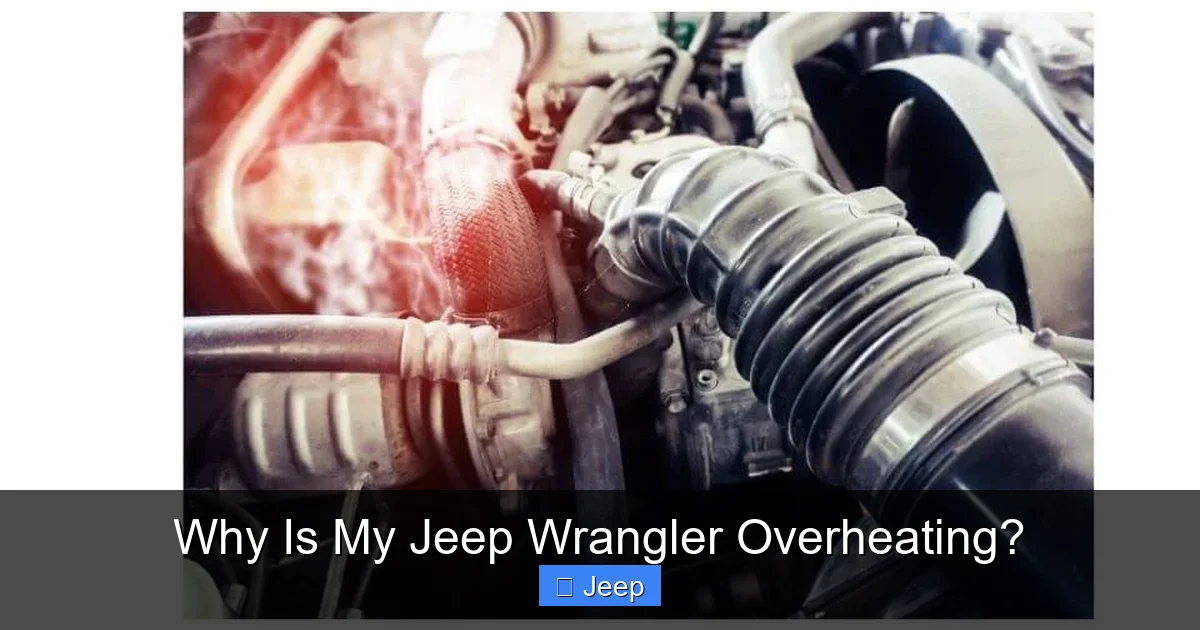
Visual guide about Why Is My Jeep Wrangler Overheating?
Image source: jeepmodified.com
1. Low Coolant Level (From Leaks)
This is the most frequent cause, and it’s often obvious. Coolant doesn’t just disappear; it leaks. Check for puddles under your parked Wrangler. Common leak points:
- Hoses: The upper and lower radiator hoses, heater core hoses, and bypass hoses. They crack, rot, or degrade at the clamps over time, especially with age and heat cycles.
- Water Pump: The pump’s internal seal or its gasket can fail, leaking from a small weep hole or the mounting surface. A failing pump often makes a grinding or whining noise.
- Radiator: Core damage from debris, corrosion, or a bent fin can cause leaks. The plastic end tanks are notorious for cracking with age and thermal stress.
- Heater Core: This is inside the dashboard. A leak here often manifests as sweet-smelling steam inside the cabin or a foggy windshield.
What to do: With the engine cold, open the coolant reservoir (the white plastic overflow tank). The level should be between the MIN and MAX lines. If it’s low, top it off with the correct 50/50 mix of coolant and distilled water for your Wrangler’s model year. Then, find and fix the leak. A simple hose replacement is cheap; ignoring it leads to a tow.
2. Thermostat Failure (Stuck Closed)
If your Wrangler overheats very quickly, especially in stop-and-go traffic, but you don’t see any external leaks, the thermostat is the prime suspect. When it jams shut, hot coolant can’t reach the radiator. The engine will scorch hot, but the radiator hoses will feel cool or only warm to the touch (the upper hose gets hot only after the thermostat opens).
What to do: Thermostat replacement is a moderate DIY job for those with basic tools. It’s located in the thermostat housing, usually where the upper radiator hose connects to the engine. Always replace the gasket and use a new thermostat with the correct temperature rating (usually 195°F for most Wranglers). For a deeper dive into how thermostats fail in various vehicles, you can read more about why cars overheat in general, as the principles are universal.
3. Water Pump Failure
The water pump is a bearing and seal system. When the bearing wears out, the pump becomes loose on its shaft, causing wobble and eventual failure. The seal leak will cause a slow drip. Symptoms include a grinding noise from the engine bay (often louder when the AC is on), coolant leaks at the pump mounting, and of course, overheating as circulation stops.
What to do: Replace the water pump. On many Wrangler engines (like the 3.6L Pentastar V6), this is a significant job involving the timing cover and often the timing chain. It’s best left to a professional unless you’re an experienced wrench-turner. Don’t just replace the pump; inspect all related belts and tensioners.
4. Radiator Problems: Clogged, Damaged, or Blocked
Your Wrangler’s radiator is exposed to the elements. Bugs, mud, sand, and road debris can pack the fins, blocking airflow. Internal corrosion and sediment buildup can clog the tiny tubes over years of neglected coolant flushes. A partially blocked radiator can’t shed heat effectively.
What to do: Carefully clean the exterior fins with a garden hose (low pressure) from the back side to push debris out. For internal clogs, a coolant flush is necessary. If the radiator is damaged or corroded, replacement is the only fix. When replacing, consider an upgraded aluminum radiator for better cooling, especially if you’ve added accessories like a winch or larger tires that increase load and heat.
5. Cooling Fan Malfunction
Your Wrangler’s electric cooling fan(s) are crucial for low-speed operation and idling—exactly the conditions you face on the trail or in city traffic. A failed fan motor, a blown fuse, a bad relay, or a faulty coolant temperature sensor can keep the fan from kicking on. You’ll hear a distinct absence of fan noise when the engine gets hot and should be running.
What to do: Listen for the fan. With the engine hot and idling, you should hear a loud roar from the engine bay as the fan engages. If not, check fuses and relays first (your owner’s manual shows locations). A simple swap with a known-good relay can diagnose it. Fan motors and assemblies can be replaced.
6. Blown Head Gasket (The Worst-Case Scenario)
This is the catastrophic failure you want to avoid. Prolonged or severe overheating can warp the aluminum cylinder head and compromise the head gasket. Symptoms include white smoke from the exhaust (steam from burning coolant), milky sludge under the oil cap (coolant in the oil), bubbles in the coolant reservoir, and persistent overheating even after fixing other issues. Compression loss is also common.
What to do: This is a major engine repair. Diagnosis requires a compression test, leak-down test, or chemical block test. If confirmed, the cylinder head must be resurfaced (or replaced if warped) and a new gasket installed. It’s expensive because it’s labor-intensive. This is why immediate action at the first sign of overheating is non-negotiable.
Off-Roading and Overheating: A Dangerous Combination
Here’s the critical truth for all Wrangler owners: your vehicle is most vulnerable to overheating when you’re using it for its intended purpose—off-roading. The very act of crawling over rocks in low range creates a perfect storm of heat factors.
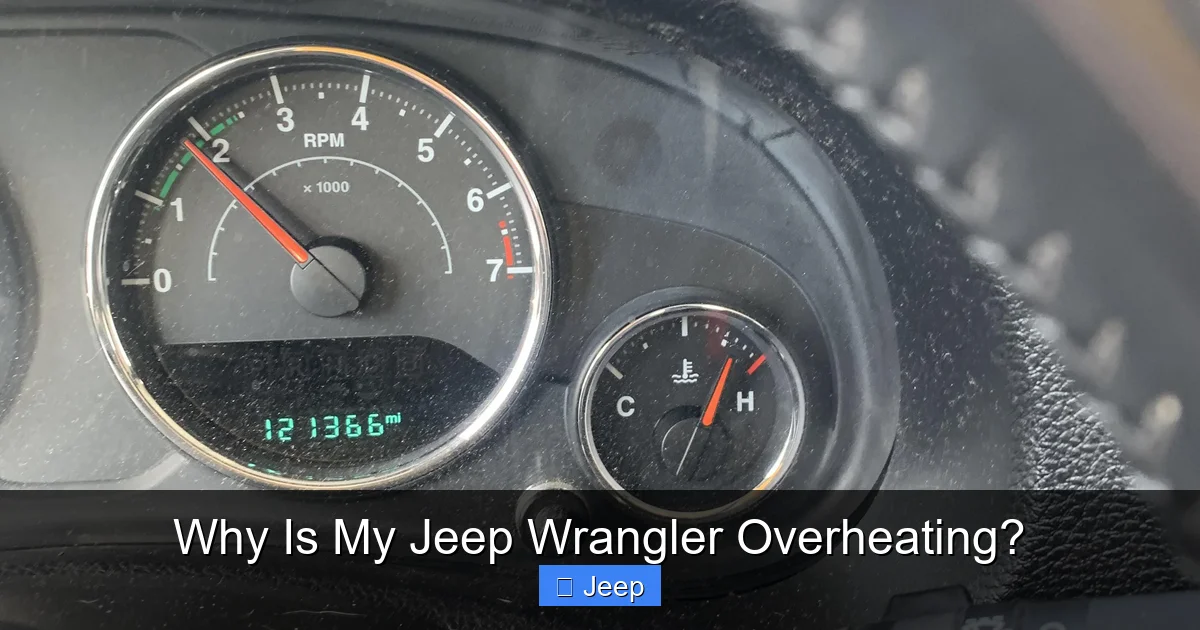
Visual guide about Why Is My Jeep Wrangler Overheating?
Image source: i.redd.it
Why Off-Roading Strains Your Cooling System
- Lack of Airflow: The radiator needs a constant stream of air. When you’re moving at 2 mph in a rock garden, there’s virtually no natural airflow. The cooling fan becomes the sole source of air, and it may not be powerful enough under extreme load.
- High Engine RPM: In low range, your engine might be turning at 3,000-4,000 RPM to maintain slow speed. High RPM generates more heat and makes the water pump spin faster, but it also increases friction and load heat.
- Extreme Ambient Temperatures: Off-road often means desert heat, sun-baked canyons, or stifling summer days. The air itself is hot, so the radiator’s ability to shed heat is reduced.
- Additional Load: Big tires, heavy bumpers, winches, and recovery gear add unsprung and sprung weight. Your engine works harder to move it all, producing more waste heat.
Essential Tips for Off-Road Cooling
- Use Your Heater: This is a pro trick. Your heater core is a small radiator. Turning the heater to max and the fan to max acts as a supplemental cooling system, pulling hot coolant from the engine and blowing it into the cabin. It’s uncomfortable, but it can buy you critical time to get to a shaded spot.
- Take Breaks: Don’t try to conquer that endless hill in one go. Stop, shut off the engine, and let it cool for 10-15 minutes. Pop the hood to help heat dissipate.
- Choose Lines Wisely: Avoid prolonged, steep climbs in direct sun if you can. Take a line with some shade or a breeze if possible.
- Pre-Trip Check: Before any serious off-road adventure, check coolant level, inspect hoses for softness/cracks, and ensure your fan clutch (if equipped) or electric fan is working.
- Consider Upgrades: For hard-core wheeling, a higher-capacity aluminum radiator, an additional electric fan, or a transmission oil cooler can be wise investments. You might also look into a Jeep-specific performance module that can adjust fan curves, though this is a more advanced modification.
What to Do When Your Jeep Wrangler Overheats (Immediate Action Plan)
Seeing that gauge climb induces panic, but you must stay calm. Your immediate actions can mean the difference between a $200 fix and a $5,000 engine rebuild.
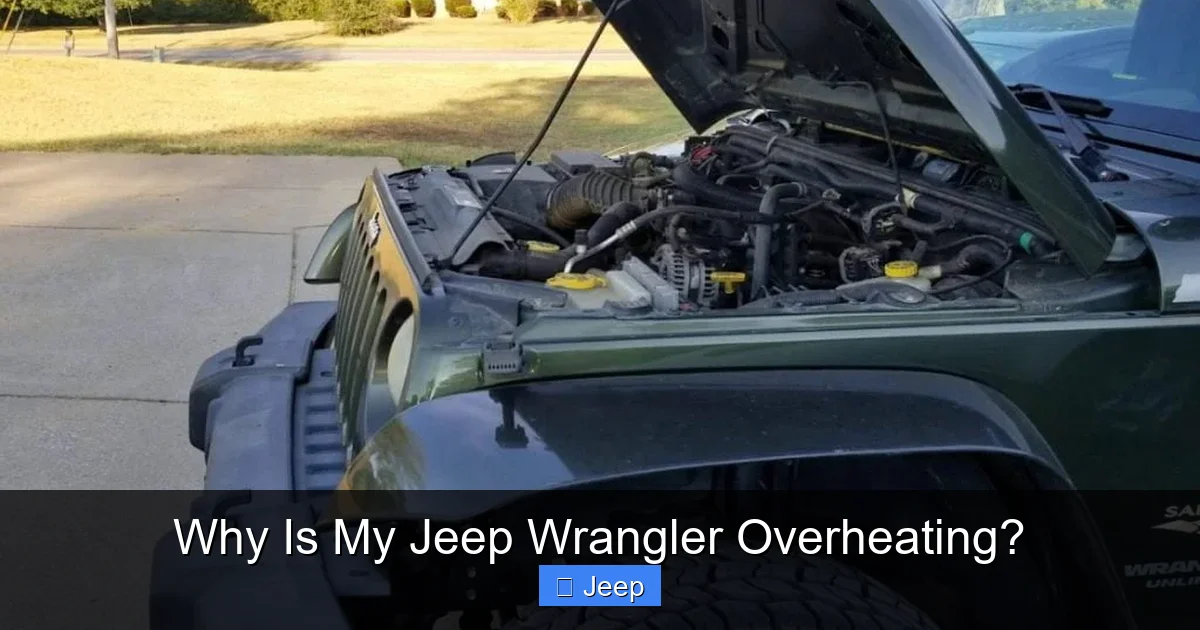
Visual guide about Why Is My Jeep Wrangler Overheating?
Image source: vehiclers.com
Step 1: Safely Pull Over and Shut Down. As soon as you see the temperature warning light or gauge in the red, signal and move to the shoulder or a safe turnout. Turn off the engine immediately. Do not keep running it “to see if it gets better.”
Step 2: Do NOT Open the Radiator Cap. This is the most important rule. The system is under pressure and scalding hot coolant will erupt and cause severe burns. Wait at least 30-45 minutes for the engine to cool completely.
Step 3: Check Coolant Level (When Cold). Once cool, open the coolant reservoir. If it’s low, carefully add a 50/50 mix of coolant and water (or just water in an emergency to get you moving slowly to a safe location). Do not open the radiator cap itself unless you’re willing to risk injury.
Step 4: Look for Obvious Leaks. Inspect the engine bay and ground for puddles. Is the upper radiator hose wet? Is there fluid near the water pump housing? This can give you a clue for the tow truck driver or mechanic.
Step 5: Call for Help. If you had to add a significant amount of coolant to get it to the safe zone, or if the engine was showing signs of severe overheating (steam, ticking), do not restart it. Call a tow truck. It’s not worth the risk. If you were only slightly hot and topped it off, you might attempt a very slow, cautious drive to the nearest repair shop, but keep the heater on max and watch the gauge like a hawk.
Step 6: Get a Professional Diagnosis. Even if you get it to a shop, don’t just say “it’s overheating.” Tell them what you observed: Did it happen suddenly or slowly? Were there any noises? Did the heater work? Did you see leaks? This info speeds up diagnosis.
Preventing Overheating: Your Maintenance Checklist
An ounce of prevention is worth a pound of cure. Here is a simple, actionable maintenance schedule for your Wrangler’s cooling system.
Every Oil Change (Every 5,000-7,500 miles)
- Visually Check Coolant Level: Open the reservoir with a cold engine. Ensure it’s between MIN and MAX. Top off with the correct coolant type (usually OAT coolant for newer Wranglers, check your manual).
- Inspect for Leaks: Look at the ground under the front of the vehicle. Check around the radiator, water pump, and hoses for any wetness or stains.
- Check Hoses: Squeeze the upper and lower radiator hoses. They should be firm, not soft, spongy, or cracked. Feel the heater hoses as well.
Every 30,000 Miles (or Every 2-3 Years)
- Coolant System Flush: This is non-negotiable. Old coolant loses its corrosion inhibitors and anti-freeze properties, becoming acidic and eating away at your system from the inside. A proper flush removes all sediment and replaces it with fresh fluid.
- Radiator Cap Test: Have the cap pressure-tested. A weak cap allows coolant to boil at a lower temperature, causing overheating under load.
- Thermostat Inspection: While not a wear item, it’s cheap insurance to replace the thermostat during a coolant service if you have high mileage.
Every 60,000-90,000 Miles
- Water Pump Replacement: Consider this a proactive replacement if you’re at this mileage and haven’t done it. It fails more often as it ages. On some engines, it’s part of a major timing service.
- Cooling Fan(s) Inspection: Check for physical damage, test operation, and listen for unusual noises. Ensure the fan clutch (if equipped) engages properly.
- Radiator Thorough Cleaning: Carefully straighten any bent fins and clean the exterior thoroughly with a gentle hose spray.
Sticking to this schedule will catch small problems before they strand you. Remember, your Wrangler’s cooling system works hardest when you’re hardest at play. Treat it well, and it’ll keep you cool.
Conclusion: Stay Cool, Stay Adventurous
Your Jeep Wrangler overheating is a warning signal you cannot afford to ignore. It’s the result of a breakdown in the delicate balance of heat and cooling. By understanding the six main causes—from simple coolant leaks to the devastating head gasket failure—and knowing the immediate steps to take, you empower yourself to handle the situation safely and cost-effectively. The unique demands of off-roading make proactive maintenance even more critical. Regular coolant flushes, hose inspections, and fan checks are the small investments that protect your big adventure. Listen to your Jeep. That temperature gauge is its voice. When it starts to whisper trouble, pull over, investigate, and act. A well-maintained cooling system means your Wrangler will keep conquering trails and highways for years to come, without the ghost of overheating haunting your journeys.
Frequently Asked Questions
Can I drive my Jeep Wrangler if it’s slightly overheating?
No. If the gauge is in the red or the warning light is on, you must pull over immediately. Driving even a short distance with an overheating engine can cause permanent, costly damage like a warped cylinder head or blown head gasket. It’s always safer to call for a tow.
Why does my Jeep Wrangler overheat only when the AC is on?
The AC condenser sits in front of the radiator and adds another layer of heat resistance. If your cooling system is already marginal—with a slightly clogged radiator, weak fan, or low coolant—the extra load from the AC can push it over the edge. This is a classic sign of a system that needs attention, like a failing fan or dirty radiator. For more on this common symptom, see why cars overheat with the AC on.
How much does it cost to fix an overheating Jeep Wrangler?
The cost varies wildly. A simple hose replacement or thermostat might be $100-$300 in parts and labor. A water pump on a V6 Wrangler can be $500-$1,000. A radiator replacement is $400-$900. A head gasket repair due to prolonged overheating is a major job, often costing $2,000-$4,000 or more. Early diagnosis is key to avoiding the big bills.
What type of coolant does my Jeep Wrangler use?
It depends on the model year and engine. Most 2007-2018 JK/JLU Wranglers with the 3.6L V6 use Pentosin HOAT (Hybrid Organic Acid Technology) coolant, typically pink or orange. Always consult your owner’s manual. Using the wrong coolant can cause corrosion and poor performance. Never mix different coolant types.
Why is my Jeep Wrangler overheating all of a sudden with no leaks?
A sudden, leakless overheating points to a component that failed without losing fluid. The top suspects are a thermostat stuck shut, a broken water pump shaft (seal might not leak immediately), a failed cooling fan, or a slipped serpentine belt that stopped driving the water pump. A blown head gasket can also cause this, but you’d usually see other symptoms like white smoke. Sudden issues like this are discussed in articles about cars overheating all of a sudden.
Is it normal for my Jeep Wrangler to run hot in summer or off-road?
It’s common for the temperature to rise a bit more in extreme conditions, but it should never enter the red zone or trigger the warning light. A well-functioning cooling system should maintain normal operating temperature even in 100°F heat while crawling. If it’s consistently running hotter than usual, it’s a sign of a developing problem that needs inspection.
