
Does Tesla Have Two Charging Ports

Tesla vehicles do not have two charging ports. Instead, they come equipped with a single, proprietary NACS (North American Charging Standard) port. However, you can charge at non-Tesla stations using a CCS adapter, expanding your options beyond the Supercharger network. Understanding this setup is key to hassle-free EV ownership.
If you’re new to Tesla or electric vehicles, you might wonder: does Tesla have two charging ports? It’s a common question, especially if you’ve seen other EVs with two distinct connectors. The short answer is no—Tesla vehicles have a single, integrated charging port. But that doesn’t limit your charging options. Let’s clear up the confusion and explore how Tesla’s clever design gives you access to both its own Supercharger network and thousands of third-party chargers with the right adapter.
Tesla’s approach is different from most other electric cars. While many EVs have separate ports for AC charging (Level 1 and 2) and DC fast charging (like CCS or CHAdeMO), Tesla combines both functions into one sleek connector called NACS. This means you use the same port whether you’re plugging into a home outlet, a public AC charger, or a Supercharger. It’s a design that prioritizes simplicity and user experience. So, when people ask does Tesla have two charging ports, the answer is a firm no—but that single port is incredibly versatile.
Key Takeaways
- Tesla uses a single NACS port, not two. All Tesla models integrate both AC and DC charging into one compact connector, eliminating the need for separate ports.
- CCS adapters allow charging at non-Tesla stations. To use Electrify America, EVgo, or other CCS networks, you need a Tesla-to-CCS adapter.
- Charging speeds vary by port and adapter. NACS at Superchargers offers the fastest speeds; CCS adapters may limit maximum power but still provide fast charging.
- Adapters are essential for third-party network access. Without a CCS adapter, your Tesla can only charge at Tesla stations or via AC Level 1/2 connectors.
- Superchargers are optimized for NACS, delivering the quickest charges. Plugging directly into a Supercharger without an adapter ensures maximum speed and reliability.
- NACS is becoming an industry standard. Many automakers are adopting NACS for future EVs, which will eventually make adapters obsolete for public charging.
- Always carry an adapter for road trips. A CCS adapter provides flexibility and peace of mind when traveling outside Tesla’s network.
📑 Table of Contents
The Tesla NACS Port Explained
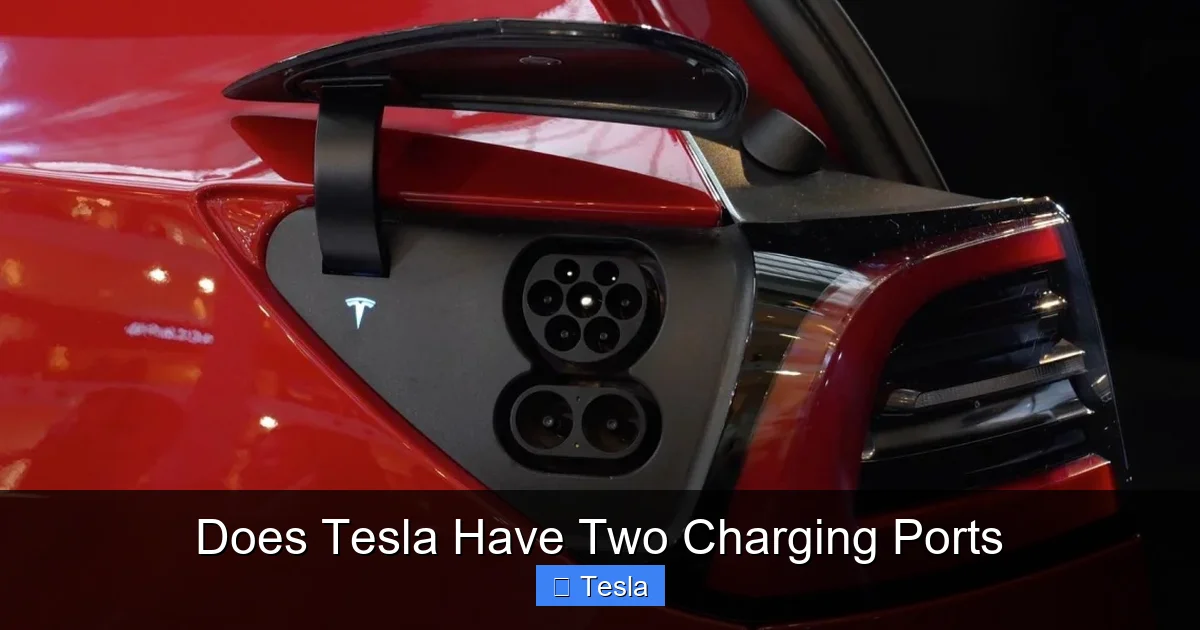
To understand why Tesla doesn’t need two ports, you first need to know about NACS. NACS stands for North American Charging Standard, and it’s the proprietary connector Tesla uses on all its vehicles. It’s a small, elegant plug that handles both alternating current (AC) for slower charging and direct current (DC) for rapid charging. This dual functionality is key to Tesla’s single-port strategy.
What is NACS?
NACS was developed by Tesla early in its EV journey. Unlike other standards that split AC and DC into separate connectors, Tesla’s design merges them. The port communicates with the charger to determine whether to deliver AC or DC power. This means you never have to guess which plug to use—it’s always the same one. When you pull up to a Tesla Supercharger, the cable connects directly to your NACS port and delivers high-power DC straight to the battery. At a public AC charger (like those at hotels or shopping centers), the same port receives AC power, which your car’s onboard converter changes to DC for the battery.
Physical Design and Location
The NACS port is typically located on the rear quarter panel of Tesla vehicles—on the driver’s side for Model S, X, and Y, and on the passenger side for Model 3 and Cybertruck (though Cybertruck has a unique design). It’s a compact, rectangular connector with a rounded top, much smaller than the CCS or CHAdeMO plugs used by other EVs. Its size and shape make it easy to handle, and the port cover is motorized on most models, opening automatically when you approach with the charger cable or via the Tesla app. This sleek design is part of Tesla’s ethos of minimalism and integration.
Why a Single Port?
Tesla’s choice to use one port stems from a desire for simplicity and space efficiency. By combining AC and DC into one connector, Tesla reduces complexity for drivers—no more wondering which port to use. It also saves space in the vehicle, allowing for more room in the front trunk (frunk) or interior. Additionally, it streamlines manufacturing and maintenance. From a user experience perspective, it’s foolproof: you see one port, you use one cable. This design was a bold move early on, but it has proven highly effective as Tesla’s Supercharger network grew.
Charging with CCS Adapters for Non-Tesla Networks
While Tesla’s NACS port is perfect for Superchargers, what about the vast network of third-party DC fast chargers? Most of these use the CCS (Combined Charging System) standard, which has separate ports for AC and DC. To bridge this gap, Tesla offers an official CCS Combo adapter, and third-party companies like TeslaTap produce their own versions. With a CCS adapter, your Tesla can charge at any CCS station, effectively giving you access to multiple charging networks.
Visual guide about Does Tesla Have Two Charging Ports
Image source: thecooldown.com
When Do You Need a CCS Adapter?
You’ll need a CCS adapter whenever you want to use a public DC fast charger that isn’t part of the Tesla Supercharger network. Networks like Electrify America, EVgo, and Greenlots primarily use CCS. Even some AC-only stations (like those at workplaces) may have J1772 connectors, but Tesla’s mobile connector comes with a J1772 adapter for AC charging, so you don’t need a CCS adapter for Level 1 or 2. The CCS adapter is strictly for DC fast charging at third-party stations. If you frequently road trip outside Tesla’s dense Supercharger corridors, carrying a CCS adapter is highly recommended.
Types of CCS Adapters
There are two main types: Tesla’s official CCS Combo adapter and aftermarket options like TeslaTap. Tesla’s adapter is a simple, compact dongle that plugs into your NACS port, then you connect the CCS cable to it. It’s reliable and supported by Tesla, but it can be pricey (around $250-$300). Third-party adapters, such as TeslaTap, often include extra features like built-in cables or higher current ratings. They may be cheaper but vary in quality. Whichever you choose, ensure it’s rated for the power levels you need (up to 350 kW for latest CCS stations).
Using Third-Party Charging Networks
Once you have a CCS adapter, using a non-Tesla charger is straightforward. Pull up to an Electrify America or EVgo station, plug the CCS cable into your adapter (which is already connected to your car), and follow the prompts on the charger’s screen or app. Payment is usually handled via the network’s app or credit card. Charging speeds with a CCS adapter can reach up to 150-200 kW, depending on your Tesla model and the station’s capability. For example, a Model 3 Long Range can charge at about 150 kW on a 350 kW CCS station with an adapter, though it may be slightly slower than at a Supercharger due to communication overhead.
Charging Speeds and Compatibility
Charging speed is a critical factor for EV owners. With Tesla’s single NACS port, speeds depend on where you charge and what equipment you use. Let’s break down the differences between Supercharging, third-party DC fast charging with an adapter, and AC charging at home or public Level 2 stations.
Visual guide about Does Tesla Have Two Charging Ports
Image source: soyacincau.com
Home Charging with NACS
At home, you’ll typically use a Level 1 (120V) or Level 2 (240V) charger. Tesla’s Mobile Connector comes with a standard plug for 120V outlets, delivering about 3-5 miles of range per hour. For faster home charging, you can install a dedicated 240V outlet (like a NEMA 14-50) and use the Tesla Wall Connector or Mobile Connector with an adapter. This setup provides 20-30 miles of range per hour. The NACS port handles AC charging seamlessly, and no adapter is needed for home AC charging since Tesla’s connectors are designed for NACS. Installing a 220V outlet can cost between $500 and $2,000 depending on your home’s electrical setup. For a detailed cost breakdown, check our guide on how much it costs to install a 220V outlet for Tesla.
Supercharger Speeds
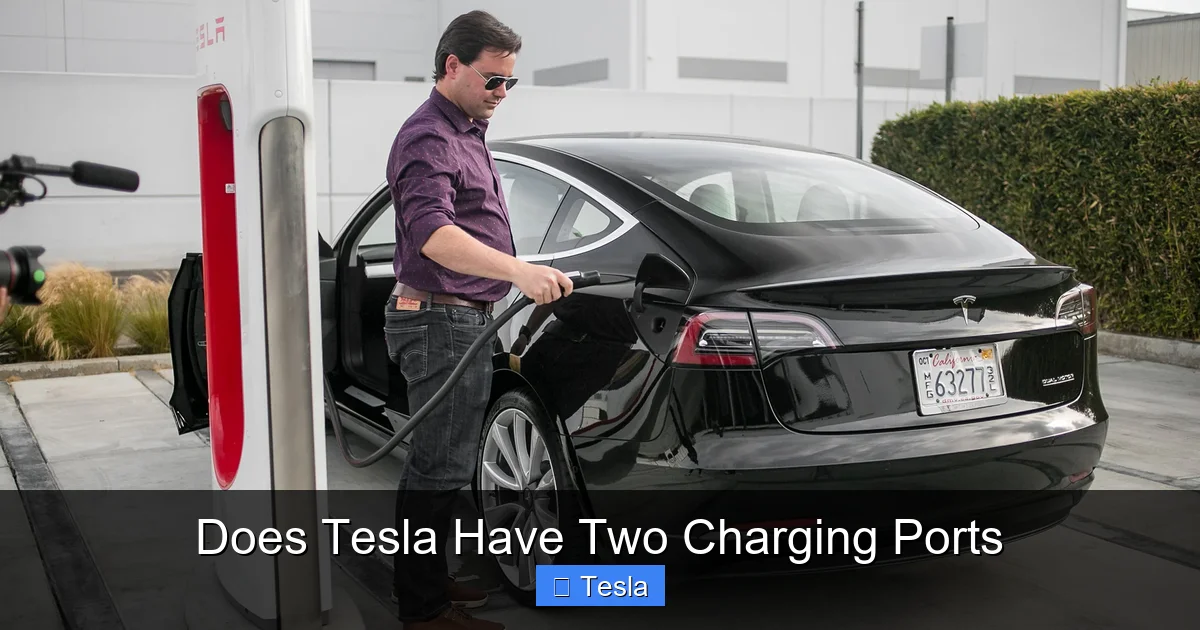
Tesla Superchargers are the gold standard for fast charging. They deliver DC power directly to the battery at rates up to 250 kW (or 325 kW on V4 Superchargers). Plugging your Tesla straight into a Supercharger without any adapter ensures you get the maximum possible speed. For instance, a Model Y can charge from 10% to 80% in about 25-30 minutes on a V3 Supercharger. The NACS port’s direct communication with Superchargers allows for optimized power delivery and battery preconditioning, which warms the battery for faster charging in cold weather.
CCS Adapter Speed Impact
When using a CCS adapter at a third-party station, you’ll still get very fast charging, but there might be a slight reduction in peak speed compared to a Supercharger. This is due to differences in communication protocols and power delivery. Most Teslas can accept up to 150-200 kW on CCS, which is still excellent—adding 200 miles of range in 15-20 minutes. However, the adapter may limit the maximum current, and some older adapters aren’t rated for the highest power levels. It’s important to choose a high-quality adapter if you plan to use high-power CCS stations frequently.
The Supercharger Network: Exclusive but Evolving
Tesla’s Supercharger network has been a major selling point for Tesla owners. For years, it was exclusive to Tesla vehicles, requiring a NACS port and a Tesla account. But as NACS becomes an industry standard, Tesla is opening parts of its network to non-Tesla EVs, though with some caveats.
Visual guide about Does Tesla Have Two Charging Ports
Image source: motortrend.com
Tesla-Only Era
Historically, only Teslas could use Superchargers. The NACS port and Tesla’s authentication system (via the car or app) ensured seamless, plug-and-charge experiences. This exclusivity gave Tesla owners unparalleled convenience on long trips, with stations strategically placed along highways. The network’s reliability and speed were unmatched, and it remains one of Tesla’s biggest advantages.
Opening to Non-Tesla EVs
In 2022, Tesla began pilot programs to allow non-Tesla EVs to charge at select Supercharger locations, using a CCS adapter. In regions where Tesla has opened its network, non-Tesla drivers must use the Tesla app, create an account, and sometimes purchase a $50 “pass” to access. They also need a CCS adapter to connect their car’s CCS port to Tesla’s NACS cable. For Tesla owners, this change doesn’t affect their ability to plug in directly—they still use the NACS port without an adapter. However, increased usage could lead to wait times at popular stations.
Future of Supercharger Access
As more automakers adopt NACS (Ford, GM, Rivian, etc.), the need for CCS adapters will diminish. Future non-Tesla EVs will likely come with NACS ports, allowing them to plug into Superchargers natively. This shift means Tesla’s single-port design will become even more advantageous, as the same connector works across all networks. For current Tesla owners, the single NACS port remains future-proof—no retrofits needed.
Practical Tips for Tesla Owners
Now that you understand Tesla’s single-port setup, here are some practical tips to maximize your charging experience, whether at home or on the road.
Road Trip Planning
Always plan your route with Supercharger locations in mind using the Tesla navigation or apps like PlugShare. While Superchargers are abundant, there are still gaps in some areas. Carry a CCS adapter for backup—especially if traveling to regions with fewer Superchargers. Before you leave, check adapter compatibility with your Tesla model and the third-party networks you’ll encounter. It’s also wise to precondition your battery (via the Tesla app) before arriving at a Supercharger to optimize charging speed.
Home Charging Setup
For daily charging, a home Level 2 setup is ideal. Install a 240V outlet (like a NEMA 14-50) and use the Tesla Mobile Connector or Wall Connector. This charges much faster than a standard 120V outlet. As mentioned, installation costs vary. Get quotes from electricians and consider your panel’s capacity. If you have a dedicated spot, a Wall Connector offers the fastest home charging and can be hardwired. Remember, no adapter is needed for home AC charging—just plug your Tesla’s NACS cable into the outlet.
Adapter Recommendations
If you need a CCS adapter, the official Tesla CCS Combo adapter is the safest bet, as it’s designed and tested by Tesla. It’s pricier but comes with Tesla’s support. Third-party adapters from reputable brands like TeslaTap are good alternatives, often with better build quality or additional features. Avoid cheap, no-name adapters—they can overheat or damage your port. Store your adapter in the trunk or frunk so it’s always available. Also, keep the adapter clean and dry, as debris can cause connection issues.
The Future of EV Charging Standards
The EV charging landscape is rapidly evolving. Tesla’s decision to open its NACS patent and share the standard is reshaping the industry. Understanding this shift helps contextualize why Tesla has stuck with a single port.
NACS Becoming the Industry Standard
In 2023, major automakers like Ford, GM, Rivian, and Nissan announced they would adopt NACS for their future EVs in North America. This means new non-Tesla cars will come with NACS ports, eliminating the need for adapters at Superchargers and many third-party stations. The industry is moving toward a unified standard, which simplifies everything for consumers. Tesla’s early bet on a single, integrated port is now paying off as the rest of the industry follows suit.
Implications for Tesla Owners
For Tesla owners, this trend is all positive. Your single NACS port will work with virtually every public charger in the coming years, as networks upgrade to NACS cables. You may never need a CCS adapter again. It also means the Supercharger network will become more accessible, potentially reducing congestion. However, during the transition period, having an adapter remains useful for older CCS stations that haven’t upgraded yet.
Will Tesla Ever Add a Second Port?
Given the industry’s shift to NACS, it’s highly unlikely Tesla will add a second port. A second port would add cost, weight, and complexity without providing significant benefit. The single NACS port already handles all charging needs, and with NACS becoming universal, there’s no reason to change. Tesla’s design philosophy favors minimalism and integration, so expect the single port to remain for the foreseeable future.
Conclusion
So, does Tesla have two charging ports? No—it has one brilliantly designed NACS port that does the job of two. This single connector handles AC and DC charging, letting you use home outlets, public Level 2 chargers, Tesla Superchargers, and even third-party DC fast chargers (with a CCS adapter). It’s a setup that emphasizes simplicity without sacrificing flexibility. As NACS becomes the universal standard, Tesla owners will enjoy even greater convenience. If you’re a Tesla driver, embrace the single port, invest in a quality CCS adapter for road trips, and enjoy the seamless charging experience that Tesla has engineered.
Frequently Asked Questions
Do all Tesla models have the same charging port?
Yes, every Tesla vehicle—from Model 3 to Model X and Cybertruck—uses the same NACS port. This uniformity means any Tesla can charge at any Tesla station or use the same adapters.
Can I use a CCS adapter at a Tesla Supercharger?
No. CCS adapters are for connecting your Tesla’s NACS port to third-party CCS stations. At Tesla Superchargers, you plug directly into the NACS port without any adapter for optimal speed.
Does Tesla plan to add a second charging port in the future?
Unlikely. Tesla’s design philosophy centers on a single, integrated port. With NACS becoming an industry standard, a second port would be redundant and add unnecessary complexity.
What’s the difference between NACS and CCS charging ports?
NACS is Tesla’s proprietary port that combines AC and DC charging in one connector. CCS (used by most other EVs) has separate ports for AC and DC. Tesla uses a CCS adapter to connect to CCS networks.
Can I charge a non-Tesla electric vehicle at a Tesla Supercharger?
Currently, non-Tesla EVs cannot charge at Superchargers unless they have a NACS port and Tesla opens the station to non-Tesla vehicles in your region. Most non-Tesla EVs require a CCS-to-NACS adapter, which Tesla does not provide.
Are Tesla charging adapters included with the car?
No. Tesla vehicles come with a mobile connector for AC charging, but CCS adapters for DC fast charging at non-Tesla stations are sold separately. It’s a recommended accessory for road trips.
