
How to Open the Hood on a Jeep Cherokee

Opening the hood on your Jeep Cherokee is a simple but essential skill for basic maintenance. The process typically involves finding the interior release lever, then securing the hood with the prop rod. While the exact location can vary slightly between model generations, the core steps remain the same. This guide covers every detail, from the initial pull to proper closure, ensuring you can safely access your engine compartment anytime.
So, you need to pop the hood on your trusty Jeep Cherokee. Whether you’re topping off the oil, checking the coolant, or just taking a peek under the hood for the first time, this is a fundamental piece of automotive self-sufficiency. It’s one of those simple tasks that can feel mysterious if you’ve never done it before, but I’m here to walk you through every single step. We’ll cover the classic Jeep Cherokee models from the iconic XJ era all the way to the modern KL generation. By the end of this guide, you’ll be able to open that hood with your eyes closed—well, maybe not literally, but you’ll definitely feel confident.
Why is this so important? Because your engine compartment is the heart of your vehicle. Routine checks like oil levels, coolant, brake fluid, and battery terminals are crucial for reliability and preventing costly breakdowns. Knowing how to access this space safely and correctly is non-negotiable for any Jeep owner. Plus, it’s a great first step into the world of DIY car care. Let’s get started.
Key Takeaways
- Primary Release Location: The main hood release is almost always inside the vehicle, on the lower left side of the driver’s footwell, near the door.
- Two-Step Process: You must first pull the interior lever, then go to the front of the vehicle to disengage the secondary latch under the hood edge.
- Prop Rod is Mandatory: Never leave the hood unsecured with just the latch; always use the factory prop rod or a suitable support to prevent it from falling.
- Model Year Variations: While similar, 2014-2023 Cherokees (KL) and 1997-2013 models (XJ/KJ) have different grille and latch designs you should recognize.
- Safety First: Always ensure the engine is cool before opening the hood to avoid burns from steam or hot components.
- Stuck Hood Protocol: If the hood won’t open, do not force it. Identify the issue—often a broken cable or frozen latch—and address it methodically.
- Proper Closure: Lower the hood slowly until it latches, then press down firmly on the front center to ensure a secure, full engagement.
📑 Table of Contents
Understanding Your Jeep Cherokee’s Hood Mechanism
Before we get hands-on, let’s talk about what’s actually happening when you open the hood. Jeep, like almost every car manufacturer, uses a two-part latching system for safety and security. Think of it like a double lock. The first lock is inside your car, controlled by a lever or pedal. When you activate that, it releases a cable that pulls on the secondary latch, which is hidden just under the front edge of the hood itself. You then have to physically go to the front of the vehicle and release that secondary latch by hand. Only then can you lift the hood and secure it with the prop rod. This design prevents the hood from flying open accidentally at high speeds and deters casual theft.
Identifying Your Cherokee Generation
The Jeep Cherokee has had a few major iterations, and the hood release setup is mostly consistent but with small, important differences. Here’s a quick way to know which you have:
- XJ Generation (1997-2001): The classic, boxy “square body” Cherokee. The interior release is a lever on the driver’s side kick panel. The secondary latch is a simple metal bar you pull up.
- KJ/Liberty Generation (2002-2013): This was the model that replaced the XJ and was badged as Liberty in some markets, but the Cherokee name returned for the final years. The interior release is often a pedal you push with your foot. The secondary latch is usually a small, flat lever you slide or push.
- KL Generation (2014-Present): The modern, sleek crossover-style Cherokee. The interior release is a small lever in the driver’s footwell, similar to the XJ but more modern. The secondary latch is a small, often black plastic handle you pull up, located behind the Jeep badge or a small grille opening.
Don’t worry if you’re not sure. The steps below will help you identify the parts on your specific vehicle. Just remember: the process is always interior lever/pedal first, then front latch second.
The Step-by-Step: How to Open the Hood on Any Jeep Cherokee
Alright, let’s get to the meat of the matter. Follow these steps in order. It’s a straightforward sequence, but missing one will leave you standing there wondering why the hood won’t budge.
Visual guide about How to Open the Hood on a Jeep Cherokee
Image source: d2n97g4vasjwsk.cloudfront.net
Step 1: Prepare Your Vehicle & Yourself
This is the most overlooked but most critical step. Never attempt to open the hood if the engine is hot. A hot engine means hot coolant, steam, and metal surfaces that can cause severe burns in seconds. If you’ve been driving, let the engine cool for at least 30-45 minutes. Park on a flat, stable surface, engage the parking brake, and turn off the ignition. For manual transmission vehicles, leave it in gear. This is basic safety.
Next, gather your tools. You’ll need the hood prop rod, which is almost always stored right on the hood itself or near the latch mechanism. On most Cherokees, it’s a long, thin metal rod with a bent end. Find it and have it ready. Also, if it’s dark, have a flashlight handy. Good visibility is key to finding those small latches.
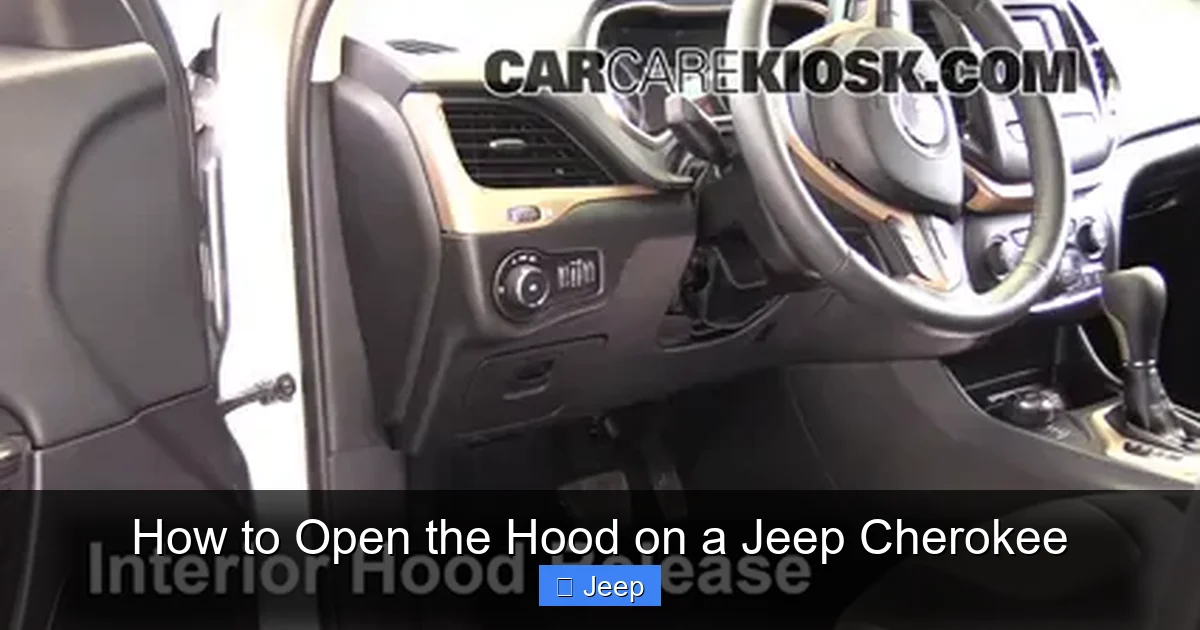
Step 2: Locate and Activate the Interior Hood Release
Sit in the driver’s seat and look to your left, down by your feet where the driver’s side door meets the dashboard and floor. This area is called the “kick panel.” You’re hunting for a small lever or a foot pedal.
- For XJ (1997-2001) and KL (2014+) models: You’ll find a small, plastic-handled lever. It might have a picture of a hood on it. Pull it firmly towards you. You should hear a distinct clunk or pop from the front of the vehicle. That’s the secondary latch releasing. If you don’t hear anything, the cable might be loose or broken.
- For KJ/Liberty (2002-2013) models: Look for a small metal pedal on the floor near the left side. Push it down firmly with your foot until you hear that same clunk from the front.
Pro Tip: After pulling/pushing the release, walk to the front of the vehicle immediately. The secondary latch is now disengaged, but the hood is still held down by its own weight and the primary latch’s residual grip. You must now physically lift it.
Step 3: Disengage the Secondary Hood Latch
Now, move to the front of your Cherokee. Stand facing the grille. You need to find the secondary latch, which is located centrally, just under the leading edge of the hood. The exact spot depends on your model:
- XJ (1997-2001): Look through the narrow gap between the hood and the grille/headlight assembly. You’ll see a simple metal bar running side-to-side. Reach in and push/pull it up. It’s usually stiff but will move.
- KJ/Liberty (2002-2013): The latch is often behind a small plastic cover or directly accessible. You’ll see a flat, lever-style handle. Slide it to the left or right, or push it up, depending on the design.
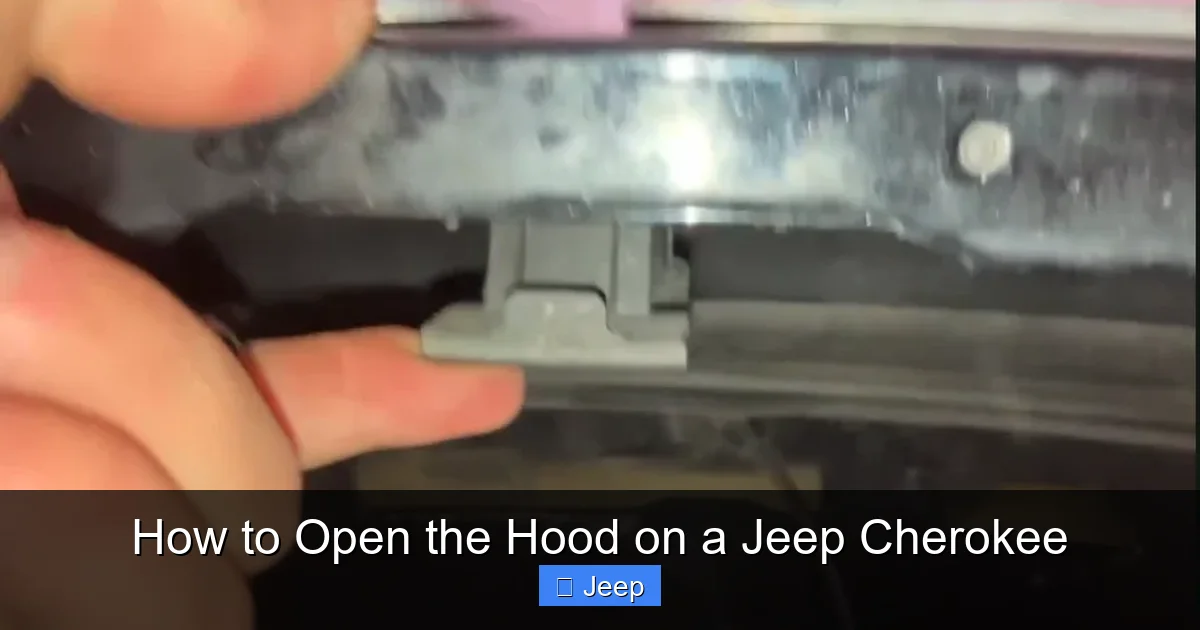
- KL (2014+): This is the easiest. Look at the center of the hood front edge. Behind the large Jeep badge or a small slotted grille piece, there’s a black plastic handle. Simply reach in, grab it, and pull it straight up. It should pop free easily.
Important: Once you’ve moved this secondary latch, the hood is no longer held down at all. It will lift freely. Be ready to support its weight.
Step 4: Lift the Hood and Secure It with the Prop Rod
With both latches disengaged, grasp the hood firmly with both hands (use a cloth if the paint is hot or dirty). Lift it straight up. The Cherokee hood is heavy, so use your legs, not your back. Lift until it’s fully open and you can access the underside of the hood front edge.
Now, locate the hood prop rod. It’s usually clipped to the underside of the hood or to the fender well. Unclip it. You’ll see a small hole or bracket on the underside of the hood and another on the inner fender or radiator support. Insert the bent end of the prop rod into the hole on the hood, then lower the rod until the other end clicks into the bracket on the vehicle frame. This creates a stable triangle that holds the heavy hood open securely. Give it a gentle tug to make sure it’s seated properly. Never work under a hood held only by the latch or by hand. The prop rod is your safety harness.
Step 5: Closing the Hood Properly
When you’re finished, the process is the reverse, but with a crucial final step. First, remove the prop rod and re-clip it to its storage spot. Then, grasp the hood and lower it slowly. Do not drop it. Let it settle onto the primary latch. You should hear a solid thunk. Now, for the critical part: press down firmly on the front center of the hood with the palm of your hand. You need to apply about 20-30 pounds of pressure. This ensures the primary latch has fully engaged and the hood is flush and secure. Try to lift the front edge gently; it should not move at all. If it feels loose, lift it again and repeat the firm press.
Troubleshooting Common Issues
Sometimes, things don’t go smoothly. Here’s how to handle the most common problems without panic.
Visual guide about How to Open the Hood on a Jeep Cherokee
Image source: jeepcorner.com
The Interior Release Handle Feels Loose or Does Nothing
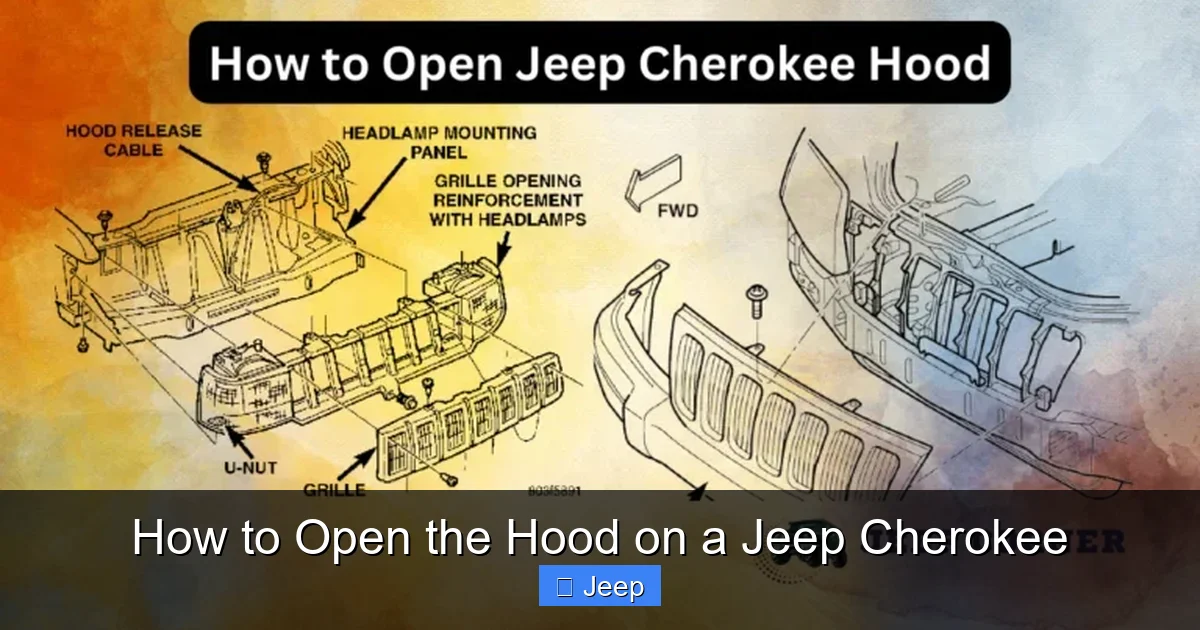
If the lever or pedal has no tension or you hear no clunk from the front, the hood release cable is likely broken or disconnected. This is a common failure point, especially on older XJ and KJ models. You can sometimes still open the hood by accessing the secondary latch from the front. Use a flashlight to locate it (see Step 3 descriptions). You may need a long screwdriver or pliers to manually manipulate the latch mechanism. Once open, you’ll need to repair or replace the release cable, which typically requires removing parts of the grille for access. For detailed procedures on other vehicles, you might find guides like how to open the hood on a Subaru Forester helpful for understanding general cable-based systems.
The Hood Won’t Lift After Releasing the Secondary Latch
This is usually due to the primary latch being stuck or corroded. The interior release may have disengaged the secondary latch, but the main latch is still biting. Do not yank on the hood. Instead, have a helper pull the interior release again while you try to lift the hood with both hands. The added tension can sometimes free a sticky latch. If that fails, you may need to lubricate the latch mechanism with a penetrating oil like WD-40, accessed from the top or sides of the grille area. Be patient.
The Secondary Latch is Frozen or Broken
In cold climates, the latch mechanism can freeze solid. A hair dryer or carefully applied warm water (not boiling) can melt the ice. If the latch handle is broken off, you’ll need to access the latch body itself, usually by removing parts of the grille or the hood’s leading edge trim. This is a more involved repair. For other common access issues, such as how to open the gas tank on a Toyota RAV4, similar principles of finding and manipulating hidden latches apply.
Model-Specific Considerations and Tips
While the core process is universal, let’s highlight some specifics for the major Cherokee generations to make your life easier.
Visual guide about How to Open the Hood on a Jeep Cherokee
Image source: jeepoffroads.com
For the Classic XJ (1997-2001)
These are beloved for their simplicity. The interior lever is on the driver’s side, mounted on the vertical panel beside your left knee. It’s a bright yellow or black plastic lever. The secondary latch is a bare metal bar that runs across the hood. It can be very stiff if the vehicle hasn’t been opened in a while. Use both hands to push it up. The prop rod stores on the left side of the engine bay, clipped to the fender well. On these models, the hood release cable is notorious for breaking. If it does, you’ll have to access the secondary latch from the front, which might mean removing the grille screws to get better access.
For the KJ/Liberty (2002-2013)
The foot pedal release is convenient but can be hard to see. It’s a small, square pedal on the driver’s side floor mat. The secondary latch is a small, flat, often black plastic lever located behind a rectangular opening in the hood’s front edge. You slide it to the left or right. The prop rod on these models usually stores in a bracket on the right-side fender well. A common issue on these is the hood not latching fully after closing, often because the secondary latch wasn’t fully disengaged initially or the primary latch is misaligned.
For the Modern KL (2014-Present)
This is the slickest design. The interior release is a small, ergonomic lever with a red tip on the driver’s left footwell. The secondary latch is a large, easy-to-grab black handle behind the prominent JEEP badge on the hood. Simply pull up. The prop rod is cleverly stored in a tube on the right strut tower. Just pull it out and insert it. The KL’s hood is very heavy due to sound deadening and aluminum construction, so using the prop rod is absolutely essential. Also, the KL has a lot of plastic engine cover; opening the hood is just the first step to accessing anything.
Beyond Opening: What to Do Once the Hood is Up
Congratulations! The hood is open and secure. Now what? This is your window into your vehicle’s health. Here’s a quick checklist for a routine visual and dipstick inspection:
- Oil Level: Pull the dipstick, wipe it, reinsert fully, pull again, and read. The level should be between the MIN and MAX marks.
- Coolant: Check the translucent overflow reservoir (usually near the radiator). The level should be between the LOW and FULL lines when the engine is cool.
- Windshield Washer Fluid: Open the blue-capped reservoir and top it off.
- Battery: Look for heavy white/green corrosion on the terminals (clean if needed) and ensure the hold-down clamp is tight.
- Belts & Hoses: Give a visual look for cracks, fraying, or leaks.
- Leaks: Look for any fresh puddles or drips under the engine.
For more specific maintenance guides, like how to change an air filter, the first step is always getting that hood open securely. This basic access is the gateway to almost all under-hood maintenance.
Conclusion: Your Key to Confidence Under the Hood
Opening the hood on your Jeep Cherokee isn’t magic—it’s a learned skill. It’s the first and most fundamental step in connecting with your vehicle and taking charge of its maintenance. Remember the sequence: interior release first, then front latch, then prop rod. Always prioritize a cool engine and a secure prop rod. If you encounter resistance, don’t force it; diagnose the issue—a stuck latch, a broken cable, or ice.
This simple act empowers you. It transforms the mysterious space under the hood from an intimidating black box into a familiar workspace. You can check fluids, listen for noises, and spot problems before they become disasters. So go out to your Cherokee, find that lever or pedal, and practice. Do it now when there’s no pressure. Make it second nature. Because when you really need to check the oil before a long trip or top off the coolant on a hot day, you’ll be ready. You’ve got this. Now go open that hood and see what’s inside.
Frequently Asked Questions
What if I pull the interior release but the hood doesn’t pop at all?
This usually means the hood release cable is broken or has come loose from the latch. You’ll need to access the secondary latch manually from the front of the vehicle. Use a flashlight to locate the latch mechanism behind the grille or badge and try to move it directly with a tool. Repairing the cable will then be necessary.
My hood is stuck and won’t lift even after releasing the secondary latch. What now?
The primary latch is likely seized. Have a helper pull the interior release while you try to lift the hood. You can also try spraying a penetrating oil like WD-40 around the latch area from the top or sides. Be patient and work the latch free; never use excessive force that could bend the hood.
Is it safe to prop the hood open with just a stick or random object?
Absolutely not. The hood is extremely heavy. Only use the factory-provided prop rod, which is designed to fit securely into specific brackets. Using an improper support risks the hood falling, which can cause severe injury and major damage to the engine bay or windshield.
Where exactly is the interior hood release on a 2018 Jeep Cherokee?
On the 2018 Cherokee (KL model), sit in the driver’s seat and look at the lower left corner of the footwell, near where the door closes. You’ll see a small black plastic lever with a red tip and a hood icon. Pull it firmly toward you to release the front latch.
How do I know if my hood is fully closed and latched?
After lowering the hood, press down firmly on the front center edge with the palm of your hand. You should feel and hear a solid, definitive click. Then, try to gently lift the front edge of the hood. If it doesn’t move up at all, it’s secure. If there’s any play, it’s not latched properly and you should try again.
Can opening the hood trigger the car alarm?
No, simply opening the hood with the proper procedure should not trigger the factory alarm. The alarm is triggered by unauthorized entry into the passenger compartment. However, if the hood is opened while the alarm is already armed and the system is faulty, it could potentially set it off, but this is not normal operation.
