
Do Jeep Wranglers Come with Leather Seats

No, leather seats are not a standard feature on all Jeep Wranglers. They are typically an optional upgrade or a standard feature on higher trim levels like the Sahara, Rubicon, and certain special editions. Availability varies significantly by model year and generation, so checking the specific vehicle’s build sheet or window sticker is essential for confirmation.
Ah, the iconic Jeep Wrangler. It’s the go-anywhere, do-anything vehicle that defines adventure for millions. You picture yourself cruising with the top down, doors off, feeling the wind. But what about the seats you’re sitting on? When you think “premium,” “luxury,” or just a step up from the basic cloth, your mind likely jumps to leather. So the big question for so many prospective buyers and new owners is: Do Jeep Wranglers come with leather seats?
The short, and perhaps most important, answer is: it depends. Unlike some luxury SUVs where leather is standard on every model, Jeep has always treated leather as an upgrade—a reward for choosing a higher trim level or adding a premium package. For the classic, rugged Wrangler, cloth seats have been the steadfast, utilitarian standard. But that doesn’t mean leather isn’t available. In fact, for the last decade and a half, it’s become a very common—and desirable—option on many Wrangler models. Let’s pop the hood on this topic and break down exactly which Wranglers have leather, which don’t, and what you need to know as a buyer or owner.
Key Takeaways
- Leather is not standard: Base and Sport trim Wranglers almost always come with durable, easy-clean cloth seats as standard equipment.
- Higher trims get leather: The Sahara trim has frequently included leather seats as standard or a popular option. The top-tier Rubicon trim also commonly features leather, often with unique styling.
- Model year matters: The introduction and standardization of leather options have evolved, especially from the JK (2007-2018) to the current JL (2018+) and JT Gladiator generations.
- Aftermarket is an option: Many owners add high-quality aftermarket leather seat covers or full seat re-upholstery to cloth-equipped Wranglers for a custom look and feel.
- Check the specifics: The only way to be 100% sure for a specific used Wrangler is to verify via the vehicle’s VIN, build sheet, or original window sticker.
- Synthetic “leather” exists: Some trims may use premium vinyl or synthetic materials (like “Trailhawk” branded cloth) that look and feel like leather but are not genuine hide.
- Consider your needs: Leather offers a premium feel and is easier to clean from mud and spills but can be hot in summer, cold in winter, and requires specific maintenance.
📑 Table of Contents
The Trim Level Tiers: Where Leather Lives
Understanding Jeep’s trim ladder is the single most important key to unlocking the leather seat mystery. Jeep consistently structures its Wrangler lineup from basic workhorse to luxury-laden off-roader. Leather seats are almost exclusively reserved for the upper echelons of this hierarchy.
The Sport & Sport S: The Cloth Champions
If you’re looking at a base Wrangler Sport or even a Sport S, you should expect cloth seats. These are the entry-level models, focused on affordability and core capability. The cloth is durable, utilitarian, and designed to take a beating from gear, pets, and muddy boots. You will not find genuine leather as a standard or even a commonly ordered option on these trims. Some very specific fleet or special-order vehicles might be exceptions, but they are rare birds. For the vast majority of Sport model buyers, cloth is the only choice from the factory. This is the perfect place to consider a high-quality aftermarket cover if you want a leather feel without the premium price tag.
The Sahara: The Traditional Leather Home
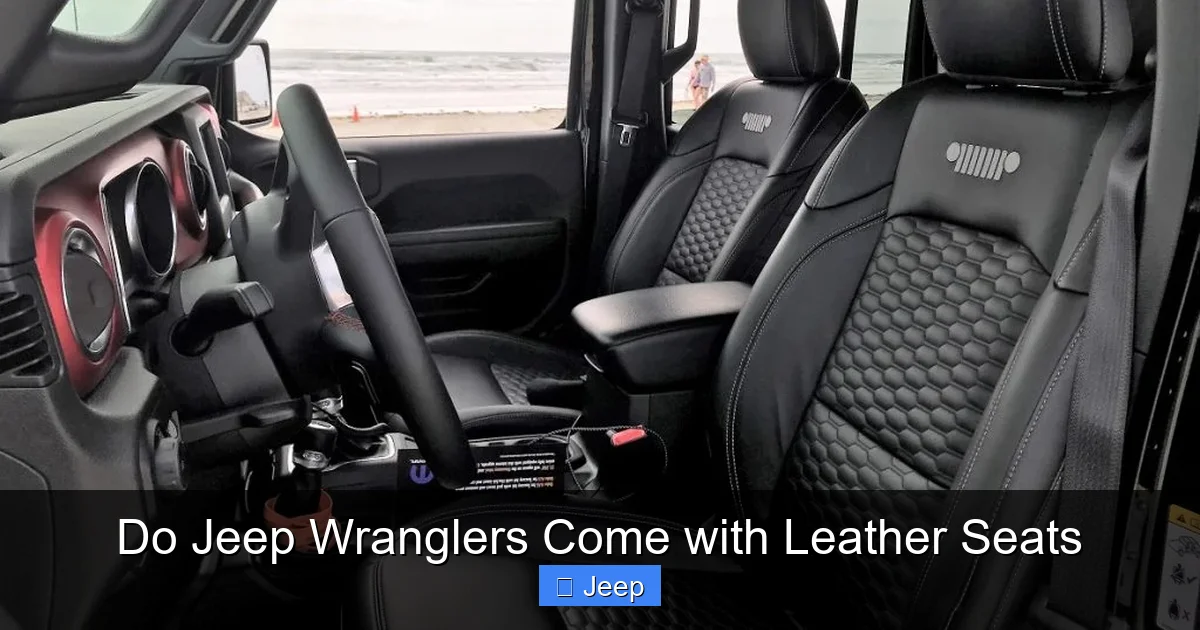
Here’s where things get interesting. For years, the Sahara trim has been the most consistent and popular Wrangler to come with leather seats. In many model years, especially from the JK generation onward, leather was either standard equipment on the Sahara or a nearly ubiquitous option chosen by buyers. The Sahara is positioned as the “luxury” Wrangler—it gets upgraded interior accents, better audio systems, and creature comforts like air conditioning (which is also standard on most newer Sports). If you see a Wrangler with factory leather, there’s a very high probability it started life as a Sahara. The leather in Saharas is typically a high-quality, durable hide, often with the “SAHARA” logo embroidered on the front seats.
The Rubicon: Capability Meets Comfort
The king of the off-road, the Rubicon, is all about heavy-duty axles, locking differentials, and rock-crawling prowess. But Jeep also equips the Rubicon with a premium interior to match its premium price. Leather seats have been a standard or very common feature on Rubicon models for many years. Often, the Rubicon gets unique leather upholstery with red or orange accent stitching, celebrating its off-road racing heritage. So, while the Sahara is the “luxury” trim, the Rubicon is the “luxury capability” trim, and both have shared the leather seat feature. You cannot assume a Rubicon has leather (some early ones didn’t), but it is extremely likely on post-2012 models.
Special Editions: Limited Runs, Premium Features
Jeep loves its special editions—the Willys, the Freedom, the 80th Anniversary, the High Altitude. These are essentially Sahara or Rubicon models with unique exterior badging, wheels, and interior appointments. If a special edition is based on a Sahara or Rubicon platform, it almost always inherits that trim’s leather seats. In fact, some special editions, like the High Altitude, are specifically marketed with premium leather interiors as a key selling point. These are fantastic ways to get a unique Wrangler with the comfort of leather, often with additional exclusive features.
Generational Changes: JK vs. JL vs. JT
The story of Wrangler leather isn’t static. It has changed with each new generation. Knowing the generation helps you set expectations.
Visual guide about Do Jeep Wranglers Come with Leather Seats
Image source: carsbibles.com
The JK Generation (2007-2018)
The JK was a massive redesign that brought the Wrangler into the modern era with more comfort and capability. Leather became a real, available option here, primarily on the Sahara and Rubicon trims. In the early JK years (2007-2010), leather was a pricey option even on the Sahara. As the generation progressed, it became more common. By the late JK years (2014-2018), you could reliably find Saharas and Rubicons with leather. The Unlimited (4-door) models also followed this same pattern.
The JL Generation (2018-Present)
The current JL Wrangler brought even more refinement. Here, Jeep solidified the leather seat availability. For the 2018-2023 model years, leather was standard on the Sahara, Rubicon, and Sahara Unlimited (4-door) trims. It was also available on the Sport S as part of a premium package, but this was less common. The 2024+ model year saw a slight reshuffling with the introduction of the new “Willys” trim, but leather remains a staple of Sahara and Rubicon. The JL’s leather is generally of higher quality, with better bolstering and more modern designs.
The JT Gladiator (2019-Present)
Jeep’s pickup truck, the Gladiator, shares its DNA and platform with the JL Wrangler. Unsurprisingly, its trim strategy mirrors the Wrangler’s. The Gladiator Overland (equivalent to Sahara) and Rubicon trims come standard with leather seats. The Sport and Sport S are cloth-only from the factory. So, if you’re shopping the Gladiator, the same rules apply: look to the higher trims for leather.
The “How To” Guide: Identifying Leather in a Wrangler
You’re standing in a dealership or looking at a private party listing. How do you know if that Wrangler has genuine leather?
Visual guide about Do Jeep Wranglers Come with Leather Seats
Image source: motorbiscuit.com
Visual and Tactile Inspection
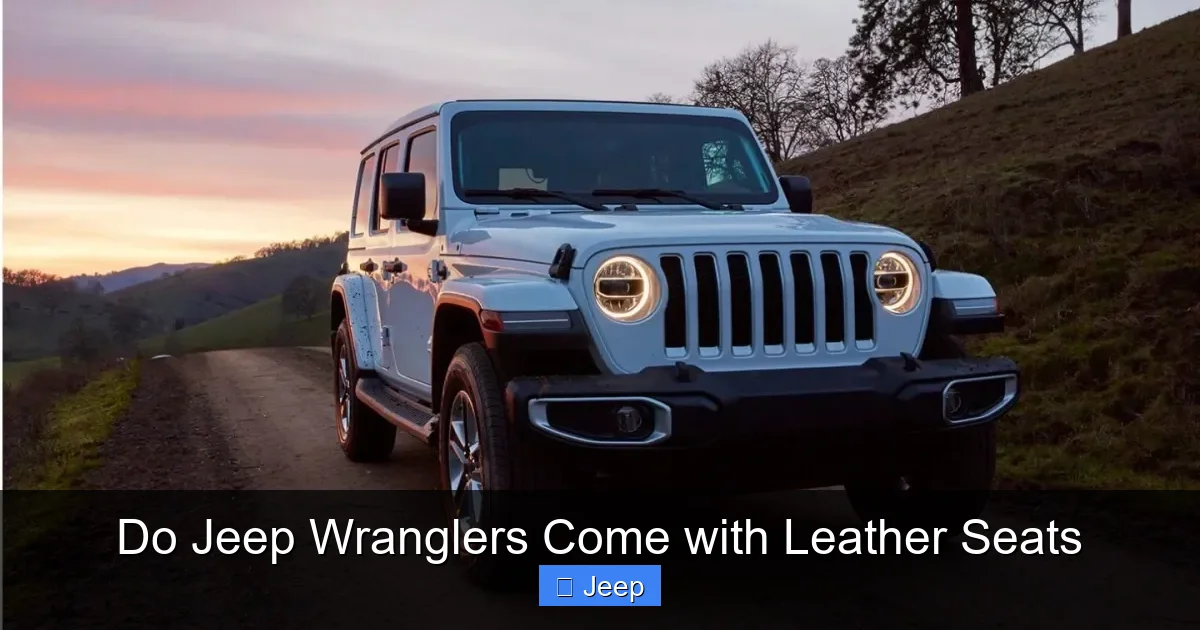
Get in the car. Look closely at the seats. Genuine leather has a natural grain and texture that is inconsistent—it’s a natural material. It will feel soft and supple, not uniformly textured like vinyl. Check the seams; leather stitching is often precise. Look for the “SAHARA” or “RUBICON” embroidery on the front seatbacks or headrests—a dead giveaway. Also, check the seat adjuster controls; on leather models, they are often wrapped in leather or have a more premium feel.
The Window Sticker (Monroney Label)
This is your best friend. The original window sticker, if available, will list “Leather Appointed Seats” or “Leather-Trimmed Seats” as a feature, often under an “Interior” section. It might also list it as part of a package like a “Convenience Group” or “Premium Group.” If the seller has the original sticker, this is 100% confirmation.
The Vehicle Build Sheet (Via VIN)
A Jeep’s Vehicle Identification Number (VIN) is a code that can be decoded to reveal its exact factory specifications. Several online services (like Jeep’s own owner’s portal, or third-party sites) allow you to enter the VIN and receive a build sheet. This sheet will explicitly state the interior type, such as “LEATHER APPOINTED SEATS” or “CLOTH SEATS.” This is the most authoritative method for a used vehicle where the window sticker is gone.
Ask for the Build Sheet from Jeep
If you have the VIN, you can sometimes call a Jeep dealership’s service department with the VIN and they can print out the original build sheet from their system. It’s worth a try and is a reliable source.
Leather vs. Cloth: The Practical Debate for a Wrangler
Is leather even a good idea for a vehicle built for adventure? Let’s weigh the pros and cons.
Visual guide about Do Jeep Wranglers Come with Leather Seats
Image source: shunauto.com
Pros of Leather in a Wrangler
- Easy Cleaning: Mud, sand, water, and spilled drinks can be wiped up with a quick shot of cleaner and a cloth. No stubborn stains soaking into fabric.
- Premium Feel: It elevates the interior from a work truck to a more luxurious space, which is nice for daily driving and longer trips.
- Durability (with care): Well-maintained leather can last the life of the vehicle. It won’t fade or develop permanent odors like some cloth can.
- Resale Value: A Wrangler with factory leather often commands a higher resale value than an identical cloth model, as it’s seen as an upgrade.
Cons of Leather in a Wrangler
- Temperature Extremes: Leather gets scorching hot in the summer sun and bone-chillingly cold in winter. With a removable top, this is a daily reality. Seat heaters/coolers mitigate this but aren’t always standard.
- Maintenance Required: Leather dries out and cracks without regular conditioning (every 3-6 months). You need special leather cleaners and conditioners, not all-purpose cleaners. For guidance on proper care, resources like guides on cleaning synthetic leather or general leather seat cleaners are invaluable.
- Slipperiness: Leather can be slick, making it harder to brace yourself during off-road maneuvers. Some drivers add a grip pad or use seat covers designed for leather to improve friction.
- Cost: Factory leather is a significant upfront cost. Aftermarket leather is cheaper but varies wildly in quality.
The Aftermarket Path: Adding Leather to a Cloth Wrangler
What if you have a beloved Sport model but dream of leather? You have two main paths.
Full Re-Upholstery
This is the factory-quality route. You take your seats to an upholstery shop (or a Jeep specialty shop) and have them completely stripped down and recovered in genuine leather. This is expensive ($1,500-$3,000+), but the result is seamless, durable, and can include custom colors and stitching. It’s the best long-term solution.
Seat Covers
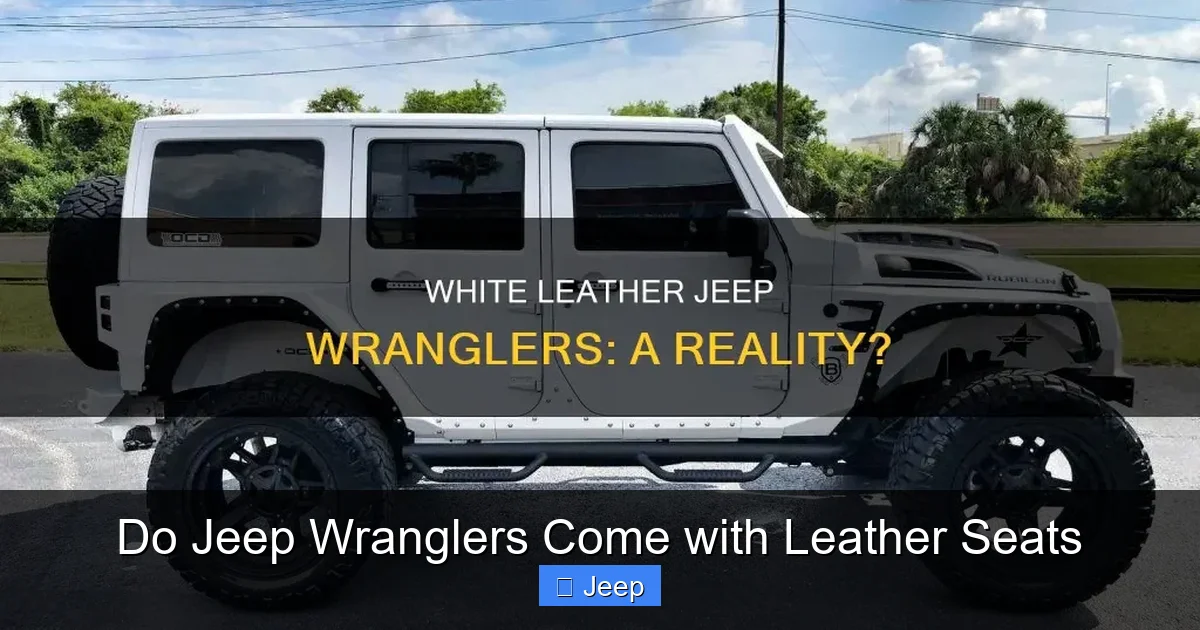
This is the more popular, affordable, and reversible option. Modern seat covers have come a long way. You can get custom-fit covers made from genuine leather, faux leather (vinyl), or fabric with leather-like panels. They install over your existing cloth seats. The pros are lower cost and easy removal. The cons are that they can look less integrated, shift around if poorly fitted, and may not have the same breathability or feel as factory leather. For families, checking compatibility with child seats is crucial—some bulky covers can interfere with the LATCH system. Always verify fitment, especially if you need to install a convertible car seat in your Wrangler.
Final Verdict & Buying Advice
So, do Jeep Wranglers come with leather seats? The definitive answer is: Yes, but only on specific, higher-trim models. Your shopping strategy should be clear.
If you want factory leather, your targets are the Sahara, Rubicon, and any special edition based on those trims, across the JK, JL, and JT generations. Always verify with a VIN check or build sheet. Don’t just take the seller’s word for it, as aftermarket covers can be very convincing.
If you have a cloth-seat Wrangler and want a leather feel, explore the robust aftermarket world of seat covers and re-upholstery. It can be a great project to personalize your rig. Just remember that for a Wrangler, the seats are part of the adventure equation. Choose the material—cloth, factory leather, or aftermarket—that best fits your climate, your tolerance for maintenance, and how you plan to use your legendary Jeep.
Frequently Asked Questions
Is leather standard on any Jeep Wrangler trim?
No. Leather has never been standard on the base Sport trim. However, on many recent model years (especially JL generation), leather has been a standard feature on the Sahara and Rubicon trims. It’s always been an optional or standard upgrade on higher trims, never a base-model item.
Can I get leather seats on a 2-door Jeep Wrangler?
Absolutely. The availability of leather seats is not dependent on the number of doors. Both 2-door and 4-door (Unlimited) Wranglers in the Sahara and Rubicon trims have been offered with leather seats. The same generational rules apply to both body styles.
How can I tell if a used Wrangler has real leather seats?
First, look for the “SAHARA” or “RUBICON” embroidery on the front seats. Second, check the original window sticker if the seller has it. Third, use the vehicle’s VIN to obtain a factory build sheet, which will explicitly list the interior material. Finally, a tactile inspection—real leather has a natural grain and feels soft, not like plastic.
Are leather seats harder to maintain than cloth in a Wrangler?
They require a different kind of maintenance. Leather needs regular cleaning with pH-balanced cleaners and conditioning every 3-6 months to prevent drying and cracking. Cloth needs deep cleaning for stains and odors but generally requires less frequent, specialized upkeep. Leather is easier to wipe clean for surface spills but is more vulnerable to sun damage and neglect over time.
Do all Jeep Wrangler Rubicons have leather seats?
While the vast majority of modern Rubicons (JL generation and later JK Rubicons from ~2012 onward) do have leather seats, it was not 100% universal in earlier model years. Some very early JK Rubicons (2007-2011) could be ordered with premium cloth. You must always verify a specific vehicle’s history using its VIN or build sheet.
Is it worth paying extra for a Wrangler with factory leather?
It depends on your priorities. Factory leather adds value at resale and offers easier cleaning. If you live in a climate with extreme temperatures, the lack of ventilation/heat in base leather seats can be a downside. For many, the premium feel and easier maintenance make it a worthwhile upgrade, especially if the price difference from a comparable cloth model is reasonable. Consider how you’ll use the vehicle and whether you’ll invest in proper leather care products.
