
How to Unplug a Tesla Charger (model Y)

Unplugging a Tesla Model Y charger is a simple, two-step process designed for safety and convenience, but it’s very different from a gas pump. First, you must unlock the connector via the car’s touchscreen or the Tesla app. Second, press the physical release button on the charger handle itself. Never force or yank the cable. If the standard method fails, an internal emergency release located behind the front trunk trim provides a backup solution.
Key Takeaways
- Two-Step Process: Unlocking via touchscreen/app and pressing the handle’s release button are separate, mandatory steps.
- Never Force It: The connector has a mechanical lock. Forcing it will cause damage to the latch or charge port.
- Check the Screen: The touchscreen must show “Charge Connector Unlocked” or “Ready to Remove” before attempting to pull.
- Emergency Release: A manual pull cord inside the front trunk (frunk) disengages the lock if the electronic system fails.
- It’s Not a Gas Nozzle: Do not treat it like a traditional fuel pump. The locking mechanism is intentional for safety and security.
- App Control: You can unlock the connector from your Tesla app, which is useful if you’re away from the car.
- Gentle Pressure: When pressing the release button, apply steady pressure straight towards the car, not at an angle.
[FEATURED_IMAGE_PLACEHOLDER]
📑 Table of Contents
- The Tesla Model Y Charging System Explained
- The Standard Unplugging Procedure: A Two-Step Dance
- Emergency Release: Your Plan B When Electronics Fail
- Common Mistakes & How to Avoid Them
- Caring for Your Charging Connector & Port
- Troubleshooting Charging & Unplugging Issues
- Conclusion: Confidence Through Knowledge
The Tesla Model Y Charging System Explained
So, you’ve just finished charging your fantastic Tesla Model Y at your favorite Supercharger or your home wall connector. The battery is full, your journey can continue, and now it’s time to unplug. You reach for the charger handle, give it a gentle tug, and… nothing happens. It’s locked in place. If you’re new to electric vehicles, this moment can be surprisingly confusing and a little frustrating. You might instinctively give it a harder yank, thinking it’s just stuck. Don’t. That’s the fastest way to break something expensive.
The Tesla charging system, particularly the connector and the charge port on your Model Y, is a marvel of engineering designed with multiple safety layers. Unlike a simple gas nozzle that you can pull out anytime, the Tesla connector physically locks into the vehicle’s charge port when charging begins. This lock serves several critical purposes: it prevents accidental unplugging during high-power charging (which could cause dangerous arcing), deters theft of the expensive cable, and ensures a secure, consistent electrical connection. Understanding this system is the first key to mastering the unplugging process.
This guide will walk you through everything you need to know, from the standard daily procedure to what to do when things go wrong. We’ll cover the exact steps, the location and use of the emergency release, common pitfalls to avoid, and how to care for your connector. By the end, unplugging your Model Y will feel like second nature, and you’ll have the confidence to handle any situation at any charging station.
The Components: Port, Connector, and Lock
Your Model Y’s charging port is located on the driver’s side rear quarter panel, hidden behind a sleek flap that opens automatically when you approach with a key card or phone key, or when you press the charging port button on the touchscreen. Inside, there’s a receptacle that accepts the Tesla connector. The connector itself, whether it’s from a Supercharger, a Wall Connector, or a Mobile Connector, has a handle with a built-in button and a metal latch mechanism at its tip.
When you insert the connector and charging starts, a small motorized pin inside the vehicle’s charge port extends and engages with a hole in the connector’s latch, physically locking it in place. This is the “click” you hear. This lock remains engaged until the vehicle explicitly releases it. The release button on the handle of the charger you’re holding doesn’t directly unlock the car; instead, it disengages the connector’s own internal latch from the *cable side*, allowing the now-unlocked connector to be pulled free from the port. It’s a two-part system: the car unlocks, and then the button lets the connector separate.
The Standard Unplugging Procedure: A Two-Step Dance
Let’s get into the nitty-gritty. The correct, everyday method to unplug your Model Y is a precise two-step sequence. Skipping or confusing these steps is the root cause of most user frustration. Remember this mantra: Unlock on the screen, then press the button.
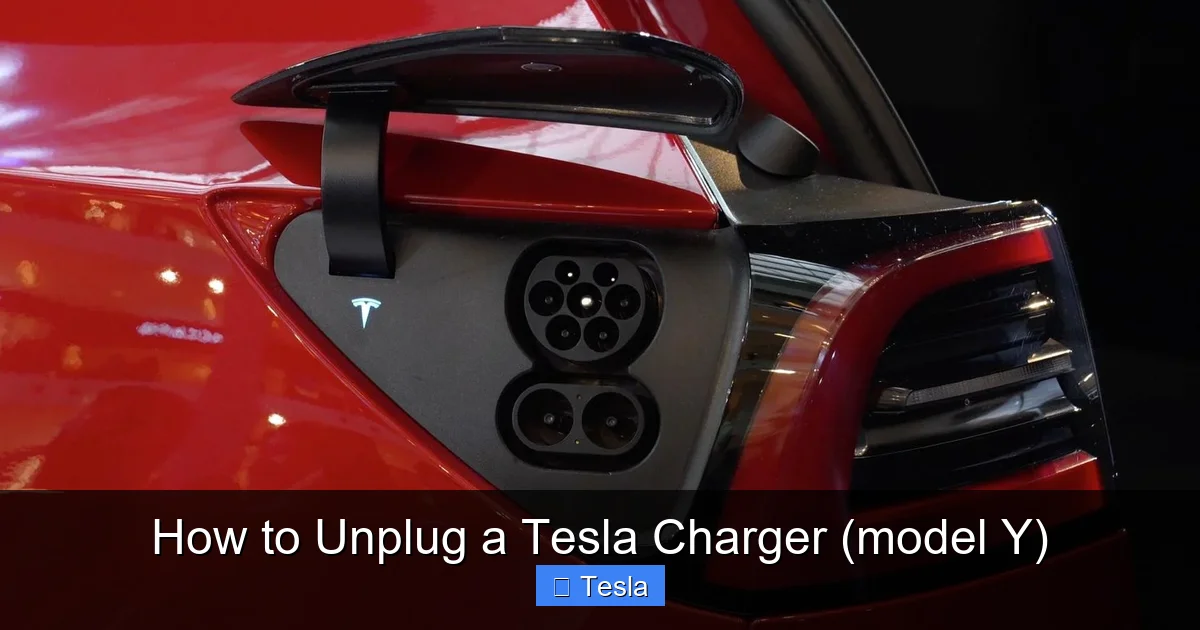
Visual guide about How to Unplug a Tesla Charger (model Y)
Image source: soyacincau.com
Step 1: Initiate Unlock on the Vehicle
This is the most important step and the one people often miss. The car must be told it’s okay to release the connector. You have three primary ways to do this:
- The Touchscreen: While parked and charging, a charging icon appears on the top status bar of your center screen. Tap it. A menu will pop up showing charging details. At the bottom, you’ll see a large, red button that says “Stop Charging” and, once charging has stopped or is ready to stop, it will change to say “Unlock Connector.” Tap “Unlock Connector.” The screen will confirm the connector is unlocked, and you’ll often hear a small mechanical whirring sound from the charge port area as the lock pin retracts.
- The Tesla App: Open your Tesla app, ensure it’s connected to your car, and navigate to the “Charging” section. There is a “Stop Charging” button. Once charging has ceased, this will change to an “Unlock Connector” button. Tapping it sends the command to your car. This is incredibly useful if you’re inside a store or your home and want to prepare the charger for the next person.
- The Charge Port Button: On the charge port door itself, there is a small button. Pressing and holding it for about 2 seconds will also stop charging and unlock the connector, provided the car is awake (you’re near it with a key). This is the quickest method if you’re standing right at the car.
After using any of these methods, look at your touchscreen. You must see a clear message that the connector is unlocked, such as “Charge Connector Unlocked” or “Ready to Remove.” Do not proceed until you see this confirmation.
Step 2: Press the Release Button and Withdraw
Now that the car’s lock is disengaged, you can physically separate the connector. On the Tesla connector handle, there is a rubberized button, usually located on the side where your thumb naturally rests. This button is not a trigger you pull; it’s a button you press inwards, towards the body of the connector.
With one hand, firmly grasp the handle. Use your thumb to press and hold the release button inward. While holding the button, pull the connector straight out from the charge port with a steady, gentle motion. You should feel no resistance. The connector will slide out smoothly. Release the button once it’s free.
Pro Tip: Your other hand can gently support the bottom of the connector as you pull to keep it perfectly aligned and prevent any awkward angles that might cause the button to disengage prematurely.
Emergency Release: Your Plan B When Electronics Fail
What happens if your touchscreen is frozen, your phone is dead, the car’s 12V battery is low, or the electronic lock simply malfunctions? The connector remains stubbornly locked. This is where the emergency release comes in. Every Tesla Model Y has a manual, mechanical override located inside the front trunk (frunk). It’s a feature you hope never to use, but you should absolutely know about it.
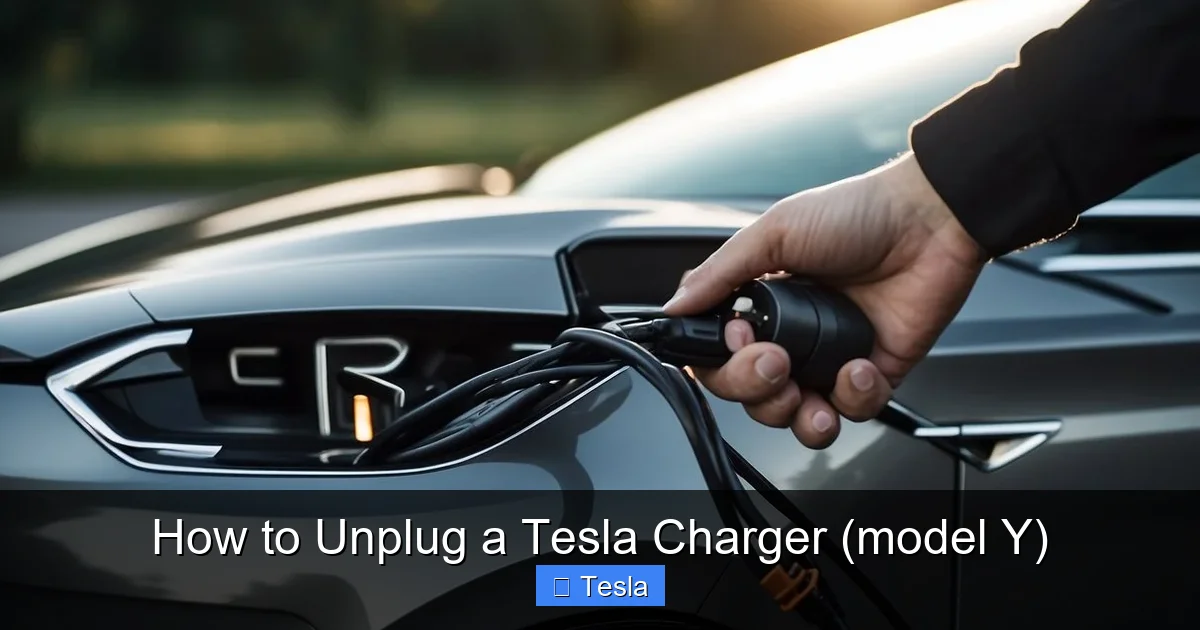
Visual guide about How to Unplug a Tesla Charger (model Y)
Image source: koala.sh
Locating the Emergency Release Cord
The emergency release is a bright orange pull cord with a T-handle. To access it:
- Open the front trunk (frunk). You can do this via the touchscreen (Controls > Service > Frunk), the Tesla app, or by pressing the dedicated frunk button on your key fob if equipped.
- Look at the inside of the frunk lid, towards the front (the part that closes against the car’s body). You’ll see a black plastic trim panel. There is a small access hole in this panel, usually on the driver’s side.
- The orange T-handle cord is tucked behind this panel. You can usually see the end of the T-handle through the access hole, or you may need to carefully reach in and feel for it.
If you have a heavy frunk mat or cargo net installed, you may need to remove it to access the trim panel more easily.
Using the Emergency Release
Once you’ve located the orange T-handle:
- Firmly grasp the handle.
- Pull the cord sharply and decisively towards you. You will feel and hear a distinct “clunk” from the charge port area. This mechanical action physically disconnects the lock pin from the connector, regardless of the car’s electronic state.
- Now, return to the charge port. You should be able to simply pull the connector out. You will not need to press the handle’s release button because the emergency release has already disengaged the lock mechanism at the port itself.
Important: After using the emergency release, your car will likely display an error message on the touchscreen about the charge port being manually opened. This is normal. The system will reset itself the next time you plug in and begin charging normally. If the error persists, a simple power cycle (sitting in the car with seatbelt on, or using the app’s “Power Off” function) will clear it.
Common Mistakes & How to Avoid Them
Even with the instructions, it’s easy to develop bad habits. Let’s address the most frequent errors new Tesla owners make and how to correct them.

Visual guide about How to Unplug a Tesla Charger (model Y)
Image source: teslord.com
Mistake 1: Yanking the Cable Without Unlocking
This is the #1 cause of damage. The lock is strong. Pulling against it can shear the plastic latch on the connector, bend the metal pin inside the charge port, or stress the cable. Always, always verify the “Unlocked” message on the screen before touching the release button.
Mistake 2: Pressing the Release Button Before Unlocking
Pressing the handle’s button while the car still has the lock engaged does nothing useful. It might slightly disengage the connector’s internal parts, but the car’s lock pin is still holding it firm. You’ll just be pressing a button with no result, leading to frustration. The sequence is lock release first, then button press.
Mistake 3: Pulling at an Angle
The connector and port are designed for a straight-in, straight-out motion. Pulling the handle up, down, or to the side can cause the button to slip off your thumb or jam the connector against the edge of the port. Always pull perfectly straight back, parallel to the car’s body.
Mistake 4: Ignoring the Charge Port Flap
Sometimes, the charge port flap can partially close or interfere as you’re pulling the connector out, especially if it’s windy or you’re not holding the cable perfectly straight. Be mindful of the flap. Use your free hand to hold it open if necessary until the connector clears the opening.
Mistake 5: Not Letting Charging Fully Stop
If you try to unplug while the car is still actively transferring power (especially at high Supercharger rates), the system may not allow the unlock command to execute for safety. Wait for the charging status on the screen to show “Charge Complete” or manually tap “Stop Charging” and wait a few seconds for the process to fully terminate before selecting “Unlock Connector.”
Caring for Your Charging Connector & Port
Proper unplugging is just one part of maintaining a healthy charging system. Taking care of the hardware ensures it works smoothly for years.
Keep It Clean
Dirt, dust, and road salt can get into the charge port and the connector’s contacts. Periodically inspect both. With the connector unplugged, use a soft, dry brush or a can of compressed air to gently clean out the charge port. For the connector, wipe the metal pins with a clean, dry microfiber cloth. Never use liquids or abrasive materials on the electrical contacts. A clean connection is a efficient and safe connection.
Proper Storage of the Mobile Connector
If you use the portable Mobile Connector (the one that plugs into a 120V or 240V outlet), don’t just throw it in the trunk. Use the provided cable wrap to organize it. Store it in its bag or a dedicated bin. Avoid kinking the cable sharply, especially near the connector heads. Stress on the cable where it meets the plastic housing is a common failure point.
Regular Visual Inspection
Every few months, take a close look at the connector you use most often (home or Supercharger). Check for:
- Cracks or damage to the plastic housing.
- Bent, broken, or excessively worn metal pins inside the connector head. (A single bent pin can prevent a proper connection).
- Fraying, cuts, or hardening of the cable insulation.
- Debris or corrosion in the charge port.
If you notice any damage, stop using that connector immediately and contact Tesla Service. Using a damaged connector can harm your car’s charge port and is a safety hazard.
Troubleshooting Charging & Unplugging Issues
Sometimes, the problem isn’t user error but a genuine hiccup in the system. Here’s how to diagnose common problems.
The Touchscreen Shows “Charging” But Won’t Unlock
First, ensure charging has actually stopped. Tap “Stop Charging” and wait 10-15 seconds. Then try “Unlock Connector.” If it still says “Charging” or won’t unlock, try the following:
- Wake the car fully: Sit in the driver’s seat with your seatbelt fastened or open/close a door.
- Use the Tesla App to unlock. The app uses a different communication pathway and might succeed where the touchscreen command didn’t.
- Check your 12V battery health. A severely low 12V battery can cause various electronic systems, including the charge port lock, to malfunction. The car will usually warn you on the screen if the 12V battery is low.
The Connector Feels Stuck Even After Unlocking
If the screen says “Unlocked” but the connector requires significant force to remove, stop. This indicates a mechanical issue. The connector’s internal latch may be damaged or the lock pin in the port may be misaligned. Do not use the emergency release in this case—that’s for electronic lock failure, not mechanical binding. Gently wiggle the connector while holding the button. If it doesn’t budge, your best course is to contact Tesla Roadside Assistance or Service. Forcing it will guarantee costly repairs to both the connector and the charge port.
Supercharger Connector Is Hot or Difficult to Handle
During very high-speed charging, the connector and cable can become warm to the touch. This is normal. However, if it’s uncomfortably hot, it might be due to a very high charging current or ambient temperature. Let it cool for a minute before attempting to unplug. Always grasp the handle, not the cable itself, as the cable carries the high current and can be hotter near the connector head.
Error Messages on Screen
Messages like “Charge Port Error” or “Check Charge Port” indicate a fault. Often, simply unplugging and re-plugging the connector can reset the handshake. If the error returns, or if you can’t unplug due to the error, use the emergency release and then schedule a service appointment. Have your VIN ready and be prepared to describe the exact sequence of events.
Conclusion: Confidence Through Knowledge
Unplugging your Tesla Model Y’s charger isn’t complicated, but it requires you to respect the designed sequence. It’s a two-step dance: command the car to unlock via screen or app, then press the button on the handle and pull straight out. This process protects your investment in both your vehicle and the charging infrastructure. Remember the golden rule: if it’s stuck, do not force it. Your options are to re-check the unlock command, try the app, or, as a last resort, use the emergency release cord in the frunk.
By understanding the “why” behind the lock—safety, security, and a solid connection—you move from frustrated guessing to competent execution. This small piece of EV ownership knowledge empowers you at every public charging station and in your own driveway. It’s one of those little rituals that, once mastered, becomes a seamless part of the electric driving experience. Now you can charge up, hit the road, and never worry about being that person stuck at the charger, pulling on a cable that won’t budge. You’ve got this.
Frequently Asked Questions
What should I do if my Tesla Model Y charge port won’t unlock from the touchscreen?
First, ensure the car is awake and not actively charging. Try using the Tesla app to send the unlock command. If that fails, you will need to use the emergency release pull cord located inside the front trunk (frunk) behind a trim panel. This manually disengages the lock.
Is it normal for the Tesla charger connector to be warm after fast charging?
Yes, it is normal for the connector and cable to feel warm, especially after a high-speed Supercharger session. This is due to the high electrical current flowing through it. Allow it to cool for a moment before handling, and always grasp the plastic handle, not the cable itself.
Can I just pull the Tesla charger out without pressing the button?
No, you cannot. Even if the car is unlocked, the connector’s internal latch is designed to stay engaged with the port until you actively press the release button on the handle. Attempting to pull without pressing the button will not work and can damage the connector’s latch mechanism.
How is unplugging a Tesla different from unplugging a gas pump?
A gas pump nozzle has no lock; you can pull it out anytime. A Tesla connector has an active electronic lock that must be disengaged by the car first, followed by a manual button press on the handle. This two-step process prevents accidental removal during charging and theft.
Where exactly is the emergency release cord in the Model Y frunk?
Open the front trunk. Look at the inside of the frunk lid (the part that closes). On the driver’s side, there is a small access hole in the black plastic trim panel. The bright orange T-handle of the emergency release cord is tucked behind this panel. Pull it sharply to unlock the charge port.
My Tesla screen says “Charge Connector Unlocked,” but the connector is still hard to pull out. What now?
Stop pulling immediately. This indicates a mechanical binding issue, not an electronic lock. Gently wiggle the connector while holding the release button. If it doesn’t release, do not use the emergency release (that’s for electronic failure). Contact Tesla Roadside Assistance or Service to avoid damaging the charge port or connector.
