
How to Adjust the Steering Wheel on a Tesla Model 3

Adjusting the steering wheel on your Tesla Model 3 is a simple, fully electronic process done via the touchscreen or left stalk. You can fine-tune both tilt (up/down) and telescopic (in/out) positions for optimal comfort. The vehicle’s memory system can save your settings for multiple drivers, and the integrated steering wheel heater adds warmth. Always adjust before driving for maximum safety and comfort.
Getting comfortable behind the wheel of your Tesla Model 3 is about more than just a plush seat. The position of the steering wheel is absolutely critical for control, comfort, and long-term driving ergonomics. Unlike traditional cars with a physical adjustment lever, your Model 3 uses a sleek, electronic system. This guide will walk you through every method to adjust the steering wheel on a Tesla Model 3, from the primary touchscreen controls to the handy stalk shortcuts, saving settings to memory, and even using the heated wheel feature. We’ll cover safety best practices and what to do if things don’t work as expected. Let’s get you set up perfectly.
Key Takeaways
- Fully Electronic Adjustment: The Tesla Model 3 steering wheel adjusts electronically with no manual lever; control is via the touchscreen or left steering wheel stalk.
- Dual Adjustment Axes: You can adjust both the angle (tilt) and the distance from the dashboard (telescopic reach) independently or together.
- Driver Profile Memory: Saved driver profiles store your preferred steering wheel position along with seat, mirror, and climate settings for one-touch recall.
- Integrated Steering Wheel Heater: A built-in heating element warms the wheel, activated through the touchscreen or physical button, perfect for cold weather.
- Safety First: Always adjust the steering wheel and seat before driving. The ideal position allows a slight bend in your elbows and clear view of the instrument cluster.
- Troubleshooting is Rare: Most adjustment issues are resolved by restarting the vehicle’s touchscreen. Persistent problems require a Tesla service appointment.
📑 Table of Contents
The Two Primary Methods of Steering Wheel Adjustment
Your Tesla Model 3 offers two intuitive ways to move the steering wheel. Both methods control the same electric motors, giving you precise command over tilt and telescopic movement. You’ll likely use one more than the other, but knowing both is useful.
Method 1: The Touchscreen Control (The Main Hub)
The central 15-inch touchscreen is the command center for nearly everything in your Model 3, including steering wheel positioning. This is the most visual and detailed method.
First, ensure the vehicle is powered on (either in Park or with a driver present). Tap the ‘Controls’ icon (the car silhouette) on the bottom toolbar. Then, select ‘Adjustments’ from the left-hand menu. You’ll see a graphical representation of your car’s interior. The steering wheel icon will be highlighted. Use the on-screen buttons to move the wheel:
- Tilt (Up/Down): Use the circular arrows pointing up and down.
- Telescopic (In/Out): Use the arrows pointing toward and away from the dashboard.
- Combined Movement: Some software versions allow diagonal adjustment with a single control.
Make small adjustments and watch the wheel move in real-time. The screen also displays the current adjustment values. This method is great for fine-tuning, especially if you’re setting up a new driver profile from scratch.
Method 2: The Left Steering Wheel Stalk (The Quick Shortcut)
For faster, hands-on-the-wheel adjustments, use the buttons on the left stalk behind the steering wheel. This is perfect for minor tweaks without taking your eyes off the road for long (though always prioritize the road).
The left stalk has a small scroll wheel and a button. To adjust the steering wheel:
- Scroll Up/Down: Roll the scroll wheel forward or backward to move the steering wheel toward or away from you (telescopic adjustment).
- Press the Button: Press the button on the end of the stalk to toggle between adjustment modes. Typically, one mode is for the steering wheel (icon looks like a steering wheel), and another is for the driver’s seat (icon looks like a person in a seat). Make sure the steering wheel icon is selected on the touchscreen before using the scroll wheel.
This stalk method is efficient for quick changes, like when switching drivers and you just need to bring the wheel a little closer. It’s a fantastic example of Tesla’s driver-centric design, keeping controls within easy reach.
Leveraging Memory Settings for Multiple Drivers
If you share your Model 3 with another driver, you’ll love the memory function. It doesn’t just remember the steering wheel position; it saves a complete snapshot of all driver preferences.
Visual guide about How to Adjust the Steering Wheel on a Tesla Model 3
Image source: tesery.com
How to Save a Driver Profile
First, create a driver profile. On the touchscreen, go to ‘Controls’ > ‘Driver & Vehicle’ > ‘Driver Profiles’. Select ‘Add New Driver’ and enter a name. Once the profile is active (your name appears at the top of the screen), adjust the steering wheel, seat, mirrors, and climate settings to your perfect position. Then, go back to ‘Driver Profiles’ and tap ‘Save’. Your settings are now linked to that profile.
Recalling Your Settings
When you return to the car, your profile should automatically load if your phone key (or key card) is detected. You can also manually switch profiles from the same ‘Driver Profiles’ menu. Once a profile is active, the car will automatically adjust the steering wheel, seats, and mirrors to your saved positions. This seamless transition is one of the most convenient features of the Tesla ownership experience. It’s a complete ergonomic reset with a single tap. For those who also customize their Tesla’s exterior, exploring options like a vinyl wrap can complement your personalized interior setup.
The Integrated Steering Wheel Heater: Warmth on Demand
A cold steering wheel on a frosty morning is no fun. The Model 3 includes a subtle but effective heating element within the steering wheel rim. It’s a small luxury that makes a big difference.
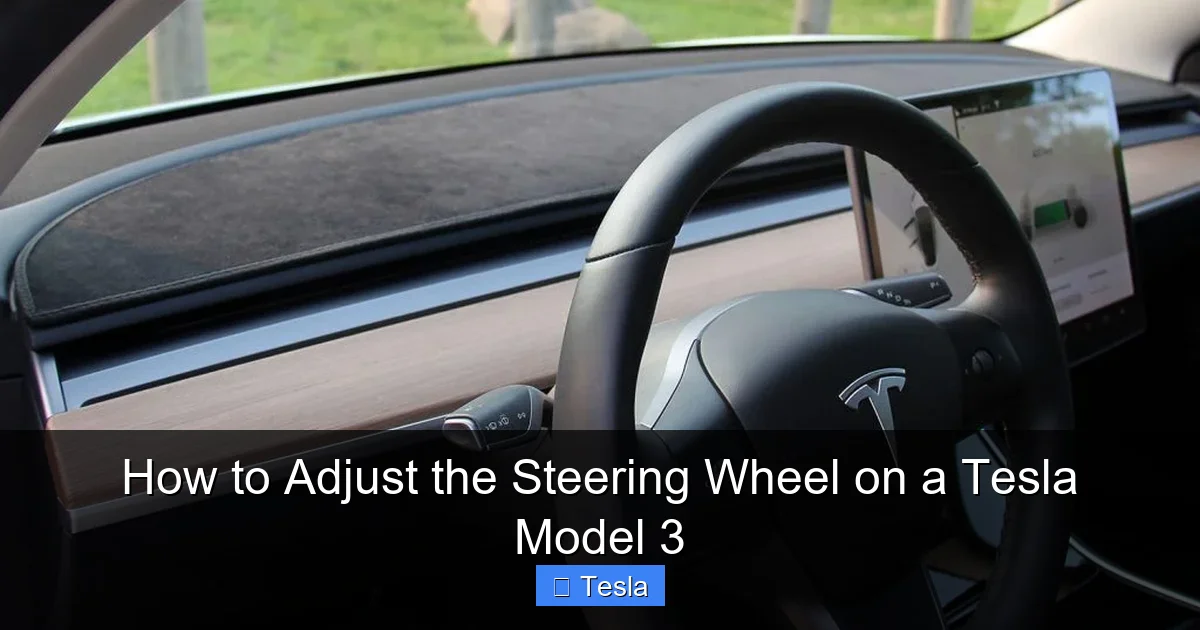
Visual guide about How to Adjust the Steering Wheel on a Tesla Model 3
Image source: tesloid.com
Activating the Heater
There are two ways to turn it on:
- Touchscreen: Go to ‘Controls’ > ‘Climate’ > ‘Steering Wheel Heater’. Toggle it on. You can often set a timer (e.g., 30 or 60 minutes) after which it turns off automatically.
- Physical Button: On the bottom spoke of the steering wheel (usually the 6 o’clock position), there is a small button with a heating icon. Press it to cycle through off, low, and high settings. A small LED indicator shows the active level.
The heater warms the wheel evenly and relatively quickly. It’s more energy-efficient than running the cabin heater on high and provides direct warmth where you need it. Remember, using any electrical accessory, including the steering wheel heater, will slightly reduce your driving range. For long trips in cold weather, pre-conditioning the cabin while still plugged in is the most efficient way to ensure a warm wheel and interior.
Safety First: Proper Adjustment Techniques
Correct steering wheel positioning is a fundamental safety issue, not just a comfort one. An improper position can lead to fatigue, reduced reaction time, and increased injury risk in a collision.
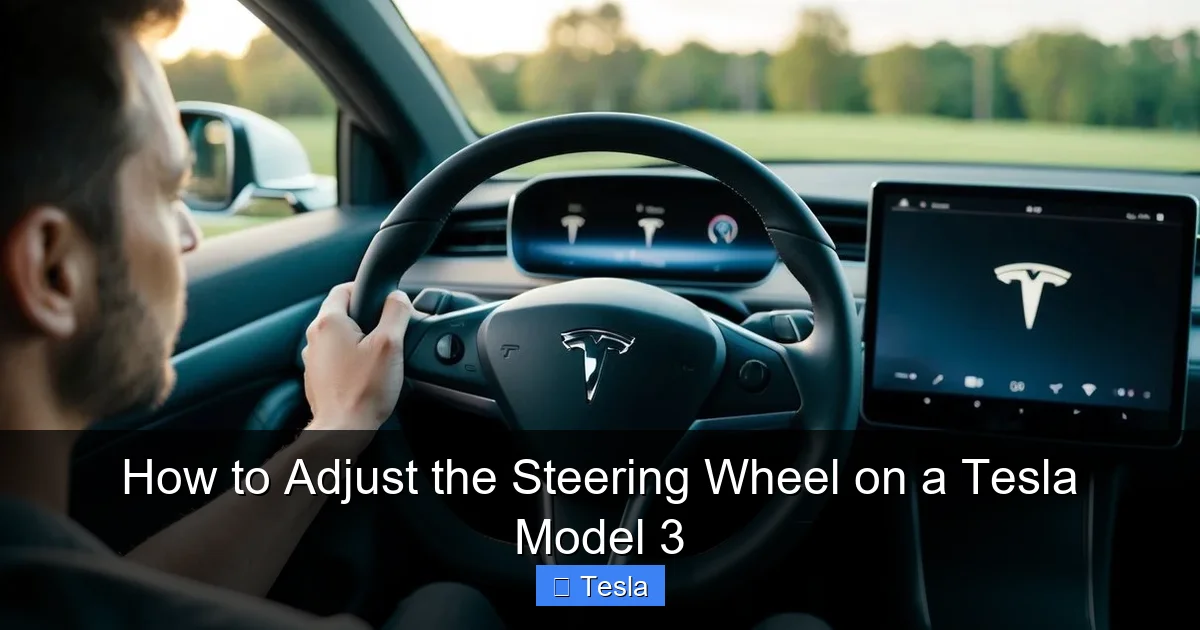
Visual guide about How to Adjust the Steering Wheel on a Tesla Model 3
Image source: koala.sh
The “10-and-2” or “9-and-3” Rule Revisited
Traditional advice was to hold the wheel at 10 and 2 o’clock. Modern safety experts, including those from the Insurance Institute for Highway Safety (IIHS), now recommend 9 and 3 o’clock for better control and to keep arms clear of a deploying airbag. Regardless of your hand position, the wheel must be adjusted so you can hold it comfortably with a slight bend in your elbows. You should not have to fully extend your arms or hunch your shoulders forward.
The Full Adjustment Sequence
Always follow this order for the best result:
- Seat First: Adjust your seat forward/backward and up/down so you can fully depress the pedals without locking your knee and have a clear view over the dashboard. Your hips should be as far back in the seat as possible.
- Steering Wheel Second: Now adjust the steering wheel. Tilt it so you can see the instrument cluster (the screen behind the wheel) clearly without the rim blocking your view. Telescopically, move it so your wrists rest comfortably on the wheel with your shoulders relaxed against the seat. Your hands should be at the 9 and 3 positions with elbows bent.
- Mirrors Last: Finally, adjust your side and rearview mirrors. Your seating and steering position are now fixed, so your mirror angles will be correct for your field of view.
Taking 30 seconds to do this properly before you drive significantly reduces fatigue on any journey. It’s especially important for taller or shorter drivers who fall outside the average range.
Troubleshooting: When Adjustment Doesn’t Work
The electronic system in the Model 3 is very reliable. However, on rare occasions, you might encounter issues. Most are simple fixes.
Issue: The Touchscreen or Stalk Controls Are Unresponsive
Solution: This is usually a temporary software glitch. The first and most effective step is to perform a soft reboot of the touchscreen. Hold down both scroll wheels on the steering wheel (or the two buttons on the steering wheel itself, depending on model year) until the screen goes black and the Tesla logo reappears. This restarts the car’s display computer without affecting driving systems. After it reboots, try adjusting again. If the problem persists, try parking, powering off the vehicle completely (via ‘Safety & Security’ > ‘Power Off’), wait a minute, then restart.
Issue: The Steering Wheel Moves Erratically or Stutters
Solution: This could indicate a temporary loss of communication or a minor obstruction. Ensure nothing is physically caught in the steering column area (like a bag strap or clothing). Check for any software updates pending in ‘Controls’ > ‘Software’. An update may resolve a known bug. If the movement is jerky or makes unusual noises, do not force it. Contact Tesla Service.
Issue: An Error Message Appears (e.g., “Steering Wheel Adjustment Unavailable”)
Solution: A persistent error message indicates a system fault. This could be related to the adjustment motor, a sensor, or a deeper electrical issue. First, try the soft reboot. If the message returns, you will need to schedule a service appointment. Do not attempt to manually force the wheel; it is locked in place when powered off and manually moving it can damage the system. For any persistent electronic issue, it’s best to let Tesla’s technicians diagnose it with their proprietary tools. Remember, for other Tesla customization needs, like understanding the cost of professional window tinting to reduce glare, our site has dedicated guides.
Conclusion: Your Perfect Driving Position Awaits
Mastering the steering wheel adjustment on your Tesla Model 3 is one of the first and most important steps in tailoring your driving experience. The process is deliberately simple and intuitive, reflecting Tesla’s philosophy of user-friendly technology. By using the touchscreen for precise control, the stalk for quick changes, and the memory function for seamless driver swaps, you can achieve a safe and comfortable position in seconds. Don’t forget the little luxuries like the steering wheel heater on chilly mornings. Always prioritize the correct adjustment sequence—seat first, then wheel, then mirrors—for optimal ergonomics and safety. The electronic system is robust, and most hiccups are solved with a simple screen reboot. If you take the time to set it up right, your Model 3 will feel like an extension of yourself on every drive, whether you’re commuting or on a road trip. Enjoy the perfect view, the perfect grip, and the perfect drive.
Frequently Asked Questions
Can I adjust the steering wheel while the car is moving?
Yes, you can make minor adjustments using the left stalk while driving at a steady speed. However, for safety, it’s best to make major adjustments when the car is in Park. Always keep your focus on the road.
Does the steering wheel adjustment work if the car is turned off?
No. The electric steering wheel motors only operate when the vehicle is powered on (either in Park with a driver present or in “Ready to Drive” mode). The wheel is locked in place when the car is off to prevent theft and damage.
How do I reset the steering wheel position to factory default?
There is no single “reset” button. To return to a neutral position, manually adjust it using the touchscreen or stalk. If you want to clear a saved driver profile that includes the wheel position, go to ‘Controls’ > ‘Driver & Vehicle’ > ‘Driver Profiles’, select the profile, and choose ‘Delete’.
Why isn’t my steering wheel heater working?
First, ensure it’s turned on via the touchscreen or wheel button. If it still doesn’t warm, check for any error messages. A soft reboot of the touchscreen (holding both steering wheel scroll buttons) often resolves temporary glitches. If the problem continues, it may be a faulty heating element or fuse requiring service.
Is the steering wheel adjustment range the same in all Tesla Model 3 trims?
Yes. The adjustment mechanism (tilt and telescopic range) is identical across all Model 3 variants (Rear-Wheel Drive, Long Range, Performance). The difference in wheel size or trim does not affect the adjustment range.
Can I manually move the steering wheel if the electronic system fails?
No. The steering wheel is locked to the electronic adjustment column and cannot be moved by hand when the system is powered. Forcing it can cause significant damage. If the system fails, the wheel will remain in its last position, and you must contact Tesla Service for repair.
