
Which Is Bigger: Nissan Rogue or Chevy Equinox?

When comparing the Nissan Rogue and Chevy Equinox, size matters—but bigger isn’t always better. While both are compact SUVs, the Rogue offers more passenger and cargo space, making it the larger and more practical choice for families and frequent travelers.
Key Takeaways
- The Nissan Rogue is larger overall: It has a longer wheelbase, wider body, and more interior volume than the Chevy Equinox.
- Rogue offers more cargo space: With up to 74.1 cubic feet of cargo room, the Rogue beats the Equinox’s 63.9 cubic feet.
- Equinox is slightly more compact: Its smaller footprint makes it easier to park and maneuver in tight city spaces.
- Passenger comfort favors the Rogue: Rear legroom and headroom are more generous in the Nissan, especially for taller passengers.
- Both seat five comfortably: Neither SUV offers a third row, but the Rogue’s interior feels more spacious.
- Towing capacity is similar: Both can tow up to 1,500 lbs, so size doesn’t impact towing performance.
- Choose based on lifestyle: Need space? Go Rogue. Prefer agility? The Equinox might suit you better.
📑 Table of Contents
- Which Is Bigger: Nissan Rogue or Chevy Equinox?
- Exterior Dimensions: Length, Width, and Wheelbase
- Interior Space: Passenger Comfort and Room to Breathe
- Cargo Capacity: Hauling Gear, Groceries, and More
- Driving Dynamics: Size vs. Maneuverability
- Technology and Features: Space Isn’t Just Physical
- Which One Should You Choose?
Which Is Bigger: Nissan Rogue or Chevy Equinox?
So you’re in the market for a compact SUV—something that’s practical, fuel-efficient, and stylish enough to handle both school drop-offs and weekend road trips. Two names keep popping up: the Nissan Rogue and the Chevy Equinox. Both are popular, reliable, and packed with modern features. But when it comes to size—especially interior space, cargo capacity, and overall dimensions—which one comes out on top?
The short answer? The Nissan Rogue is bigger—and not just by a little. From wheelbase to cargo volume, the Rogue offers more room for passengers and gear. But size isn’t everything. The Chevy Equinox, while slightly smaller, has its own strengths, like a more car-like driving feel and a lower starting price. So before you decide, let’s break down every dimension, from headroom to hauling power, so you can pick the SUV that truly fits your life.
Exterior Dimensions: Length, Width, and Wheelbase
When comparing the exterior size of the Nissan Rogue and Chevy Equinox, the differences are noticeable—but not dramatic. Both are classified as compact SUVs, but the Rogue edges ahead in nearly every external measurement.

Visual guide about Which Is Bigger: Nissan Rogue or Chevy Equinox?
Image source: s7d9.scene7.com
Length and Wheelbase
The Nissan Rogue measures approximately 183.0 inches in length, with a wheelbase of 106.5 inches. In contrast, the Chevy Equinox comes in at 183.1 inches long—just a hair longer—but with a slightly shorter wheelbase of 107.3 inches. Wait, that seems contradictory, right? How can the Equinox be longer but have a shorter wheelbase?
Here’s the deal: wheelbase—the distance between the front and rear wheels—has a bigger impact on interior space than overall length. A longer wheelbase usually means more room inside, especially for rear passengers. So even though the Equinox is technically 0.1 inches longer, the Rogue’s longer wheelbase (by 0.8 inches) translates to better interior comfort.
Width and Height
Width is where the Rogue really pulls ahead. The Rogue is 72.4 inches wide (excluding mirrors), while the Equinox is slightly narrower at 72.1 inches. That might not sound like much, but every inch counts when you’re trying to squeeze three kids into the back seat or load wide items like strollers or furniture.
In terms of height, the Rogue stands at 66.5 inches, compared to the Equinox’s 65.4 inches. The extra inch of height gives the Rogue a slightly more commanding view of the road and can make entry and exit easier for older passengers or those with mobility concerns.
Ground Clearance and Approach Angles
Ground clearance is another factor to consider, especially if you live in an area with snow, potholes, or rough terrain. The Rogue offers 8.2 inches of ground clearance, while the Equinox provides 7.9 inches. Again, the Rogue wins—but only by a small margin. Both are more than capable for daily driving and light off-roading, but the Rogue has a slight edge if you frequently drive on uneven surfaces.
Approach and departure angles (how steep a slope the vehicle can climb without scraping) are similar between the two, so neither has a clear advantage for adventurous drivers. But if you’re choosing based on sheer size and presence on the road, the Rogue feels more substantial.
Interior Space: Passenger Comfort and Room to Breathe
Now let’s talk about what really matters: the space inside. After all, you’re not just buying a vehicle—you’re buying a mobile living room, office, and storage unit. So which SUV gives you more room to stretch out?

Visual guide about Which Is Bigger: Nissan Rogue or Chevy Equinox?
Image source: autozonic.com
Front Seat Comfort
Both the Rogue and Equinox offer comfortable front seats with plenty of adjustability. But the Rogue’s cabin feels more open and airy. With 41.1 inches of front headroom and 43.8 inches of legroom, the Rogue gives drivers and passengers a little more breathing room. The Equinox offers 40.3 inches of headroom and 43.1 inches of legroom—still generous, but slightly tighter.
The Rogue also has a wider front shoulder room measurement (58.2 inches vs. 57.8 inches), which can make a difference on long drives or for broader-shouldered drivers. Plus, the Rogue’s dashboard layout is more driver-centric, with controls within easy reach and a cleaner design.
Rear Seat Space
This is where the Rogue really shines. Rear passengers in the Rogue enjoy 37.8 inches of legroom and 38.5 inches of headroom. The Equinox, by comparison, offers 36.5 inches of legroom and 38.2 inches of headroom. That extra inch and a half of legroom might not seem like a lot, but for taller passengers or families with growing teens, it can mean the difference between comfort and cramped quarters.
Shoulder room in the back is also better in the Rogue: 57.3 inches vs. 56.9 inches in the Equinox. And because the Rogue has a longer wheelbase, the rear seats are positioned farther from the front, reducing the “knee-in-chest” feeling some compact SUVs suffer from.
Third-Row Seating? Not an Option
Neither the Rogue nor the Equinox offers a third row of seating. If you need to seat seven people regularly, you’ll need to look at larger SUVs like the Nissan Pathfinder or Chevy Traverse. But for families of five or fewer, both vehicles are more than capable—just know that the Rogue gives you a bit more wiggle room.
Cargo Capacity: Hauling Gear, Groceries, and More
Whether you’re packing for a weekend getaway, hauling sports gear, or just doing weekly grocery runs, cargo space is a big deal. So how do the Rogue and Equinox stack up when it comes to storage?
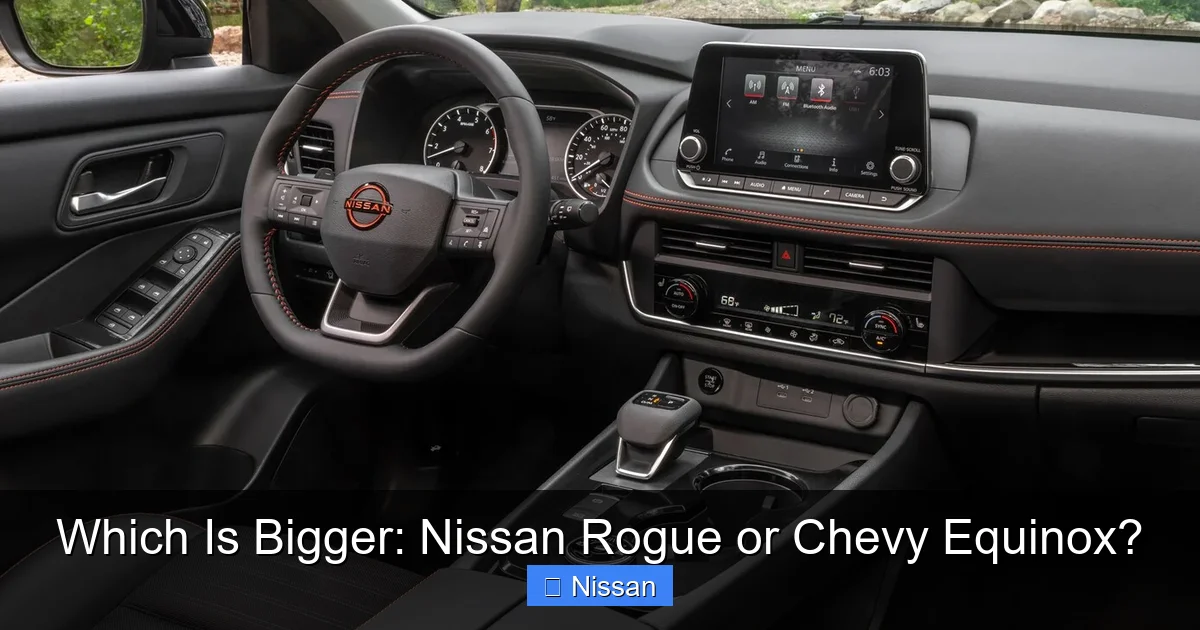
Visual guide about Which Is Bigger: Nissan Rogue or Chevy Equinox?
Image source: pictures.dealer.com
Cargo Volume Behind the Rear Seats
With the rear seats up, the Nissan Rogue offers 36.5 cubic feet of cargo space. The Chevy Equinox provides 29.9 cubic feet. That’s a significant difference—nearly 7 cubic feet more in the Rogue. To put that in perspective, that’s enough space for an extra suitcase, a large cooler, or several bags of mulch.
This extra space comes in handy for everyday tasks. Imagine loading up for a family picnic: the Rogue can easily fit a cooler, folding chairs, a blanket, and a picnic basket with room to spare. The Equinox can handle it too, but you might have to play Tetris with your gear.
Maximum Cargo Capacity (Seats Folded)
Fold down the rear seats, and the difference becomes even more pronounced. The Rogue expands to a massive 74.1 cubic feet of cargo space. The Equinox maxes out at 63.9 cubic feet. That’s over 10 cubic feet less—enough to fit a full-sized bicycle, a small mattress, or several large moving boxes.
The Rogue’s cargo area is also more versatile. It features a two-tier cargo floor, allowing you to hide valuables or create a flat loading surface. The Equinox has a simpler setup, with a standard flat floor and optional cargo management system, but it doesn’t offer the same level of customization.
Practical Storage Features
Both SUVs come with thoughtful storage solutions, but the Rogue goes a step further. It includes under-floor storage compartments, multiple cup holders, and a center console that’s deep enough to hold a tablet or small laptop. The Equinox has good storage too, but it feels more basic in comparison.
One standout feature in the Rogue is the “Divide and Hide” cargo system, which lets you create separate compartments and conceal items from view. It’s perfect for keeping groceries from rolling around or hiding gifts before a birthday party. The Equinox doesn’t have an equivalent system, so you’ll need to rely on cargo nets or organizers.
Driving Dynamics: Size vs. Maneuverability
Now, here’s the trade-off: bigger isn’t always better when it comes to driving. A larger vehicle might offer more space, but it can also feel less agile in tight spaces. So how do the Rogue and Equinox compare in real-world driving?
Turning Radius and City Driving
The Chevy Equinox has a tighter turning radius of 37.6 feet, compared to the Rogue’s 38.4 feet. That means the Equinox can make sharper turns and is slightly easier to maneuver in crowded parking lots or narrow streets. If you live in a city with tight alleys or frequent parallel parking, the Equinox might feel more nimble.
But the difference is minor. Most drivers won’t notice the 0.8-foot difference in daily driving. And the Rogue’s slightly larger size actually contributes to a more stable ride at highway speeds, reducing the feeling of being tossed around in wind or on uneven pavement.
Ride Comfort and Noise Levels
The Rogue’s longer wheelbase and wider stance give it a smoother, more planted ride. It absorbs bumps and potholes better than the Equinox, which can feel a bit more jittery on rough roads. The Rogue also does a better job of insulating passengers from road and wind noise, making long drives more pleasant.
Both vehicles come with available all-wheel drive, but the Rogue’s system is more advanced, with multiple drive modes (including off-road settings) that adapt to different conditions. The Equinox’s AWD is simpler and more focused on traction in rain or light snow.
Fuel Efficiency: Does Size Impact MPG?
You might think the larger Rogue would guzzle more gas, but that’s not the case. In fact, both SUVs are quite efficient. The Rogue gets an EPA-estimated 27 mpg city / 35 mpg highway with front-wheel drive. The Equinox comes in at 26 mpg city / 31 mpg highway.
The Rogue’s slightly better highway mileage is thanks to its more aerodynamic design and continuously variable transmission (CVT), which keeps the engine in its most efficient range. So even though it’s bigger, the Rogue is actually a bit more fuel-efficient on the open road.
Technology and Features: Space Isn’t Just Physical
When we talk about “size,” we’re not just talking about inches and cubic feet. The interior layout, tech features, and overall design contribute to how spacious a vehicle feels. Let’s see how the Rogue and Equinox compare in the tech department.
Infotainment and Connectivity
Both SUVs come standard with an 8-inch touchscreen, Apple CarPlay, Android Auto, and Bluetooth. But the Rogue’s system feels more modern and responsive. The interface is cleaner, with larger icons and smoother animations. The Equinox’s system is functional but feels a bit dated in comparison.
The Rogue also offers a larger available display (up to 9 inches) and a premium Bose audio system, which enhances the sense of space with rich, immersive sound. The Equinox offers a Bose system too, but only on higher trims.
Safety and Driver Assistance
Safety is a top priority for families, and both vehicles come well-equipped. The Rogue includes Nissan Safety Shield 360 as standard, which features automatic emergency braking, blind-spot warning, rear cross-traffic alert, and lane departure warning. The Equinox offers Chevy Safety Assist, which includes similar features but lacks rear automatic braking on base models.
The Rogue’s safety suite feels more comprehensive, and its larger size contributes to better crash protection. In NHTSA testing, the Rogue earned a 5-star overall safety rating, while the Equinox scored 4 stars. It’s a small difference, but every bit counts when it comes to protecting your loved ones.
Interior Materials and Design
The Rogue’s cabin uses higher-quality materials, with soft-touch surfaces, available leather upholstery, and a more cohesive design. The Equinox’s interior is functional but leans more toward hard plastics, especially in lower trims. The Rogue feels more upscale and spacious, even before you consider the actual dimensions.
Lighting also plays a role. The Rogue offers ambient interior lighting on higher trims, which makes the cabin feel more open and inviting at night. The Equinox doesn’t offer this feature, so the interior can feel darker and more enclosed after sunset.
Which One Should You Choose?
So, which is bigger: the Nissan Rogue or Chevy Equinox? The answer is clear—the Nissan Rogue is the larger vehicle in almost every measurable way. It offers more passenger space, greater cargo capacity, a longer wheelbase, and a more comfortable ride. If you prioritize space, comfort, and versatility, the Rogue is the better choice.
But that doesn’t mean the Equinox is a bad option. If you value a lower starting price (the Equinox starts around $27,000, while the Rogue begins at $28,000), easier maneuverability, and a slightly more car-like driving experience, the Equinox might be the right fit. It’s also a solid choice if you don’t need maximum cargo space and prefer a more compact footprint.
Ultimately, the decision comes down to your lifestyle. Are you hauling kids, gear, and groceries on a regular basis? Go with the Rogue. Do you mostly drive solo or as a couple and value agility over space? The Equinox could be your match.
Take both for a test drive. Sit in the back seat. Load up the cargo area. See which one feels like home. Because when it comes to choosing a vehicle, size matters—but so does how it makes you feel.
Frequently Asked Questions
Is the Nissan Rogue bigger than the Chevy Equinox?
Yes, the Nissan Rogue is bigger than the Chevy Equinox in nearly every dimension, including length, width, wheelbase, passenger space, and cargo capacity. It offers more room for both people and gear.
Which SUV has more cargo space: Rogue or Equinox?
The Nissan Rogue has significantly more cargo space. It offers 36.5 cubic feet behind the rear seats and up to 74.1 cubic feet with the seats folded, compared to the Equinox’s 29.9 and 63.9 cubic feet.
Does the Chevy Equinox have a third row like the Rogue?
No, neither the Nissan Rogue nor the Chevy Equinox offers a third row of seating. Both are five-passenger compact SUVs.
Which SUV is better for tall passengers?
The Nissan Rogue is better for tall passengers, especially in the rear seat. It offers more legroom, headroom, and shoulder room than the Equinox.
Is the Equinox easier to park than the Rogue?
Yes, the Chevy Equinox has a slightly tighter turning radius and a more compact feel, making it a bit easier to maneuver and park in tight spaces.
Do both SUVs have all-wheel drive?
Yes, both the Nissan Rogue and Chevy Equinox offer available all-wheel drive, though the Rogue’s system includes more drive modes and off-road capabilities.
