
Where Is the Transmission Dipstick on a 2010 Toyota Camry?

Many 2010 Toyota Camry models don’t have a traditional transmission dipstick. Instead, they use a sealed transmission system that requires a scan tool or professional inspection. Learn how to check your transmission fluid safely and correctly.
Key Takeaways
- Most 2010 Camrys lack a dipstick: Toyota moved to sealed transmissions in this model year, eliminating the traditional dipstick for most trims and engines.
- Check via fill plug method: Fluid level is verified by removing a fill plug on the transmission case, typically requiring a 3/8-inch drive ratchet.
- Use only Toyota ATF WS: The 2010 Camry requires genuine Toyota WS (World Standard) automatic transmission fluid—using the wrong type can damage the transmission.
- Check when warm and level: Always check fluid after driving for 15–20 minutes and ensure the car is on a flat surface with the engine running and in Park.
- Professional inspection recommended: Due to complexity, many owners and mechanics recommend having a certified Toyota technician perform fluid checks and changes.
- Symptoms of low fluid: Slipping gears, delayed shifting, or dashboard warning lights may indicate low or degraded transmission fluid.
- Regular maintenance matters: Even without a dipstick, transmission fluid should be inspected every 30,000 to 60,000 miles to ensure longevity.
📑 Table of Contents
- Where Is the Transmission Dipstick on a 2010 Toyota Camry?
- Why Doesn’t the 2010 Toyota Camry Have a Transmission Dipstick?
- How to Check Transmission Fluid Without a Dipstick
- Signs Your Transmission Fluid Needs Attention
- Maintenance Tips for Your 2010 Camry’s Transmission
- When to See a Mechanic
- Conclusion
Where Is the Transmission Dipstick on a 2010 Toyota Camry?
If you’re a proud owner of a 2010 Toyota Camry, you might have opened the hood looking for the transmission dipstick—only to come up empty-handed. You’re not alone. Many drivers are surprised to learn that most 2010 Camry models don’t have a traditional transmission dipstick at all. Instead, Toyota transitioned to a sealed transmission system, which means checking the fluid isn’t as simple as pulling a stick and wiping it clean.
This change was part of a broader industry trend toward more efficient, low-maintenance transmissions. While it reduces the chance of overfilling or contamination, it also means owners need to adapt their maintenance routines. The good news? You can still check and maintain your transmission fluid—it just takes a bit more know-how and sometimes a trip to the mechanic.
In this guide, we’ll walk you through everything you need to know about the 2010 Toyota Camry’s transmission system, including why there’s no dipstick, how to check the fluid safely, what tools you’ll need, and when to seek professional help. Whether you’re a DIY enthusiast or just trying to stay informed, this article will help you keep your Camry running smoothly for years to come.
Why Doesn’t the 2010 Toyota Camry Have a Transmission Dipstick?
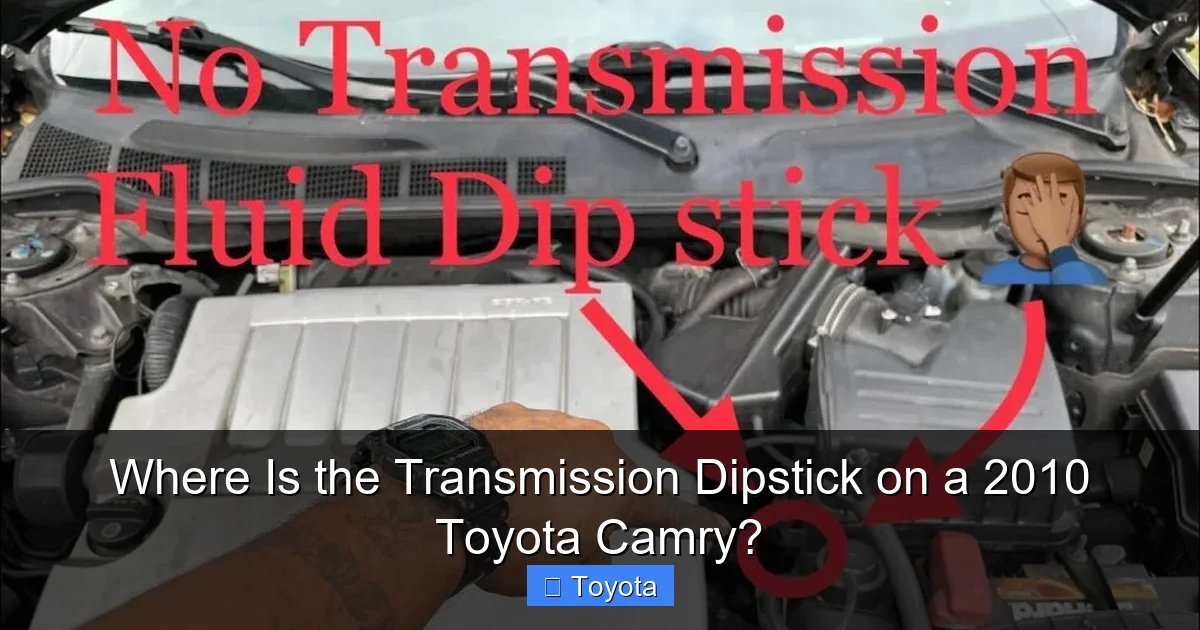
Visual guide about Where Is the Transmission Dipstick on a 2010 Toyota Camry?
Image source: thecarhow.com
The Shift to Sealed Transmissions
Back in the day, checking your transmission fluid was as routine as checking your oil. You’d pop the hood, locate the dipstick (usually yellow or red), pull it out, wipe it, reinsert it, and check the level. Simple. But by 2010, Toyota had largely phased out this system in favor of sealed transmissions—especially in popular models like the Camry.
A sealed transmission is designed to be maintenance-free for the life of the vehicle, or at least until a major service is needed. The idea is to prevent contamination, reduce the risk of overfilling, and improve overall reliability. Without a dipstick, there’s no easy way for dirt or moisture to enter the system, and the fluid is less likely to be disturbed during routine checks.
This design also supports Toyota’s use of specialized transmission fluid—ATF WS (World Standard)—which is formulated to work optimally in sealed systems. Unlike older fluids that break down faster, WS fluid is engineered for long-term stability, reducing the need for frequent changes.
Engine and Trim Variations
It’s important to note that not every 2010 Camry is exactly the same. Toyota offered the Camry with different engines—primarily the 2.4L 4-cylinder (2AZ-FE) and the 3.5L V6 (2GR-FE)—and various trim levels like LE, SE, XLE, and Hybrid. While most of these models use a sealed transmission, there are rare exceptions.
Some early-production 2010 models or specific regional variants might still have a dipstick, especially if they were built on older platforms or used a different transmission type. However, the vast majority of U.S.-market 2010 Camrys—particularly those with the U241E or U241LE automatic transmissions—are dipstick-free.
If you’re unsure about your specific model, check your owner’s manual or look up your VIN on Toyota’s official website. You can also consult a local dealership or trusted mechanic for confirmation.
The Role of Modern Diagnostics
Another reason Toyota eliminated the dipstick is the rise of onboard diagnostics. Modern vehicles like the 2010 Camry are equipped with sophisticated sensors that monitor transmission temperature, pressure, and performance. If something goes wrong, the car can trigger a dashboard warning light—such as the “Check Engine” or “Transmission” light—alerting you to a potential issue.
While these systems are helpful, they don’t replace the need for physical fluid checks. Sensors can fail, and not all problems trigger a warning light immediately. That’s why understanding how to manually inspect your transmission fluid—even without a dipstick—is still crucial for long-term reliability.
How to Check Transmission Fluid Without a Dipstick
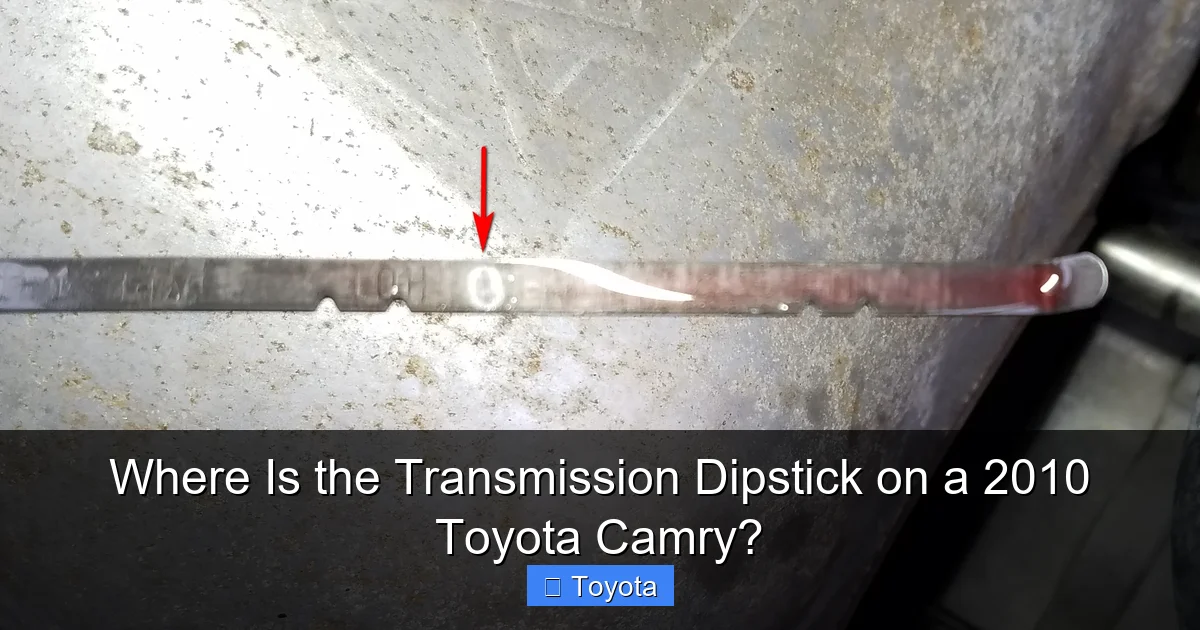
Visual guide about Where Is the Transmission Dipstick on a 2010 Toyota Camry?
Image source: i.imgur.com
The Fill Plug Method
So, if there’s no dipstick, how do you check the fluid? The answer lies in the transmission’s fill plug. This is a bolt located on the side of the transmission case, typically near the driver’s side axle. When removed, it allows you to see whether the fluid level is correct.
Here’s how to do it safely:
1. **Warm up the engine:** Drive your Camry for 15–20 minutes to bring the transmission fluid to operating temperature. Cold fluid gives an inaccurate reading.
2. **Park on level ground:** Make sure your car is on a flat surface. Use wheel chocks if needed.
3. **Leave the engine running:** Keep the engine on and the transmission in Park with the parking brake engaged.
4. **Locate the fill plug:** Crawl under the car (use a jack and jack stands for safety) and find the 14mm or 17mm bolt on the transmission case. It’s usually near the axle shaft.
5. **Remove the plug:** Use a 3/8-inch drive ratchet or breaker bar. Be careful—fluid may drip out if the level is correct.
6. **Check the level:** If fluid trickles out, the level is good. If nothing comes out, the fluid is low and needs to be added.
7. **Reinstall the plug:** Tighten it to the manufacturer’s torque specification (usually around 20–25 ft-lbs).
Adding Fluid the Right Way
If the fluid is low, you’ll need to add more—but not through the fill hole. Instead, use a fluid pump and a long tube to inject the fluid through the dipstick tube (if your model has one) or a dedicated fill port. Some mechanics use a funnel with a flexible hose inserted into the transmission cooler line.
Always use only Toyota Genuine ATF WS fluid. Do not substitute with generic or multi-vehicle fluids. Using the wrong type can cause slipping, overheating, or even transmission failure.
Pour slowly and check frequently by removing the fill plug. Stop when fluid begins to drip out. Overfilling can be just as harmful as underfilling.
Safety Tips and Tools You’ll Need
Checking transmission fluid without a dipstick isn’t for everyone. It requires getting under the car, working with hot components, and handling fluids carefully. Here are some tips to stay safe:
– **Use proper jack stands:** Never rely solely on a hydraulic jack. Always use jack stands rated for your vehicle’s weight.
– **Wear gloves and eye protection:** Transmission fluid can irritate skin and eyes.
– **Work in a well-lit area:** Good lighting helps you see the fill plug and avoid mistakes.
– **Have a drip pan ready:** Fluid will spill when you remove the plug.
– **Use the right tools:** A 3/8-inch drive ratchet, socket set, and torque wrench are essential.
If you’re not comfortable doing this yourself, don’t hesitate to visit a mechanic. A professional can check the fluid, inspect for leaks, and perform a full transmission service if needed.
Signs Your Transmission Fluid Needs Attention
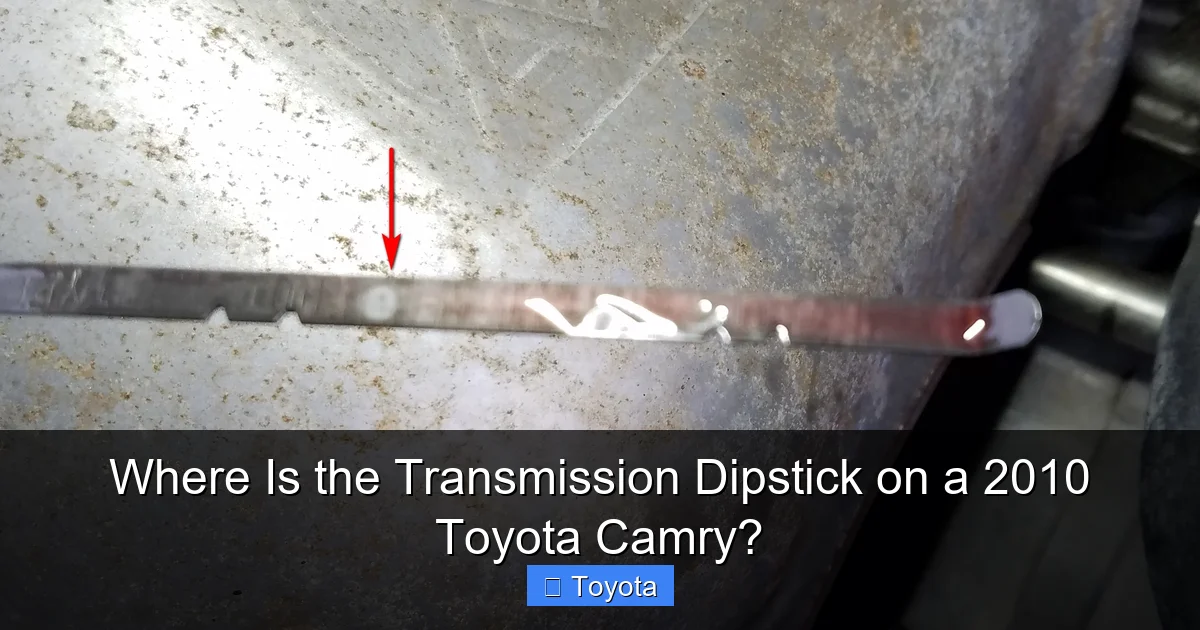
Visual guide about Where Is the Transmission Dipstick on a 2010 Toyota Camry?
Image source: i.imgur.com
Common Symptoms of Low or Bad Fluid
Even without a dipstick, you can still tell when your transmission fluid needs attention. Watch for these warning signs:
– **Delayed or rough shifting:** If your Camry hesitates when shifting from Park to Drive, or jerks during acceleration, low fluid could be the cause.
– **Slipping gears:** The engine revs but the car doesn’t move as expected. This is a serious sign of transmission trouble.
– **Unusual noises:** Whining, humming, or clunking sounds from under the car may indicate low fluid or internal wear.
– **Burning smell:** Overheated transmission fluid can produce a burnt odor. This often means the fluid is old or the transmission is working too hard.
– **Dashboard warning lights:** The “Check Engine” or “Transmission” light may illuminate if the system detects a problem.
When to Check the Fluid
Even if you don’t notice symptoms, it’s wise to inspect your transmission fluid periodically. Toyota recommends checking it every 30,000 to 60,000 miles, depending on driving conditions. If you frequently drive in stop-and-go traffic, tow heavy loads, or live in a hot climate, consider checking it more often.
Regular inspections help catch problems early and extend the life of your transmission. Remember, transmission repairs are among the most expensive fixes on any vehicle—so prevention is key.
Maintenance Tips for Your 2010 Camry’s Transmission
Stick to the Recommended Fluid
Using the correct transmission fluid is critical. The 2010 Camry is designed for Toyota ATF WS, a low-viscosity fluid that provides smooth shifting and protects internal components. Never use Dexron, Mercon, or other generic fluids—they’re not compatible and can cause damage.
If you’re unsure whether your fluid is original or has been changed, ask your mechanic to test it. Some shops offer fluid analysis to check for contamination or degradation.
Schedule Regular Service
While the transmission is sealed, it’s not maintenance-free forever. Over time, fluid breaks down, and debris can accumulate. A full transmission service—including a fluid and filter change—is recommended every 60,000 to 100,000 miles.
During this service, a technician will drain the old fluid, replace the filter (if accessible), and refill with fresh ATF WS. Some shops also perform a flush, which removes more old fluid but carries a small risk of dislodging debris. Discuss the pros and cons with your mechanic.
Watch for Leaks
Even sealed systems can develop leaks. Check under your car regularly for red or brown fluid puddles. Common leak points include the transmission pan gasket, axle seals, and cooler lines. If you spot a leak, have it repaired promptly to prevent low fluid levels and potential damage.
Drive Smart
Your driving habits affect transmission health. Avoid aggressive acceleration, sudden stops, and towing beyond your Camry’s capacity. Let the engine warm up in cold weather before driving, and don’t shift into Park until the car is fully stopped.
These small habits reduce stress on the transmission and help maintain optimal fluid condition.
When to See a Mechanic
Complex Repairs Require Expertise
While checking fluid via the fill plug is doable for some, more complex tasks—like replacing the filter, performing a flush, or diagnosing internal issues—are best left to professionals. Toyota transmissions are precision instruments, and improper handling can lead to costly mistakes.
A certified Toyota technician has the tools, training, and access to factory service information. They can also use a scan tool to read transmission data and detect problems before they become serious.
Warranty and Resale Considerations
If your Camry is still under warranty (unlikely for a 2010 model, but possible with extended coverage), DIY fluid changes could void it. Even if not, keeping detailed service records improves resale value. A well-maintained transmission is a major selling point.
Peace of Mind
At the end of the day, your car is a significant investment. Paying a professional for a transmission inspection gives you peace of mind and ensures the job is done right. It’s a small price to pay for avoiding a $3,000+ repair bill.
Conclusion
The absence of a transmission dipstick on the 2010 Toyota Camry might seem inconvenient, but it’s a sign of modern engineering designed for reliability and longevity. While you can’t simply pull a stick and check the level, you still have options—whether through the fill plug method or professional service.
Understanding your vehicle’s design, using the correct fluid, and staying alert to warning signs will go a long way in keeping your Camry’s transmission in top shape. Regular maintenance, smart driving habits, and timely inspections are your best defenses against costly repairs.
So the next time you pop the hood and don’t see a dipstick, don’t panic. You’re not missing anything—your Camry is just built for the future. With the right knowledge and care, your 2010 Toyota Camry can deliver smooth, trouble-free driving for many miles to come.
Frequently Asked Questions
Does the 2010 Toyota Camry have a transmission dipstick?
Most 2010 Toyota Camry models do not have a traditional transmission dipstick. Toyota used sealed transmissions in this model year, eliminating the dipstick for easier maintenance and reduced contamination risk.
How do I check the transmission fluid in a 2010 Camry without a dipstick?
You can check the fluid by removing the fill plug on the transmission case. With the engine running and warm, remove the plug—if fluid trickles out, the level is correct. If not, fluid needs to be added.
What type of transmission fluid does a 2010 Toyota Camry use?
The 2010 Camry requires Toyota Genuine ATF WS (World Standard) fluid. Using any other type can damage the transmission and void warranties.
Can I add transmission fluid myself?
Yes, but it requires accessing the fill plug and using a pump to inject fluid. It’s a delicate process—many owners prefer to have a mechanic do it to avoid overfilling or contamination.
How often should I check the transmission fluid?
Even without a dipstick, inspect the fluid every 30,000 to 60,000 miles. Check more frequently if you drive in harsh conditions like heavy traffic or extreme heat.
What are the signs of low transmission fluid?
Symptoms include delayed shifting, slipping gears, unusual noises, a burning smell, or dashboard warning lights. Address these issues promptly to avoid transmission damage.