
Should I Buy a Honda Civic or Toyota Corolla?

Choosing between a Honda Civic and a Toyota Corolla comes down to your priorities—style, tech, driving feel, and long-term value. Both are top-tier compact sedans known for reliability and efficiency, but subtle differences in design, performance, and features can sway your decision.
Key Takeaways
- Reliability: Both the Honda Civic and Toyota Corolla are legendary for long-term dependability, with strong resale values and low maintenance costs.
- Fuel Efficiency: The Corolla often edges out slightly in EPA ratings, especially with its hybrid model, while the Civic offers sportier driving with competitive mpg.
- Driving Experience: The Civic delivers a more engaging, responsive ride with sharper handling, ideal for drivers who enjoy a sportier feel.
- Interior and Tech: The Civic typically offers a more modern, upscale cabin with intuitive infotainment, while the Corolla focuses on simplicity and ease of use.
- Safety Features: Both come standard with advanced driver-assist systems, but Toyota’s Safety Sense and Honda Sensing are equally robust and highly rated.
- Price and Value: The Corolla generally starts at a lower base price, but the Civic offers more standard features in higher trims, balancing overall value.
- Hybrid Options: The Corolla Hybrid delivers exceptional fuel economy (up to 50 mpg), while the Civic currently lacks a hybrid variant in the U.S. market.
📑 Table of Contents
Introduction: Two Titans of the Compact Car World
If you’re in the market for a reliable, fuel-efficient, and affordable compact sedan, chances are you’ve landed on two of the most trusted names in the game: the Honda Civic and the Toyota Corolla. These two models have been battling it out for decades, each earning a loyal fan base and consistently topping reliability charts. But when it comes to choosing between them, the decision isn’t always clear-cut.
Both the Honda Civic and Toyota Corolla are designed for everyday drivers who want a car that won’t let them down. Whether you’re commuting to work, running errands, or taking weekend road trips, these vehicles offer a blend of practicality, safety, and value that’s hard to beat. But beyond the basics, they each have their own personality—subtle differences in design, performance, and technology that can make one a better fit for your lifestyle than the other.
So, should you buy a Honda Civic or Toyota Corolla? The answer depends on what you value most in a car. Are you looking for a smooth, efficient ride with top-notch fuel economy? Or do you prefer a more dynamic driving experience with a modern interior and sporty handling? In this guide, we’ll break down every key aspect—from performance and tech to safety and long-term ownership costs—so you can make an informed decision that matches your needs.
Performance and Driving Experience
Visual guide about Should I Buy a Honda Civic or Toyota Corolla?
Image source: 3.19.197.79
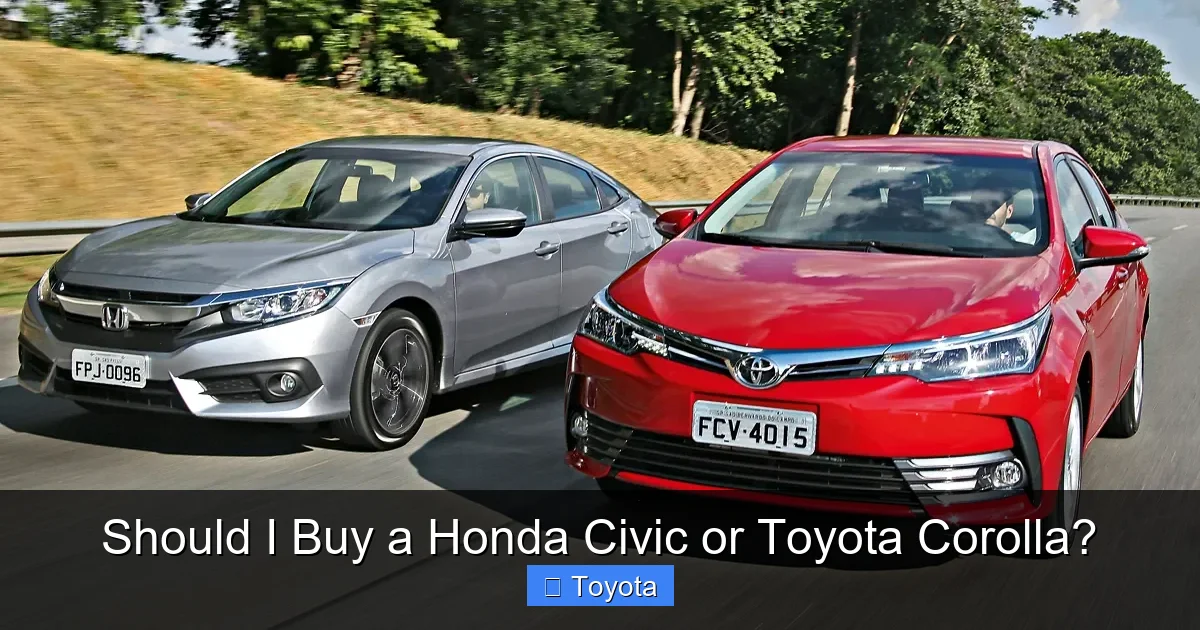
When it comes to how a car feels on the road, the Honda Civic and Toyota Corolla take different approaches. The Civic leans into a more engaging, sport-tuned driving experience, while the Corolla prioritizes comfort and smoothness. Let’s dive into the details.
Engine Options and Power
The 2024 Honda Civic comes standard with a 2.0-liter four-cylinder engine that produces 158 horsepower. If you’re looking for more pep, the turbocharged 1.5-liter engine in the Sport and higher trims bumps that up to 180 horsepower. That extra power makes a noticeable difference during highway merges or when passing slower traffic. The Civic’s engine delivers a satisfying growl under acceleration, and the continuously variable transmission (CVT) is well-tuned to mimic traditional gear shifts, reducing the “rubber band” effect some CVTs are known for.
On the other hand, the 2024 Toyota Corolla offers a 2.0-liter four-cylinder engine across all trims, producing 169 horsepower. While it doesn’t have a turbo option like the Civic, the Corolla’s engine is smooth and efficient, delivering power in a linear, predictable way. The Corolla’s CVT also includes a physical first gear (called “Launch Gear”) for quicker off-the-line response, which helps it feel more responsive at low speeds.
Handling and Ride Quality
Here’s where the Civic really shines. Honda has long tuned the Civic for a sportier feel, with precise steering, firm suspension, and a lower center of gravity. Whether you’re navigating tight city streets or winding back roads, the Civic feels planted and confident. It’s the kind of car that makes you want to take the scenic route.
The Corolla, by contrast, is tuned for comfort. Its suspension absorbs bumps and potholes with ease, making it a great choice for daily commutes on rough pavement. The steering is lighter and less communicative, which some drivers prefer for relaxed driving. While it won’t thrill enthusiasts, the Corolla’s ride is smooth and quiet—perfect for those who prioritize a calm, stress-free drive.
Hybrid Performance: A Clear Winner for Efficiency
If fuel economy is your top concern, the Toyota Corolla Hybrid is a standout. It pairs a 1.8-liter four-cylinder engine with an electric motor, delivering a combined 138 horsepower and an EPA-estimated 50 mpg in the city and 43 mpg on the highway. That’s seriously impressive for a non-luxury compact car. The hybrid system is seamless, switching between gas and electric power without any noticeable lag.
As of now, Honda does not offer a hybrid version of the Civic in the United States. While the Civic e:HEV is available in other markets, U.S. buyers are limited to gasoline-only models. This gives the Corolla a clear advantage for eco-conscious drivers or those with long commutes who want to maximize fuel savings.
Fuel Economy and Efficiency
Visual guide about Should I Buy a Honda Civic or Toyota Corolla?
Image source: i.gaw.to
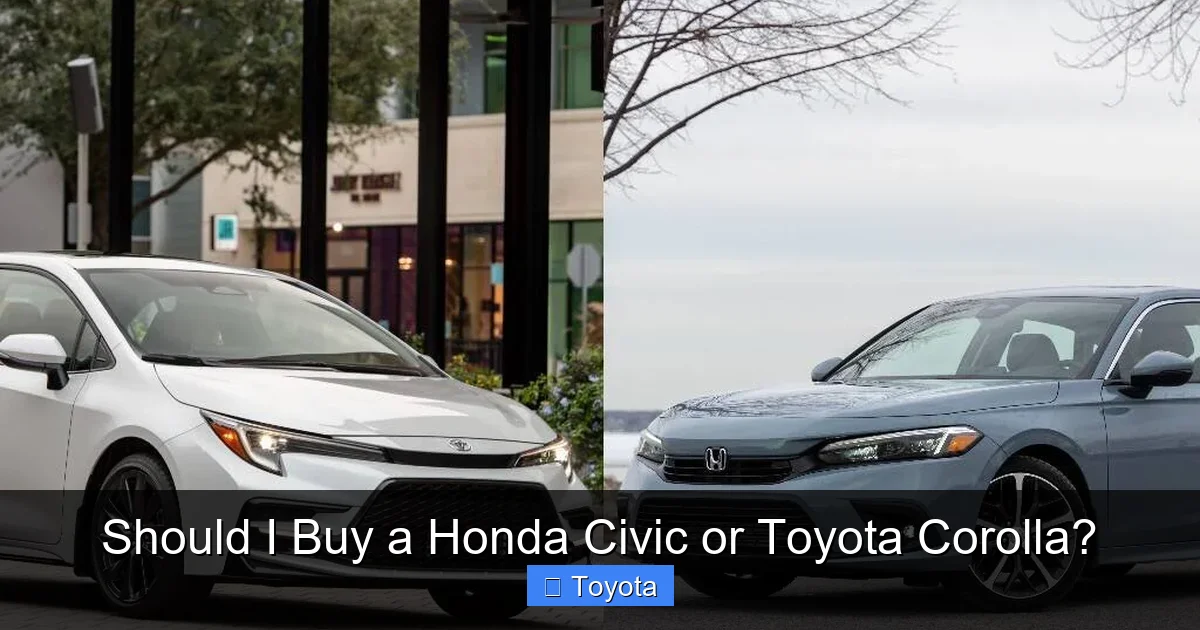
Fuel efficiency is a major selling point for both the Civic and Corolla, but the Corolla—especially the hybrid model—holds a slight edge in this category.
The standard Honda Civic with the 2.0-liter engine gets an EPA-estimated 31 mpg in the city and 40 mpg on the highway. The turbocharged 1.5-liter model is slightly less efficient, at 30 mpg city and 37 mpg highway. These numbers are still excellent for a non-hybrid compact car and beat many competitors in the segment.
The Toyota Corolla with the 2.0-liter engine delivers 32 mpg city and 41 mpg highway—just a hair better than the Civic. But the real game-changer is the Corolla Hybrid, which achieves up to 50 mpg city and 43 mpg highway. That’s a significant difference, especially if you drive a lot in stop-and-go traffic. Over the course of a year, the hybrid could save you hundreds of dollars in fuel costs.
For example, if you drive 15,000 miles annually and gas costs $3.50 per gallon, the Corolla Hybrid would use about 300 gallons of gas, while the Civic (non-turbo) would use around 375 gallons. That’s a difference of 75 gallons—or $262.50 per year. Over five years, that adds up to over $1,300 in savings.
Keep in mind that hybrid models typically cost more upfront. The 2024 Corolla Hybrid starts around $24,000, while the base Civic starts at about $23,000. But if fuel economy is a priority, the long-term savings and environmental benefits of the hybrid may justify the higher initial cost.
Interior Design, Comfort, and Technology
Visual guide about Should I Buy a Honda Civic or Toyota Corolla?
Image source: news.brannonhonda.com
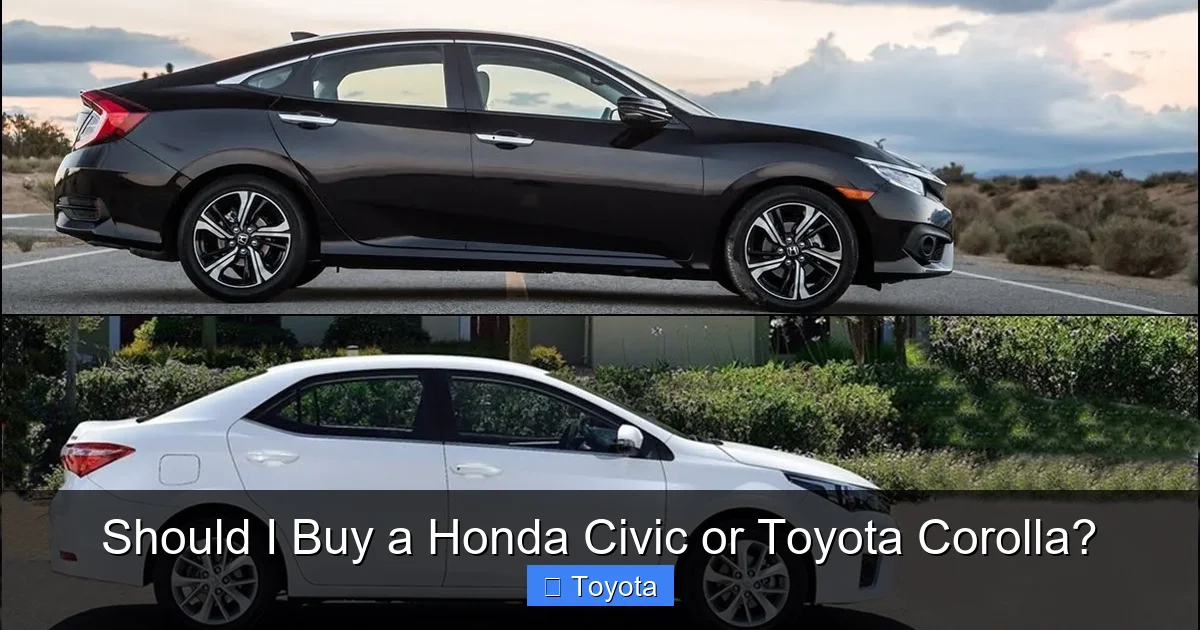
Step inside the Honda Civic and Toyota Corolla, and you’ll notice distinct design philosophies. The Civic offers a more modern, driver-focused cabin, while the Corolla emphasizes simplicity and ease of use.
Cabin Quality and Materials
The 2024 Honda Civic features a clean, minimalist interior with soft-touch materials on the dashboard and door panels. Higher trims include leather-trimmed seats, aluminum-style accents, and ambient lighting, giving the cabin a premium feel that rivals some entry-level luxury cars. The layout is intuitive, with controls placed within easy reach.
The Toyota Corolla’s interior is functional and well-built, but it leans more toward practicality than luxury. The materials are durable and easy to clean, which is great for families or drivers who prioritize longevity over aesthetics. While it doesn’t feel as upscale as the Civic, the Corolla’s cabin is quiet, well-insulated, and free of rattles or squeaks.
Infotainment and Connectivity
Both cars come standard with an 8-inch touchscreen, Apple CarPlay, Android Auto, and a six-speaker audio system. However, the Civic’s infotainment system is generally considered more responsive and user-friendly. The interface is snappier, with clearer graphics and easier navigation. Higher trims offer wireless Apple CarPlay and Android Auto, a premium Bose audio system, and a 10.2-inch digital instrument cluster.
The Corolla’s system is reliable and straightforward, but it can feel a bit sluggish at times. The menu layout is simple, which some drivers appreciate, but it lacks the polish and speed of the Civic’s setup. Wireless smartphone integration is available on higher trims, but it’s not as seamless as Honda’s implementation.
Seating and Cargo Space
Both sedans offer comfortable seating for five, with ample headroom and legroom in the front. The Civic has a slight edge in rear-seat space, with more legroom and a flatter floor, making it more comfortable for three passengers. The Corolla’s rear seat is still roomy, but taller passengers might find the headroom a bit tighter.
Cargo space is nearly identical: the Civic offers 14.8 cubic feet of trunk space, while the Corolla has 13.1 cubic feet. Neither is class-leading, but both are sufficient for groceries, luggage, or weekend gear. If you need more space, consider the Honda Civic Hatchback, which offers up to 24.5 cubic feet with the rear seats up.
Safety Features and Ratings
Safety is a top priority for both Honda and Toyota, and both the Civic and Corolla come loaded with advanced driver-assist technologies.
Standard Safety Suites
The Honda Civic includes Honda Sensing as standard on all trims. This suite includes:
– Collision Mitigation Braking System
– Road Departure Mitigation
– Adaptive Cruise Control
– Lane Keeping Assist
– Traffic Sign Recognition
The Toyota Corolla comes with Toyota Safety Sense 3.0, which includes:
– Pre-Collision System with Pedestrian Detection
– Lane Departure Alert with Steering Assist
– Full-Speed Range Dynamic Radar Cruise Control
– Automatic High Beams
– Road Sign Assist
Both systems are highly rated and perform well in real-world testing. They help reduce driver fatigue and can prevent accidents in everyday driving scenarios.
Crash Test Ratings
The 2024 Honda Civic earned a Top Safety Pick+ award from the Insurance Institute for Highway Safety (IIHS), the organization’s highest honor. It received “Good” ratings in all crash tests and “Superior” ratings for front crash prevention.
The 2024 Toyota Corolla also earned a Top Safety Pick award from IIHS, with “Good” ratings across the board and “Superior” front crash prevention. The National Highway Traffic Safety Administration (NHTSA) gives both cars a 5-star overall safety rating.
In short, you can’t go wrong with either car when it comes to safety. Both offer excellent protection and peace of mind.
Reliability and Long-Term Value
When it comes to reliability, the Honda Civic and Toyota Corolla are in a league of their own. Both brands have built reputations for building cars that last—often well over 200,000 miles with proper maintenance.
Brand Reputation and Owner Feedback
Toyota has long been synonymous with reliability, and the Corolla is one of its most proven models. Owners consistently report low repair costs, minimal breakdowns, and strong resale value. According to J.D. Power and Consumer Reports, the Corolla ranks among the most reliable compact cars year after year.
Honda is right there with Toyota. The Civic has earned top marks in reliability studies and is known for its durable engines and transmissions. Many Civics are still on the road after 15–20 years, a testament to their build quality.
Warranty and Maintenance Costs
Both cars come with a 3-year/36,000-mile basic warranty and a 5-year/60,000-mile powertrain warranty. Toyota also offers complimentary maintenance for the first two years or 25,000 miles, which can save you money on oil changes and inspections.
Honda doesn’t include free maintenance, but its vehicles are known for requiring fewer repairs over time. Routine maintenance for both cars is affordable, with common services like oil changes, brake pads, and tire rotations costing similar amounts.
Resale Value
Both the Civic and Corolla hold their value exceptionally well. According to Kelley Blue Book, the Corolla retains about 50% of its value after five years, while the Civic holds around 48%. These numbers are among the best in the compact car segment, meaning you’ll get more money back when it’s time to sell or trade in.
Pricing and Trim Options
Let’s talk dollars and cents. The 2024 Honda Civic starts at around $23,000 for the base LX trim. The Sport trim adds styling cues and a turbo engine for about $25,000, while the top Touring trim climbs to $28,000 with leather seats, navigation, and premium audio.
The 2024 Toyota Corolla starts slightly lower, at about $22,000 for the base L trim. The LE and SE trims offer more features and sportier styling, with the SE starting around $24,500. The Corolla Hybrid begins at approximately $24,000, making it one of the most affordable hybrid sedans on the market.
While the Corolla has a lower starting price, the Civic often includes more standard features in higher trims. For example, the Civic Touring comes with a head-up display, wireless charging, and a 12-speaker Bose system—features not available on the Corolla. So, while the Corolla wins on base price, the Civic may offer better value if you’re looking for premium amenities.
Which One Should You Choose?
So, should you buy a Honda Civic or Toyota Corolla? The answer depends on your priorities.
Choose the **Honda Civic** if you:
– Want a more engaging, sporty driving experience
– Prefer a modern, upscale interior with intuitive tech
– Value responsive handling and a dynamic ride
– Don’t need a hybrid option (for now)
Choose the **Toyota Corolla** if you:
– Prioritize fuel efficiency, especially with the hybrid model
– Want a smooth, comfortable ride for daily commuting
– Prefer a simpler, no-frills interior design
– Are looking for the lowest starting price and strong reliability
Both cars are excellent choices, and you really can’t go wrong with either. But by understanding your driving habits, budget, and preferences, you can pick the one that fits your life best.
Frequently Asked Questions
Which car is more reliable, the Honda Civic or Toyota Corolla?
Both the Honda Civic and Toyota Corolla are extremely reliable, with strong track records for longevity and low repair costs. Toyota has a slight edge in long-term dependability studies, but Honda is right behind, making either a safe bet for years of trouble-free driving.
Is the Honda Civic faster than the Toyota Corolla?
Yes, the Honda Civic is generally faster, especially in turbocharged trims. The Civic’s 1.5-liter turbo engine produces 180 horsepower, compared to the Corolla’s 169 horsepower. The Civic also has sharper handling and a sportier feel on the road.
Does the Honda Civic have a hybrid version?
As of 2024, the Honda Civic does not offer a hybrid model in the U.S. market. The Civic e:HEV is available in Europe and Asia, but American buyers must choose between gasoline engines. The Toyota Corolla, however, offers a highly efficient hybrid variant.
Which car has better fuel economy?
The Toyota Corolla Hybrid wins in fuel economy, achieving up to 50 mpg in the city. The standard Corolla and Honda Civic are close, but the Civic’s turbo engine is slightly less efficient. For maximum mpg, the Corolla Hybrid is the clear winner.
Which car has more interior space?
The Honda Civic offers slightly more rear legroom and a flatter floor, making it more comfortable for three passengers. Cargo space is similar, but the Civic Hatchback provides significantly more room if you need extra storage.
Are safety features standard on both cars?
Yes, both the Honda Civic and Toyota Corolla come standard with comprehensive safety suites—Honda Sensing and Toyota Safety Sense 3.0—including adaptive cruise control, lane keeping assist, and automatic emergency braking. Both have earned top safety ratings.
