
Too Little Air Pressure in Just One Tire Can Make a Car Difficult to Control

Even a single underinflated tire can seriously affect your car’s handling, braking, and stability. This imbalance creates uneven rolling resistance, pulls the vehicle to one side, and increases the risk of accidents—especially at high speeds or in wet conditions.
You’re cruising down the highway, enjoying the drive, when suddenly your car starts to feel… off. It’s not a loud noise or a warning light—just a subtle pull to the right, like something’s tugging at the steering wheel. You correct it, but a few minutes later, it happens again. You glance at your dashboard—no alerts. Everything seems normal. But what if the real issue is hiding in plain sight? What if just one of your tires is dangerously low on air?
Most drivers assume that tire problems only matter when *all* tires are affected. But the truth is, **too little air pressure in just one tire can make a car difficult to control**. It’s a silent hazard that creeps up without warning, compromising your safety in ways you might not expect. From reduced braking performance to increased risk of hydroplaning, a single underinflated tire can throw off your vehicle’s entire balance. And because the effects are often gradual, you might not notice the danger until it’s too late.
This isn’t just about comfort or fuel economy—it’s about control. Your tires are the only part of your car that touches the road. When one of them isn’t performing properly, the ripple effects can be dramatic. In this article, we’ll break down exactly how and why a single low tire can turn a smooth ride into a risky situation. You’ll learn what happens inside the tire, how it affects your car’s behavior, and—most importantly—how to prevent it.
Key Takeaways
- Uneven tire pressure disrupts vehicle balance: When one tire has significantly less air, it changes how your car responds to steering, braking, and cornering.
- Underinflation increases stopping distance: A soft tire doesn’t grip the road as well, making it harder to stop quickly in emergencies.
- One low tire can cause dangerous pulling: Your car may drift or veer toward the side with the underinflated tire, especially on highways.
- Heat buildup raises blowout risk: Low pressure causes excess flexing in the tire sidewall, generating heat that can lead to sudden failure.
- Fuel efficiency drops with underinflation: Even one soft tire increases rolling resistance, forcing your engine to work harder and burn more fuel.
- Modern TPMS systems help but aren’t foolproof: Tire Pressure Monitoring Systems alert you, but they may not detect gradual leaks or minor pressure drops.
- Regular checks prevent problems: Checking tire pressure monthly—and before long trips—can save you from dangerous driving conditions.
📑 Table of Contents
How Tire Pressure Affects Vehicle Handling
Your car’s handling depends on a delicate balance between all four tires. Each tire is designed to carry a specific load and maintain consistent contact with the road. When one tire loses pressure, that balance is disrupted. Think of it like walking with one shoe untied—your gait changes, you compensate without thinking, and over time, it throws off your whole posture. The same principle applies to your vehicle.
When one tire is underinflated, it doesn’t roll as efficiently as the others. It flattens slightly at the bottom, increasing the surface area in contact with the road. This creates more friction and rolling resistance on that side. As a result, your car has to work harder to move forward, and the imbalance causes it to pull toward the softer tire. This pulling effect is most noticeable during acceleration or when driving on uneven surfaces.
But it’s not just about direction. Underinflation also affects how your car responds to steering inputs. A soft tire doesn’t respond as quickly or precisely as a properly inflated one. When you turn the wheel, the underinflated tire may lag behind or deform more than the others, making the car feel sluggish or unresponsive. This delay can be especially dangerous in emergency maneuvers, like swerving to avoid an obstacle.
The Science of Rolling Resistance
Rolling resistance is the force that opposes the motion of a tire as it rolls on the road. It’s influenced by several factors, including tire design, road surface, and—most importantly—air pressure. When a tire is underinflated, its sidewalls flex more than they should. This repeated flexing generates heat and increases energy loss, which translates to higher rolling resistance.
Imagine pushing a shopping cart with one wobbly wheel. That wheel drags, slows you down, and makes the whole cart harder to steer. Now picture that same effect in your car, but at 60 miles per hour. The increased resistance on one side forces the engine to compensate, which not only reduces fuel efficiency but also strains the drivetrain. Over time, this uneven load can lead to premature wear on suspension components, brakes, and even the transmission.
Impact on Braking Performance
Braking is another area where a single underinflated tire can cause trouble. When you hit the brakes, your car relies on all four tires to grip the road and slow down evenly. But a soft tire doesn’t maintain optimal contact with the pavement. Its flattened shape reduces traction, especially on wet or slippery surfaces.
This imbalance can lead to uneven braking force. The side with the properly inflated tires may slow down faster than the side with the low tire, causing the car to pull or even skid. In extreme cases, this can trigger the ABS (anti-lock braking system) unnecessarily, reducing overall stopping power. Studies have shown that a tire underinflated by just 20% can increase stopping distance by up to 10 feet at highway speeds—enough to make the difference between avoiding a collision and causing one.
Why One Tire Makes a Big Difference
Visual guide about Too Little Air Pressure in Just One Tire Can Make a Car Difficult to Control
Image source: worldtirereview.com
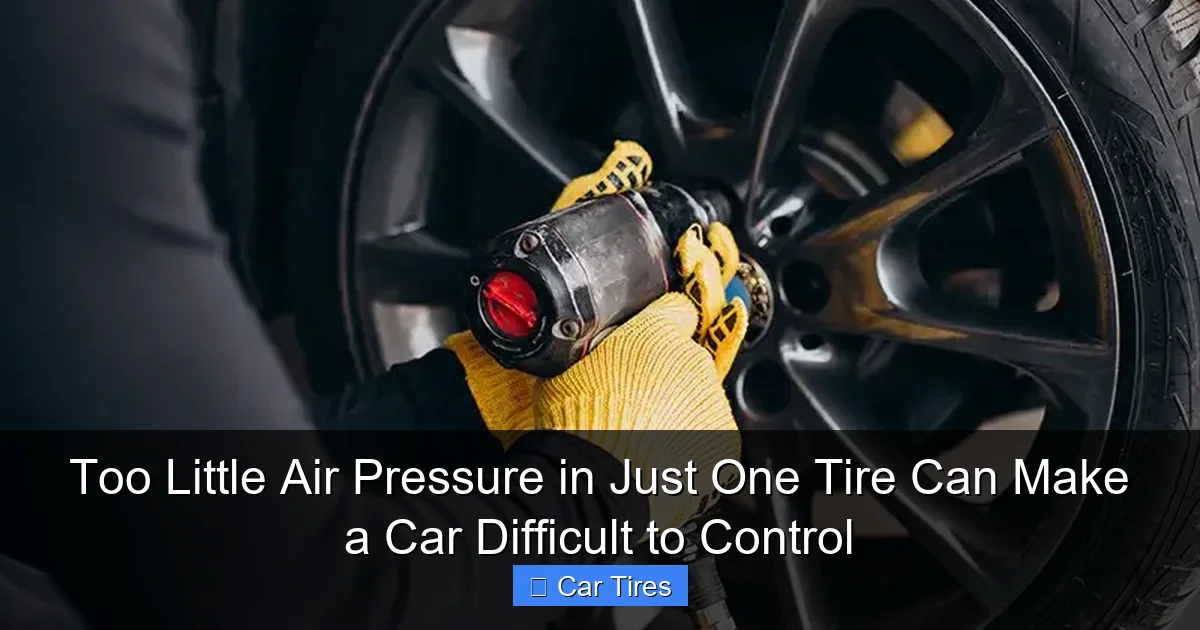
At first glance, it might seem like one tire wouldn’t have a major impact. After all, there are three other tires doing their job, right? But the reality is that modern vehicles are engineered for symmetry. Every component—from the suspension to the steering system—is calibrated to work with equal tire pressure on all four corners. When that symmetry is broken, the entire system has to adapt, often in ways that compromise safety.
Consider this: your car’s weight is distributed across all four tires. If one tire is underinflated, it can’t support its share of the load. The extra weight shifts to the other tires, especially the one directly opposite (e.g., if the front left is low, the rear right may bear more load). This uneven weight distribution affects how the car corners, accelerates, and brakes.
Asymmetrical Handling and Steering Pull
One of the most noticeable effects of a single underinflated tire is steering pull. You might feel the car constantly drifting to one side, requiring constant correction to stay in your lane. This isn’t just annoying—it’s exhausting and dangerous, especially on long drives. Fatigue can set in quickly when you’re fighting the wheel every few seconds.
The pull happens because the underinflated tire has a larger contact patch and more rolling resistance. As it drags slightly, it creates a torque that turns the steering wheel in that direction. Even if you don’t feel it strongly at low speeds, the effect becomes much more pronounced at highway speeds, where small imbalances are magnified.
Increased Risk of Hydroplaning
Hydroplaning occurs when a layer of water builds up between the tire and the road, causing the tire to lose contact and “float” on the surface. Properly inflated tires are designed to channel water away through their tread grooves. But an underinflated tire flattens out, reducing the effectiveness of those grooves.
When just one tire is low, it becomes the weak link in wet conditions. That tire may hydroplane while the others maintain grip, causing sudden loss of control. The car could spin, slide, or veer unpredictably—especially if you’re braking or turning at the same time. This is why tire pressure is so critical during rainy weather.
The Hidden Dangers of Heat Buildup
Visual guide about Too Little Air Pressure in Just One Tire Can Make a Car Difficult to Control
Image source: interstate-tires.com
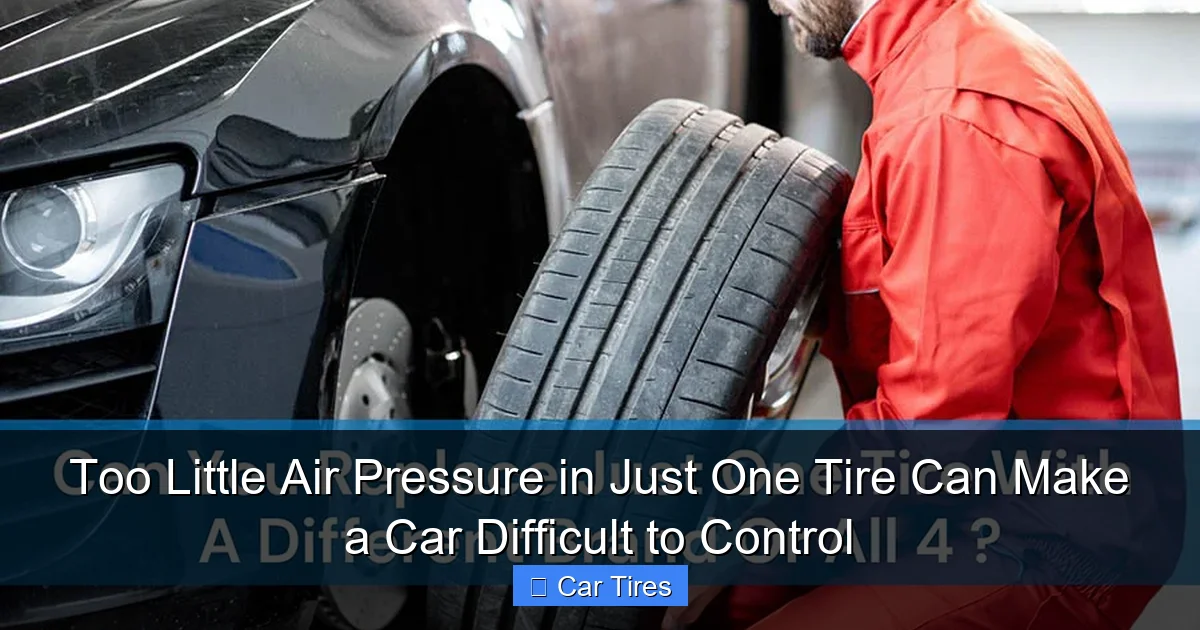
One of the most insidious risks of underinflation is heat buildup. When a tire doesn’t have enough air, its sidewalls flex excessively as it rolls. This constant bending generates internal friction, which produces heat. Over time, that heat can weaken the tire’s internal structure, leading to tread separation, belt failure, or even a blowout.
How Heat Affects Tire Integrity
Tires are made of layers of rubber, steel, and fabric, all bonded together under high pressure and temperature. When one tire is underinflated, the increased flexing causes the rubber to overheat. This heat can degrade the adhesives that hold the layers together, leading to delamination. In severe cases, the tire may suddenly fail—especially at high speeds.
A blowout is terrifying enough on its own, but when it happens because of a single underinflated tire, the consequences can be even worse. The sudden loss of air causes an immediate shift in weight and balance, often making the car uncontrollable. Drivers may overcorrect, leading to skidding, rollovers, or collisions.
Real-World Example: The Highway Blowout
Imagine you’re driving on the interstate at 70 mph. Your front right tire has been slowly losing air for days, but you haven’t noticed because the TPMS light hasn’t come on yet. Suddenly, the tire overheats and bursts. The car lurches to the right, the steering wheel jerks violently, and you struggle to keep it on the road. Even if you manage to pull over safely, the risk of a multi-car accident is high.
This scenario isn’t rare. According to the National Highway Traffic Safety Administration (NHTSA), underinflated tires contribute to over 600 fatalities and 33,000 injuries annually in the U.S. Many of these incidents involve only one tire being significantly low.
Fuel Efficiency and Environmental Impact
Visual guide about Too Little Air Pressure in Just One Tire Can Make a Car Difficult to Control
Image source: i.ytimg.com
While safety is the top concern, underinflation also has economic and environmental consequences. A single underinflated tire increases rolling resistance, which means your engine has to burn more fuel to maintain speed. This not only costs you money at the pump but also increases your carbon footprint.
How Much Fuel Are You Wasting?
Studies show that for every 1 psi (pound per square inch) drop in tire pressure, fuel efficiency decreases by about 0.2%. If one tire is 10 psi below the recommended level, that’s a 2% drop in fuel economy. Over a year of driving, that could mean dozens of extra gallons of gas—and hundreds of dollars in unnecessary expenses.
For example, if your car normally gets 30 mpg and you drive 15,000 miles a year, a 2% drop in efficiency means you’ll use about 10 extra gallons per month. At $3.50 per gallon, that’s $35 more per month—over $400 a year. And that’s just from one underinflated tire.
Environmental Consequences
More fuel consumption means more greenhouse gas emissions. Carbon dioxide (CO₂) is a major contributor to climate change, and vehicles are one of the largest sources. By keeping your tires properly inflated, you’re not just saving money—you’re helping reduce air pollution and conserve natural resources.
How to Detect and Prevent Underinflation
The good news is that underinflation is entirely preventable. With a few simple habits, you can keep your tires in optimal condition and avoid the dangers of low pressure.
Use a Quality Tire Pressure Gauge
Don’t rely solely on the TPMS warning light. These systems are designed to alert you when pressure drops significantly (usually 25% below recommended), but they won’t catch minor leaks or gradual pressure loss. Invest in a reliable digital or analog tire pressure gauge and check your tires at least once a month.
Always check pressure when the tires are cold—meaning the car hasn’t been driven for at least three hours. Driving heats up the tires, which increases pressure and gives a false reading.
Know Your Vehicle’s Recommended PSI
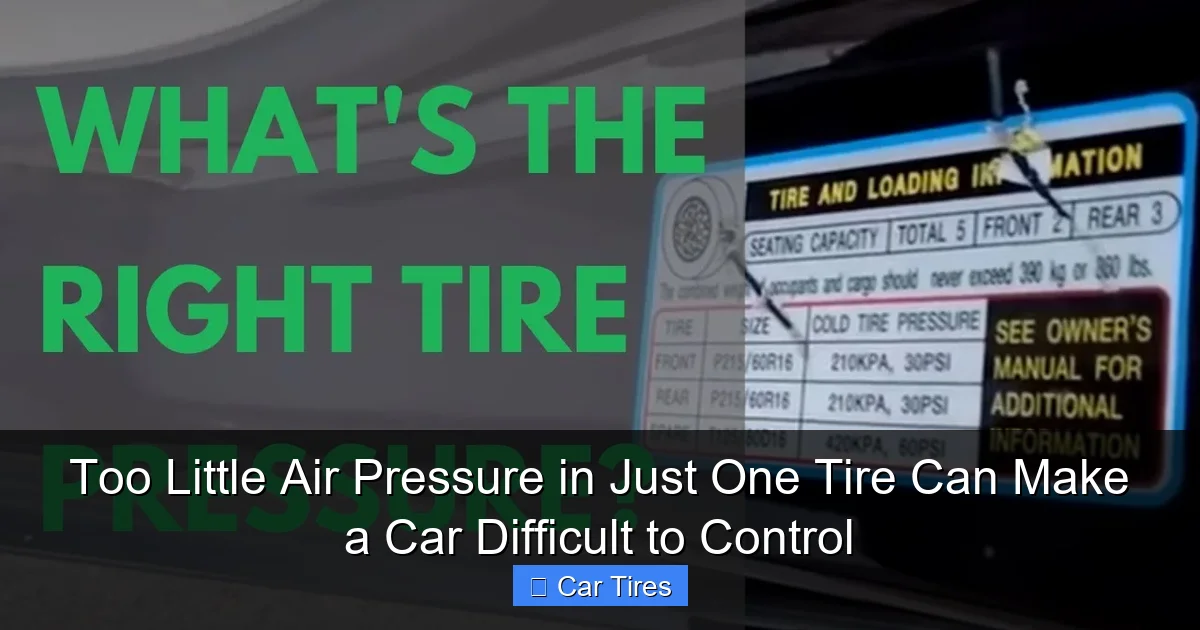
The correct tire pressure isn’t always what’s printed on the tire sidewall. That number is the maximum pressure the tire can handle, not what your car needs. Check your owner’s manual or the sticker on the driver’s side door jamb for the manufacturer’s recommended PSI. This ensures optimal performance, safety, and tire life.
Inspect Tires Regularly
Look for signs of underinflation, such as:
– A visibly flattened or bulging sidewall
– Uneven tread wear (especially on the edges)
– A tire that looks “squished” compared to the others
– Increased road noise or vibration
If you notice any of these, check the pressure immediately and inspect for leaks, punctures, or valve stem damage.
Don’t Ignore the TPMS Light
If your Tire Pressure Monitoring System (TPMS) light comes on, don’t delay. Pull over safely and check the affected tire. Even if it looks fine, it could be losing air slowly. Use your gauge to confirm and inflate as needed. If the light stays on after inflation, there may be a leak or sensor issue—get it checked by a professional.
The Role of Modern Technology
Modern vehicles come equipped with advanced systems to help monitor tire health. While TPMS is the most common, some cars now feature more sophisticated diagnostics that can detect uneven pressure between tires or predict potential failures.
Direct vs. Indirect TPMS
There are two types of TPMS:
– **Direct TPMS** uses sensors inside each tire to measure pressure and send real-time data to the dashboard. It’s more accurate and can detect small changes.
– **Indirect TPMS** estimates pressure based on wheel speed sensors. It’s less precise and may not detect issues until pressure is significantly low.
If your car has direct TPMS, you’ll get more reliable alerts. But even then, it’s smart to manually check pressure regularly.
Emerging Technologies
Some automakers are experimenting with smart tires that monitor temperature, tread depth, and road conditions in real time. These systems could one day predict blowouts before they happen or adjust pressure automatically for different driving conditions. While not yet mainstream, they represent the future of tire safety.
Conclusion
Too little air pressure in just one tire can make a car difficult to control—and that’s not an exaggeration. From steering pull and braking issues to increased risk of blowouts and hydroplaning, the consequences are real and potentially life-threatening. Yet, this is one of the easiest problems to prevent.
By checking your tire pressure monthly, using a quality gauge, and staying alert to changes in your car’s behavior, you can protect yourself, your passengers, and others on the road. Don’t wait for a warning light or a near-miss to take action. Your tires are your only connection to the road—treat them with the care they deserve.
Remember: safety doesn’t come from luck. It comes from awareness, maintenance, and a commitment to doing the small things right. So the next time you’re about to hit the road, take two minutes to check your tires. It could be the most important two minutes of your drive.
Frequently Asked Questions
Can one underinflated tire really affect my car’s handling?
Yes. Even a single underinflated tire creates uneven rolling resistance, causing your car to pull to one side and reducing overall stability. This imbalance affects steering, braking, and cornering, making the vehicle harder to control.
How often should I check my tire pressure?
Check your tire pressure at least once a month and before long trips. Tires can lose air naturally over time, and seasonal temperature changes can also affect pressure.
Will my TPMS light always warn me about low pressure?
Not always. TPMS typically alerts you only when pressure drops significantly (around 25% below recommended). It may miss slow leaks or minor underinflation, so manual checks are still essential.
What’s the correct tire pressure for my car?
The correct pressure is listed in your owner’s manual or on the sticker inside the driver’s door jamb. Don’t use the number on the tire sidewall—that’s the maximum, not the recommended pressure.
Can I drive with one underinflated tire in an emergency?
It’s not safe. Driving on a low tire increases the risk of a blowout, especially at high speeds. If you must drive, go slowly and get the tire checked or replaced as soon as possible.
Does underinflation affect fuel economy?
Yes. A single underinflated tire increases rolling resistance, forcing your engine to work harder and burn more fuel. This can reduce fuel efficiency by up to 2% or more.
