
How to Clean Corrosion Off a Car Battery

Cleaning corrosion off a car battery is essential for maintaining reliable vehicle performance and extending battery life. With basic tools and safety precautions, you can remove buildup safely and restore proper electrical connections in under 30 minutes.
Key Takeaways
- Safety first: Always wear gloves and goggles, and work in a well-ventilated area to avoid contact with battery acid and fumes.
- Turn off the engine: Ensure the vehicle is off and keys are removed before starting any battery maintenance.
- Disconnect properly: Remove the negative terminal first, then the positive, to prevent short circuits.
- Use a baking soda solution: Mix 1 tablespoon of baking soda with 1 cup of water to neutralize acidic corrosion effectively.
- Scrub gently: Use a wire brush or old toothbrush to clean terminals and cable ends without damaging components.
- Reconnect securely: Reattach the positive terminal first, then the negative, and apply dielectric grease to prevent future corrosion.
- Regular checks help: Inspect your battery every 3–6 months to catch corrosion early and maintain optimal performance.
📑 Table of Contents
- Why Car Battery Corrosion Happens—And Why It Matters
- Essential Safety Precautions Before You Begin
- Tools and Materials You’ll Need
- Step-by-Step Guide to Cleaning Corrosion Off a Car Battery
- Preventing Future Corrosion: Maintenance Tips
- When to Call a Professional
- Conclusion: A Simple Task with Big Benefits
Why Car Battery Corrosion Happens—And Why It Matters
You’re ready to start your car on a chilly morning, turn the key, and… nothing. Or maybe it cranks slowly, like the engine is struggling to wake up. One of the most common culprits? Corrosion on your car battery terminals.
Battery corrosion isn’t just an eyesore—it’s a serious issue that can lead to poor electrical connections, starting problems, and even complete battery failure if left unchecked. It typically appears as a white, green, or blueish powdery substance around the battery terminals and cable connectors. This buildup is usually a result of hydrogen gas escaping from the battery during normal charging and discharging cycles. When this gas mixes with moisture, dirt, and other elements under the hood, it forms corrosive compounds that eat away at metal surfaces.
Ignoring corrosion might seem harmless at first, but over time, it creates resistance in the electrical circuit. That means your starter motor doesn’t get the full power it needs to turn over the engine. You might notice dim headlights, sluggish dashboard lights, or intermittent electrical issues. In worst-case scenarios, the corrosion can become so severe that the battery cables break or the terminals become permanently damaged, requiring costly replacements.
The good news? Cleaning corrosion off a car battery is a straightforward DIY task that most drivers can handle with basic tools and household items. Not only does it restore proper function, but it also extends the life of your battery and saves you from unexpected breakdowns. Plus, regular maintenance helps you spot other potential issues—like loose cables or a dying battery—before they leave you stranded.
Essential Safety Precautions Before You Begin
Before you grab your tools and start scrubbing, it’s crucial to understand the risks involved. Car batteries contain sulfuric acid and produce flammable hydrogen gas—both of which demand respect. A little caution goes a long way in preventing injury or damage.
Visual guide about How to Clean Corrosion Off a Car Battery
Image source: carfromjapan.com
Wear Proper Protective Gear
Always wear safety goggles and chemical-resistant gloves (like nitrile or rubber). Battery acid can cause severe burns to your skin and eyes, and even small splashes can be dangerous. If you don’t have gloves, at the very least avoid touching the terminals with bare hands—corrosion residues can still be mildly acidic.
Work in a Well-Ventilated Area
Never clean a battery in an enclosed space like a garage with the door closed. Hydrogen gas buildup can be explosive if ignited by a spark. Open the garage door or work outside whenever possible. Also, avoid smoking, using lighters, or creating sparks near the battery.
Turn Off the Vehicle and Remove the Key
Make sure the engine is completely off and the keys are out of the ignition. Even if the car isn’t running, electrical systems can still be active, and accidental short circuits are a real risk when handling metal tools near battery terminals.
Keep Children and Pets Away
Battery maintenance involves chemicals and electrical components—definitely not a job for kids or curious pets. Keep them at a safe distance until the job is done and all tools are put away.
Have a Fire Extinguisher Nearby
While rare, battery explosions can happen if hydrogen gas accumulates and meets an ignition source. A small Class ABC fire extinguisher nearby is a smart precaution, especially if you’re working in a confined space.
Tools and Materials You’ll Need
You don’t need a mechanic’s toolkit to clean battery corrosion. Most of what you need is likely already in your garage or kitchen. Here’s a simple checklist to get started:
Visual guide about How to Clean Corrosion Off a Car Battery
Image source: i.ytimg.com
- Baking soda: The go-to neutralizer for battery acid. It’s safe, effective, and cheap.
- Water: Preferably distilled, but tap water works in a pinch.
- Wire brush or old toothbrush: For scrubbing terminals and cable ends. A dedicated battery terminal brush works best, but an old toothbrush is a great backup.
- Wrench or socket set: To loosen and remove battery cables. Most cars use 10mm or 13mm bolts.
- Safety goggles and gloves: Non-negotiable for protection.
- Rags or paper towels: For wiping down surfaces and cleaning up spills.
- Plastic container or bowl: To mix your cleaning solution.
- Dielectric grease or petroleum jelly: To coat terminals after cleaning and prevent future corrosion.
- Optional: Battery terminal protectant spray: A commercial product that adds an extra layer of defense.
Pro tip: If you’re dealing with heavy corrosion, consider using a battery terminal cleaner spray (available at auto parts stores). These are specially formulated to break down tough buildup quickly, but they’re not necessary for most routine cleanings.
Step-by-Step Guide to Cleaning Corrosion Off a Car Battery
Now that you’re prepped and protected, it’s time to get to work. Follow these steps carefully to clean corrosion safely and effectively.

Visual guide about How to Clean Corrosion Off a Car Battery
Image source: compressorlab.com
Step 1: Locate the Battery and Inspect for Damage
Pop the hood and find your battery. It’s usually a rectangular box with two thick cables attached to the top. Look for signs of swelling, cracks, or leaks—if you see any, stop immediately. A damaged battery can be dangerous and may need professional replacement.
Check the corrosion: Is it just a light dusting, or is there a thick crust? Light buildup is easier to handle, but heavy corrosion may require extra scrubbing or a second cleaning pass.
Step 2: Disconnect the Battery Cables
Always disconnect the negative terminal first (marked with a “–” or black cover). Use your wrench to loosen the nut, then carefully wiggle the cable clamp off the terminal. Place it away from the battery so it doesn’t accidentally touch the terminal again.
Next, disconnect the positive terminal (marked with a “+” or red cover). This order prevents sparks near the battery, which could ignite hydrogen gas.
Pro tip: If the cables are stuck, gently rock them side to side—don’t pry or force them, as you could break the terminal.
Step 3: Prepare the Cleaning Solution
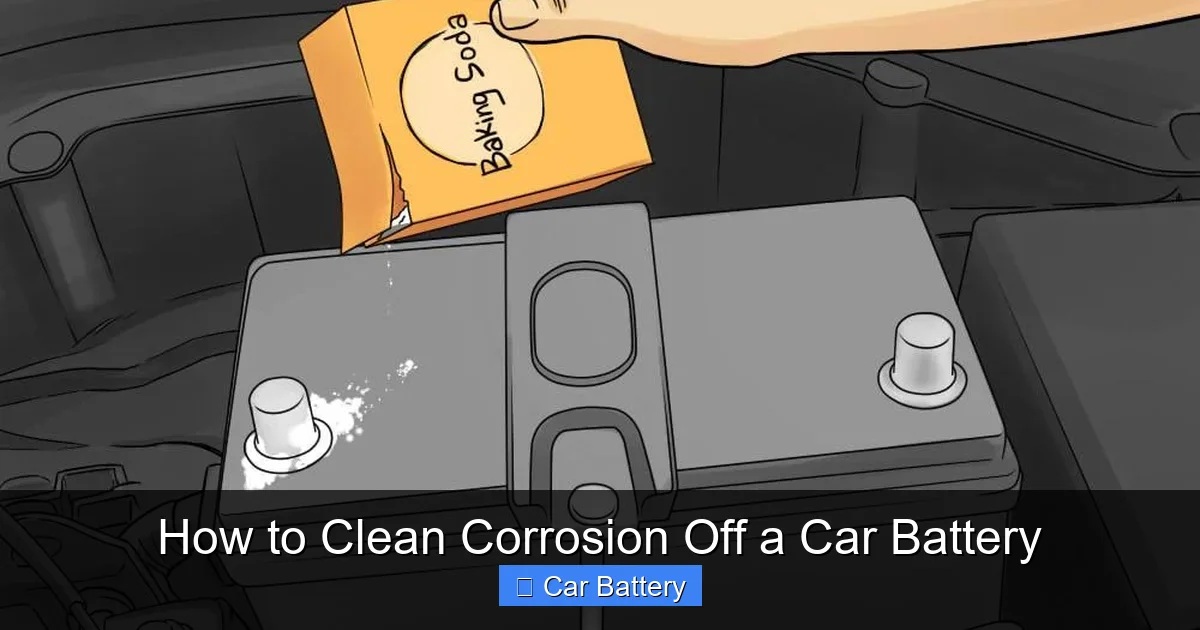
In a plastic bowl, mix 1 tablespoon of baking soda with 1 cup of water. Stir until it dissolves. This creates a mild alkaline solution that neutralizes the acidic corrosion.
Alternatively, you can make a paste by using less water—about 2 tablespoons of baking soda with just enough water to form a thick slurry. The paste sticks better to vertical surfaces and works well for heavy buildup.
Step 4: Apply the Solution and Scrub
Dip your brush into the solution and gently scrub the terminals, cable clamps, and surrounding areas. You’ll notice the mixture fizzing—that’s normal! It means the baking soda is reacting with the acid and breaking down the corrosion.
For stubborn spots, let the paste sit for 5–10 minutes before scrubbing again. Use an old toothbrush for tight spaces around the terminal posts.
Wipe away the residue with a damp rag, then dry everything thoroughly with a clean towel. Moisture left on the battery can lead to new corrosion, so make sure it’s completely dry.
Step 5: Clean the Battery Tray and Hold-Down Clamp
While the terminals are off, take a moment to clean the battery tray and hold-down clamp. Corrosion can spread to these areas and weaken the battery’s stability. Use the same baking soda solution and a rag to wipe them down.
If the tray is rusty, consider applying a rust inhibitor or touch-up paint to prevent further deterioration.
Step 6: Reconnect the Battery Cables
Reattach the positive terminal first, then the negative. Tighten the nuts securely with your wrench, but don’t over-tighten—this can strip the threads or crack the terminal.
Once connected, apply a thin layer of dielectric grease or petroleum jelly to the terminals and cable clamps. This creates a protective barrier that repels moisture and slows future corrosion.
Optional: Spray on a battery terminal protectant for added defense. These sprays form a clear, durable coating that lasts longer than grease.
Preventing Future Corrosion: Maintenance Tips
Cleaning corrosion is only half the battle—preventing it from coming back is just as important. With a few simple habits, you can keep your battery terminals clean and your car starting reliably for years.
Apply Terminal Protection Regularly
After cleaning, always coat the terminals with dielectric grease or a commercial protectant. Reapply every 6 months or whenever you notice the coating wearing off.
Keep the Battery Clean and Dry
Dirt and moisture accelerate corrosion. Wipe down the top of the battery with a dry cloth during routine maintenance. Avoid spraying water directly on the battery—use a damp cloth instead.
Check Cable Connections Monthly
Loose or frayed cables can cause arcing, which increases corrosion. Make sure all connections are tight and secure. If a cable is damaged, replace it promptly.
Use a Battery Maintainer in Extreme Climates
In very hot or cold regions, batteries work harder and are more prone to gas leakage. A battery maintainer (or trickle charger) helps keep the charge stable and reduces stress on the battery.
Inspect During Oil Changes
Make battery checks part of your regular maintenance routine. Every time you get an oil change, take 2 minutes to look at the terminals. Early detection saves time and money.
Consider a Battery Terminal Cover
Some aftermarket covers fit over the terminals and shield them from moisture and debris. They’re inexpensive and easy to install—great for drivers in humid or rainy climates.
When to Call a Professional
While most corrosion issues can be handled at home, there are times when it’s best to seek expert help.
Severe Battery Damage
If the battery case is cracked, swollen, or leaking fluid, do not attempt to clean it. These are signs of internal failure, and the battery should be replaced immediately by a professional.
Persistent Corrosion
If corrosion returns within weeks despite proper cleaning and protection, there may be an underlying issue—like a faulty alternator overcharging the battery. A mechanic can diagnose and fix the root cause.
Electrical System Problems
If your car still won’t start or has electrical issues after cleaning, the problem may go beyond the battery. Have a technician perform a full electrical system check.
Old or Weak Battery
Batteries typically last 3–5 years. If yours is older and frequently needs cleaning, it may be nearing the end of its life. A load test at an auto parts store can confirm if replacement is needed.
Conclusion: A Simple Task with Big Benefits
Cleaning corrosion off a car battery might not be the most exciting chore, but it’s one of the most rewarding. In less than 30 minutes, you can restore your vehicle’s starting power, prevent electrical issues, and extend the life of your battery. Plus, it’s a skill that empowers you to take control of your car’s maintenance—no mechanic required.
Remember, safety comes first. Always wear protection, disconnect cables in the right order, and use the right tools. With a little baking soda, a brush, and some elbow grease, you’ll have clean, corrosion-free terminals that keep your car running smoothly.
Make it a habit to inspect your battery every few months, especially before extreme weather seasons. A quick check can save you from a dead battery on a cold winter morning or a sweltering summer afternoon. And if you ever feel unsure, don’t hesitate to consult a professional—better safe than sorry.
So next time you see that telltale white crust around your battery terminals, don’t panic. Grab your gloves, mix up a cleaning solution, and get to work. Your car—and your wallet—will thank you.
Frequently Asked Questions
Can I clean battery corrosion without disconnecting the cables?
It’s not recommended. Disconnecting the cables ensures safety and allows you to clean thoroughly. Leaving them connected increases the risk of short circuits and makes it harder to scrub properly.
Is it safe to use vinegar to clean battery corrosion?
Vinegar is acidic and can worsen corrosion over time. Stick with baking soda, which neutralizes acid safely. Avoid harsh chemicals like bleach or ammonia.
How often should I clean my car battery?
Inspect your battery every 3–6 months. Clean it whenever you see visible corrosion or if your car starts slowly. Regular checks prevent major buildup.
Can corrosion drain my car battery?
Yes. Corrosion creates resistance in the circuit, forcing the battery to work harder. Over time, this can lead to faster discharge and reduced performance.
What if the corrosion keeps coming back?
Frequent corrosion may indicate an overcharging alternator or a leaking battery. Have a mechanic test your charging system and inspect the battery for damage.
Can I drive with corroded battery terminals?
It’s risky. Corrosion can cause intermittent connections, leading to stalling or failure to start. Clean it as soon as possible to avoid being stranded.
