
How to Care for a Waterproof Car Cover

Quick Answer
To care for a waterproof car cover, remove loose dirt regularly, wash it according to the manufacturer’s instructions, rinse away detergent, and let it dry completely before storage. Keep the cover away from sharp edges, avoid harsh cleaners and high heat, and inspect the fabric and seams for damage. These habits help preserve water resistance and reduce the risk of trapped grit scratching your vehicle’s paint.
Essential care steps
- Remove loose debris: Shake out dust, leaves, and grit before washing or folding the cover.
- Check the label: Confirm whether the cover supports hand washing, machine washing, or only surface cleaning.
- Use gentle cleaning: Choose an approved mild cleaner and avoid bleach, solvents, and abrasive brushes unless the manufacturer specifically permits them.
- Rinse thoroughly: Remove cleaning residue that could affect the fabric or its finish.
- Dry completely: Allow both sides to dry before folding the cover for storage.
- Inspect for wear: Look for split seams, worn elastic, pinholes, and damaged straps.
One important precaution
- Make sure the vehicle and cover are suitable for the intended installation, and follow the product’s instructions before covering a wet car.
A waterproof car cover can help shield a parked vehicle from rain, dust, bird droppings, and other environmental debris. However, its protective performance depends on more than the material’s original water resistance.
As a DIY-minded car enthusiast, I’d treat a car cover like any other piece of protective equipment: clean it carefully, inspect it regularly, and store it properly. The right routine helps prevent avoidable wear and keeps dirt from transferring back onto the vehicle.
In This Guide
- What does caring for a waterproof car cover involve?
- How often should you clean a waterproof car cover?
- How do you wash a waterproof car cover safely?
- How should you dry and store a car cover?
- How do you protect waterproofing and prevent damage?
- Which car-cover cleaning method is best?
- Frequently asked questions
What Does Caring for a Waterproof Car Cover Involve?
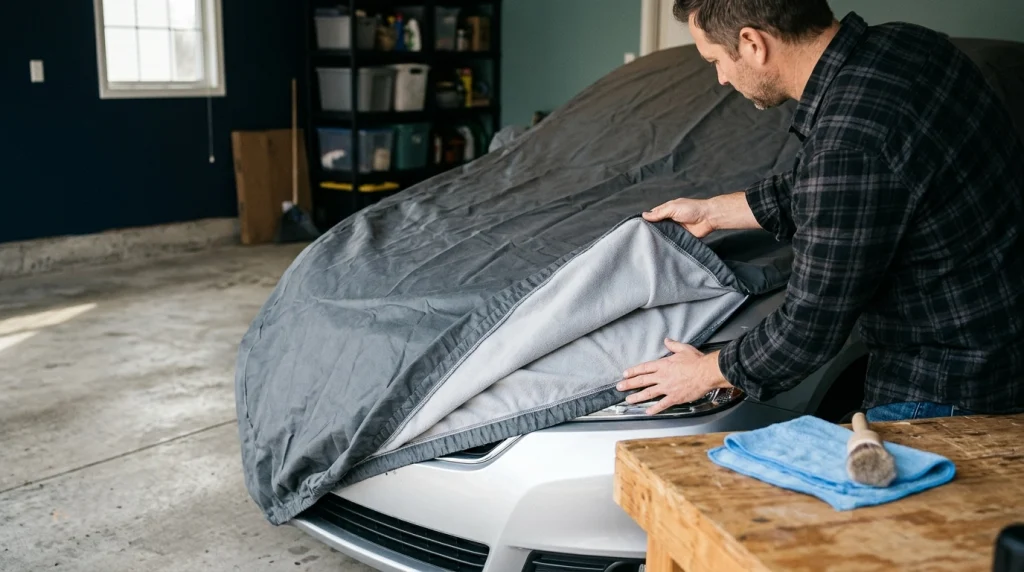
Caring for a waterproof car cover means cleaning away contaminants, preserving its water-resistant construction, checking for damage, and preventing moisture buildup during storage. The goal is to maintain the cover without weakening its fabric, coating, seams, or attachment points.
What is a waterproof car cover?
A waterproof car cover is a protective covering designed to limit water penetration through its fabric or construction. Some products rely on waterproof membranes or coatings, while others use tightly woven materials and water-repellent treatments.
These designs aren’t interchangeable. A water-resistant cover may repel light rain but allow moisture through during prolonged exposure, while a waterproof design may still have vulnerable seams, openings, or worn areas.
Why does regular maintenance matter?
Dirt and grit can collect on the cover’s inner surface, straps, and folded edges. When the fabric moves against the vehicle, those particles may contribute to paint scratches.
Moisture also deserves attention. A cover that stays damp for long periods can develop unpleasant odors or mildew, particularly when dirt and organic debris remain trapped in its folds.
Good maintenance focuses on four things:
- Cleanliness: Remove dust, pollen, tree residue, and road grime before they accumulate.
- Water protection: Avoid cleaners and treatments that aren’t approved for the cover’s material.
- Fabric condition: Find tears, loose stitching, and worn attachment points early.
- Moisture control: Dry the cover thoroughly and store it in a clean, dry location.
Remember that the cover protects the car only when it fits correctly and remains in good condition. A damaged or contaminated cover can create problems instead of preventing them.
How Often Should You Clean a Waterproof Car Cover?
Clean your waterproof car cover whenever it becomes noticeably dirty, develops residue, or accumulates enough debris to risk scratching the paint. For a vehicle parked outdoors, regular inspections and light cleaning are often more practical than waiting until the cover looks heavily soiled.
There isn’t one universal cleaning interval. Local weather, parking conditions, nearby trees, traffic pollution, and the cover’s material all influence how frequently it needs attention.
Use the parking environment as your guide
| Parking condition | Recommended care |
|---|---|
| Covered garage with little dust | Inspect periodically and clean when needed. |
| Outdoor parking under trees | Check frequently for leaves, sap, pollen, and bird droppings. |
| Dusty roads or construction nearby | Inspect the outer and inner surfaces for fine grit. |
| Frequent rain or humid conditions | Check for trapped moisture, odors, and mildew. |
| Long-term vehicle storage | Inspect before installation and periodically during storage. |
Remove debris before it becomes a problem
Start with a simple visual inspection whenever you remove the cover. Shake off loose leaves and dust, then look for sticky residue or embedded grit that requires more careful cleaning.
Don’t aggressively brush dried mud or rub gritty fabric against the vehicle. Remove the cover, clean the affected area using an appropriate method, and let the material dry as directed.
Section Takeaway: Clean based on the cover’s actual condition rather than following an arbitrary calendar. Frequent light inspections can help you catch dirt and moisture problems before they become harder to manage.
How Do You Wash a Waterproof Car Cover Safely?
The safest cleaning method depends on the cover’s material, coating, size, and construction. For many waterproof outdoor covers, hand washing or gentle surface cleaning is the lower-risk choice unless the manufacturer explicitly approves machine washing.
Care instructions vary considerably between brands. For example, Coverking’s washing guidance recommends hand washing its covers, while other manufacturers permit machine washing for specific fabrics.
Step 1: Check the manufacturer’s instructions
Before adding water or detergent, look for the care label, product manual, or manufacturer’s support page. Confirm the permitted washing method, water temperature, cleaning products, and drying procedure.
Don’t assume every waterproof cover can tolerate the same treatment. A coated multilayer cover may respond differently to washing than a lightweight fabric cover.
Step 2: Remove loose dirt and debris
Shake the cover gently in an open area to release loose dust and leaves. Use a soft cloth or another manufacturer-approved method to remove surface debris without scraping the fabric.
Pay particular attention to the inside surface, seams, hems, and straps. These areas can collect grit that may rub against the car’s paint when you install the cover again.
Step 3: Wash with an approved cleaner
If hand washing is permitted, use a clean basin, cool or lukewarm water as directed, and a small amount of approved mild detergent. Work gently rather than twisting, wringing, or aggressively scrubbing the material.
For surface cleaning, leave the cover installed only if its manufacturer permits this approach and the vehicle is cool. Use a soft sponge to clean small sections, then rinse away the remaining soap.
Avoid these common cleaning mistakes:
- Bleach and harsh solvents: They may damage fabric fibers, coatings, or color.
- Fabric softener: It can interfere with some fabric finishes and water-repellent treatments.
- Abrasive brushes: Stiff bristles can wear the surface or damage delicate coatings.
- Unapproved washing machines: Agitators, spinning action, and hardware can strain seams or tear the cover.
- Pressure washers: Concentrated water pressure may damage vulnerable materials, seams, or coatings.
Step 4: Rinse until no residue remains
Rinse the entire cover thoroughly with clean water. Pay attention to folds and seams, where detergent can remain trapped.
Some manufacturers specifically recommend multiple rinses for machine-washable covers. Follow the instructions for your product rather than assuming one rinse is always sufficient.
Step 5: Treat stubborn stains carefully
Bird droppings, tree sap, and oily residue may need targeted cleaning rather than a full wash. Start with the mildest approved method and test any permitted cleaner on an inconspicuous area if the manufacturer allows it.
Don’t scrape dried residue with a metal tool or apply household chemicals without checking compatibility. If a stain won’t come off safely, ask the manufacturer for a recommended treatment.
Practical tip: Cleaning more aggressively isn’t necessarily better. Gentle cleaning and thorough rinsing are preferable to risking the coating just to remove a stubborn mark.
How Should You Dry and Store a Car Cover?
Let a washed or rain-soaked car cover dry completely before folding it or placing it in its storage bag. Trapped moisture can encourage mildew and unpleasant odors, especially in warm or humid environments.
Air-dry the cover correctly
Unless the manufacturer specifies another approved method, air drying is a sensible default. Spread the cover over a clean drying rack or hang it where air can circulate freely around the material.
A shaded, ventilated area helps limit unnecessary exposure to intense sunlight. Avoid radiators, heaters, hot exhaust components, and tumble dryers unless the product instructions expressly permit a particular method.
Before storage, check the following areas:
- The outer surface and vehicle-facing lining.
- Thick hems, folded sections, and stitched seams.
- Straps, elastic edges, and attachment points.
- Any pockets or reinforced sections that might retain moisture.
Don’t rely on the outside feeling dry. Turn or reposition the cover as necessary so the entire material can dry before storage.
Fold and store the cover without trapping moisture
Once completely dry, fold the cover loosely according to the manufacturer’s instructions. Keep the storage area clean and dry, and avoid placing the folded cover against sharp tools, dirty garage floors, or containers holding chemicals.
If the supplied storage bag is damp or dirty, clean and dry it before reuse. A breathable storage arrangement is useful when recommended by the manufacturer, but the product’s own storage instructions should take priority.
What if the cover gets wet during use?
A waterproof exterior doesn’t guarantee that the space underneath the cover will remain dry. Condensation, moisture entering around the edges, and water already on the vehicle can contribute to damp conditions.
If you remove a wet cover, allow it to dry before packing it away. If the car itself is wet, check the cover’s instructions before reinstalling it, particularly if you intend to leave the vehicle covered for an extended period.
Also let the engine and exhaust system cool completely before covering the vehicle. Hot components may damage the fabric or create a fire hazard if they contact an unsuitable cover.
Section Takeaway: Complete drying matters as much as washing. A clean cover can still develop odor, mildew, or storage problems if you fold it while damp.
How Do You Protect Waterproofing and Prevent Damage?
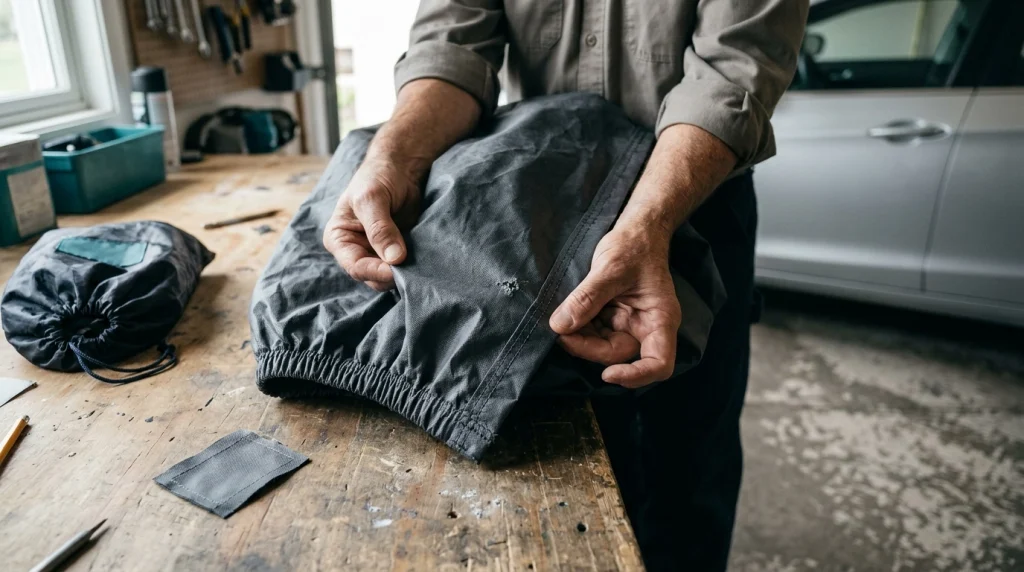
Protecting a waterproof car cover means preserving its coating or membrane, avoiding unnecessary friction, and addressing wear before it spreads. Cleaning alone cannot restore a damaged waterproof layer or repair a leaking seam.
Can washing reduce a cover’s waterproofing?
It can, depending on the material and cleaning method. Harsh chemicals, excessive heat, unsuitable detergents, and abrasive washing may damage certain coatings or water-repellent finishes.
Some covers use a durable waterproof membrane, while others depend partly on a surface treatment that causes water to bead and run off. These constructions need different care, so don’t apply a generic waterproofing product without checking compatibility.
If water stops beading on the surface, don’t immediately assume the cover has failed. Dirt and residue can affect how water behaves, and water beading alone doesn’t establish whether the entire cover still prevents penetration.
When should you reapply a waterproofing treatment?
Only use a waterproofing or water-repellent treatment when the manufacturer recommends it for your particular cover. An incompatible spray may leave residue, alter the finish, or interfere with the material’s intended performance.
Before treating the whole cover, confirm the approved product and application instructions. If the cover has a damaged membrane, open seam, or puncture, a surface spray may not solve the underlying problem.
Inspect the cover for common damage
A quick inspection can help you find problems before the next installation. Look closely at the places that experience repeated pulling, rubbing, and exposure to weather.
| Problem | What to do |
|---|---|
| Small tear or puncture | Check whether the manufacturer approves a compatible patch or repair kit. |
| Loose or split seam | Ask about an approved repair; ordinary stitching may compromise waterproofing. |
| Worn elastic or straps | Replace or repair the component if an approved option is available. |
| Musty odor or visible mildew | Follow the manufacturer’s cleaning guidance and dry the cover thoroughly. |
| Water penetrating a specific area | Inspect the fabric and seams for damage and contact the manufacturer if necessary. |
When checking for damage, don’t deliberately flood the cover or use a pressure washer to test it. Inspect the material visually and follow any manufacturer-approved testing method.
Protect the vehicle underneath the cover
Even a high-quality cover can scratch paint if dirt becomes trapped between the fabric and the bodywork. Make sure the vehicle is clean enough for safe covering, paying special attention to dusty panels and areas where debris collects.
Fit the cover correctly and secure its straps or fasteners as instructed. A loose cover may flap in the wind, increasing friction and putting additional stress on seams and attachment points.
Don’t cover a vehicle immediately after driving if the exhaust or other components remain hot. Likewise, avoid trapping a wet or heavily contaminated vehicle beneath the cover for long periods.
Section Takeaway: Preserve the original finish by cleaning gently, securing the cover properly, and inspecting vulnerable areas. Reapply treatments or repair damage only with methods approved for the specific material.
Which Car-Cover Cleaning Method Is Best?
Hand washing is a sensible starting point for many waterproof covers because it gives you control over the pressure and friction applied to the material. However, the manufacturer’s approved method is more important than any general preference for hand washing or machine washing.
The following comparison helps you choose an approach without assuming every cover has the same construction.
| Cleaning method | Best suited for | Main precaution |
|---|---|---|
| Dry debris removal | Loose dust, leaves, and surface dirt | Avoid rubbing grit into the fabric. |
| Damp cloth or sponge | Light dirt and small affected areas | Use an approved cleaner and gentle pressure. |
| Hand washing | Covers whose instructions permit manual washing | Don’t wring, twist, or scrub aggressively. |
| Machine washing | Only covers explicitly approved for machine washing | Follow the specified machine, cycle, temperature, and detergent requirements. |
| Pressure washing | Generally avoid unless the manufacturer expressly approves it | Concentrated pressure can damage vulnerable fabric or seams. |
Should you wash the cover on the car or remove it first?
Surface cleaning while the cover is fitted may be convenient when the manufacturer permits it. It can also help you clean a large cover in manageable sections without needing a washing machine.
However, this method isn’t suitable for every product or situation. Follow the manufacturer’s guidance, avoid excessive water around the vehicle, and remove the cover when necessary to clean both sides properly.
How do you know when it’s time to replace the cover?
Consider replacement when widespread fabric deterioration, repeated leaks, extensive tears, failed seams, or damaged attachment points prevent the cover from fitting securely or providing its intended protection. Small defects may be repairable, but the repair must suit the fabric and waterproofing system.
If the cover still fits correctly and remains structurally sound, routine maintenance may be enough. Don’t replace a cover based only on reduced water beading without first checking for dirt, treatment requirements, or localized damage.
For product-specific guidance, consult the manufacturer’s car-cover cleaning instructions or the support documentation supplied with your own model.
Frequently Asked Questions
Can you wash a waterproof car cover with soap and water?
Yes, if the manufacturer permits wet cleaning. Use an approved mild detergent, gentle pressure, and a thorough rinse. Avoid harsh chemicals and unapproved cleaning methods that could damage the waterproof layer or surface treatment.
Can you put a waterproof car cover in the washing machine?
Only if the manufacturer explicitly allows machine washing for your cover. Some products require hand washing because machine agitation can damage their fabric, seams, or coatings. Check the permitted cycle, temperature, detergent, and drying method before proceeding.
Can you use a pressure washer on a waterproof car cover?
It’s best to avoid pressure washing unless the manufacturer specifically approves it. Concentrated water pressure can damage vulnerable coatings, seams, and fabric. A gentle hose rinse or damp sponge is a safer starting point for many covers.
How often should you clean a waterproof car cover?
Clean it when dirt, residue, or other debris accumulates, and inspect it regularly while in use. Outdoor covers exposed to tree sap, bird droppings, dust, or frequent rain may need attention more often than covers stored in a clean garage.
Can you leave a waterproof car cover on a wet car?
Check the manufacturer’s instructions before covering a wet vehicle. Although the cover may resist rain, moisture can remain trapped underneath or condensation may develop. Whenever practical, let the vehicle dry and cool before installing the cover.
How do you restore the waterproofing on a car cover?
First, clean the cover using the approved method and inspect it for damage. If its water-repellent finish needs renewal, use only a treatment recommended for that material. A spray cannot reliably repair a torn membrane, leaking seam, or other structural damage.
How should you store a waterproof car cover during winter?
Clean the cover if needed, allow it to dry completely, and fold it according to the manufacturer’s instructions. Store it in a clean, dry location away from sharp objects, chemicals, and unnecessary heat. Check for moisture or damage before using it again.
Final Takeaway: Keep Your Waterproof Car Cover Clean and Dry
Learning how to care for a waterproof car cover comes down to a few consistent habits: remove debris, use the right cleaning method, rinse thoroughly, dry completely, and inspect the material for damage.
Most importantly, follow the instructions for your particular cover instead of assuming that all waterproof fabrics tolerate the same detergents, washing machines, or treatments. Careful maintenance helps preserve the cover’s condition and reduces the chance of transferring dirt or moisture onto your vehicle.
Before your next installation, check the cover’s inner surface, confirm that the vehicle is clean and cool, and make sure all straps and fasteners work correctly. A few minutes of preparation can help protect both the cover and the paint underneath.
Research note: General care recommendations were cross-checked against manufacturer and automotive-care guidance. Product-specific instructions take priority where cleaning and drying requirements differ.