
Hand Wash vs Machine Wash Car Cover: Which Is Safer?
Quick Answer
Hand washing is generally the safer choice when cleaning a car cover, especially if its material or care requirements are unknown. Machine washing is suitable for some covers, but only when the manufacturer permits it and specifies an appropriate washer and cycle. For example, Coverking’s car cover washing instructions recommend hand washing for its covers, with special care requirements for certain materials.
Hand Wash vs Machine Wash
- Hand washing: Offers better control over scrubbing and helps avoid unnecessary mechanical stress.
- Machine washing: Saves effort when the cover is explicitly machine-washable and the washer meets its requirements.
- Waterproof covers: Need extra care because unsuitable cleaning can affect protective coatings or construction.
- Large covers: May require a commercial front-loading washer rather than a standard household machine.
- Drying: Air drying is the cautious default unless the manufacturer specifically permits another method.
Before You Wash
- Check the care label, identify the cover material, and follow the instructions for that exact model.
- Avoid bleach, fabric softener, excessive heat, and aggressive scrubbing unless the manufacturer explicitly approves the relevant treatment.
When a car cover gets dusty, stained, or covered in bird droppings, the cleaning method matters just as much as the cleaning product. I approach the hand wash vs machine wash car cover question by looking at the material, construction, and manufacturer’s care instructions first.
In this guide, I’ll compare both methods, explain how to clean different types of covers, and show you how to avoid common mistakes that can shorten a cover’s useful life.
In This Guide
Hand Wash vs Machine Wash: What’s the Difference?
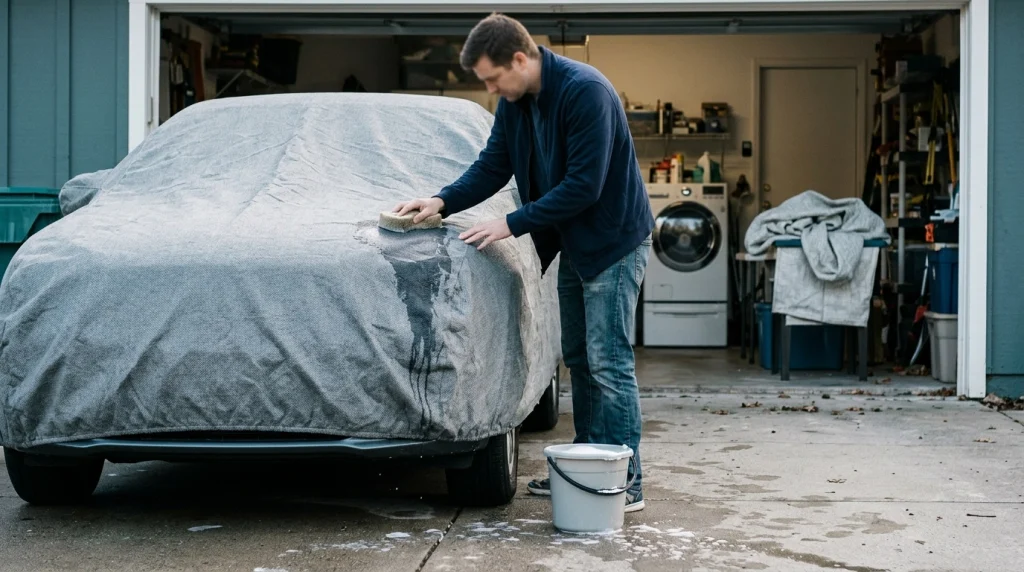
Hand washing gives you more control over the cleaning process, while machine washing offers convenience when the cover is designed to handle it. Neither method is automatically right for every car cover.
What is hand washing a car cover?
Hand washing a car cover is a cleaning method that uses water, an approved mild cleaner, and gentle manual action to remove dirt without relying on a washing machine’s agitation. Depending on the manufacturer’s instructions, you may clean the cover while it is fitted over the vehicle or after removing it.
This method is useful for fitted outdoor covers, delicate materials, and covers with special care restrictions. It also lets you concentrate on dirty areas without subjecting the entire cover to unnecessary mechanical movement.
What is machine washing a car cover?
Machine washing a car cover means cleaning it inside a washing machine using an approved cycle, water temperature, and cleaning product. Some manufacturers permit this method, while others prohibit it or restrict it to specific machines.
The main concern is how the washer handles the fabric. Agitation, twisting, overcrowding, and contact with a center spindle can stress seams, elastic hems, straps, and protective layers.
Comparison table: hand washing vs machine washing
| Factor | Hand Wash | Machine Wash |
|---|---|---|
| Fabric control | Direct control over pressure and scrubbing | Depends on the approved cycle and washer design |
| Equipment | Water source, suitable cleaner, and soft sponge or cloth | Washer with adequate capacity and approved settings |
| Effort | Requires manual cleaning and rinsing | Less manual work once the cover is loaded |
| Risk of mechanical damage | Generally lower when handled gently | Can be higher with unsuitable machines or cycles |
| Large outdoor covers | Often practical if you have room to rinse | May require a commercial front-loader |
| Waterproof or coated fabric | Often the cautious option when permitted | Only if the manufacturer approves machine washing |
| Drying | Usually air dry | Usually air dry after the approved cycle |
The important distinction is not simply whether the cover feels thick or thin. Construction, stitching, coatings, and the care label determine which cleaning method is appropriate.
Section Takeaway: Hand washing is the safer starting point when the care instructions are unknown. Machine washing is a valid option only when the specific cover is approved for it.
When Should You Hand Wash a Car Cover?
Hand washing is usually the better choice when your cover has delicate construction, uncertain care requirements, or a manufacturer warning against machine washing. It lets you remove contamination without putting the entire cover through a mechanical cycle.
Outdoor covers with waterproof or water-resistant layers
Many outdoor car covers use layered fabrics or treatments designed to help manage rain, dust, and other environmental exposure. An unsuitable detergent or aggressive washing process may damage those materials.
For these covers, follow the manufacturer’s specified cleaning method rather than assuming that a waterproof cover can tolerate a regular laundry cycle. Some products permit commercial machine washing, while others require manual cleaning.
Fitted covers with elastic hems, straps, and grommets
Fitted covers often include elastic edges, fastening straps, reinforced seams, or metal grommets. These features can snag or experience unnecessary stress in an unsuitable washer.
Hand washing gives you the opportunity to clean around these features carefully. Avoid pulling on the elastic or scrubbing directly across a seam with a stiff brush.
Delicate indoor and specialty covers
Indoor covers may use soft, stretchy, or brushed fabrics that need different care from heavy outdoor covers. A satin-stretch cover, for example, may have restrictions that don’t apply to an ordinary polyester cover.
Check the exact instructions before washing. Some specialty covers require hand washing or dry cleaning, while others are designed for gentle machine washing.
How to hand wash a car cover safely
Once you’ve confirmed that hand washing is allowed, use a gentle process. The following approach works as a general framework, but the product’s specific instructions take priority.
- Choose a suitable location. Use a clean driveway or another area with enough room to rinse the cover without dragging it across rough ground.
- Remove loose dirt. Shake off debris or rinse away loose dust with gentle water flow before rubbing the material.
- Prepare the cleaner. Mix the manufacturer-approved mild detergent at the recommended concentration.
- Clean gently. Use a soft sponge or cloth, working in manageable sections without excessive pressure.
- Rinse thoroughly. Remove soap residue according to the product’s rinsing instructions.
- Air dry completely. Keep the cover in a suitable drying location until both sides are dry before storing or reinstalling it.
Some manufacturers allow washing the cover while it is fitted over a clean vehicle. Others specify a basin or another surface, so don’t assume that on-car cleaning is universally permitted.
Section Takeaway: Hand washing offers greater control for delicate or restricted covers. Gentle handling and complete rinsing matter just as much as choosing the right detergent.
When Is Machine Washing Safe for a Car Cover?
Machine washing is safe only when the manufacturer approves it and you use the required washer, cycle, temperature, and cleaner. A machine-washable label does not necessarily mean that every household washer is suitable.
Which car covers can go in a washing machine?
Some indoor dust covers and selected outdoor covers are designed for machine washing. The permitted method varies by material and product line, even among covers sold by the same manufacturer.
For example, Covercraft’s published car cover care instructions allow machine washing for specified fabrics and require attention to washer type, cleaner, rinsing, and drying. That is not permission to machine wash every cover on the market.
Before loading a cover, verify these details:
- Washer type: Determine whether a front-loading machine or a commercial washer is required.
- Capacity: Make sure the cover fits without being compressed or crammed into the drum.
- Cycle: Use the exact gentle or delicate setting specified by the manufacturer.
- Water temperature: Follow the stated cold or warm water requirement.
- Cleaning product: Use only an approved detergent or cleaner in the recommended quantity.
- Rinsing and drying: Follow the specified number of rinses and the approved drying method.
Why should you avoid a washer with a center agitator?
A center agitator is the vertical spindle found in some top-loading washing machines. It moves laundry around the drum, but a large cover can wrap around it or catch on it during washing.
That movement may stretch the cover, damage stitching, or place stress on attached hardware. Unless the manufacturer explicitly permits that washer design, choose an approved alternative or wash the cover by hand.
Should you use a commercial washing machine?
A commercial front-loading washer may be necessary for large covers designed for SUVs, pickup trucks, or full-size vehicles. It can offer more space than a typical household machine, but capacity alone doesn’t make a washer suitable.
Confirm the washer requirements first. If the cover is too bulky to move freely, don’t force it into the machine.
Can machine washing damage a car cover?
Yes, an unsuitable wash can damage the fabric, seams, elastic, or protective treatments. The risk depends on the cover’s construction and the washer’s action, so damage isn’t inevitable every time a cover enters a machine.
Stop and reassess if the instructions prohibit machine washing, the cover cannot fit comfortably, or you cannot identify the approved settings. Saving a little manual effort isn’t worth risking an expensive fitted cover.
Section Takeaway: Machine washing is an option, not a universal rule. Confirm the exact cover’s requirements before choosing a machine or cycle.
How to Wash a Car Cover Without Damaging It
The safest cleaning routine starts with identifying the material and ends with a completely dry cover. The method should remove contamination without leaving abrasive debris or cleaning residue against the vehicle’s paint.
Step 1: Identify the cover and check its care instructions
Look for the sewn label, packaging, product manual, or manufacturer’s support page. Record the model name if available, then confirm the approved cleaning method and drying requirements.
If the label is missing, contact the manufacturer rather than guessing from the cover’s color or thickness. Similar-looking fabrics can have different coatings and care restrictions.
Step 2: Remove loose grit before cleaning
Dust and fine grit can scratch paint if they’re rubbed against a vehicle’s finish. Shake off loose debris carefully, and use gentle rinsing when the instructions permit it.
If you’re washing the cover on the car, make sure the vehicle is clean enough to avoid trapping dirt between the fabric and paint. A dirty car underneath defeats much of the purpose of cleaning the cover.
Step 3: Select an appropriate cleaner
Use the detergent or cleaner recommended for the cover’s material. A mild product is often suitable when the manufacturer permits it, but some covers specifically prohibit detergents or require a dedicated cleaner.
Avoid bleach and fabric softener unless the manufacturer explicitly says otherwise. These products may be incompatible with certain fabrics and water-repellent treatments.
Step 4: Wash according to the approved method
For hand washing, use a soft sponge and gentle pressure. For machine washing, follow the approved washer type, cycle, temperature, and load requirements.
Don’t twist, wring, or aggressively scrub the cover to speed up cleaning. If a stain remains, check the manufacturer’s stain-removal guidance before trying a stronger chemical.
Step 5: Rinse away all remaining cleaner
Soap left in the fabric can attract dirt or leave residue on the cover. Rinse until the cleaner has been removed as directed by the manufacturer.
For machine-washable covers, use any additional rinse cycles required by the care instructions. Don’t assume one rinse is enough for every product.
Step 6: Dry the cover completely
Air drying is the cautious default for many car covers. Spread or hang the cover in a clean location with sufficient airflow, following any restrictions on sunlight or drying position.
Don’t use a tumble dryer unless the manufacturer expressly allows it for that particular material. Heat can shrink some fabrics or damage coatings, while folding a damp cover away can trap moisture.
Step 7: Inspect before putting it back on the car
Once dry, inspect the cover for changes that might affect its fit or protective function. Pay particular attention to:
- Torn seams, holes, or loose stitching.
- Stretched elastic hems or damaged fastening straps.
- Cracked, peeling, or visibly altered coating.
- Remaining dirt on the side that touches the vehicle.
- Persistent dampness or detergent residue.
Only reinstall the cover when both the cover and the vehicle are clean and dry. If the material feels different or the fit has changed, consult the manufacturer before continued use.
Section Takeaway: A careful wash protects more than the cover’s appearance. Cleanliness, thorough rinsing, complete drying, and a final inspection all help reduce avoidable problems.
What Washing Mistakes Should You Avoid?
Most avoidable cleaning problems come from using the wrong method, applying too much force, or overlooking the drying instructions. A few simple precautions can prevent unnecessary wear.
Using bleach or fabric softener
Bleach can discolor or weaken some materials, while fabric softener may leave residues that interfere with certain water-repellent treatments. Avoid both unless your cover’s manufacturer specifically approves them.
Don’t assume a product is safe just because it works well on ordinary laundry. Car covers can use different fabrics, coatings, and layered constructions.
Using hot water or a harsh wash cycle
Hot water and aggressive agitation can be unsuitable for synthetic fabrics, elastic components, and protective layers. Follow the specified temperature and cycle instead of turning up the settings to remove stubborn dirt.
If you don’t know the approved temperature, don’t experiment. Confirm the instructions before washing.
Putting a large cover into a small washer
A tightly packed cover may not move or rinse properly. The extra pressure and movement can also put stress on seams and attached hardware.
Choose an appropriately sized, approved machine or use a permitted hand-washing method. Never force the fabric into a drum that cannot accommodate it comfortably.
Using a dryer without checking the instructions
Some covers must air dry, while specific materials may permit a controlled machine-drying method. Never assume that a low-heat setting is safe for every cover.
Give the cover enough time to dry completely. Storing damp fabric can encourage unpleasant odors and moisture-related problems.
Reinstalling a dirty or damp cover
A car cover should not trap grit against the paint or hold unnecessary moisture against the vehicle. Even a clean cover can become contaminated if you place it on a dirty driveway or fold it with the inner surface touching the ground.
Keep the inside clean, inspect the vehicle before covering it, and avoid installing the cover on a wet car unless the product’s instructions specifically address that situation.
Section Takeaway: Avoid unapproved chemicals, harsh cycles, overcrowding, and premature drying or storage. These precautions matter whether you wash by hand or use a machine.
Which Washing Method Should You Choose?
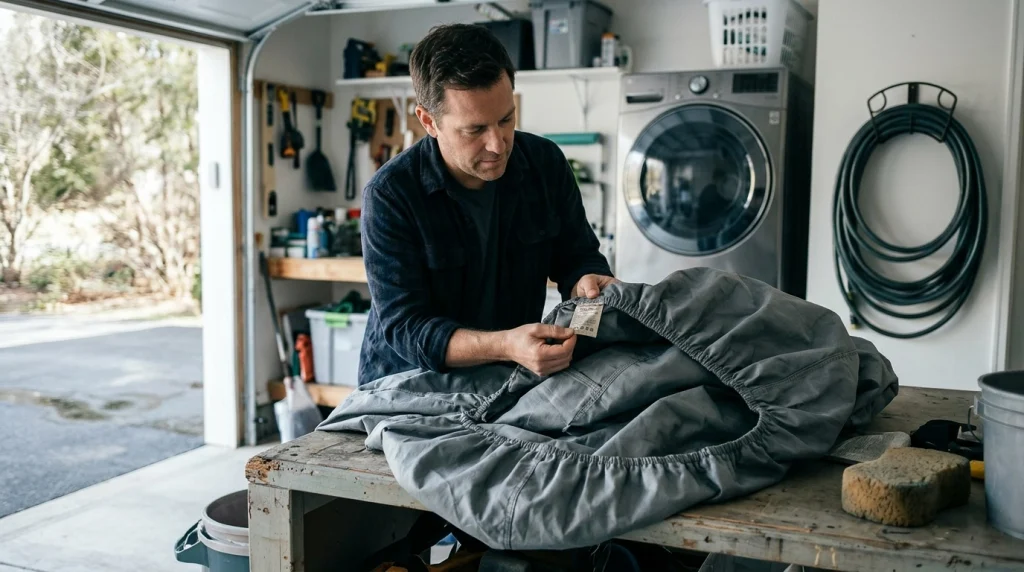
Choose the method specified by your cover’s manufacturer. If you cannot verify that machine washing is permitted, gentle hand cleaning is generally the more cautious starting point, provided the material allows it.
Choose hand washing when…
- The manufacturer prohibits machine washing.
- The cover has delicate or specialty fabric that requires manual care.
- You need to clean a small dirty area rather than wash the entire cover.
- Your available washing machine is too small or has an unsuitable agitator.
- The manufacturer’s instructions are unclear and you’ve confirmed that gentle hand cleaning is permitted.
Choose machine washing when…
- The exact cover is explicitly machine-washable.
- You have access to a washer of the required size and design.
- You can follow the specified temperature, cycle, detergent, and rinsing requirements.
- The manufacturer permits the proposed drying method.
What if the cover is heavily stained?
Start by identifying the type of stain and checking the manufacturer’s cleaning recommendations. Bird droppings, tree sap, oily residue, and ordinary dust may need different treatments.
Remove loose contamination gently before applying a suitable cleaner. Avoid scraping with sharp tools or using solvents that could damage the fabric or its coating.
For stubborn stains, test a manufacturer-approved treatment on a discreet area if the instructions permit it. If the stain remains, ask the manufacturer about suitable products rather than escalating to harsh chemicals.
Does the right washing method affect how long a car cover lasts?
Appropriate cleaning can help maintain a cover’s condition by removing accumulated dirt and contaminants. However, no washing method guarantees a particular lifespan because material quality, weather exposure, fit, storage, and frequency of use also matter.
As of 2026, the practical advice remains product-specific: don’t assume all car covers share the same cleaning rules. For additional guidance, review the general Coverstore car cover cleaning instructions and compare them with the instructions for your own cover.
Section Takeaway: Let the care label determine the method, not convenience alone. When both methods are permitted, choose the one that meets the cleaning requirements with the least unnecessary stress on the fabric.
Frequently Asked Questions
Is hand washing better than machine washing a car cover?
Hand washing is generally the safer default when a cover’s care requirements are unknown or its material needs delicate treatment. Machine washing can be equally appropriate for covers designed for it. Always follow the exact manufacturer’s instructions rather than assuming one method is best for every product.
Can I wash my car cover in a regular washing machine?
Only if the manufacturer permits it and the machine meets the cover’s requirements. Some covers need a large front-loading or commercial washer, while others cannot be machine-washed at all. Avoid a center-agitator washer unless the manufacturer explicitly approves that design.
Can washing a car cover remove its waterproof coating?
An unsuitable cleaning method or incompatible detergent may damage certain water-repellent treatments or layered materials. However, the outcome depends on the cover’s construction and care requirements. Use the approved cleaner, temperature, and washing method to reduce the risk of damaging its protective properties.
What detergent should I use to wash a car cover?
Use the cleaner recommended by the cover’s manufacturer. A mild detergent may be suitable for many fabrics, but some specialty covers prohibit detergents or require a particular cleaning product. Avoid bleach and fabric softener unless the manufacturer explicitly permits them.
Can I put a car cover in the dryer?
Don’t put a car cover in a tumble dryer unless its care instructions explicitly allow it. Heat can shrink some materials or damage protective coatings. Air drying is the cautious default for many covers, and the cover should be completely dry before storage or reuse.
Can I wash a car cover while it is on the vehicle?
Some manufacturers permit cleaning a cover while it is fitted over a clean vehicle, using a hose, soft sponge, and approved cleaner. Others specify a different method. Check the product instructions first, and avoid rubbing dirt between the cover and the vehicle’s paint.
How often should I wash my car cover?
There is no universal washing interval for every car cover. Clean it when dirt or contamination builds up, or when the manufacturer recommends maintenance. Frequent unnecessary washing can add wear, while excessive dirt may transfer to the vehicle or interfere with proper use.
Final Takeaway: Hand Wash or Machine Wash?
For most car owners who aren’t sure about their cover’s cleaning requirements, hand washing is the more cautious place to start. It provides direct control over the process and avoids the mechanical action of an unsuitable washing machine.
Machine washing is a reasonable alternative when the manufacturer explicitly approves it and you have the correct equipment. The right temperature, detergent, rinse process, and drying method are just as important as the choice between hand washing and machine washing.
My advice is straightforward: identify the exact cover, follow its care instructions, and inspect it before reinstalling it. A little care during cleaning can help preserve the cover’s fit and protective function without taking unnecessary risks with your vehicle’s finish.
Next step: Check the sewn care label or the manufacturer’s product page before washing. If you can’t confirm that machine washing is permitted, don’t put the cover in the washer until you’ve verified the correct method.
This article provides general car-cover care guidance. The manufacturer’s instructions for your specific cover take priority over general recommendations.