
Rust Forming Under My Car Cover? Causes, Fixes, and Prevention

Quick Answer
If rust is forming under your car cover, trapped moisture is usually the main problem. A wet vehicle, poor airflow, a non-breathable cover, ground moisture, or salt left on the body can keep metal damp long enough for corrosion to begin. I recommend uncovering the car, drying it fully, cleaning any salt or dirt, and following proper vehicle storage practices before covering it again.
Most likely causes
- Trapped moisture: Rain, wash water, or condensation stays between the vehicle and cover.
- Poor ventilation: A cover that cannot release water vapor keeps surfaces damp.
- Salt contamination: Road salt left on metal speeds corrosion when moisture is present.
- Ground moisture: Damp soil, grass, or an exposed driveway can increase moisture around a stored vehicle.
- Damaged paint: Chips and scratches expose bare steel where rust can start.
- Wrong cover: A tarp or poorly suited indoor cover may trap water during outdoor storage.
What I would do first
- Remove the cover, let the vehicle dry completely, inspect the rusty area, and do not cover it again while any surface is damp.
I learned the hard way that putting a cover over a car does not automatically keep rust away. A cover can protect paint from sun, dust, sap, and weather, but it can also create a damp pocket when the setup is wrong.
If you have noticed orange spots, bubbling paint, rusty fasteners, or corrosion after uncovering your vehicle, this guide will help you find the cause and stop it from getting worse.
In This Guide
Why Is Rust Forming Under My Car Cover?
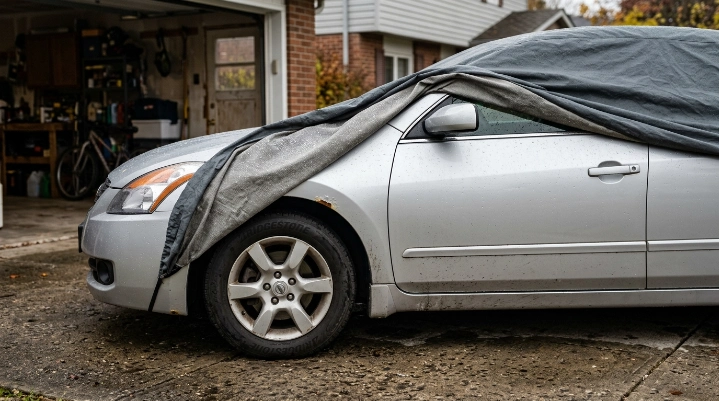
Rust under a car cover usually means water or humid air is staying against metal longer than it should. The cover itself may not create corrosion, but it can make a moisture problem worse.
Rust is corrosion that forms when iron or steel reacts with oxygen in the presence of moisture. Salt and damaged protective coatings can speed that reaction.
Was the car wet before you covered it?
This is the first thing I check. I have been tempted to cover a freshly washed car before every seam and lower panel was dry.
That is a bad habit. Water can remain around mirrors, trim, wheel arches, door seams, trunk edges, and body gaps long after the visible paint looks dry.
- Rainwater: Moisture can remain in seams after a storm.
- Wash water: Hidden areas may still be wet when the paint feels dry.
- Morning dew: A vehicle can look almost dry while condensation remains on cooler metal.
Is condensation building underneath the cover?
A vehicle outdoors changes temperature throughout the day. The body can cool overnight and warm again after sunrise.
Moist air trapped around cooler panels may condense into droplets. If the cover releases moisture slowly, those droplets can remain against the vehicle.
I pay special attention after several humid or rainy days. When I lift a cover and find the underside damp, I treat that as a warning sign.
Is road salt still on the vehicle?
Winter grime deserves extra attention. Salt residue can collect around rocker panels, wheel arches, suspension areas, fasteners, and the lower body.
Covering a salty vehicle without cleaning it does not stop corrosion. Add moisture, and the environment becomes much more favorable for rust.
- Wash road salt from the body and wheel wells.
- Clean mud from lower panels and underbody areas you can safely reach.
- Dry the vehicle before storage.
- Inspect existing paint chips before covering.
Section Takeaway: A car cover works best as the final layer of protection. The vehicle underneath should already be clean, dry, and free of heavy salt residue.
What Kind of Rust Am I Looking At?
Not every orange mark means the same thing. Where the rust appears tells me how urgently I need to respond.
Surface rust on exposed metal
Light orange or brown staining on a small bare-metal area may be early surface rust. I often see this around paint chips, exposed brackets, bolts, and untreated steel.
Early surface corrosion is usually easier to address than rust that has worked beneath paint or through structural metal.
Rust bubbles under painted panels
Bubbling paint worries me more. It can mean corrosion is developing beneath the coating rather than sitting only on the surface.
Watch areas such as rocker panels, wheel arches, lower doors, trunk edges, and panel seams.
Orange brake rotors after storage
Brake rotors are bare metal, so a thin orange film can appear after moisture exposure. Edmunds notes that some rotor rust after storage may clear after the vehicle is driven. Its long-term storage guidance also recommends checking the brakes before returning a stored vehicle to regular use.
Heavy corrosion, grinding, sticking brakes, or poor braking needs more attention. Do not assume every rusty brake component is harmless.
Structural or perforating rust
Deep scaling, holes, weakened mounting points, or heavy corrosion on structural areas is different from cosmetic surface rust. This can affect vehicle integrity.
Mechanic Alert: If you see heavy rust on structural members, suspension mounting points, brake lines, or major underbody components, have a qualified mechanic inspect the vehicle rather than relying on a home cosmetic repair.
| What You See | Likely Situation | My Next Step |
|---|---|---|
| Light orange film on rotor | Surface oxidation after moisture exposure | Inspect brakes before driving |
| Small rust spot at paint chip | Bare steel exposed | Clean and repair promptly |
| Bubbling paint | Corrosion may be under coating | Inspect beyond visible bubble |
| Flaking or perforated metal | Advanced corrosion | Professional inspection |
What Should I Do When I Find Rust?
My first goal is to remove the moisture source. Treating a rust spot while leaving the car damp under the same cover only repeats the problem.
- Remove the cover. Do not put it back on immediately.
- Dry the vehicle. Open the cover to air out separately as well.
- Wash away contamination. Remove salt, mud, dirt, and other deposits.
- Find the rust location. Separate cosmetic paint damage from brake or structural corrosion.
- Check the cover. Look for damp lining, blocked vents, tears, dirt, or poor fit.
- Correct the storage setup. Improve airflow and keep the vehicle away from persistent ground moisture when possible.
Should I put the cover back on immediately?
No. I wait until both the vehicle and the inside of the cover are dry.
A dry car under a damp cover still gives you a moisture problem. The cover itself needs attention.
Should I repair a paint chip?
A paint chip exposes the metal beneath the finish. If corrosion has started there, delaying the repair gives moisture more time to reach the steel.
Small cosmetic areas may be suitable for a proper touch-up repair. Spreading rust or bubbling paint may need professional bodywork.
Can the Wrong Car Cover Cause Rust?
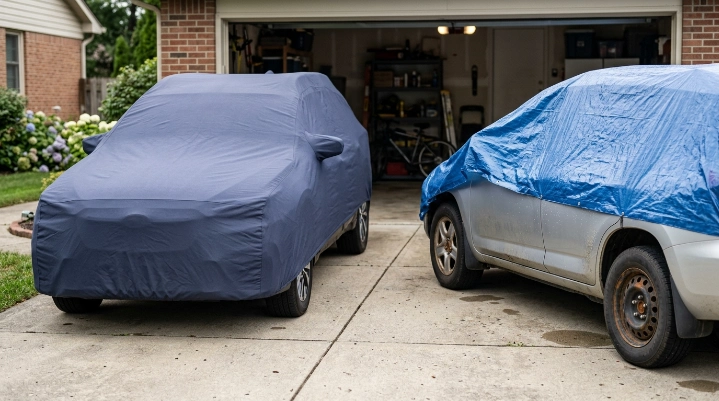
The wrong cover can contribute to the conditions that cause rust. Material, fit, ventilation, and whether the cover is designed for indoor or outdoor use all matter.
Car and Driver’s 2026 cover testing found noticeable differences between products. Its testing also found hints of moisture around a cheaper weather-resistant cover, which is exactly why I do not assume every product labeled “all-weather” performs the same way. You can review its 2026 car cover testing for examples.
| Cover Setup | Moisture Risk | Best Use |
|---|---|---|
| Breathable indoor cover | Lower in a dry garage | Dust and light indoor protection |
| Quality outdoor cover | Depends on ventilation, fit, and conditions | Rain, sun, dirt, and outdoor exposure |
| Loose universal cover | Moderate | Short-term protection when properly secured |
| Non-breathable plastic tarp | Higher when moisture gets trapped | Not my choice for direct long-term vehicle covering |
Fit matters too
A cover that is too loose can move in wind. That motion may rub dirt against paint and create small scratches.
Once paint protection is damaged, exposed metal becomes more vulnerable to moisture. A fitted cover also stays more predictable during bad weather.
How Do I Prevent Rust Under a Car Cover?
I focus on the storage setup before I focus on the cover. The goal is to keep water away while still allowing moisture to escape.
- Cover only a dry car: Check mirrors, seams, wheel arches, and lower panels.
- Clean before storage: Remove road salt, mud, bugs, sap, and bird droppings.
- Use the correct cover: Choose an outdoor-rated cover for outdoor storage.
- Keep the cover clean: Dirt on the inner surface can scratch paint.
- Check the fit: Avoid excessive flapping or loose fabric.
- Inspect after heavy weather: Lift the cover and check for dampness.
- Use sheltered storage when possible: A dry garage reduces direct exposure to rain and changing weather.
What about parking on grass or soil?
I avoid long-term covered storage on damp grass or soil when I have another choice. Moisture close to the ground can keep the area beneath the vehicle humid.
A dry paved surface or sheltered garage gives me a more controlled environment. It also makes leaks and standing water easier to spot.
Should I wax the car before covering it?
A clean, protected paint finish gives the exterior another barrier against contamination. Wax or another paint-protection product does not replace proper drying, though.
I treat paint protection as backup. Moisture control still comes first.
How often should I check a covered car?
I do not leave an outdoor-covered vehicle completely forgotten. I inspect it after prolonged rain, major temperature swings, or any time I suspect the cover stayed wet.
As of 2026, that simple habit still matters more to me than marketing claims printed on a cover package. A quick inspection can reveal condensation before corrosion spreads.
Frequently Asked Questions
Does a car cover make a car rust?
A car cover does not directly create rust, but it can trap moisture around metal when the car, cover, or storage area stays damp. Poor ventilation, salt contamination, damaged paint, and the wrong cover type can make corrosion more likely.
Is a waterproof car cover better for preventing rust?
A good outdoor cover should keep outside water away while managing trapped moisture. I would not judge a cover by the word “waterproof” alone. Fit, ventilation, material quality, and the ability to dry between uses also matter.
Can I cover my car right after washing it?
I would not. Dry the paint, mirrors, trim, wheel arches, seams, and lower body first. Water often hides in gaps after the visible panels appear dry, and covering the car can slow evaporation.
Why is there condensation under my car cover?
Condensation can form when humid air meets cooler vehicle surfaces. Temperature changes during outdoor storage can make this more noticeable. A damp cover, poor airflow, and wet ground may add to the moisture around the vehicle.
Should I remove my car cover when it rains?
Not necessarily if you have a properly fitted outdoor cover designed for weather exposure. After prolonged wet conditions, however, I check beneath it for trapped moisture and let both the cover and car dry if needed.
Can rust under a car cover damage the paint?
Yes. Corrosion can begin at exposed metal where paint is chipped or scratched, and rust developing beneath paint may cause bubbling or lifting. Early inspection gives you a better chance to address a small spot before it spreads.
Is rust on brake rotors after covering the car normal?
A light film can appear on bare brake rotors after moisture exposure or storage. Heavy rust, sticking brakes, unusual noise, or reduced braking should be inspected rather than dismissed as normal surface oxidation.
Final Takeaway
If I find rust forming under my car cover, I do not blame the cover and buy another one immediately. I first look for trapped moisture, salt, damaged paint, poor airflow, and damp storage conditions.
The best routine is simple: clean the vehicle, dry it fully, use a properly fitted cover for the storage environment, and inspect underneath it after wet weather. If corrosion is deep, structural, or affecting brake components, get the vehicle professionally inspected before the damage progresses.
Fix the moisture problem first. Then the car cover can do the job it was meant to do.
“`