
How to Keep a Car Cover Clean: A Practical Maintenance Guide
Quick Answer
To keep a car cover clean, remove loose dust and grit regularly, wipe away fresh stains with a soft cloth, and wash the fabric according to its manufacturer’s instructions. Keep the vehicle-facing surface free of abrasive dirt, rinse away cleaning residue, and let the cover dry completely before storing it. Proper care helps preserve the fabric and its protective coatings.
Everyday car cover care essentials
- Remove loose debris: Shake off leaves, dust, and grit before folding or reinstalling the cover.
- Clean the vehicle: Remove dirt from the car before covering it to reduce the risk of paint scratches.
- Spot-clean stains: Use a soft sponge and an approved cleaning solution instead of aggressive scrubbing.
- Wash carefully: Check whether your specific cover allows hand washing or machine washing.
- Dry it fully: Never pack away a damp cover because trapped moisture can encourage mildew and unpleasant odors.
- Store it properly: Keep the clean, dry fabric in a suitable storage bag or clean, ventilated location.
One important precaution
- Avoid bleach, fabric softener, harsh solvents, and high-pressure washing unless the manufacturer explicitly approves them.
A car cover can protect your daily driver from dust, bird droppings, pollen, and changing weather, but the cover itself needs regular attention. The most practical approach is to remove contamination early rather than wait until the entire fabric looks dirty.
This guide explains how to keep a car cover clean, choose the right washing method, handle stubborn stains, and prevent dirt from reaching your vehicle’s paint. You’ll also learn how to adapt your cleaning routine for indoor parking, outdoor exposure, and humid conditions.
In This Guide
- Why Does Keeping a Car Cover Clean Matter?
- How Do You Keep a Car Cover Clean Every Day?
- How Do You Wash a Car Cover Safely?
- How Do You Remove Stains, Mold, and Odors?
- Which Car Cover Cleaning Method Is Best?
- How Should You Dry, Store, and Maintain a Car Cover?
- Frequently Asked Questions
- Final Takeaway
Why Does Keeping a Car Cover Clean Matter?
Keeping a car cover clean helps prevent abrasive dirt from reaching your vehicle, reduces unpleasant odors, and supports the cover’s intended protective function. A dirty cover can become a source of contamination instead of acting as a clean barrier.
What Is a Car Cover, and Why Does Its Cleanliness Matter?
A car cover is a fitted or semi-fitted fabric barrier designed to shield a parked vehicle from selected environmental contaminants and exposure. Depending on its material and construction, it may offer protection against dust, sunlight, rain, pollen, and bird droppings.
Its condition matters because the inside surface sits close to the vehicle’s finish. Dust and fine grit trapped between the fabric and paint can rub against the surface when wind moves the cover or someone removes it.
The problem isn’t limited to visible dirt. Fine particles can accumulate in seams, folds, mirror pockets, and the inner lining, where they’re easy to overlook.
What Happens When You Neglect Car Cover Maintenance?
Several problems can develop when dirt and moisture build up over time.
- Paint contamination: Dust, grit, and other debris may transfer from the fabric to the vehicle.
- Persistent odors: Damp storage can leave a musty smell that becomes harder to remove.
- Reduced water performance: Dirt buildup may interfere with some fabrics’ water-resistant behavior.
- Material deterioration: Repeated abrasion, unsuitable chemicals, and improper washing can damage fibers or coatings.
- Hidden damage: Accumulated grime can make small tears, worn stitching, and thinning areas harder to spot.
Manufacturers such as WeatherTech and Covercraft provide fabric-specific cleaning guidance because care requirements vary. Their instructions are a better starting point than assuming every cover can tolerate the same detergent, washing machine, or drying method.
For general vehicle ownership information, consult the National Highway Traffic Safety Administration. For car cover cleaning, however, the product manufacturer’s instructions should guide your choice of washing method and cleaning products.
Section takeaway: A clean cover is part of keeping a car’s finish clean. Focus on the vehicle-facing surface and avoid methods that could compromise the fabric.
How Do You Keep a Car Cover Clean Every Day?
The easiest way to maintain a car cover is to remove loose debris before it becomes embedded in the fabric. A short inspection during installation and removal can prevent much more time-consuming cleaning later.
1. Start With a Clean Vehicle
Before installing the cover, check the hood, roof, windshield, and other exposed panels for dust, mud, dried leaves, and grit. Clean the vehicle as needed and allow wet surfaces to dry when appropriate for the cover’s material and intended use.
Never drag a cover across a visibly dirty paint surface if you can avoid it. Instead, lift the fabric as you remove or position it, particularly around the hood, roof edges, mirrors, and rear panels.
2. Remove Dust and Loose Debris Regularly
Shake the cover gently in a suitable outdoor area when it’s safe to do so. For localized dirt, use a soft, clean microfiber cloth or another tool approved by the manufacturer.
- Remove leaves and loose twigs before folding the fabric.
- Brush away dry dust gently without grinding it into the material.
- Inspect folds, elastic hems, and mirror pockets for trapped grit.
- Check the underside before placing the cover back on the car.
Avoid stiff brushes and aggressive rubbing, especially on coated or multilayer covers. If the debris includes sand or sharp particles, remove it carefully before handling the fabric further.
3. Clean Small Spills Before They Set
Bird droppings, pollen deposits, and fresh splashes are usually easier to address before they dry into stubborn stains. Follow the manufacturer’s instructions and test an approved cleaning solution on a discreet area when appropriate.
Use a damp sponge or soft cloth to lift contamination instead of scrubbing hard. Rinse the affected area if the care instructions call for it, then allow the cover to dry properly.
4. Choose a Cleaning Schedule That Matches Exposure
There isn’t one universal cleaning interval for every car cover. The right schedule depends on parking conditions, weather, surrounding trees, traffic dust, and how frequently you install and remove the cover.
- Indoor parking: Inspect periodically and clean when dust or contamination accumulates.
- Outdoor parking: Check more frequently for pollen, bird droppings, rain residue, and windblown debris.
- Humid environments: Pay particular attention to dampness, musty odors, and incomplete drying.
- After storms or nearby construction: Inspect for mud, grit, and debris before reusing the cover.
In 2026, a condition-based cleaning routine remains a practical approach because exposure varies from one parking location to another. Clean the cover when it needs attention, rather than following an arbitrary monthly schedule.
Section takeaway: Keep both the car and the cover’s inner surface clean. Regular light maintenance helps reduce the need for aggressive washing.
How Do You Wash a Car Cover Safely?
The safest way to wash a car cover is to follow the instructions for its exact material and construction. Some covers allow gentle machine washing, while others require hand cleaning or simple wiping with water and an approved cloth.
What Supplies Should You Prepare?
For a cover that permits hand washing, gather a few basic supplies before starting.
- A clean bucket or suitable water source.
- Cool or lukewarm water, as directed by the manufacturer.
- A mild, approved cleaning product.
- A soft sponge or microfiber cloth.
- A garden hose with gentle water flow, if permitted.
- A clean place where the cover can dry fully.
Don’t assume ordinary laundry detergent is suitable for every waterproof or coated cover. Some products require a specific cleaner, and some manufacturers prohibit detergent altogether.
How Do You Hand-Wash a Car Cover?
Hand washing gives you control over pressure and lets you focus on dirty areas without subjecting the fabric to unnecessary agitation. Use this method only when the cover’s instructions allow wet cleaning.
- Choose a clean work area. Use a clean driveway or another suitable surface where mud and loose debris won’t stick to the fabric.
- Remove loose dirt. Shake off leaves and dust before adding water.
- Prepare the solution. Mix the approved cleaner with water at the specified concentration.
- Clean gently. Work in manageable sections using a soft sponge or cloth.
- Rinse thoroughly. Remove all cleaning residue using the method recommended for the material.
- Check the reverse side. Clean the inner surface if permitted and necessary, paying attention to grit and residue.
- Dry completely. Follow the recommended air-drying or other approved drying procedure before storage.
Never twist or wring a cover to force water out unless its manufacturer explicitly permits that handling method. Excessive pulling can strain seams, elastic sections, and attachment points.
Can You Machine-Wash a Car Cover?
Yes, some car covers are machine-washable, but this depends on the specific product. Manufacturer instructions may specify a particular machine type, cycle, detergent, and drying procedure.
If machine washing is approved, check the following details first.
- Machine type: Confirm whether a front-loading machine is required and whether a center agitator is prohibited.
- Capacity: Make sure the cover has enough room to move without being forced into the drum.
- Water temperature: Use the temperature specified for the fabric.
- Cleaning product: Use only the approved cleaner and amount.
- Rinsing: Follow the prescribed rinse instructions to remove residue.
- Drying: Use the permitted method and avoid unapproved heat.
Large SUV and pickup covers may require a commercial machine with sufficient capacity. If your cover’s instructions prohibit machine washing, don’t attempt it simply because the fabric appears sturdy.
Which Cleaning Products Should You Avoid?
Harsh products can damage fabric fibers, water-repellent treatments, or other specialized layers. When the care label doesn’t authorize a product, choose the manufacturer’s recommended option instead.
- Bleach: Avoid it unless the manufacturer explicitly approves it.
- Fabric softener: Many car cover manufacturers prohibit it because it may leave residues or affect fabric performance.
- Strong solvents: These can damage finishes, coatings, or synthetic materials.
- Abrasive cleaners: Scouring products and stiff brushes can wear down the surface.
- Unapproved pressure washing: High-pressure water may strain seams or damage sensitive layers.
When in doubt, pause and check the care label or contact the manufacturer. A conservative cleaning method is preferable to risking a cover’s protective properties.
Section takeaway: Confirm the permitted cleaning method before washing. Gentle handling alone isn’t enough if the product’s material requires a specific cleaner or prohibits water immersion.
How Do You Remove Stains, Mold, and Odors?
Stubborn stains need a careful approach because the wrong cleaning product can damage a car cover’s surface or protective treatment. Identify the contamination first, then use a method approved for the material.
How Do You Remove Bird Droppings and Tree Sap?
Bird droppings and tree sap can stick to fabric and become harder to remove when left untreated. Address them promptly without scraping aggressively or rubbing the contamination deeper into the material.
- Bird droppings: Follow the cover’s approved spot-cleaning procedure, using a soft cloth and suitable cleaning solution.
- Tree sap: Avoid sharp tools and unapproved solvents, which may damage the fabric or its coating.
- Greasy marks: Use only a cleaner approved for the cover rather than a strong automotive degreaser.
- Pollen: Remove loose particles first, then clean the remaining residue gently.
- Mud: Remove loose particles carefully and follow the recommended washing method.
Don’t assume a cleaning trick that works on vehicle paint will also work on cover fabric. Test a permitted cleaner on a discreet area when the manufacturer allows it.
How Can You Remove Musty Smells and Prevent Mildew?
A musty smell often signals that moisture has remained trapped in the cover or its storage area. Warm, humid conditions can make the problem more noticeable, particularly when a damp cover stays folded for extended periods.
To address the problem, inspect the inner lining, seams, and folded sections for visible growth or persistent dampness. Clean the material according to its care instructions and allow it to dry thoroughly in a well-ventilated location.
Avoid spraying perfume or air freshener over the smell. These products may mask the odor without removing its source, and some ingredients may be unsuitable for coated fabric.
If visible mold persists after approved cleaning, or the fabric has developed extensive discoloration or deterioration, contact the manufacturer about suitable treatment or replacement. Don’t combine cleaning chemicals in an attempt to remove the problem faster.
What Should You Do About Stains That Won’t Disappear?
Not every stain needs aggressive treatment. A faint cosmetic mark may be safer to leave alone than to risk weakening the fabric with repeated scrubbing.
Persistent staining accompanied by peeling coatings, brittle material, damaged stitching, or unusual texture changes deserves closer inspection. If the cover no longer provides its intended protection, replacement may be more sensible than repeated cleaning attempts.
Section takeaway: Treat stains early, avoid unapproved chemicals, and address moisture at its source. Protecting the fabric matters more than removing every visible mark.
Which Car Cover Cleaning Method Is Best?
The best cleaning method depends on how dirty the cover is, the fabric’s construction, and the manufacturer’s care instructions. Spot cleaning works for small areas, while hand washing or machine washing may suit more extensive contamination when expressly permitted.
Use this comparison to decide which approach to consider before checking the detailed instructions for your particular cover.
| Cleaning method | Best suited for | Main advantage | Important limitation |
|---|---|---|---|
| Dry debris removal | Dust, leaves, and loose grit | Quick routine maintenance | Won’t remove stuck-on stains |
| Spot cleaning | Small stains and isolated dirty patches | Limits unnecessary washing | Cleaner must be material-compatible |
| Hand washing | Broader dirt buildup on washable covers | Allows controlled, gentle cleaning | Requires space and thorough rinsing |
| Machine washing | Covers explicitly labeled machine-washable | Can clean larger areas efficiently | Machine type, capacity, and settings matter |
| Manufacturer-approved professional cleaning | Specialized covers or difficult contamination | May provide suitable material-specific care | Availability and compatibility vary |
Should You Clean a Cover While It’s on the Car?
Some manufacturers permit spot cleaning while the cover is fitted over the vehicle. This can make it easier to clean a small area without spreading the fabric across the ground.
However, the method isn’t appropriate for every product. Follow the manufacturer’s directions, avoid soaking the vehicle unnecessarily, and remove the cover afterward if required to dry both surfaces properly.
Is Pressure Washing a Good Idea?
High-pressure washing isn’t a sensible default for car cover maintenance. A forceful stream may stress seams, disturb delicate coatings, or drive water into areas that take longer to dry.
A gentle rinse is preferable when the care instructions allow it. Don’t assume that a cover marketed as waterproof can tolerate a pressure washer.
Section takeaway: Choose the least aggressive method that can safely remove the contamination. The manufacturer’s instructions take priority over general cleaning advice.
How Should You Dry, Store, and Maintain a Car Cover?
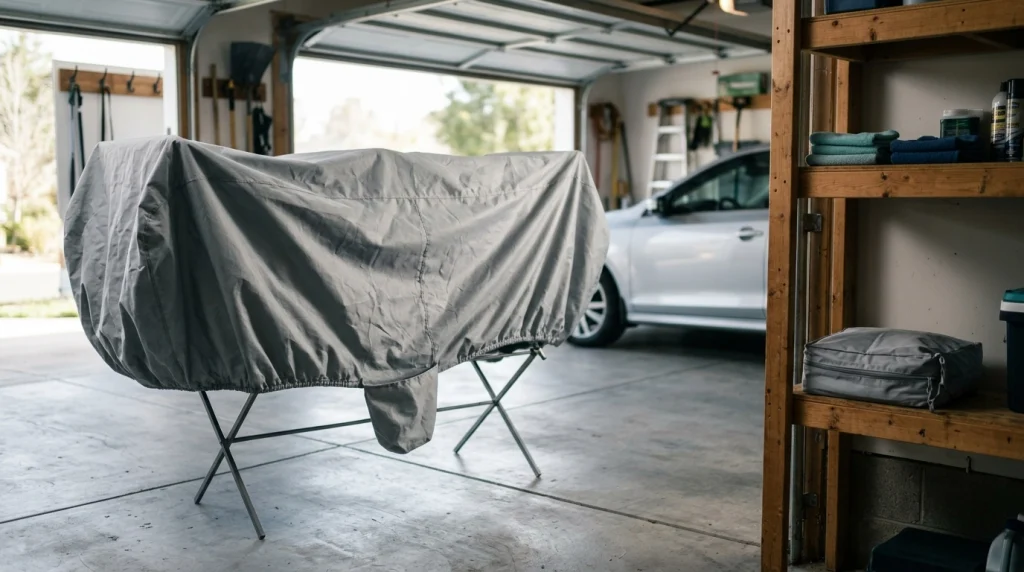
Drying and storage are essential parts of keeping a car cover clean. Even a properly washed cover can develop odors or moisture-related problems if it’s packed away before the fabric and inner lining are dry.
How Do You Dry a Car Cover Without Damaging It?
For covers that permit air drying, spread the material across a clean rack or another suitable surface with enough space for air to circulate. Avoid leaving it bunched up in a corner or folded over itself while wet.
- Follow the specified drying method for the fabric.
- Check thick seams, elastic hems, and mirror pockets for remaining moisture.
- Keep the cover away from sharp edges and dirty surfaces.
- Avoid unapproved tumble drying, ironing, or direct heat.
- Allow additional drying time in humid or poorly ventilated conditions.
Some products have specific dryer settings, while others must only air-dry. Never apply a universal drying rule to every material; the product instructions determine what’s safe.
How Should You Fold and Store the Cover?
Once the cover is completely dry, fold it on a clean surface so the vehicle-facing side doesn’t collect fresh dirt. Follow any folding instructions supplied with the product, particularly if it has a specialized lining or fitted mirror pockets.
Store the cover in its supplied bag if appropriate, or use another clean storage option recommended by the manufacturer. Keep it away from standing water, sharp tools, chemicals, and dusty workshop floors.
A breathable storage location can be useful where moisture is a concern. However, some covers have specific storage requirements, so avoid substituting a sealed plastic container or another storage method without checking compatibility.
How Do You Keep an Outdoor Car Cover Cleaner for Longer?
Outdoor covers collect more environmental contamination than covers used exclusively in a clean garage. A few preventive habits can reduce the amount of cleaning required.
- Choose the parking spot carefully: Avoid areas directly beneath trees that regularly shed sap, flowers, or sticky debris.
- Secure the cover correctly: Use its intended straps or fasteners to reduce unnecessary movement in the wind.
- Check after bad weather: Look for mud, leaves, and grit before removing or reinstalling the cover.
- Control moisture: Follow the product’s guidance for ventilation and wet-weather use.
- Inspect before storage: Check for torn seams, worn elastic, loose straps, and damaged fabric.
WeatherTech’s official product and care resources provide a useful starting point for understanding why cover materials and maintenance requirements should not be treated as interchangeable.
When Should You Replace a Car Cover Instead of Cleaning It?
Cleaning cannot restore every damaged cover. If the fabric has widespread thinning, persistent mildew damage, torn seams, failing fasteners, or compromised protective layers, inspect whether the cover can still do its intended job.
Minor damage may be repairable if the manufacturer approves a suitable repair method. Extensive deterioration or a poor fit may justify replacement, especially when the cover risks rubbing against the vehicle or allowing unwanted moisture through.
Section takeaway: Dry the cover fully, store it in a clean place, and inspect it regularly. Preventive care reduces contamination and helps you identify damage before it becomes a larger problem.
Frequently Asked Questions
How Often Should You Clean a Car Cover?
Clean your car cover whenever dirt, stains, or residue begin to accumulate. Outdoor covers may need attention more often than indoor covers, particularly after storms, heavy pollen, or exposure to bird droppings. Follow the manufacturer’s maintenance schedule when one is provided.
Can I Use Regular Laundry Detergent on a Car Cover?
Only if the manufacturer permits it for your cover’s material. Some covers accept a mild laundry detergent, while others require a specific cleaner or prohibit detergents altogether. Avoid fabric softener and bleach unless the instructions explicitly allow them.
Can I Put My Car Cover in the Washing Machine?
Some covers are machine-washable, but others require hand cleaning or wiping. Check the care label for the permitted machine type, water temperature, cycle, and detergent. Never force a bulky cover into a machine that lacks sufficient capacity.
Can I Leave My Car Cover on While Cleaning It?
Some manufacturers permit spot cleaning while the cover remains fitted to the vehicle. Others recommend removing it for washing or drying. Follow the product’s instructions and make sure moisture doesn’t remain trapped between the cover and the vehicle.
How Do I Stop My Car Cover From Smelling Musty?
Remove the cover from storage, inspect it for moisture or visible growth, and clean it using the approved method. Allow it to dry completely before folding it away. Store it in a suitable, clean location with appropriate ventilation.
Can I Use a Pressure Washer to Clean My Car Cover?
Avoid pressure washing unless the manufacturer explicitly approves it. Strong water pressure can stress seams or damage some fabrics and coatings. Use a gentle rinse when permitted, and remove cleaning residue without excessive force.
Will Cleaning Restore a Car Cover’s Water Resistance?
Cleaning may improve water performance when accumulated dirt interferes with the fabric, but it won’t necessarily restore a damaged coating. If water resistance remains poor after correct cleaning, consult the manufacturer before applying a treatment or replacing the cover.
Final Takeaway: Keep Your Car Cover Clean With Simple Habits
Learning how to keep a car cover clean comes down to a few consistent habits: remove loose debris, keep the vehicle clean, treat stains early, and use the correct washing method for the fabric. These steps help prevent dirt from transferring to your car and reduce the risk of damage from unsuitable cleaning products.
Pay particular attention to drying and storage in humid conditions. A clean cover that’s folded away while damp can still develop unpleasant odors or other moisture-related problems.
Before your next cleaning session, check the care label and gather the recommended supplies. A few minutes of routine attention can help keep your cover ready for use and your vehicle better protected.
Note: Cleaning requirements differ between cover materials and manufacturers. Always follow the instructions supplied with your specific product.