
When Should You Replace a Car Cover? 7 Signs It’s Time for a New One
Quick Answer
You should replace a car cover when its fabric tears, waterproofing fails, seams separate, the lining becomes abrasive, or the cover no longer fits securely. There is no universal replacement interval because lifespan depends on material quality, sunlight, weather exposure, storage, and maintenance. Inspect your cover regularly and compare its condition with your vehicle’s protection needs.
Signs your car cover needs replacing
- Torn fabric: Holes and splits expose paintwork to dirt, moisture, and sunlight.
- Leaking material: Water penetrates a cover that should provide rain protection.
- Failed seams: Stitching pulls apart or openings widen under normal use.
- Damaged lining: Rough, gritty, or deteriorating inner fabric may scratch the finish.
- Poor fit: Loose fabric flaps in the wind, or the cover no longer stays secured.
- Persistent dampness: The cover traps moisture or remains wet long enough to create a recurring problem.
What to do before buying another cover
- Check whether cleaning, drying, or a manufacturer-approved repair can restore the cover.
- Choose a replacement designed for your parking conditions, climate, and vehicle shape.
A car cover can help protect your vehicle, but only while its material, fit, and construction remain in good condition. I’ve found that the useful question isn’t simply how old a cover is, but whether it still protects the paint without creating new problems.
In this guide, I’ll explain the warning signs to look for, how weather affects cover life, when repairs make sense, and how to choose a replacement that suits your daily driver.
In This Guide
7 Signs You Should Replace a Car Cover
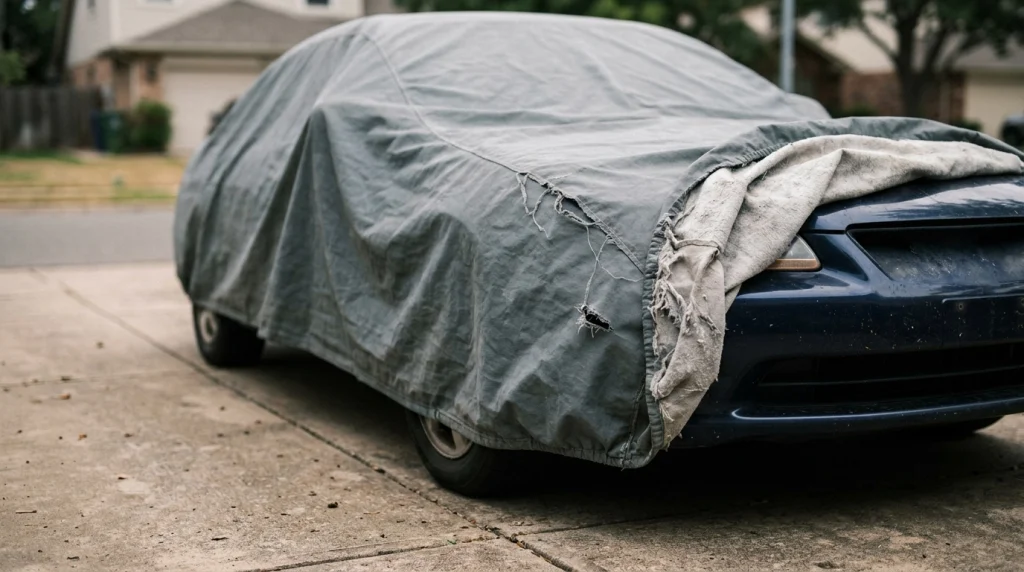
Replace your car cover when visible wear starts compromising protection or threatens the paint. Small cosmetic changes don’t always mean the cover has failed, but structural damage and persistent moisture problems deserve immediate attention.
1. The fabric has holes, tears, or thinning areas
Holes and tears allow contaminants and weather to reach areas the cover should protect. Thin patches can also split further when you pull the cover over mirrors, bumpers, or roof edges.
Inspect areas that experience the most friction. These commonly include mirror pockets, wheel openings, corners, and points where the fabric contacts sharp trim.
A tiny tear in an otherwise sound cover may be repairable. Replace it if damage spreads, several weak spots appear, or repairs no longer hold securely.
2. Rainwater passes through a cover designed to repel it
A waterproof or water-resistant cover should perform according to its advertised protection level. If water consistently penetrates damaged areas, worn coatings, or failed seams, the cover may no longer suit your needs.
First, distinguish material failure from condensation. Moisture can collect beneath a cover when warm, humid air meets a cooler vehicle surface, even when rain hasn’t penetrated the fabric.
Follow the manufacturer’s care instructions before testing the cover again. If water continues passing through areas that should repel rain, consider replacing it with a suitable model.
3. Seams, straps, or elastic edges are failing
A cover can look intact while its seams or attachment points deteriorate. Loose stitching, detached straps, stretched elastic, and broken buckles can leave the fabric unsecured.
Check whether the cover remains in place during ordinary wind. If it repeatedly slips off or flaps against the bodywork, it can expose the car and increase the risk of paint abrasion.
Replace the cover when essential attachment points cannot be repaired reliably. A new cover with secure fastenings is preferable to repeatedly tightening a failing one.
4. The inner lining is rough, dirty, or deteriorating
The inside of a car cover matters just as much as the outside. A soft lining can help reduce abrasion, while embedded grit, damaged fibers, or rough exposed backing may scratch the paint.
Remove the cover carefully and examine its inner surface in good light. Pay special attention to dusty areas, seams, and places that rub against the hood, roof, and trunk.
Clean a washable cover according to its care label. Replace it if the lining continues shedding material, exposes abrasive backing, or cannot be cleaned adequately.
5. Sunlight has made the material brittle or faded
UV exposure can weaken some fabrics and coatings over time. Fading alone doesn’t prove that a cover has failed, but fading combined with cracking, stiffness, or tearing is a stronger warning.
Gently inspect the material without stretching it aggressively. If it cracks under ordinary handling or develops several brittle areas, stop relying on it for regular outdoor protection.
6. The cover no longer fits your vehicle securely
A cover should fit the vehicle’s body shape and stay secured without excessive loose fabric. A poor fit can expose lower panels or allow the material to move against the paint.
Check the fit after installing the cover, especially around mirrors, bumpers, and the lower edges. A cover that worked on an older vehicle may also be unsuitable after changing cars or adding exterior accessories.
If the cover has stretched, shrunk, or lost its ability to stay in position, replacement may be the simplest solution. Confirm your vehicle’s make, model, year, and body style before ordering another.
7. The cover repeatedly traps moisture or develops persistent odors
A damp cover can hold moisture against the vehicle, particularly when the car is covered while wet or parked in humid conditions. Persistent dampness, mildew odors, or visible mold suggest that the current storage and drying routine needs attention.
Remove the cover when practical, let both surfaces dry, and follow the manufacturer’s cleaning guidance. Avoid covering a wet vehicle unless the product specifically supports that use.
If the cover remains damp despite proper drying, or its material has developed persistent contamination or deterioration, replacement may be necessary. Also investigate ventilation and drainage around the parking area.
Section Takeaway: Replace a cover when protection, fit, or fabric integrity has deteriorated. A faded appearance alone matters less than whether the cover still performs safely.
How Long Does a Car Cover Last?
A car cover’s lifespan depends on its construction, exposure, fit, and care. There isn’t one replacement interval that applies to every cover, so use its condition rather than its age as your main guide.
What affects a car cover’s lifespan?
Several factors influence how quickly a cover wears out. An outdoor cover generally faces more environmental stress than one used occasionally inside a clean, dry garage.
- Sunlight: UV exposure can weaken susceptible fabrics, coatings, and elastic components.
- Rain and humidity: Repeated wetting and slow drying can contribute to deterioration, mildew, or moisture retention.
- Wind: Repeated movement can wear fabric, seams, and contact points against the vehicle.
- Dust and pollution: Particles trapped beneath the cover can increase abrasion against the paint.
- Installation habits: Pulling roughly, dragging fabric across dirty paint, or forcing a tight cover can accelerate wear.
- Storage: Folding a cover while damp or storing it in a dirty area can shorten its useful life.
Does indoor or outdoor parking make a difference?
Yes. Indoor parking usually reduces direct sunlight and rain exposure, although dust, condensation, and contact with dirty surfaces can still cause problems.
Outdoor covers face more demanding conditions. Strong sun, heavy rain, wind, and seasonal temperature changes can accelerate deterioration, depending on the materials used.
Don’t assume that an expensive cover will last indefinitely outdoors. Follow its care instructions and inspect it more often when it faces harsh weather every day.
Should you replace a car cover after a specific number of years?
Not automatically. Manufacturers may provide expected service-life guidance for particular products, but that estimate cannot be applied to every fabric, climate, or parking arrangement.
As of 2026, the most practical approach remains condition-based replacement. Use the manufacturer’s guidance as a reference, then assess actual damage, moisture performance, lining condition, and fit.
For example, a lightly used garage cover might remain serviceable while a heavily exposed outdoor cover of the same age develops brittle fabric or failing seams. The calendar alone doesn’t tell you which one needs replacing.
Section Takeaway: Exposure and maintenance matter more than a universal age limit. Inspect outdoor covers more frequently, particularly after severe weather or noticeable changes in their texture.
Should You Repair or Replace Your Car Cover?
Repair a car cover when damage is small, localized, and fixable without compromising its protective function. Replace it when several components fail, the fabric has deteriorated broadly, or repairs no longer provide dependable coverage.
Car cover repair versus replacement
| Condition | Recommended action | Reason |
|---|---|---|
| Small tear in sound fabric | Consider repair | A compatible patch may restore coverage. |
| One loose seam | Repair if practical | Localized stitching damage may be fixable. |
| Several large tears | Replace | Multiple failures make reliable protection harder to maintain. |
| Brittle or cracking fabric | Replace | The surrounding material may fail even after patching. |
| Failed elastic or broken strap | Repair or replace | The decision depends on whether the fastening can be restored securely. |
| Damaged inner lining | Repair only if fully restorable | Rough or contaminated lining can threaten the paint finish. |
| Cover no longer fits | Replace if fit cannot be corrected | Poor fit can expose the vehicle or allow excessive movement. |
When is a patch enough?
A small patch can work when the surrounding fabric remains flexible and strong. Choose a repair product compatible with the cover’s material and intended weather protection.
Check the manufacturer’s repair instructions before applying adhesive, tape, or stitching. An unsuitable repair may damage a coating or leave a new path for water.
After the repair, inspect the area for lifting edges, loose threads, or spreading cracks. Don’t rely on a patch that separates during normal installation.
When does replacement make more sense?
Replacement is usually the sensible choice when the damage affects several areas or the material has deteriorated throughout. A repair cannot restore strength to fabric that has become brittle everywhere.
Consider replacement when:
- Multiple tears appear in different sections.
- The cover repeatedly leaks despite appropriate care.
- The inner lining remains rough or sheds material.
- Essential fasteners cannot hold the cover securely.
- The cover has the wrong shape or size for the vehicle.
Think about the condition of your paint, too. A failing cover that rubs against dusty bodywork can create a problem more expensive than replacing the cover itself.
Section Takeaway: Repair isolated damage when the rest of the cover remains sound. Replace widespread or recurring failures rather than repeatedly patching material that has reached the end of its useful life.
How to Inspect and Maintain a Car Cover
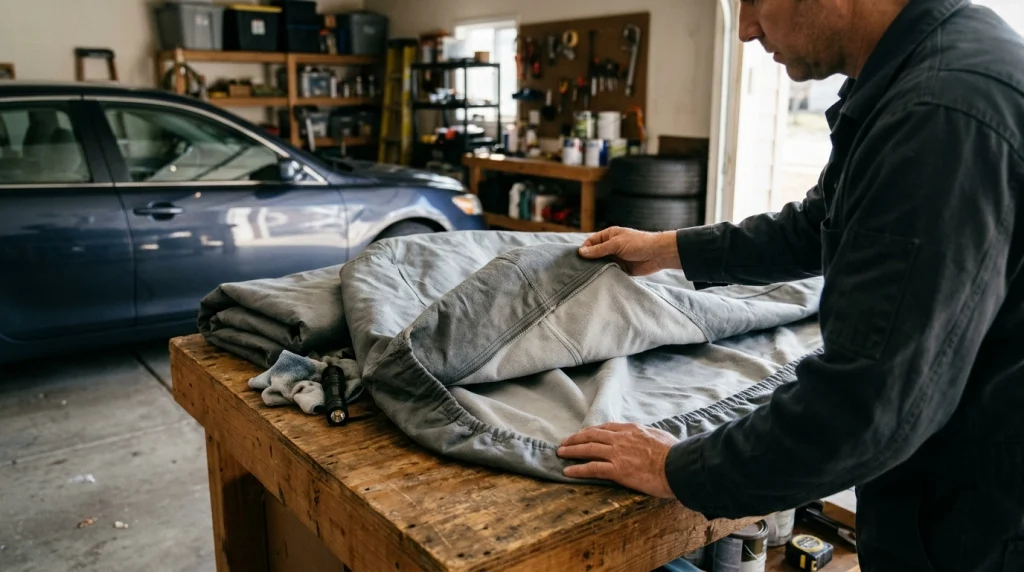
A brief inspection can reveal problems before a cover starts exposing your vehicle. Check it before installation, after severe weather, and whenever you notice changes in fit, smell, or material texture.
How do you inspect a car cover properly?
Spread the cover over a clean, dry area with enough room to examine both sides. Avoid dragging it across concrete, gravel, or other dirty surfaces.
- Inspect the exterior: Look for holes, thinning patches, coating damage, and cracks.
- Check the lining: Feel for rough areas, embedded grit, shedding fibers, or damaged backing.
- Examine the seams: Look for loose stitching, separated panels, and widening openings.
- Test the fasteners: Check straps, buckles, elastic edges, and attachment points for damage.
- Assess moisture: Look for persistent dampness, mold, unusual odors, or water damage.
- Confirm the fit: Install the cover carefully and check that it stays in place without excessive slack.
Don’t pull hard on weakened fabric just to test its strength. Brittle material can split during an aggressive inspection, making the damage worse.
How often should you inspect your cover?
There is no single inspection schedule for every cover. A sensible routine is to check it during regular vehicle care and after strong winds, heavy rain, or prolonged exposure to intense sunlight.
For an outdoor vehicle, a quick visual check every few weeks is a practical starting point, not a manufacturer-mandated interval. Inspect more often if you notice wear or live in a harsh climate.
For a garage-kept car, inspect the cover when you use it and before storing it for an extended period. A cover that sits unused can still collect dust or develop moisture-related problems.
How can you make a car cover last longer?
Good care slows avoidable wear, although it can’t reverse material degradation. Focus on keeping both the vehicle and the cover clean before bringing them into contact.
- Clean the vehicle first: Remove loose dirt and grit before covering the paint.
- Follow washing instructions: Use only cleaning methods approved for the cover’s material.
- Dry it thoroughly: Allow the cover to dry as directed before folding and storing it.
- Install it gently: Avoid dragging the material across dirty bodywork or pulling forcefully on the seams.
- Secure it properly: Use the designed attachment points to limit unnecessary movement.
- Store it carefully: Keep it away from sharp objects, dirty floors, and prolonged dampness.
A cover also needs to suit its environment. Don’t assume that a product designed for indoor dust protection will provide adequate protection against prolonged outdoor rain and sunlight.
What if the paint already looks scratched?
Remove the cover carefully and examine the paint in good lighting. Fine marks may come from trapped dirt or friction, but a visual inspection alone cannot establish their exact cause.
Stop using a cover with a gritty or damaged lining until you can clean or replace it. If the marks are deep, widespread, or unclear, consult a reputable automotive detailing professional before attempting abrasive polishing.
Section Takeaway: Clean surfaces, careful installation, proper drying, and regular checks help extend a cover’s useful life. Stop using it when its condition puts the paint at risk.
How to Choose the Right Replacement Car Cover
The best replacement is one that matches your parking environment, vehicle dimensions, and weather exposure. A cover that fits well and suits its intended use is more valuable than one selected solely by price or appearance.
Should you choose an indoor or outdoor car cover?
An indoor cover generally prioritizes a soft surface and protection from dust. An outdoor cover must address additional challenges, such as rain, sunlight, wind, and changing temperatures.
| Feature | Indoor cover | Outdoor cover |
|---|---|---|
| Main purpose | Dust and light contact protection | Protection from specified outdoor conditions |
| Sun exposure | Usually limited | UV resistance may be important |
| Rain protection | Usually not the primary purpose | Check the stated water-resistance level |
| Wind management | Less important in a protected garage | Secure fasteners and a close fit matter |
| Breathability | Useful for managing moisture | Important to assess alongside rain protection |
These are general differences, not guarantees about every product. Check the specifications of the particular cover rather than relying on the words “indoor” or “outdoor” alone.
What material should you look for?
Cover materials vary in softness, weight, breathability, and resistance to weather. Multilayer fabrics may offer several protective properties, but construction quality and the manufacturer’s intended use matter just as much.
- Soft-lined fabrics: Worth considering when minimizing contact with the paint is a priority.
- Breathable materials: Help manage moisture, although performance depends on the full design and surrounding conditions.
- Water-resistant fabrics: May repel rain without being completely waterproof.
- UV-resistant materials: Useful for vehicles parked in direct sunlight for extended periods.
Be careful with absolute claims. A waterproof cover is not necessarily breathable, and a breathable cover is not automatically suitable for heavy rain.
How important is the fit?
Fit is one of the most important factors in choosing a replacement. The cover should match your vehicle’s body shape and allow you to secure it without excessive tension or loose, flapping material.
Check the product’s fitment guide using your vehicle’s make, model, model year, and body style. Account for relevant exterior accessories, such as a rear spoiler or unusual mirrors, when checking compatibility.
A universal cover may work for some vehicles, but it can leave excess material or fail to cover certain areas properly. A vehicle-specific design is worth considering when accurate coverage is a priority.
What should you check before ordering?
Compare the product’s documented features against your actual parking conditions. Avoid paying for features you don’t need while overlooking the ones that protect your vehicle most.
- Intended indoor or outdoor use.
- Compatibility with your vehicle’s dimensions and body shape.
- Inner lining and its suitability for painted surfaces.
- Water resistance, breathability, and UV protection claims.
- Secure straps, elastic edges, and other attachment points.
- Cleaning instructions, warranty terms, and repair options.
If you park outdoors year-round, prioritize appropriate weather resistance and secure attachment. If your vehicle stays in a dry garage, a soft, well-fitting cover may be more suitable.
Section Takeaway: Match the replacement to your parking environment and vehicle. Prioritize reliable fit, a paint-friendly lining, and documented protection features over marketing claims alone.
Frequently Asked Questions
1. How do I know when my car cover needs replacing?
Replace your car cover when it develops spreading tears, failing seams, a damaged lining, persistent leaks, or a fit that allows excessive movement. If cleaning or an appropriate repair cannot restore reliable protection, a replacement is usually the safer choice for your vehicle’s finish.
2. Can an old car cover damage my paint?
Yes, a worn or dirty cover can contribute to scratches when grit becomes trapped between the fabric and paint. Excessive movement can increase abrasion. Clean the vehicle and cover before installation, and stop using any cover with a rough, contaminated, or deteriorating inner surface.
3. Is a faded car cover still usable?
A faded cover may remain usable if its fabric, seams, lining, and fasteners are still in good condition. However, fading accompanied by brittleness, cracking, or thinning suggests deterioration. Check the manufacturer’s care guidance and assess the material rather than judging it by color alone.
4. Can I keep using a car cover with a small tear?
You may be able to keep using a cover with a small tear if the surrounding fabric remains strong and the damage can be repaired properly. Use a compatible repair method and check that it holds. Replace the cover if the tear spreads or other weak spots appear.
5. Should I replace a car cover if it gets wet?
No. Getting wet does not automatically mean a car cover needs replacing. Dry it according to the manufacturer’s instructions and check for damage, persistent dampness, or mold. Replacement becomes sensible when moisture problems continue despite proper care or the material no longer performs as intended.
6. Is an outdoor car cover better than an indoor cover?
Neither type is universally better. An outdoor cover is designed for specified environmental exposure, while an indoor cover generally focuses on dust and light contact protection. Choose according to where the car is parked, then verify the cover’s actual weather-resistance, lining, and fit specifications.
7. Can I use the same car cover on a different vehicle?
Only if the cover fits the replacement vehicle properly and its design suits the new parking conditions. Differences in body length, roof height, mirrors, and spoilers can affect coverage. Check the manufacturer’s fitment guide before transferring the cover to another car.
Final Takeaway: Replace Your Car Cover Before It Stops Protecting Your Vehicle
The right time to replace a car cover is when it can no longer protect your vehicle reliably or starts creating a risk for the paint. Tears, deteriorating fabric, damaged linings, failed fasteners, and recurring moisture problems are stronger warning signs than age alone.
Before buying another cover, inspect the old one, determine whether a practical repair can restore its function, and consider the conditions in which you park. Choose a replacement with the right fit, lining, and weather protection for your everyday driving routine.
For broader vehicle-care guidance, consult trusted automotive resources such as Consumer Reports’ car coverage, Edmunds, and the National Highway Traffic Safety Administration. These resources provide general automotive information; consult the cover manufacturer for product-specific care and replacement advice.
The bottom line is simple: a car cover should protect the finish, not compromise it. Regular inspections and timely replacement help you keep it that way.