
How to Prevent Car Cover Fading: Practical Tips to Keep It Looking New

A car cover takes the brunt of sunlight, dust, rain and outdoor grime so your vehicle does not have to. In my experience, choosing the right material and keeping up with a few simple habits matters far more than trying to rescue a cover after its color has already faded. UV-resistant fabric can slow color loss, but no cover stays completely fade-free under constant sun, heat and weather.
In this guide I explain why car covers lose their color, which materials and constructions are worth considering, and how to build a practical care routine around parking, cleaning and storage. I also cover common cleaning mistakes and the warning signs that fading may be more than a cosmetic problem. Whatever you read here, the care instructions from your cover’s manufacturer come first.

Key Takeaways
- Choose a cover made for outdoor UV exposure: look for documented UV and outdoor-use information, not just a color or a “weatherproof” label.
- Cut sun exposure where you can: a garage or carport gives the biggest reduction, and shade helps when covered parking is not available.
- Fit it securely and keep it clean: a loose cover flaps and rubs, and grit trapped underneath can scratch paint and wear the fabric.
- Follow the maker’s cleaning method: avoid bleach, strong solvents, high-pressure washing and unapproved machine washing.
- Dry it fully before storage: a damp, folded cover invites mildew and odors.
- Use only approved treatments: sprays made for other materials may change a cover’s color, breathability or coating.
- Judge condition, not color alone: fading with sound fabric may be fine, but brittleness, thin patches or failing seams can justify replacement.
Table of Contents
- Why Do Car Covers Fade?
- Which Car Cover Materials Resist Fading Best?
- How Can You Prevent Car Cover Fading During Daily Use?
- How Should You Clean a Car Cover Without Damaging It?
- How Should You Store and Protect a Car Cover?
- How Can You Tell Whether a Faded Car Cover Needs Replacing?
- Final Takeaway: Make Car Cover Care a Simple Habit
Why Do Car Covers Fade?
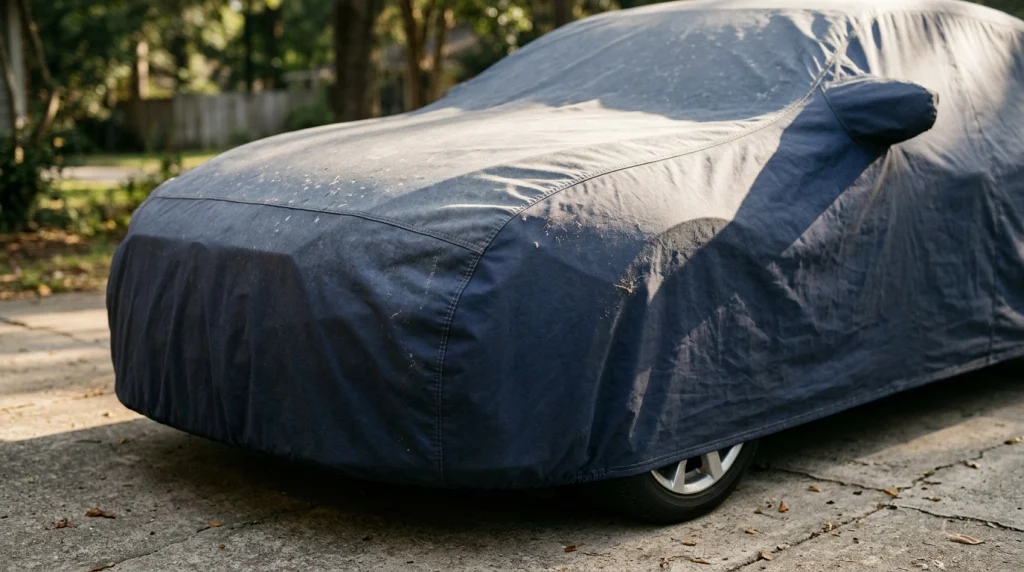
Car covers usually fade because sunlight, heat, moisture and everyday contamination gradually affect their dyes and fibers. How fast it happens depends on the fabric, its protective treatments, the climate and how many hours a day the cover stays outdoors.
UV radiation breaks down dyes and fibers
Ultraviolet (UV) radiation is a major cause of fading in outdoor fabrics. It can change the chemical structure of certain dyes and gradually weaken susceptible textile fibers, which is why the roof, hood and other upward-facing sections usually fade first.
A cover that spends every day in direct sunlight generally faces far more UV exposure than one used under a roof. Dark colors may show fading differently from light colors, but appearance alone does not tell you how well the fabric resists UV damage. For background on how UV intensity changes with location, season and time of day, the U.S. Environmental Protection Agency’s UV Index guidance is a useful starting point. It is not a car-cover durability test, but it helps explain why exposure conditions matter so much.
Heat and weather accelerate wear
Hot surfaces, repeated temperature swings, rain and humidity put extra stress on a car cover. These conditions can affect coatings, waterproof layers, seams and the flexibility of the material. A cover that is flexible when new can become stiff and chalky after a few hot seasons.
In hot, humid climates, moisture can also stay trapped in folded fabric. That creates conditions for mildew and odors, especially when a dirty cover is packed away before it has dried.
Dirt and friction contribute to deterioration
Dust, road grime, tree residue and bird droppings contaminate the cover’s surface. Rubbing that material against the paint, or folding the cover repeatedly while it is dirty, can contribute to abrasion and patchy discoloration. Wind makes this worse: a loose cover that flaps against the car acts like fine sandpaper, on both the cover and the paint.
A fading cover is not necessarily failing, but fading accompanied by rough texture, weakened stitching or thinning material deserves a closer look.
Which Car Cover Materials Resist Fading Best?
A car cover is a protective textile barrier placed over a vehicle to reduce exposure to environmental contaminants and weather. Its ability to resist fading depends on its fibers, dyes, coatings, construction and the quality of its UV protection.
When shopping, I prioritize documented outdoor durability and care instructions over a broad claim that a cover is “weatherproof.” Material names help narrow the options, but they do not guarantee a particular lifespan.
Compare common car cover materials
| Material or construction | Fading considerations | What to check |
|---|---|---|
| UV-treated polyester | May resist sunlight damage when the treatment and fabric are designed for outdoor use. | UV-resistance claims, care limits and outdoor-use rating. |
| Solution-dyed synthetic fabric | Color built into the fiber during manufacturing can improve colorfastness in suitable applications. | Whether the manufacturer confirms outdoor UV suitability for the finished fabric. |
| Multi-layer waterproof fabric | Durability depends on the outer textile, coatings, bonding and exposure conditions. | UV resistance, breathability and approved cleaning methods. |
| Basic indoor dust cover | May fade or deteriorate more quickly if used outside its intended environment. | Whether outdoor sunlight and weather exposure are explicitly supported. |
The table describes general material considerations, not guaranteed performance rankings. Actual results depend on the finished product and its exposure conditions.
Does cover color affect fading?
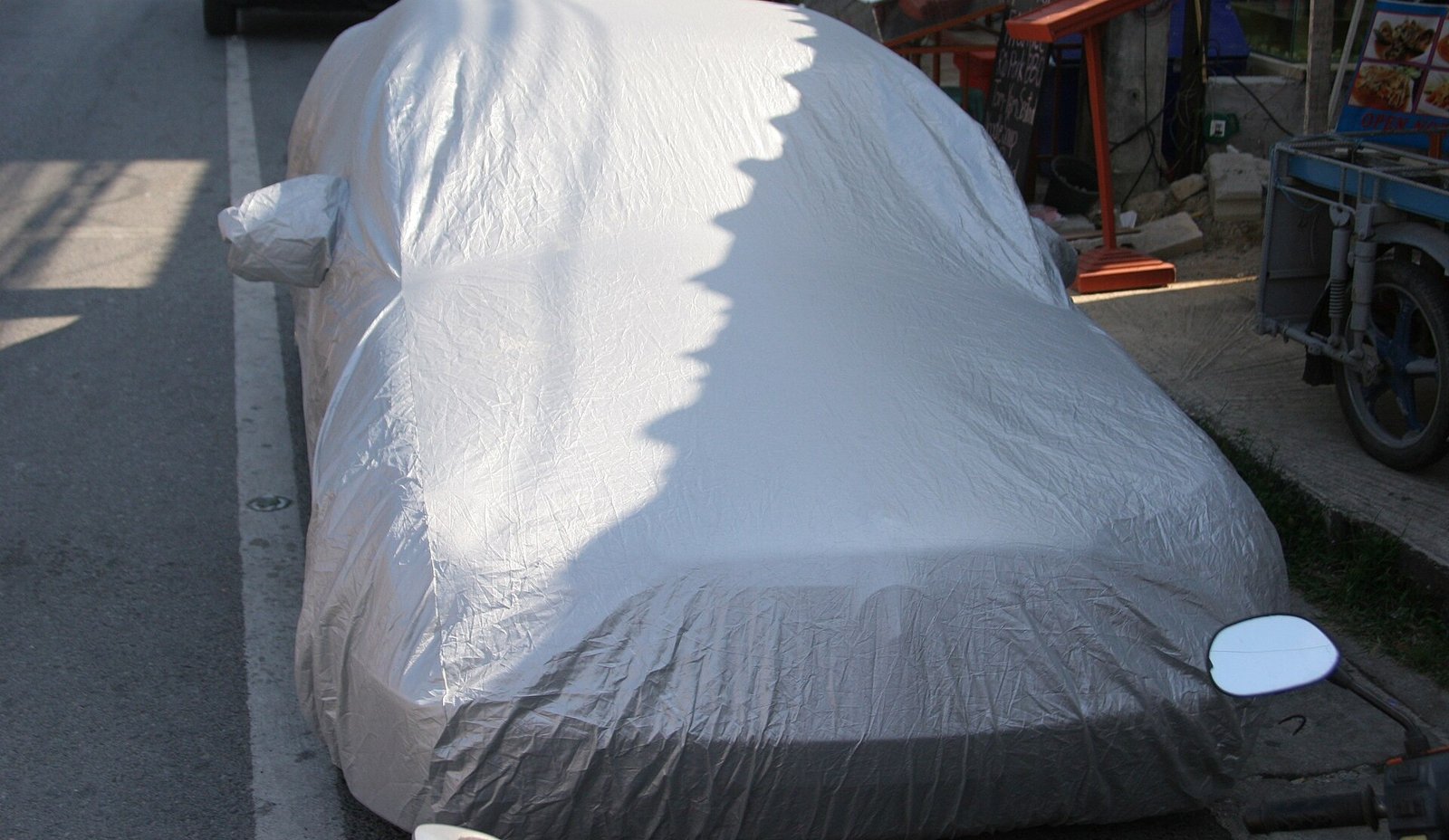
Color influences how visible fading becomes, but it is not a reliable substitute for UV-resistance information. A black cover may develop obvious gray patches, while a light-colored cover may show dirt and staining more readily. Reflective silver or light covers can also run cooler in the sun, but that does not guarantee they will last longer.
If appearance matters, look for fabric with documented colorfastness and UV durability. Do not assume that a particular color lasts longer simply because it looks darker or thicker.
What should you look for before buying?
- UV protection: a clear description of the fabric’s intended outdoor use.
- Colorfastness: information from the manufacturer about resistance to color change.
- Breathability: a design appropriate for your parking environment and moisture exposure, so condensation can escape instead of sitting on the paint.
- Fit: the correct size for your vehicle, to limit loose fabric, flapping and wind rubbing.
- Soft inner lining: a smooth underside that is gentle on paint.
- Care instructions: cleaning and drying requirements that suit your routine.
Section takeaway: a purpose-built outdoor cover with documented UV resistance is a better starting point than an indoor cover used in direct sunlight. Judge the complete product, not just its fabric label or color.
How Can You Prevent Car Cover Fading During Daily Use?
The most reliable way to slow fading is to reduce direct sunlight and avoid unnecessary wear. A consistent routine preserves the cover’s appearance and gives you regular chances to catch damage early.
1. Park in shade whenever possible
Direct sunlight exposes the cover to UV radiation and solar heat. A garage or carport offers the most consistent reduction in exposure, while a shaded parking space helps when covered parking is not available. For outdoor parking, consider these options in order of practicality:
- Garage: keeps the cover out of direct sunlight while it is installed or stored.
- Carport: blocks much of the direct sun while allowing airflow around the vehicle.
- Shaded parking: reduces exposure during the hours when nearby structures or trees cast shade.
- Open parking: use a suitable outdoor-rated cover and maintain it carefully when shade is not possible.
Avoid parking beneath trees that drop sticky sap, heavy fruit or excessive debris. Shade helps, but the extra contamination can create a different maintenance problem.
2. Fit the cover securely
A loose cover flaps in the wind, repeatedly bending the fabric and pulling at its seams. Secure fastening reduces that movement and limits wear around the mirrors, corners and elastic hems. Follow the manufacturer’s fitting instructions and use the supplied straps or fasteners. Avoid improvised metal hooks or sharp attachments that could scratch the paint.
3. Keep the vehicle and cover clean
Before fitting the cover, check the vehicle for loose grit, sand and other abrasive debris. A clean contact surface lowers the risk of scratches when the fabric moves against the paint. Ideally, cover the car when it is clean and cool. Putting a cover over a very hot engine bay, exhaust or wet paint is best avoided. Shake loose dirt from the cover before folding it, and if the inner surface collects grit, clean it using the method approved for that material.
4. Avoid unnecessary outdoor exposure
When you remove the cover, do not leave it spread across a driveway or fence in full sunlight. Move it to a clean, shaded area to dry, or fold it for indoor storage once it is completely dry. Use the cover when it serves a purpose: leaving it outside between uses adds exposure without protecting your vehicle.
5. Inspect exposed areas routinely
There is no single inspection interval that suits every cover or climate. A quick visual check during regular cleaning is a sensible starting point, with more frequent checks for covers exposed to intense sun, dust and strong winds.
- Compare the color of the roof and hood sections with areas that receive less sunlight.
- Feel for unusual stiffness or brittle patches.
- Check seams, elastic hems, straps and mirror pockets for wear.
- Look for chalky residue, small holes or areas that have become unusually thin.
Section takeaway: shade, secure fitting and clean contact surfaces address three different causes of premature wear. Regular checks help you catch deterioration before a small weak spot becomes a tear.
How Should You Clean a Car Cover Without Damaging It?
Clean a car cover using the method approved by its manufacturer. Gentle cleaning removes grime and helps preserve its appearance, but the wrong detergent, washing machine or drying method can damage certain coatings and finishes.
Step 1: Check the care instructions
Start by identifying the cover’s brand and material. Some covers allow machine washing, while others require hand cleaning or a gentle rinse only. Do not assume all polyester covers can be washed the same way, because construction and factory-applied treatments change the correct method.
Step 2: Remove loose dirt
Shake the cover gently or brush away loose dust with a soft brush if the manufacturer permits it. This prevents dry particles from being ground into the fabric during cleaning. For localized dirt, use a clean, soft cloth or sponge and the recommended amount of suitable cleaner, working gently rather than scrubbing aggressively.
Step 3: Rinse or wash as directed
Follow the specified water temperature, detergent type and washing method. If the instructions call for rinsing with water alone, do not add soap just because it seems more effective. Avoid these common mistakes unless the manufacturer specifically approves the method:
- Bleach: can affect dyes and damage certain protective treatments.
- Strong solvents: may attack synthetic fibers, coatings or bonded layers.
- Aggressive brushing: can abrade the surface and weaken delicate fabric.
- High-pressure washing: may stress seams or coatings.
- Unapproved machine washing: can cause damage through agitation, heat or unsuitable detergent.
Step 4: Air-dry the cover completely
Dry the cover according to its care label, preferably in a clean, well-ventilated, shaded area when air-drying is permitted. Avoid direct sunlight during drying when practical, especially if your goal is to limit cumulative UV exposure. Never assume a dryer or heater is safe for coated synthetic fabric, because excessive heat can distort some materials or affect their bonded layers.
Step 5: Inspect it before putting it back on
Once the cover is dry, check its inner surface, seams and fastening points. Look for residue, loose threads or areas that have become rough or brittle. If you spot a stubborn stain, check the manufacturer’s advice before applying a stain remover, because a cleaner that removes a mark may also alter the cover’s color or finish.
Practical tip: keep the manufacturer’s care instructions with the cover’s storage bag, or save a copy on your phone. That way you will not have to guess about washing or treatment when the cover gets dirty.
Section takeaway: gentle cleaning helps only when it matches the cover’s construction. Follow the product-specific instructions and let the material dry fully before storage.
How Should You Store and Protect a Car Cover?
Proper storage prevents avoidable wear when you are not using the cover. Keep it clean, completely dry, protected from direct sunlight, and away from chemicals and sharp objects.
Choose a cool, dry storage location
A garage shelf, indoor cupboard or clean storage cabinet works well. Avoid leaving the folded cover on a hot driveway, in standing water, or beside fuel, oil and cleaning solvents. Store it in the supplied bag if one is provided and the manufacturer recommends using it. A storage bag keeps dust away, but it should not trap moisture inside the folded fabric.
Fold the cover without stressing the fabric
Shake off loose debris and follow the manufacturer’s folding instructions. Avoid dragging the cover over rough concrete or forcing it into a bag that is too small. Repeatedly crushing the same areas can create creases and stress some coatings or bonded layers, so fold it neatly without pulling hard on the seams or elastic.
Be careful after rain or washing
Do not pack away a wet cover for long-term storage. Trapped moisture can encourage mildew, cause unpleasant odors and complicate later cleaning. If the cover gets wet during outdoor use, check its instructions before deciding whether it can stay on the vehicle while it dries. When possible, remove it safely and let it dry in a ventilated, sheltered area.
Should you apply a UV-protectant spray?
Only apply a UV-protectant treatment if the car cover manufacturer confirms that it is suitable for the exact fabric and coating. A product designed for vinyl dashboards, tires or outdoor furniture is not automatically suitable for a textile car cover. Before applying an approved treatment, check the directions for application, coverage, drying time and restrictions. Do not expect a spray to restore faded dyes or rebuild weakened fibers.
Section takeaway: store your cover indoors when you do not need it, keep it dry, and avoid unapproved treatments. Prevention is generally more dependable than trying to reverse visible fading.
How Can You Tell Whether a Faded Car Cover Needs Replacing?
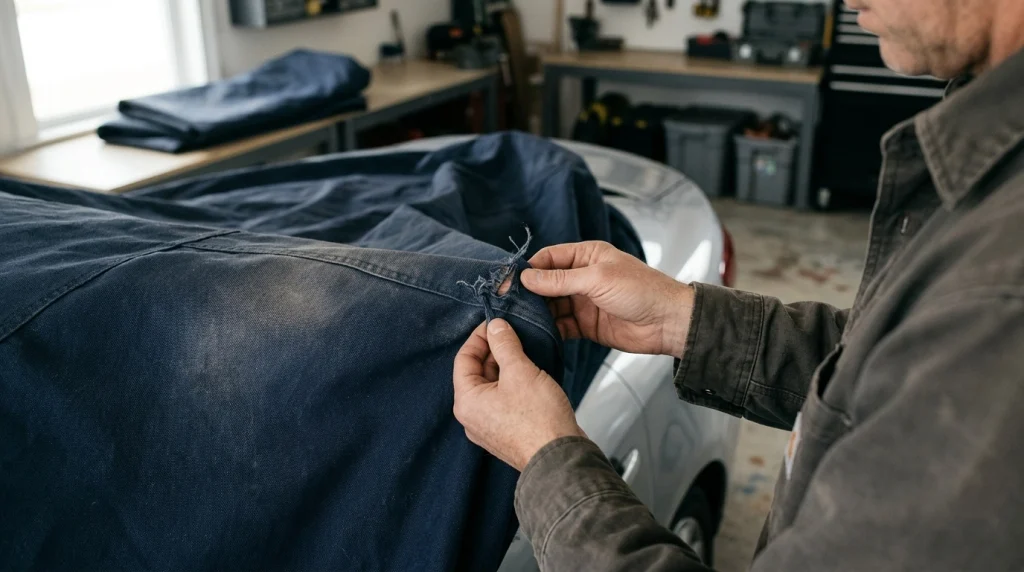
Fading alone does not mean a car cover has stopped working. The important question is whether the fabric, seams, fasteners and protective layers are still in suitable condition for the job.
Compare cosmetic fading with functional damage
| What you notice | What it may mean | What to do |
|---|---|---|
| Color is lighter, but fabric remains flexible | Cosmetic fading may be the main issue. | Inspect seams and check the manufacturer’s care guidance. |
| Fabric feels stiff or brittle | Weathering may have weakened the material. | Assess the affected area and consider replacement. |
| Thin patches or small holes | The barrier may no longer provide consistent coverage. | Check whether an approved repair is possible. |
| Seams separate or elastic no longer holds | The cover may not fit or stay secure as intended. | Repair using an approved method or replace the cover. |
| Protective coating flakes or becomes powdery | The surface treatment may be deteriorating. | Contact the manufacturer and reassess whether the cover is still suitable. |
These signs are practical indicators, not a definitive test of UV protection or waterproof performance. If performance matters for long-term outdoor storage, follow the manufacturer’s inspection and replacement guidance.
Can a faded car cover be restored?
Sometimes cleaning improves the appearance of a cover that only looks faded because of accumulated dirt. However, cleaning cannot reverse UV-related dye changes or repair weakened fibers. Likewise, a compatible protectant may help maintain certain materials, but it will not restore strength to brittle or torn fabric. Be wary of products that promise to make any old cover look and perform like new.
When is replacement the sensible option?
Consider replacing the cover when widespread deterioration makes it unreliable or when repairs no longer hold. A badly weakened cover can flap against the vehicle, expose paint to contaminants, or fail to provide the weather protection you bought it for.
Before buying another one, review what caused the previous cover to deteriorate. If it spent months in direct sunlight, an outdoor-rated design and more sheltered parking may help more than simply choosing a thicker or darker cover. For broader car-care information, Consumer Reports’ automotive guidance is a useful companion, and for technical background on how materials behave, the National Institute of Standards and Technology publishes research on materials and their properties. Neither substitutes for the care instructions specific to your cover.
Section takeaway: judge the cover by its condition, not color alone. Fading with sound fabric may be acceptable, while brittle material, failed seams or widespread thinning can justify replacement.
Final Takeaway: Make Car Cover Care a Simple Habit
Preventing car cover fading starts with choosing a suitable outdoor cover and limiting unnecessary exposure to sunlight. Cleaning it correctly, securing it against wind and storing it dry also help reduce avoidable wear.
My approach is straightforward: check the care instructions, inspect the most exposed areas regularly, and avoid experimenting with unapproved chemicals. A little maintenance is easier than dealing with a cover that has become brittle or unreliable.
If your current cover is already fading, do not judge it by appearance alone. Check its flexibility, seams, coating and fit, then decide whether continued use, an approved repair or replacement makes the most sense.
Frequently Asked Questions
1. Why is my car cover fading so quickly?
Intense sunlight, UV-sensitive dyes, heat and outdoor weathering can accelerate fading. An indoor dust cover used outdoors may deteriorate faster than intended, while dirt and abrasion can contribute to uneven discoloration. Check the fabric’s outdoor-use rating and inspect it for brittleness or thinning.
2. Does a silver car cover fade less than a black one?
Not necessarily. Color alone does not determine UV resistance or expected lifespan. Fiber composition, pigments, UV stabilizers, coatings and manufacturing quality all matter. Compare documented outdoor durability and colorfastness rather than assuming silver, black or another shade will last longer.
3. How often should I clean my car cover?
There is no universal cleaning schedule for every car cover. Clean it when dirt or contamination builds up, and inspect it during routine maintenance. Covers exposed to dusty roads, tree sap or frequent outdoor use may need attention more often than covers stored indoors.
4. Can I use ordinary waterproofing spray to prevent fading?
Do not apply an ordinary waterproofing spray unless the cover manufacturer confirms compatibility. Some products may alter the fabric’s color, breathability, water resistance or coating. Use only approved treatments and follow the product’s application and drying instructions.
5. Does washing a car cover remove its UV protection?
It depends on the cover’s construction and cleaning instructions. Some materials can be damaged by aggressive washing, unsuitable detergents or excessive heat, while others permit specific washing methods. Follow the manufacturer’s directions rather than assuming every cover needs the same treatment.
6. Can I leave my car cover outside when I am not using it?
It is better to store a removed cover in a clean, dry location away from direct sunlight. Leaving it spread outside adds unnecessary UV exposure and can expose it to wind, dirt and moisture. Allow it to dry fully before folding and storing it.
7. Should I replace a car cover as soon as it fades?
No. Fading can be cosmetic, so inspect the material before replacing it. If the fabric remains flexible, the seams are intact and the cover still performs as intended, replacement may not be necessary. Brittleness, thinning, tears and failing fasteners are more concerning signs.
8. Is it safe to put a cover on a dirty car?
It is best to avoid it. Dust and grit trapped under the cover can scratch the paint when the wind moves the fabric. A quick rinse or wipe-down with a clean microfiber cloth before covering the car is a good habit, particularly for cars parked outdoors.