
How Long Do Car Covers Last? Lifespan, Materials, and Care Tips
Quick Answer
Most car covers last about 1–5 years, depending on their material, construction, exposure to sunlight, weather, and maintenance. A quality cover used indoors may last longer, while one exposed to intense sun, heavy rain, wind, and abrasive dust can wear out much sooner. Choosing the right fit and keeping the cover clean and dry are two of the best ways to extend its useful life.
What determines a car cover’s lifespan?
- Material quality: Better fabrics, reinforced seams, and durable coatings generally resist wear longer.
- Storage location: Indoor covers avoid much of the ultraviolet exposure and weather damage that affect outdoor covers.
- Weather exposure: Strong sunlight, repeated wetting, freezing conditions, and wind can shorten fabric life.
- Vehicle fit: A properly fitted cover is less likely to flap, stretch, or rub against paint.
- Cleaning routine: Removing grit and allowing the fabric to dry helps prevent abrasion, odors, and deterioration.
- Cover condition: Fading, brittle fabric, damaged seams, and persistent leaks can indicate that replacement is approaching.
How can you make one last longer?
- Clean the vehicle before covering it, especially after driving on dusty or muddy roads.
- Follow the manufacturer’s washing instructions and dry the cover completely before long-term storage.
- Secure the cover without excessive tension and inspect it regularly for wear.
A car cover can protect your vehicle for years, but its lifespan depends on more than the price or brand. The fabric, local climate, parking conditions, and everyday handling all make a difference.
I’ve found that the most useful way to judge a cover is to look at how it handles its actual parking environment. A cover used over a garage-kept weekend car faces very different demands from one left on a daily driver in direct sunlight and wind.
In This Guide
How long do car covers last on average?
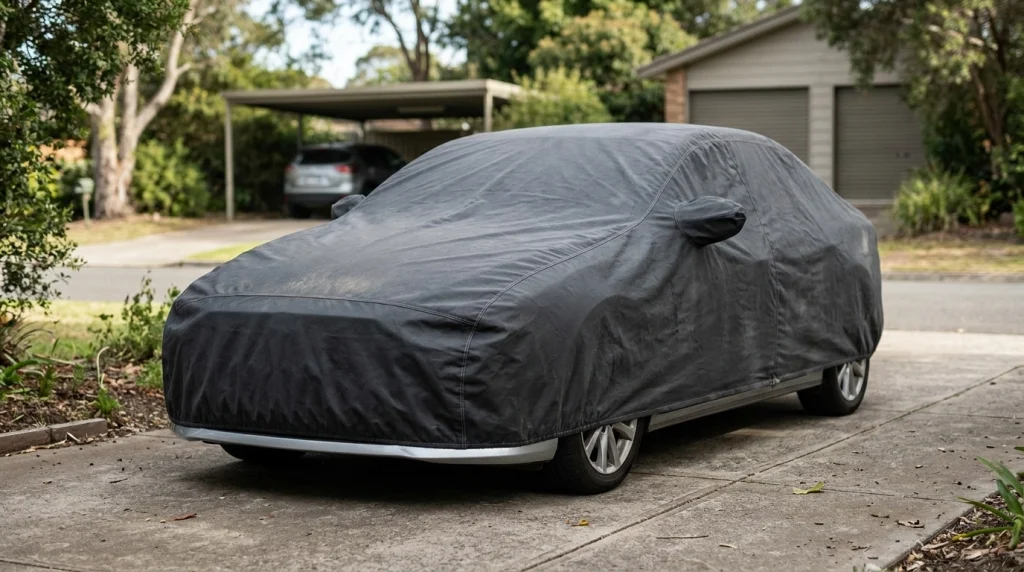
Most car covers have a practical lifespan of roughly one to five years, although some last longer under favorable conditions. This is a general planning estimate, not a guaranteed service life or a universal manufacturer rating.
A cover’s condition and performance matter more than its age alone. Some older covers still protect well, while newer ones can deteriorate quickly after continuous exposure to harsh weather.
Typical lifespan by parking location
| Parking environment | Practical lifespan estimate | Main concern |
|---|---|---|
| Indoor garage | Often several years; potentially longer | Dust, abrasion, and handling |
| Covered carport | Several years, depending on exposure | Windblown dust, moisture, and indirect sun |
| Outdoor parking with moderate weather | Often around 1–3 years | Sunlight, rain, and temperature changes |
| Exposed parking in harsh weather | May be less than 1–2 years | UV damage, wind, heavy rain, and abrasion |
These figures are broad estimates for planning, not tested averages for every product. The manufacturer’s warranty, material specifications, and maintenance instructions offer a better starting point for an individual cover.
Does indoor or outdoor use make a bigger difference?
Yes, parking location can significantly affect durability. Indoor storage usually reduces direct sunlight, rain, wind, and temperature extremes, allowing the cover to avoid several major sources of wear.
Outdoor covers must handle more than water. Ultraviolet radiation can weaken susceptible fabrics and coatings, while moving air can make loose material rub against the vehicle repeatedly.
Consider a car parked outside every day in a hot climate. Even a water-resistant cover may age quickly if its fabric receives intense sunlight and flaps against the body during windy afternoons.
By comparison, an indoor cover used a few times a month may experience much less environmental stress. Its main enemies may be dirt, rough handling, and contact with sharp edges in storage.
Section Takeaway: A one-to-five-year lifespan is a useful starting estimate, not a deadline. Match your expectations to the parking environment and inspect the cover instead of replacing it based on age alone.
Which car cover materials last the longest?
The most durable car cover is the one whose fabric, construction, and weather resistance suit your parking conditions. There is no single material that lasts the longest in every situation.
A car cover is a protective fabric barrier designed to limit exposure to environmental contaminants and weather. Its lifespan depends on the outer material, inner lining, seams, coatings, fit, and intended indoor or outdoor use.
Common cover materials compared
| Material or construction | Typical strengths | Potential weaknesses | Best use |
|---|---|---|---|
| Lightweight indoor fabric | Easy handling, low bulk, dust protection | Limited weather protection | Garaged vehicles |
| Polyester outdoor fabric | Can offer good strength and UV resistance when appropriately treated | Performance varies by weave, coating, and quality | General outdoor use |
| Polypropylene or nonwoven multilayer fabric | Can provide lightweight, layered weather protection | Some constructions degrade or tear relatively quickly outdoors | Light-duty or budget protection, depending on rating |
| Heavy-duty multilayer outdoor cover | May combine a protective outer layer with a softer inner surface | Bulk, weight, and quality differences between products | Vehicles parked outside regularly |
| Water-resistant coated fabric | Can shed rain and resist moisture penetration | Coatings and seams can deteriorate over time | Outdoor parking when ventilation and fit are suitable |
This comparison describes general material characteristics rather than measured lifespans. Construction quality and product-specific testing matter more than a fabric name by itself.
Does a more expensive cover always last longer?
No, a higher price does not guarantee a longer service life. A premium indoor cover may wear out quickly if left outside, while a less expensive outdoor cover may perform reasonably well when used as intended.
Before choosing a replacement, check these features:
- UV resistance: Look for a clear description of outdoor sunlight protection.
- Water performance: Check whether the cover is water-resistant, waterproof, or designed to shed rain while allowing some airflow.
- Seam construction: Reinforced seams and secure attachment points can reduce premature tearing.
- Inner lining: A paint-friendly lining helps limit scratching when the cover is handled correctly.
- Fit and retention: Elastic hems, suitable sizing, and secure straps can reduce wind movement.
- Warranty terms: Confirm the coverage period, exclusions, and whether outdoor exposure is included.
Warranty length is useful information, but it isn’t proof that a cover will last that long. Normal wear, improper use, and environmental damage may fall outside the warranty.
Section Takeaway: Choose a cover based on its intended environment, construction, and documented protection. Material labels alone cannot reliably predict how many years it will last.
What makes a car cover wear out faster?
Sunlight, wind, moisture, dirt, and repeated handling are the main reasons car covers deteriorate prematurely. Even a well-made cover can fail early when the conditions exceed what its materials were designed to handle.
1. Ultraviolet radiation and heat
Ultraviolet (UV) radiation can gradually weaken susceptible fabrics, coatings, and threads. Heat can add stress, particularly when a cover remains exposed to direct sunlight for long periods.
Fading alone doesn’t always mean a cover has failed. However, fading combined with brittle material, thinning panels, or cracking deserves closer inspection.
2. Wind and repeated friction
Wind can turn loose fabric into an abrasive surface that repeatedly moves against the paint. It also stresses elastic hems, straps, mirror pockets, and stitched seams.
Look for these early warning signs after windy weather:
- Scuffed or polished-looking areas where fabric rubs against body panels.
- Loose stitching around the mirrors, bumpers, or corners.
- Stretched elastic that no longer holds the cover securely.
- Small tears around straps or attachment points.
A cover that fits correctly and stays secure generally experiences less unnecessary movement. If wind routinely lifts the hem, check the size and attachment system rather than simply pulling the fabric tighter.
3. Moisture, humidity, and mildew
Moisture can cause trouble when a wet cover remains folded, compressed, or poorly ventilated. Persistent dampness may encourage mildew and unpleasant odors, while repeated wetting can affect some coatings and seams.
In humid climates, the problem isn’t limited to rain passing through the material. Condensation can develop beneath a cover, particularly when ventilation is poor or the vehicle goes under the cover while damp.
For humid or rainy conditions, choose a cover designed to balance water resistance with appropriate breathability. See this guide to using a car cover in humid climates for practical moisture-control considerations.
4. Dirt and abrasive particles
Dust, road grit, and sand can collect on the cover’s inner surface. When the cover moves against the vehicle, these particles may scratch the finish.
The cover can also wear from being dragged across concrete, gravel, or rough garage floors. Fold it carefully and keep its paint-facing surface away from dirty ground whenever possible.
5. Incorrect washing and storage
Harsh detergents, excessive heat, aggressive scrubbing, and unsuitable machine-washing cycles can damage certain fabrics or coatings. Always follow the care label rather than assuming every cover can be cleaned the same way.
Storage matters just as much. Folding a damp cover tightly into a bag can trap moisture, while placing it near sharp tools or rough edges can create tears before its next use.
Section Takeaway: Most premature wear comes from environmental exposure, movement, contamination, or improper care. Reducing those stresses can help preserve both the cover and the paint underneath it.
How do you know when to replace a car cover?
Replace a car cover when its material, fit, or protective performance has deteriorated enough that it no longer protects the vehicle reliably. Tears, brittle fabric, failing seams, and a damaged inner lining are more meaningful than age alone.
Signs the cover is reaching the end of its life
- Persistent water penetration: The fabric or seams allow more water through than the product was designed to handle.
- Brittle or weakened material: Fabric cracks, crumbles, feels unusually stiff, or tears with little force.
- Large holes or spreading tears: Openings expose painted panels to dirt, sun, and precipitation.
- Failing stitching: Seams separate or threads pull loose when the cover is handled normally.
- Damaged inner lining: Rough, contaminated, or deteriorating material increases the risk of paint abrasion.
- Poor retention: Stretched hems or damaged straps allow the cover to shift repeatedly in the wind.
- Persistent odor or mildew: The fabric remains musty despite appropriate cleaning and complete drying.
How can you check whether it still works?
Inspect the cover in good light and spread it out where you can see the panels clearly. Pay particular attention to areas that receive the most tension, including the corners, mirror pockets, seams, and elastic edges.
If water resistance is a concern, follow the manufacturer’s recommended inspection method. Avoid assuming that a single small water test proves the entire cover is waterproof or breathable.
Also check whether the cover still fits your vehicle properly. A cover that has stretched, shrunk, or lost its retention system may expose panels or rub against the paint even when its fabric appears intact.
Can an old car cover damage your paint?
Yes, an aging or contaminated cover can contribute to scratches when grit gets trapped between the fabric and paint. Loose fabric can also rub repeatedly against exterior panels, particularly in windy conditions.
Age by itself doesn’t automatically make a cover unsafe. A clean, soft, properly fitted older cover may still work well, whereas a relatively new cover with a rough lining or torn seams may not.
If you find damage, remove the cover and inspect the vehicle’s finish before reinstalling it. Don’t keep using a cover whose deteriorating lining or exposed hardware could scratch the paint.
Section Takeaway: Inspect the cover’s fabric, seams, lining, and fit together. Replace it when its protective function or paint-safe condition can no longer be trusted.
How can you make a car cover last longer?
The best way to extend car cover lifespan is to reduce abrasion, limit unnecessary weather stress, and follow the manufacturer’s cleaning and storage instructions. Small habits during installation and removal can prevent avoidable wear.
1. Start with a clean, dry vehicle
Remove loose dirt before covering the car, particularly after driving in dusty or muddy conditions. Covering a dirty vehicle can trap abrasive particles against the paint.
Allow the vehicle to dry before installing a cover that could retain moisture. If rain has soaked the car, give hidden areas around mirrors, trim, and body seams enough time to dry too.
2. Choose the correct size and fit
A cover should match your vehicle’s body shape and intended storage conditions. A loose universal cover may flap in the wind, while an incorrectly sized cover can strain its seams and elastic.
Use the manufacturer’s vehicle compatibility chart when available. For a closer look at sizing, read this car cover size guide before buying a replacement.
3. Secure it without overstressing the fabric
Use the provided straps, buckles, or retention system as instructed. The goal is to prevent excessive movement without stretching the fabric or putting too much force on its attachment points.
After installation, check the cover around the bumpers, mirrors, and lower edges. Make sure it remains in place without pulling tightly across sharp trim or bodywork.
4. Clean it according to the care label
Remove loose dust and debris before washing, then use the cleaning method approved for that particular material. Some covers allow gentle machine washing, while others require hand washing or spot cleaning.
- Avoid bleach and harsh chemicals unless the manufacturer explicitly permits them.
- Don’t use high heat or a tumble dryer unless the care instructions allow it.
- Rinse away cleaning products as directed.
- Inspect seams and coatings after cleaning.
- Let the cover dry completely before long-term storage.
For detailed cleaning advice, use this guide on how to wash a car cover safely. Correct cleaning helps avoid damage from unsuitable detergents or washing methods.
5. Store it properly between uses
When the cover comes off, shake away loose debris and check whether it needs cleaning. Allow moisture to evaporate before folding it into its storage bag.
Choose a cool, dry storage area away from sharp objects, chemicals, and rough surfaces. Keep the cover off dirty floors when possible, and avoid placing heavy objects on top of it.
6. Inspect it on a simple schedule
A quick inspection every few weeks is sensible for a cover used outdoors regularly. In a sheltered garage, checks can be less frequent, although the cover should still be examined before long-term use.
| When | What to do |
|---|---|
| Before each use | Check the vehicle and inner lining for dirt, grit, and moisture. |
| Every few weeks outdoors | Inspect seams, straps, hems, fading, and new tears. |
| After severe weather | Check for water damage, movement, abrasion, and loose attachments. |
| Before seasonal storage | Clean if necessary, dry completely, and store in a suitable location. |
Section Takeaway: Clean installation, secure fit, gentle washing, complete drying, and regular inspections are the most practical ways to get more useful years from a car cover.
When should you repair or replace your car cover?
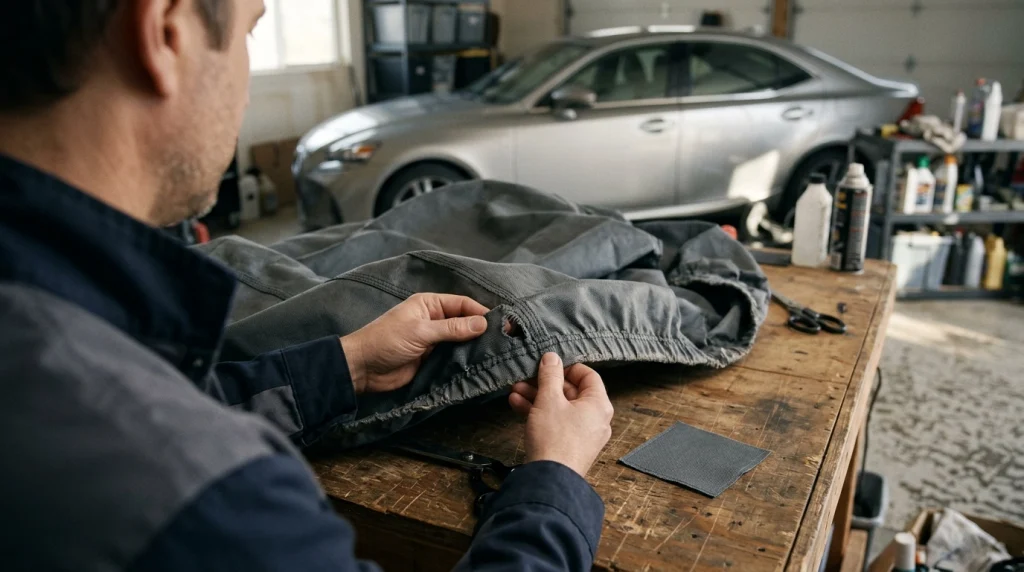
Repair a car cover when the damage is small, localized, and fixable without compromising its protection. Replace it when multiple areas are failing, the material has weakened throughout, or repairs cannot restore a secure, paint-safe fit.
When a repair makes sense
A small tear or limited seam separation may be repairable if the surrounding fabric remains strong. Use a patch or repair product specifically compatible with the cover’s material and intended outdoor exposure.
Before repairing it, check the manufacturer’s warranty and repair guidance. An unsuitable adhesive or patch can damage a coating, interfere with water resistance, or create a rough surface against the paint.
When replacement is the better option
Replacement makes more sense when deterioration affects several areas or the cover no longer performs its main job. A patch cannot restore fabric that has become brittle across large sections.
I would prioritize replacement if the cover has any of these problems:
- Several spreading tears or extensive seam failure.
- Widespread cracking, thinning, or brittle fabric.
- A deteriorated inner lining that may damage paint.
- Repeated water penetration beyond what the cover is designed to allow.
- Stretched or damaged attachments that prevent a secure fit.
How to choose a replacement that lasts
Start with the environment rather than choosing the thickest or most expensive option. A car kept indoors needs different protection from a daily driver parked outside in strong sun and frequent rain.
Compare these factors before purchasing:
- Intended use: Indoor, outdoor, or mixed parking conditions.
- Weather protection: Documented UV resistance and appropriate water performance.
- Paint safety: A suitable inner lining and a fit that limits friction.
- Construction: Reinforced seams and durable attachment points.
- Care requirements: Cleaning and storage instructions you can realistically follow.
- Warranty: Clear coverage terms for material defects and intended use.
For broader car-care guidance, consult Consumer Reports’ automotive resources and Edmunds’ car maintenance guidance. These resources can help you consider vehicle care alongside the protection your parking setup requires.
Section Takeaway: Repair isolated damage when the surrounding material is sound. Replace a cover when its fabric, seams, lining, or fit can no longer provide dependable protection.
Frequently asked questions about car cover lifespan
How many years should a car cover last?
A car cover often lasts around one to five years, depending on construction, climate, exposure, and maintenance. Indoor covers may last longer, while covers left outdoors in harsh weather can wear out sooner. Always consider the product’s warranty and actual condition.
Do car covers wear out faster in the sun?
Yes, prolonged sunlight can accelerate deterioration in fabrics, coatings, and stitching that lack adequate UV resistance. An outdoor-rated cover designed for strong sunlight is a better choice for exposed parking, but regular inspection is still necessary.
How often should I replace my car cover?
There is no universal replacement schedule. Inspect the fabric, seams, elastic, lining, and fit regularly, and replace the cover when it no longer protects the vehicle reliably. An older cover in good condition may remain useful longer than a newer, damaged one.
Can I leave a car cover on all the time?
You can leave a suitable cover installed for extended periods if the manufacturer permits it and the vehicle, cover, and parking conditions remain appropriate. Check periodically for trapped moisture, dirt, shifting fabric, and developing damage, especially during humid or rainy weather.
Does washing a car cover make it last longer?
Appropriate cleaning can remove grit and contaminants that contribute to wear. However, harsh chemicals, aggressive scrubbing, or unsuitable washing and drying methods can shorten its life. Follow the manufacturer’s care instructions and store the cover only when completely dry.
Can an old car cover scratch my car?
Yes, an old cover can scratch paint if its inner lining becomes rough, dirt accumulates on the fabric, or wind repeatedly moves it against the vehicle. Check the inside before installation and stop using a cover with deteriorated material that could damage the finish.
Is an expensive car cover worth buying?
It can be worthwhile if its construction and protection match your parking conditions. Price alone doesn’t establish durability, so compare UV resistance, fit, seam quality, lining, cleaning requirements, and warranty coverage before deciding.
Final takeaway: Get more years from your car cover
Most car covers last roughly one to five years, but your results depend on the product and how you use it. Indoor storage generally reduces environmental wear, while intense sunlight, wind, humidity, and frequent handling can shorten a cover’s useful life.
For the best results, choose a cover designed for your parking environment, keep the car and cover clean, secure the fit properly, and let the fabric dry completely before storage. Replace it when the material or construction can no longer protect your vehicle safely.
If your current cover is starting to deteriorate, inspect it before another season of outdoor use. A timely repair or replacement can help protect your vehicle’s finish and avoid relying on a cover that no longer does its job.