
How to Maintain a Car Cover: Cleaning, Drying, and Storage Tips

Quick Answer
To maintain a car cover, remove loose dirt regularly, wash it gently according to its care label, rinse away all soap, and let it dry completely before folding or storing it. Keep the vehicle and the cover’s inner surface free of grit, inspect the seams for damage, and store the clean cover in a cool, dry location. Proper care helps preserve the fabric, protective coatings, and the paintwork underneath.
Essential car cover maintenance habits
- Remove loose debris: Shake off leaves, dust, and grit before folding or reinstalling the cover.
- Wash gently: Use mild soap and a soft sponge when permitted by the manufacturer’s instructions.
- Rinse thoroughly: Remove soap residue that could attract dirt or affect the fabric.
- Dry completely: Check the hems, seams, and inner lining before packing the cover away.
- Inspect regularly: Look for worn elastic, loose stitching, tears, and damaged coatings.
- Store correctly: Keep the dry cover loosely folded in a clean, dry storage bag or suitable container.
Before putting the cover back on
- Check that the car’s exterior is reasonably clean and dry.
- Make sure the cover is suitable for the vehicle and the intended indoor or outdoor use.
- Follow the product’s care instructions whenever they differ from general cleaning advice.
A car cover takes the brunt of dust, rain, pollen, bird droppings, and sunlight so your vehicle doesn’t have to. However, that protection only works well when the cover itself stays clean and in good condition.
I’ve found that the most important part of car cover maintenance isn’t complicated cleaning. It’s handling the fabric carefully, keeping grit away from the paint, and never rushing the drying process. This guide explains how to maintain a car cover throughout the year, whether you park in a garage, leave your vehicle outside, or cover it only occasionally.
In This Guide
Why Does Car Cover Maintenance Matter?
Car cover maintenance means cleaning, drying, inspecting, and storing a protective vehicle cover so it continues to perform as intended. It also includes checking the vehicle’s surface before covering it and ensuring the material remains suitable for its environment.
A car cover isn’t maintenance-free just because it protects the vehicle. Dirt accumulates on both sides, moisture can remain trapped in folds, and repeated exposure to sunlight can gradually weaken some materials.
How a dirty cover can damage your paint
The biggest overlooked risk is abrasive dirt trapped between the cover and the vehicle. Fine sand, road dust, and other particles can rub against the finish when the fabric moves in the wind or slides during installation and removal.
This is why I treat the inner surface as carefully as the outside. A cover can look clean from a distance while still holding grit against the paint-facing side.
Before reinstalling a used cover, check these areas:
- The inner panels that rest against the hood, roof, and trunk.
- The lower edges, where road grime and splashback can accumulate.
- The seams and hems, which can collect leaves and small particles.
- The mirror pockets and other fitted areas, which may hold debris.
Remove loose particles gently rather than rubbing them into the fabric. If the inside is heavily contaminated, clean the cover according to its care label before using it again.
Why moisture and sunlight matter
Moisture trapped between a cover and a vehicle can contribute to condensation, mildew, unpleasant odors, or water-related staining. A cover that stays damp for extended periods may also deteriorate faster, depending on its material and construction.
Sunlight presents a different challenge. Prolonged ultraviolet exposure can fade or weaken certain fabrics, elastic components, and protective coatings.
A cover designed for outdoor use may resist these conditions better than a lightweight indoor cover. Neither type should be assumed to last indefinitely without inspection.
What does proper maintenance protect?
- Paintwork: Keeping abrasive debris away from the vehicle’s finish.
- Fabric: Removing contaminants before they become difficult to clean.
- Protective coatings: Avoiding cleaning products and methods that may damage water resistance.
- Fit: Catching stretched elastic, torn seams, and damaged fasteners early.
- Usability: Preventing mildew odors and making the cover easier to handle.
Section takeaway: A well-maintained cover should protect the car without introducing unnecessary dirt, trapped moisture, or abrasion. Start with a clean inner surface and check the fabric before every installation.
How Do You Clean a Car Cover Safely?
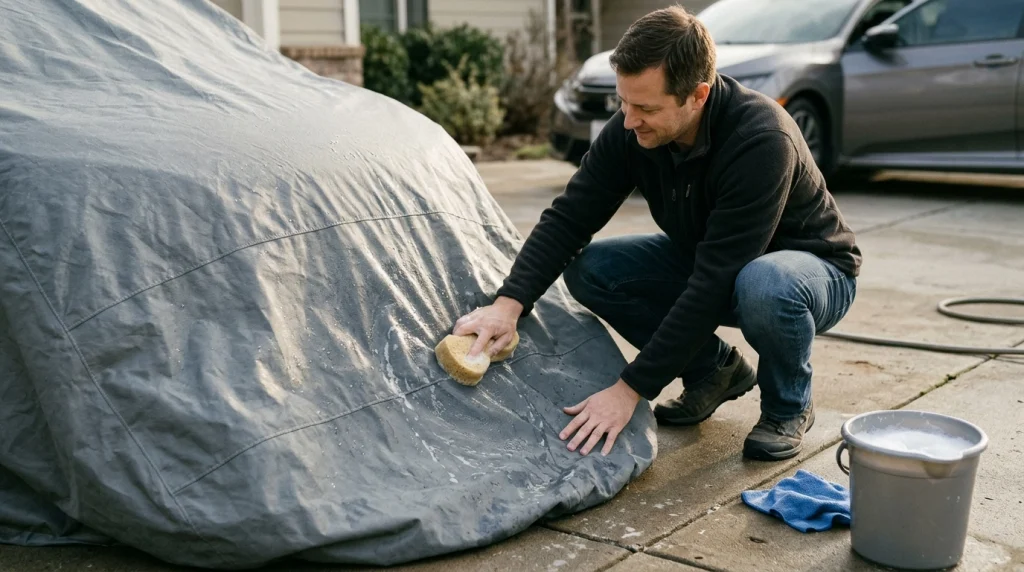
The safest general approach is to remove loose debris, wash gently with an approved cleaning solution, rinse thoroughly, and follow the manufacturer’s drying instructions. Always check the care label first because washing methods vary among single-layer, waterproof, multilayer, and specialty-finish covers.
Step 1: Check the material and care label
Before reaching for a hose or detergent, identify the cover’s material and cleaning requirements. The manufacturer’s instructions take priority over general advice because a method suitable for one fabric can damage another.
Check whether the label permits hand washing, machine washing, particular water temperatures, or any form of tumble drying. If the instructions are missing, contact the manufacturer rather than guessing.
Step 2: Remove loose dirt before washing
Choose a clean, open area where the fabric won’t pick up additional dust or gravel. If practical, leave the cover fitted over the vehicle while removing loose debris, provided the manufacturer’s cleaning instructions allow this approach.
- Shake off leaves, twigs, and loose dust without snapping the fabric aggressively.
- Use a soft brush to lift dry debris when necessary.
- Check the underside for sand, grit, and stuck particles.
- Avoid dragging the cover across rough concrete or a dirty driveway.
For a heavily soiled cover, a clean, smooth washing surface makes it easier to rinse both sides. Keep the fabric away from oil stains, sharp edges, and rough ground.
Step 3: Wash with an appropriate cleaner
For covers that permit hand washing, use cool or lukewarm water and a small amount of mild, compatible soap. Work gently with a soft sponge or cloth rather than scrubbing aggressively with a stiff brush.
Pay attention to areas exposed to road spray, bird droppings, tree residue, and accumulated dust. Let the approved cleaning solution loosen dirt instead of applying excessive pressure.
For stubborn spots, use only a treatment approved for the cover’s material. Avoid assuming that a cleaner safe for automotive paint is also safe for fabric coatings.
Step 4: Rinse away all residue
Rinsing is an important part of the process because leftover cleaning product can leave a film on the fabric. Follow the label’s rinsing instructions and continue until the water runs clear and visible suds have disappeared.
Do not use a pressure washer unless the manufacturer explicitly permits it. Forceful water jets can damage delicate material, seams, or coatings.
Step 5: Decide whether machine washing is allowed
Never assume that every car cover can go into a household washing machine. Large covers may overload the machine, while agitation can damage bonded layers, waterproof membranes, seams, or fitted sections.
Use machine washing only when the manufacturer explicitly approves it for your specific cover. Follow the stated machine size, cycle, detergent, temperature, and drying requirements.
The table below summarizes a cautious approach to common cover types. These are general guidelines, not substitutes for the product’s own care instructions.
| Cover type | Cleaning approach | Main precaution |
|---|---|---|
| Lightweight indoor cover | Gentle hand cleaning or approved machine washing | Check the label before using a washer. |
| Water-resistant outdoor cover | Gentle washing with an approved cleaner | Preserve the water-repellent treatment. |
| Multilayer or waterproof cover | Use the specified washing method, often gentle hand washing | Avoid unauthorized heat and aggressive agitation. |
| Soft-lined or specialty-finish cover | Use material-specific cleaning instructions | Protect the lining and surface finish. |
Which cleaning products should you avoid?
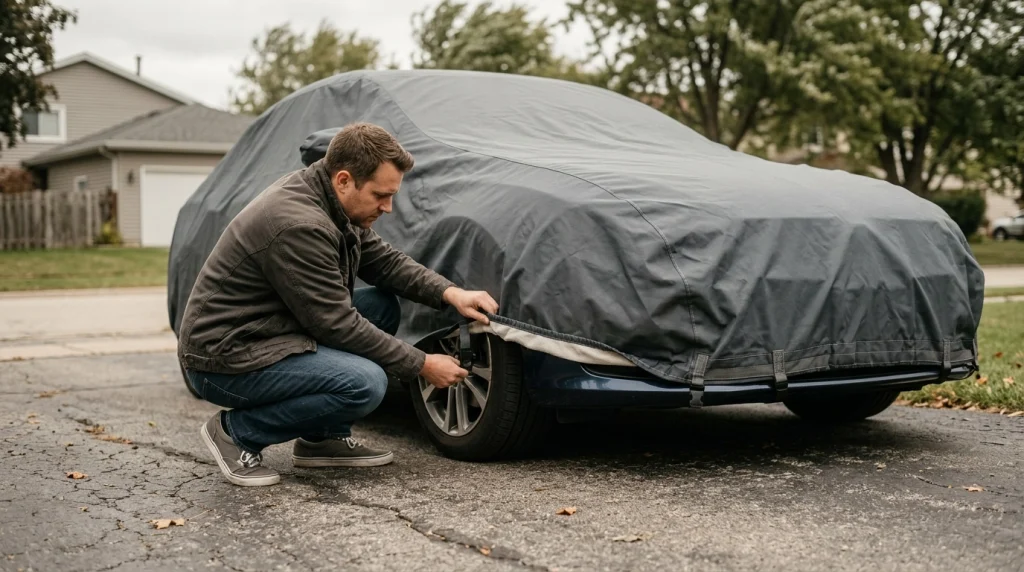
Unless the manufacturer specifically approves them, avoid bleach, harsh solvents, strong degreasers, abrasive cleaners, and fabric softeners. These products can discolor material or interfere with a cover’s protective treatment.
Don’t use household stain removers simply because they work on clothing. A car cover may contain coatings or bonded layers that react differently to cleaning chemicals.
Section takeaway: Clean gently and follow the exact care label. The aim is to remove dirt without sacrificing the cover’s fit, lining, or weather-resistant properties.
How Should You Dry and Protect a Car Cover?
Dry a car cover according to its manufacturer’s instructions, making sure all panels, seams, hems, and elastic areas are dry before storage. For covers that require air drying, use a clean, well-ventilated area and avoid unauthorized heat.
Why complete drying matters
A cover can feel dry on the outside while retaining moisture in thicker seams or folded sections. Packing it away too soon can encourage mildew, musty smells, and deterioration during storage.
This is especially important in humid weather. Air movement helps moisture escape, but the time required depends on fabric thickness, airflow, temperature, and humidity.
How to air-dry a car cover
When air drying is permitted, follow this practical routine:
- Remove excess water without twisting or wringing the material.
- Spread the cover over a clean drying rack, suitable line, or another approved surface.
- Arrange it so air can reach as much fabric as possible.
- Turn or reposition it when appropriate to expose both sides.
- Check the seams, hems, elastic, and lining before folding it away.
Shade is generally a sensible choice for covers that are sensitive to ultraviolet exposure. Avoid prolonged direct sunlight if the manufacturer warns against it.
Never put a cover in a clothes dryer unless its instructions explicitly permit that method. High heat can shrink some materials, damage coatings, or weaken bonded layers.
How can you tell if a car cover is still waterproof?
First, understand the difference between a waterproof cover and a water-resistant one. A water-resistant cover may repel light moisture but still allow water through under prolonged exposure or particular conditions.
A waterproof cover is designed to resist water penetration to a greater degree, although its actual performance depends on its construction, seams, condition, and correct use.
Watch for these possible signs that protection has deteriorated:
- Water no longer beads on the surface as it did when the cover was new.
- Previously dry areas become damp under ordinary conditions.
- The coating appears cracked, peeling, or uneven.
- Seams show wear or allow water to enter.
- The material has become unusually stiff, brittle, or thin.
Water beading alone doesn’t prove that a cover is waterproof. Some fabrics are designed to breathe, and their performance depends on more than the appearance of droplets.
Should you reapply a waterproofing treatment?
Some covers can benefit from a compatible water-repellent treatment when their original finish wears down. Others use specialized coatings that require a specific product or cannot be restored safely with generic sprays.
Check the manufacturer’s recommendations before applying anything. A treatment intended for tents, jackets, or outdoor furniture may not be suitable for your particular car cover.
If a treatment is approved, clean and dry the fabric first, apply it as directed, and allow the recommended curing or drying time. Test only in the manner specified by the product manufacturer.
Don’t use waterproofing spray to conceal torn seams or a failing membrane. Physical damage may require repair or replacement rather than a surface treatment.
Section takeaway: Complete drying prevents avoidable moisture problems, while careful inspection helps identify declining weather protection. Restore water repellency only when the manufacturer approves a compatible treatment.
How Often Should You Inspect and Maintain a Car Cover?
Inspect a car cover whenever you remove or install it, and clean it whenever dirt, stains, or contamination justify doing so. Outdoor covers generally need attention more often than indoor covers because they face more weather, airborne debris, and environmental residue.
There is no universal cleaning interval for every material or parking environment. Use the cover’s condition and the manufacturer’s recommendations to decide when a deeper clean is needed.
A practical car cover maintenance schedule
The following schedule is a useful starting point for everyday drivers. Adjust it for local weather, parking conditions, and the cover’s care instructions.
| When | Maintenance task | What to check |
|---|---|---|
| Every installation | Check the car and cover surfaces | Grit, wet patches, leaves, and sharp debris |
| After heavy rain or wind | Check fit, moisture, and accumulated debris | Loose edges, damp fabric, and wind damage |
| Every few weeks during frequent outdoor use | Inspect the fabric and remove loose dirt | Dust, pollen, stains, and wear |
| Every few months, or when needed | Consider a thorough cleaning | Persistent grime and manufacturer-recommended cleaning needs |
| Before long-term storage | Clean, dry, inspect, and fold | Hidden moisture, tears, damaged elastic, and odors |
These intervals are practical suggestions, not manufacturer-mandated service intervals. A cover parked beneath trees may need spot cleaning much sooner than one used indoors in a clean garage.
What parts of a car cover should you inspect?
Pay particular attention to areas that experience repeated stretching, movement, or contact with the vehicle.
- Seams and stitching: Look for loose threads, separated joins, and small openings.
- Elastic hems: Check whether the edges still hold the cover securely without excessive stretching.
- Straps and buckles: Look for fraying, broken clips, and damaged adjustment points.
- Mirror pockets: Check for tears and accumulated grit.
- Inner lining: Look for embedded particles, stains, and rough or deteriorating areas.
- Outer fabric: Watch for thinning, discoloration, peeling, and unusual stiffness.
When should you repair or replace a car cover?
A small tear may be repairable if the manufacturer permits a compatible patch or repair method. However, a patch that blocks drainage, interferes with a protective coating, or creates a rough surface against the paint can cause additional problems.
Replace the cover when damage compromises its fit or protection and cannot be repaired reliably. Widespread fabric deterioration, failing seams, severely stretched elastic, and persistent mildew are reasons to assess whether replacement makes more sense.
Check warranty terms before attempting a repair or applying a chemical treatment. An unapproved modification may affect warranty coverage.
Does the parking environment change your routine?
Yes. The best maintenance schedule depends on what the cover encounters every day.
- Under trees: Remove leaves, pollen, sap, and bird droppings promptly.
- Near dusty roads: Check the inner surface frequently for fine grit.
- In humid climates: Prioritize airflow and complete drying.
- In windy areas: Check securement and inspect for rubbing or torn edges.
- Inside a garage: Focus on dust removal, occasional cleaning, and protecting the fabric from stored chemicals or sharp objects.
As of 2026, the same basic principle applies across these environments: follow the care instructions for the specific cover, then adapt how frequently you inspect and clean it to the conditions it faces.
Section takeaway: Inspect the cover during normal use and clean it based on its condition rather than following a rigid calendar. Frequent checks catch small problems before they compromise protection.
How Do You Fold and Store a Car Cover?
Store a car cover only when it is clean and completely dry. Fold or roll it gently, use its supplied storage bag when appropriate, and keep it in a cool, dry location away from prolonged sunlight, excessive heat, and sharp objects.
How to remove a car cover without damaging it
Removing a cover carelessly can drag dirt across the paint, even when the cover was installed correctly. A controlled removal keeps the fabric from scraping the bodywork or picking up additional debris.
- Release the straps, clips, or fasteners according to the product instructions.
- Free the front and rear edges without yanking on the fabric.
- Lift the sides inward so the outer surface can be folded toward itself.
- Work gradually toward the center rather than dragging the cover across the vehicle.
- Check for damp areas and dirt before deciding whether to store or clean it.
If the cover is dirty, avoid folding its contaminated outer surface against the clean inner lining. Keep grit contained and clean the cover before the next installation when necessary.
How should you fold the cover?
Follow any folding diagram supplied with your cover. If no special method is required, fold it loosely in manageable sections instead of forcing it into a small bundle.
Avoid pulling hard on mirror pockets, elastic edges, and straps. Repeated stress in the same areas can accelerate wear.
Varying the fold lines slightly can also help avoid repeatedly stressing one narrow crease, particularly on covers with delicate coatings. The objective is gentle handling, not achieving a perfectly compact package.
Where should you store a car cover?
A dry garage shelf, ventilated storage cupboard, or suitable indoor storage area is generally preferable to a damp corner or a hot vehicle trunk. Keep the folded cover away from oil, fuel, cleaning chemicals, sharp tools, and anything that could snag the fabric.
Choose the storage method according to the material and manufacturer instructions.
- Use the original storage bag if it is clean, dry, and appropriate for the cover.
- Use a clean, breathable bag or container when recommended.
- Avoid sealing away moisture in an airtight container unless the cover is confirmed completely dry and the manufacturer permits that method.
- Keep the cover off damp floors and away from leaking pipes.
- Do not place heavy objects on top of the folded material.
Can you store a car cover in the trunk?
You can carry a dry, folded cover in a trunk for convenience, provided it is protected from sharp objects and contamination. However, long-term trunk storage may expose it to substantial heat, especially when the vehicle sits in direct sunlight.
Heat and trapped moisture can be harmful to some fabrics and coatings. For extended storage, an appropriate indoor location is usually the better choice.
What if the cover gets wet while you’re using it?
If rain leaves the cover damp, check whether the vehicle’s surface is also wet and whether moisture is collecting underneath. When conditions allow, remove the cover carefully and dry it according to its care instructions before storing it.
Don’t pull a frozen cover away from the vehicle if it has become stuck to ice. Allow it to thaw safely in accordance with the manufacturer’s guidance rather than tearing the fabric or damaging the finish.
Section takeaway: Gentle folding and dry, clean storage help preserve a cover between uses. Never rush packing it away when the seams, lining, or folded sections still feel damp.
What Car Cover Maintenance Mistakes Should You Avoid?
Most preventable car cover problems come from abrasive dirt, incorrect washing, incomplete drying, or poor storage. Avoiding these habits is often more useful than buying additional cleaning products or performing unnecessary maintenance.
Using harsh cleaners or excessive heat
Bleach, strong solvents, fabric softeners, and unapproved dryer settings can damage certain fabrics or protective coatings. Even if the cover looks fine afterward, its water resistance or fit may have changed.
Use only cleaning methods approved for your specific material. When the instructions are unclear, contact the manufacturer before experimenting.
Installing the cover over a dirty vehicle
A cover cannot prevent scratches if dirt is already trapped between the fabric and paint. Sand and road grime may rub against the finish as the cover shifts or comes off.
Before installation, remove loose dirt from the vehicle and inspect the cover’s inner surface. If either is heavily contaminated, clean it first rather than relying on the cover to keep the car clean.
Leaving the cover wet or tightly packed
Folding a damp cover traps moisture in areas that receive little airflow. This can lead to mildew, persistent odors, and fabric deterioration.
Wait until the cover is completely dry before storing it. A tightly compressed bundle can also create unnecessary stress on delicate material, so fold it gently.
Ignoring wind, fit, and damaged fasteners
A loose cover can flap against the bodywork, collect debris, or stretch at the attachment points. In strong winds, an unsecured cover may shift significantly or come off the vehicle.
Use the supplied straps, buckles, and other securement features as directed. Check the fit periodically, especially after windy weather, and stop using a cover that cannot be secured correctly.
Covering a hot or freshly painted vehicle
Allow the vehicle to cool after driving before fitting a cover, particularly around the exhaust and other hot components. Heat can damage some cover materials and may create a safety hazard near hot exhaust parts.
Fresh paint also needs special consideration. If the vehicle has recently been repainted, ask the body shop how long the finish must cure before covering it, because the appropriate waiting period depends on the paint system and repair process.
Assuming every car cover works in every environment
An indoor dust cover isn’t automatically suitable for outdoor rain, wind, or prolonged sun exposure. Likewise, a weather-resistant cover may not offer the soft lining or fit needed for a particular vehicle or storage situation.
Use a cover designed for your parking conditions and vehicle dimensions. Maintenance helps preserve its intended performance, but it cannot turn an unsuitable cover into the right one.
For broader vehicle upkeep and safety guidance, consult the National Highway Traffic Safety Administration and its consumer vehicle-safety resources. For car-care research and vehicle ownership advice, Consumer Reports’ cars section is another useful reference.
Section takeaway: Gentle cleaning, proper fit, complete drying, and suitable storage prevent many avoidable problems. Follow the cover manufacturer’s instructions rather than assuming that one maintenance method works for every product.
Frequently Asked Questions About Car Cover Maintenance
1. How often should I wash my car cover?
Wash your car cover when dirt, stains, or contamination build up, following the manufacturer’s instructions. A cover used outdoors may need cleaning several times a year, while an indoor cover may need much less frequent washing. Remove bird droppings, sap, and heavy debris promptly using an approved method.
2. Can I wash my car cover in a washing machine?
Yes, but only if the manufacturer explicitly approves machine washing for your particular cover. Follow the specified machine size, cycle, temperature, and detergent requirements. Some waterproof, multilayer, or specialty-finish covers require hand washing because agitation can damage their construction or protective coatings.
3. Can I leave my car cover on in the rain?
You can generally leave a cover designed for outdoor weather protection on the vehicle during rain, provided it is correctly fitted and secured. However, performance varies by material, and prolonged moisture can create problems. Check the manufacturer’s guidance, inspect for trapped water, and allow the cover and vehicle to dry when conditions permit.
4. How do I prevent mold and mildew on a car cover?
Keep the cover clean, allow it to dry completely, and store it in a cool, dry, well-ventilated location. Check seams and folded sections for hidden moisture before packing it away. If mildew develops, use only a cleaning treatment approved for the fabric, since harsh chemicals may damage protective coatings.
5. How can I maintain a waterproof car cover?
Use the recommended cleaning method, avoid unapproved chemicals and high heat, and inspect the fabric and seams for deterioration. If water repellency declines, check whether the manufacturer recommends a compatible restoration treatment. Water beading alone does not guarantee waterproof performance, so investigate any signs of leakage or coating damage.
6. Can a car cover scratch my vehicle’s paint?
Yes, a car cover can contribute to scratches if abrasive dirt becomes trapped between the fabric and the paint. Movement caused by wind or careless installation and removal can increase rubbing. Keep both surfaces clean, choose an appropriate fit, and remove the cover gently rather than dragging it across the bodywork.
7. How long should a car cover last?
There is no single lifespan that applies to every car cover. Durability depends on the material, construction, frequency of use, exposure to sunlight and weather, fit, and maintenance. Regular inspections can identify wear early, but replace the cover when damage compromises protection or safe use.
Final Takeaway: Keep Your Car Cover Clean, Dry, and Ready to Use
Learning how to maintain a car cover comes down to a few consistent habits: remove loose debris, wash gently when needed, rinse thoroughly, dry completely, and inspect the fabric before reinstalling it. These steps help preserve the cover while reducing the risk of transferring dirt or trapping moisture against your vehicle.
Pay special attention to the inner lining, seams, elastic edges, and storage conditions. Small problems are easier to address when you catch them early.
Most importantly, follow the care instructions for your particular cover. A simple, material-appropriate routine is more effective than aggressive cleaning or unnecessary treatments.
Before your next use, take a moment to check the vehicle’s surface and the cover itself. That small habit can help keep both in better condition throughout the year.