
How to Remove Bird Droppings From a Car Cover Safely
Quick Answer
To remove bird droppings from a car cover, gently lift away loose material, soften the remaining stain with water, and blot it using a clean microfiber cloth. If residue remains, use a small amount of mild detergent only if the cover manufacturer permits it. Rinse thoroughly and let the cover dry completely before putting it back on your vehicle.
Quick cleaning steps
- Check the material: Read the care label before choosing a cleaner or washing method.
- Remove loose residue: Lift excess droppings without scraping or grinding them into the fabric.
- Soften the stain: Apply cool or lukewarm water as permitted by the manufacturer’s instructions.
- Blot gently: Use a clean microfiber cloth or soft sponge to loosen the remaining material.
- Rinse and dry: Remove all cleaner residue and allow the cover to dry completely.
Remember before reinstalling
- Inspect the inner lining for grit, stains, and dampness.
- Check the vehicle’s paint for contamination before covering it again.
- Follow the care instructions for your specific cover, as materials and protective coatings differ. See this car cover cleaning guide for an example of manufacturer-specific care requirements.
Bird droppings can leave stubborn stains on a car cover, especially after sitting in the sun or drying overnight. The good news is that you can often remove them with water, gentle cleaning, and a little patience.
As a car enthusiast who prefers practical maintenance over unnecessary repairs, I would start with the gentlest method rather than reaching for a strong chemical cleaner. The goal is to remove the contamination without damaging the fabric, weakening its water-resistant coating, or transferring dirt to the vehicle’s paint.
Important: Never scrub dried bird droppings aggressively. Hard particles trapped in the residue can abrade the fabric, and a dirty cover can scratch paint when it moves against the vehicle.
In This Guide
Why Should You Remove Bird Droppings From a Car Cover Promptly?
You should remove bird droppings as soon as practical because dried residue becomes harder to lift and may leave persistent stains. Prompt cleaning also helps prevent contamination from transferring to your vehicle when you remove or reinstall the cover.
Bird droppings can stain different cover materials
A car cover is a protective layer made from fabric or a combination of fabric and coatings. Depending on its construction, it may be breathable, water-resistant, waterproof, soft-lined, or designed for indoor storage.
Bird droppings can leave visible discoloration on light-colored fabric and noticeable marks on darker materials. Repeated exposure to dirt, moisture, and outdoor contaminants can also make general cover maintenance more difficult.
Contamination can reach the paint underneath
A cover does not automatically keep every contaminant away from your vehicle. Loose grit, dried residue, and dirt on the inner lining can move against the paint as the cover shifts in wind or during removal.
For that reason, cleaning the visible stain is only part of the job. You should also inspect the cover’s underside and the vehicle’s surface before putting the cover back on.
Does the weather make a difference?
Yes. Sunlight and heat can dry droppings onto the fabric, while rain may spread residue over a larger area or leave dirt behind as water evaporates.
If the cover has been exposed to bird droppings for several days, allow more time for gentle soaking rather than applying extra pressure. Some discoloration may remain even after the residue has been removed.
Section takeaway: Clean bird droppings promptly, but protect the cover and paint by loosening the residue before wiping.
What Do You Need to Clean Bird Droppings From a Car Cover?
You usually need only a few basic supplies for a small stain. Start with water and a soft cloth, then introduce a compatible cleaner only if the residue does not come away easily.
- Clean water: Use the temperature recommended on the cover’s care label.
- Microfiber cloth: Choose a clean, soft cloth without embedded dirt or grit.
- Soft sponge: Use one without an abrasive surface for gentle cleaning.
- Mild detergent: Keep this available for stains that need more cleaning, provided the manufacturer permits it.
- Bucket or hose: Use these to prepare the cleaning solution and rinse the affected area.
- Disposable gloves: Wear them when handling droppings and wash your hands after cleaning.
Practical tip: Keep a separate cloth for the dirty exterior. Never use the same cloth on the cover’s inner lining or your car’s paint without washing it first.
Check the cover’s care label first
Before cleaning, identify whether your cover is made from polyester, polypropylene, flannel-lined fabric, or a multilayer material with a protective coating. These materials can have different restrictions on detergent, water temperature, machine washing, and drying.
If the label is missing, look for the manufacturer’s care instructions for your exact model. When the permitted cleaning method is uncertain, avoid strong chemicals, abrasive brushes, and high heat.
How Do You Remove Bird Droppings From a Car Cover Step by Step?
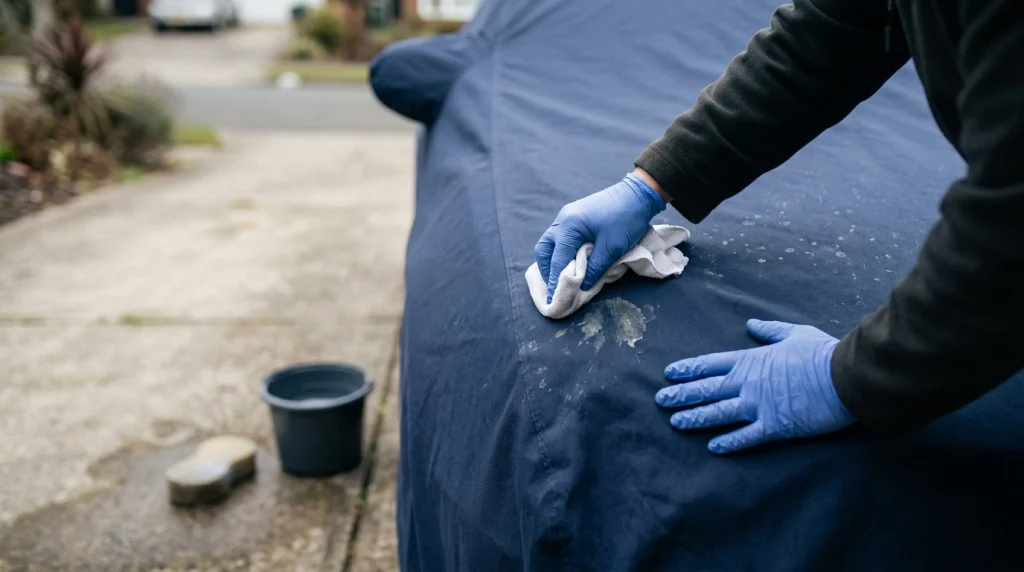
The safest starting method is to loosen the droppings with water, lift the residue gently, and rinse the area thoroughly. Follow the steps below while adjusting the cleaner and water temperature to suit your particular cover.
Step 1: Move the cover away from the vehicle if needed
If you can clean the stain safely while the cover remains fitted, keep it secure and avoid letting dirty water run onto sensitive areas. However, removing the cover is often preferable when the contamination is heavy or the inner lining could touch the dirty exterior.
When removing it, fold or handle the fabric so the stained section does not contact the clean inner surface. Place the cover on a clean, suitable area where it will not collect more grit.
Step 2: Lift off loose material
Put on gloves and carefully lift away any loose droppings without dragging them across the fabric. Avoid using a sharp tool, stiff brush, or dry paper towel to scrape the residue away.
If the deposit is firmly attached, leave it in place temporarily. Soften it first rather than forcing it off the surface.
Step 3: Soften the stain with water
Apply clean water at the temperature allowed by the manufacturer. Give the moisture time to loosen the residue before attempting to wipe it away.
For a stubborn deposit, repeat the wetting process instead of increasing pressure. Do not assume hot water is better, because excessive heat can damage some cover materials and coatings.
Step 4: Blot with a clean microfiber cloth
Press the damp cloth lightly against the softened stain and lift it away. Use a clean section of the cloth each time so you do not spread contamination over the surrounding fabric.
If the residue remains, use a soft sponge and a small amount of manufacturer-approved mild detergent diluted according to its directions. Work gently over the affected area without vigorous back-and-forth scrubbing.
Step 5: Rinse away residue
Rinse the cleaned section thoroughly with clean water, following the cover’s care instructions. Detergent left in the fabric can attract dirt or interfere with some protective finishes.
Check the area in good light. If you still see material on the surface, repeat the gentle cleaning process rather than immediately trying a stronger chemical.
Step 6: Dry the cover completely
Allow the cover to air-dry in a well-ventilated place, away from excessive heat. Spread it out as recommended by the manufacturer so moisture does not remain trapped in folded sections.
Do not reinstall or store the cover while it is damp. Trapped moisture can contribute to unpleasant odors and mildew, especially when the cover is folded and left in a storage bag.
Step 7: Inspect the inner lining and vehicle
Before reinstalling the cover, inspect both sides for remaining residue, embedded grit, and damp areas. If the stain spread beyond the original spot, clean the additional affected sections as needed.
Check the vehicle’s paint for dirt or moisture, too. Make sure the car and the cover’s contact surface are clean and dry before covering the vehicle again.
Section takeaway: Water, gentle blotting, thorough rinsing, and complete drying are the key steps. Stronger cleaning methods are not automatically more effective or safer.
How Should You Handle Fresh Versus Dried Bird Droppings?
Fresh bird droppings generally need less effort to remove, while dried deposits may require repeated wetting. The same principle applies to both: soften the material before wiping and avoid grinding it into the cover.
| Stain condition | Recommended approach | Avoid |
|---|---|---|
| Fresh droppings | Lift loose material, dampen the spot, and blot gently. | Smearing the deposit over a larger area. |
| Dried droppings | Wet the area repeatedly and wait for the residue to soften. | Scraping, stiff brushes, and aggressive rubbing. |
| Persistent discoloration | Check the material and use only an approved spot cleaner. | Mixing chemicals or applying untested solvents. |
| Large or widespread stains | Consider washing the cover according to its care label. | Machine washing without checking the instructions. |
What if the stain will not disappear?
First, check whether the remaining mark is dried residue or discoloration left in the fabric. If the surface feels clean and no material remains, additional scrubbing may cause more damage than the stain itself.
For a stubborn stain, consult the cover manufacturer about a compatible cleaner. Test an approved product on a small, inconspicuous area if the instructions allow it, and stop if the fabric changes color, texture, or water resistance.
Which Cleaning Method Is Safest for a Car Cover?
The best method depends on the fabric, coating, and severity of the stain. For an isolated deposit, spot cleaning is usually the simplest option; a full wash may be appropriate when contamination covers a larger area.
| Method | Best use | Main caution |
|---|---|---|
| Water and microfiber | Fresh or softened deposits. | Use a clean cloth and minimal pressure. |
| Approved mild detergent | Residue that remains after water cleaning. | Check compatibility and rinse thoroughly. |
| Hand washing | Widespread dirt or multiple stains. | Follow the manufacturer’s washing and drying directions. |
| Machine washing | Only covers explicitly approved for machine washing. | Agitators, heat, and unsuitable cycles can damage some covers. |
For example, CarCovers.com’s cleaning instructions describe cold-water washing and air drying for its indoor covers, along with restrictions on machine type and cleaning products. Those instructions illustrate why you should not apply one cover’s care rules to every brand or material.
Can you use vinegar, bleach, or household stain removers?
Do not assume that a household cleaner is safe for automotive fabric. Vinegar, bleach, solvents, concentrated degreasers, and other stain removers may discolor fabric or affect protective coatings.
Unless the manufacturer explicitly approves a product, stick with water and a compatible mild detergent. Never mix cleaning chemicals, and follow the product label whenever a cleaner is permitted.
Should you use a pressure washer?
A pressure washer is unnecessary for a small bird-dropping stain and may damage delicate fabric or its coating. A regular hose or gentle flow of water is a more conservative choice when the care instructions permit rinsing.
Use only the water pressure and washing method recommended for your particular cover. Avoid directing a concentrated jet at seams, bonded layers, or damaged sections.
What Cleaning Mistakes Should You Avoid?
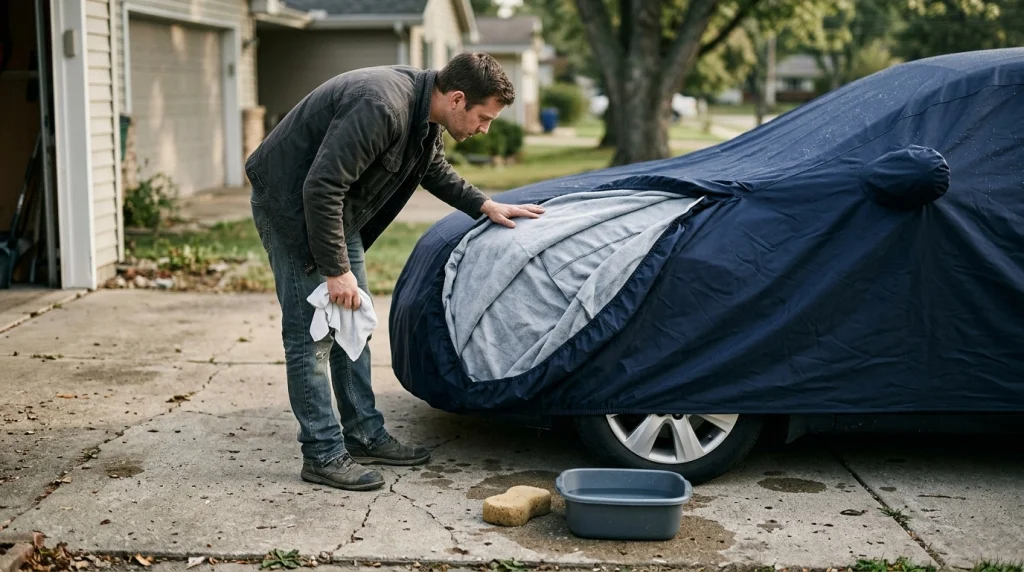
Most avoidable problems come from trying to remove the stain too quickly. Gentle cleaning protects both the cover’s construction and the vehicle underneath.
- Scrubbing while dry: Hardened debris may contain particles that abrade the fabric.
- Using a rough brush: Stiff bristles can wear the surface or damage delicate coatings.
- Applying harsh chemicals: Unapproved cleaners may change the fabric’s color or protective properties.
- Using excessive heat: Hot water or high-temperature drying can damage some materials.
- Leaving soap behind: Incomplete rinsing can leave residue in the fabric.
- Reinstalling a damp cover: Trapped moisture can contribute to odors and mildew.
- Ignoring the underside: Dirt on the inner lining may rub against the vehicle’s paint.
- Machine washing without checking: Some covers require hand washing or specific machine settings.
How can you prevent future bird-dropping stains?
If you frequently park beneath trees, balconies, or overhead wires, inspect the cover regularly and remove contamination before it hardens. Moving the vehicle to a cleaner parking spot may also reduce repeated exposure.
Choose a cover designed for your parking environment and maintain it according to its care instructions. A cover that stays clean, dry, and free of abrasive debris is better positioned to protect the vehicle’s finish.
Section takeaway: Avoid aggressive cleaning and unapproved chemicals. Regular inspection and prompt spot cleaning can make future maintenance easier.
Frequently Asked Questions
Can I remove bird droppings from a car cover without washing the entire cover?
Yes, a small stain can often be spot-cleaned with water and a clean microfiber cloth. If residue remains, use a compatible mild detergent when permitted by the manufacturer, then rinse the area thoroughly and dry it completely.
Should I remove the car cover before cleaning the stain?
Removing the cover can help prevent dirty residue from reaching the vehicle or spreading to the inner lining. For a small stain, cleaning in place may be practical if the cover remains secure and the manufacturer’s instructions allow it.
Can dried bird droppings permanently stain a car cover?
Yes, some deposits can leave discoloration that remains after the physical residue is removed. Soften dried material with water and clean gently; avoid repeated aggressive scrubbing because it may damage the fabric without removing the mark.
Is dish soap safe for cleaning a car cover?
Not every cover is compatible with every household soap. Check the manufacturer’s care instructions before using dish soap or laundry detergent, and rinse thoroughly if the product is approved. Avoid products containing ingredients that the manufacturer prohibits.
Can I put a car cover in the washing machine after spot cleaning?
Only if the care label permits machine washing. Some covers require a particular washer type, gentle cycle, or cold water, while others must be hand-washed. Follow the exact washing and drying instructions for your cover.
How long should a car cover dry before I reinstall it?
There is no single drying time for every cover because fabric thickness, humidity, airflow, and weather vary. Wait until the entire cover, including seams and folded sections, is completely dry before reinstalling or storing it.
What if bird droppings have reached the car’s paint?
Remove the cover carefully and inspect the affected panel. Follow the vehicle manufacturer’s paint-care guidance, soften the deposit with an appropriate automotive cleaning method, and avoid dry rubbing. Seek professional detailing advice if the paint appears etched or damaged.
Final Takeaway: Clean Gently and Protect the Cover
Removing bird droppings from a car cover does not have to be complicated. Start with water, loosen the residue, blot with a clean cloth, and use only a cleaner approved for your cover’s material.
After cleaning, rinse away any remaining product and allow the fabric to dry completely. Inspect the inner lining and your vehicle before reinstalling the cover, and use the manufacturer’s care instructions whenever you are unsure about a cleaning method.
A little patience is better than aggressive scrubbing. It helps you remove the mess while giving your car cover the best chance of continuing to protect your vehicle’s finish.