
Best Way to Clean a Car Cover: A Step-by-Step Guide
Quick Answer
The best way to clean a car cover is to remove loose dirt, rinse it gently, wash it with a manufacturer-approved mild cleaner, and rinse away all residue. Hand washing is the safest starting point when you don’t know whether your cover is machine washable. Let it air-dry completely before putting it back on your vehicle or storing it.
Follow These Essential Steps
- Check the care label: Confirm the permitted washing method and drying instructions before using any cleaner.
- Remove loose debris: Shake off dust, leaves, pollen, and grit before adding water.
- Use gentle cleaning: Apply mild, approved soap and work with a soft sponge or cloth.
- Rinse thoroughly: Remove soap from the fabric, seams, and folds to prevent residue buildup.
- Air-dry completely: Keep the cover out of storage until both sides are fully dry.
Avoid These Common Mistakes
- Don’t use bleach, fabric softener, harsh solvents, or a pressure washer unless the manufacturer explicitly approves the method.
- Don’t use a washing machine or tumble dryer without checking the cover’s care instructions.
A car cover protects your vehicle from dust, pollen, bird droppings, tree debris, and other outdoor contaminants. However, that protective layer also collects dirt, and improper cleaning can damage its fabric or water-resistant treatment.
When choosing the best way to clean a car cover, I would start with the manufacturer’s instructions rather than assume every cover can be washed like ordinary laundry. In this guide, we’ll cover safe hand washing, machine-washing considerations, stubborn stains, drying, and storage.
In This Guide
Why Should You Clean a Car Cover?
A car cover is a protective fabric barrier placed over a vehicle to reduce exposure to environmental contaminants. Depending on its construction, it may offer dust protection, water resistance, UV protection, or a combination of these features.
Cleaning removes accumulated dirt before it builds up or transfers onto the vehicle. It also helps you spot damage, persistent stains, and areas that may need attention.
How Dirt Can Affect Your Vehicle’s Paint
Dust and grit trapped between a cover and the paint can create scratches when the fabric moves against the vehicle. This is particularly important when the cover becomes dirty, the wind moves it, or someone pulls it across the bodywork.
Before covering your car, make sure the vehicle and the cover’s inner surface are reasonably clean. A cover cannot reliably protect paint if abrasive particles remain trapped underneath it.
Why Cover Material Matters
Car covers use different fabrics, linings, seams, and protective treatments. Some lightweight covers tolerate a gentle machine cycle, while others require hand washing or special care.
- Indoor covers: Often prioritize softness and dust protection, so gentle handling helps preserve the inner surface.
- Outdoor covers: May include water-resistant layers or coatings that need specific cleaning methods.
- Multi-layer covers: Can be more vulnerable to aggressive washing that stresses seams or separates layers.
- Stretch or specialty covers: May have specific washing restrictions that differ from ordinary fabric covers.
Section takeaway: Cleaning is about more than appearance. Removing grit and protecting the fabric helps the cover continue doing its job without unnecessarily risking your vehicle’s finish.
What Should You Check Before Cleaning a Car Cover?
Before washing a car cover, identify its material and follow the manufacturer’s care instructions. If the label is missing, look up the exact model or contact the manufacturer instead of guessing.
Gather the Right Cleaning Supplies
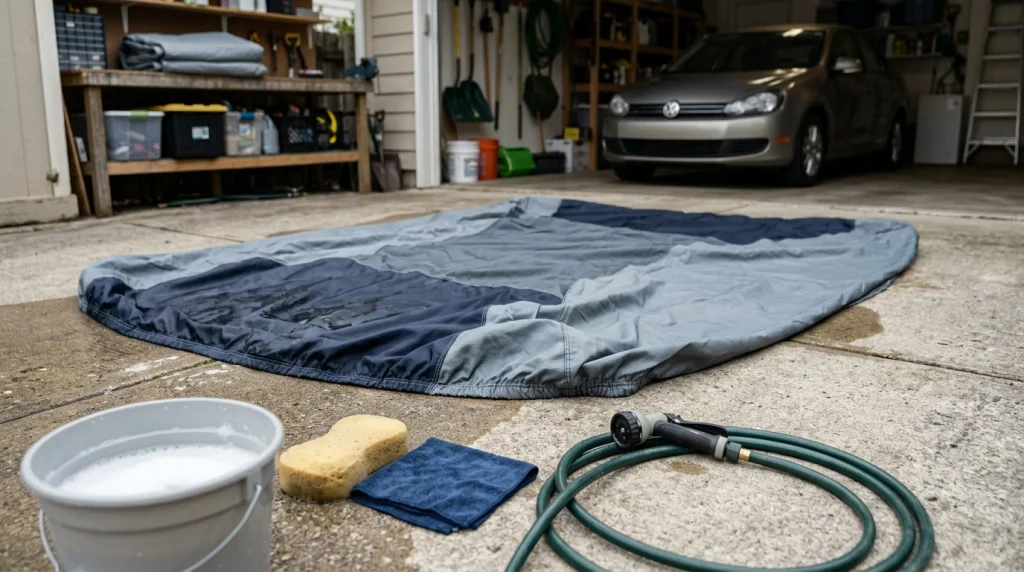
For a typical hand wash, you usually need only a few basic items. Use products approved for your particular cover.
- A garden hose with a gentle water setting.
- A bucket filled with cool or lukewarm water, if permitted.
- A mild, manufacturer-approved cleaner.
- A soft sponge, microfiber cloth, or soft-bristle brush.
- A clean driveway, patio, or other suitable washing surface.
- A clothesline, drying rack, or other clean area with good airflow.
Choose a Suitable Cleaning Solution
A mild cleaner approved for the cover’s fabric is generally preferable to a strong household chemical. Avoid assuming that a product safe for car paint, laundry, or outdoor furniture is automatically suitable for a specialized cover.
Never mix cleaning chemicals. Test an approved cleaner on a small, inconspicuous area if the manufacturer recommends spot testing, and check for discoloration or other changes before proceeding.
Prepare a Clean Washing Area
Choose a surface free of sharp stones, mud, oil, and loose debris. A dirty driveway can transfer fresh grime onto a cover while you’re trying to clean it.
If the cover is large, plan where you’ll spread it and how you’ll dry it before starting. A full-size SUV cover can be awkward to handle when wet.
How Do You Hand-Wash a Car Cover?
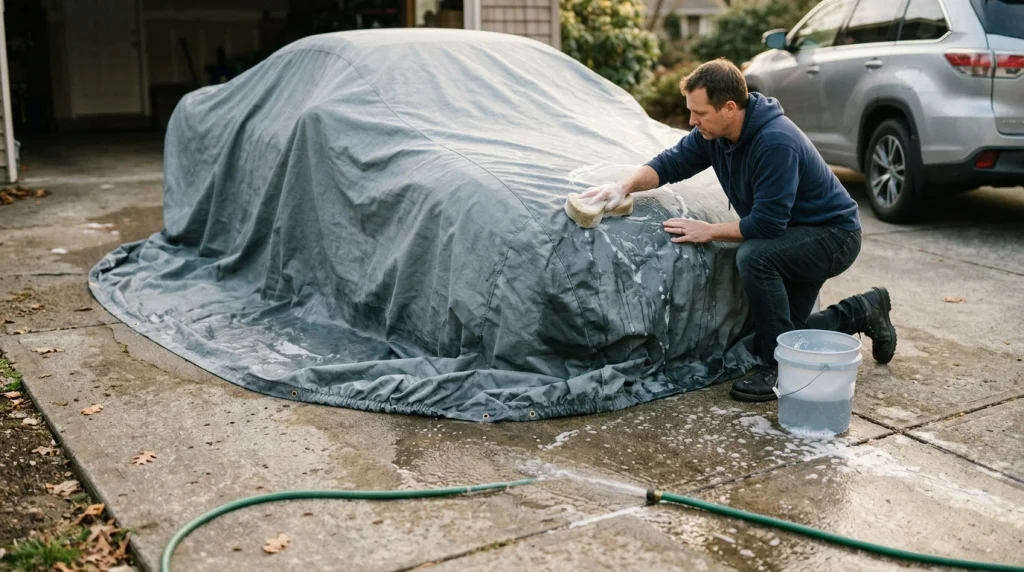
Hand washing is the safest default when the care instructions are unknown or machine washing is prohibited. It gives you control over the pressure, cleaning solution, and amount of friction applied to the fabric.
Step 1: Remove Loose Dirt and Debris
Take the cover off the vehicle if the manufacturer recommends removing it for cleaning. Shake it gently to release loose dust, leaves, pollen, and grit.
Don’t aggressively beat the fabric or drag it across the ground. Those actions can damage seams or collect more dirt on the surface.
Step 2: Rinse the Cover Gently
Spread the cover over a clean washing area and rinse it with a garden hose using low pressure. Start at one end and work across the fabric to loosen surface grime before scrubbing.
Avoid pressure washers unless the manufacturer explicitly approves their use. Concentrated water pressure may damage delicate fabric, seams, or protective layers.
Step 3: Prepare the Cleaning Solution
Mix the recommended cleaner with water at the dilution and temperature specified on its label. Don’t assume a fixed soap-to-water ratio is safe for every fabric.
Too much cleaner can leave residue that is difficult to rinse out. A suitable mild solution is usually a better starting point than a concentrated chemical mixture.
Step 4: Wash in Small Sections
Use a soft sponge or cloth to apply the solution gently. Work across one section at a time, paying attention to visibly dirty areas and folds.
- Use light pressure instead of vigorous scrubbing.
- Follow the fabric’s grain or texture where practical.
- Use a soft brush only when the material allows it.
- Avoid twisting, stretching, or wringing the cover.
Step 5: Rinse Away All Soap
Rinse the fabric thoroughly with clean water until the cleaning solution is gone. Check seams, hems, folds, and thicker sections where soap can remain trapped.
If the water still feels soapy or visible suds remain, continue rinsing. Some manufacturers recommend a second rinse or additional rinse cycle for approved machine-washable covers.
Step 6: Clean the Other Side When Needed
If both sides need cleaning, turn the cover over carefully and repeat the gentle process. Keep the inner surface away from dirty ground and rough surfaces.
Finish by checking for remaining stains, damaged seams, and areas that still feel soapy. Then move directly to proper drying.
Practical tip
Take your time with rinsing. A gentle wash followed by a thorough rinse is a better approach than aggressive scrubbing intended to remove every mark immediately.
Section takeaway: Use gentle water pressure, an approved cleaner, minimal friction, and a thorough rinse. These habits reduce the risk of unnecessary wear during routine cleaning.
Can You Machine-Wash a Car Cover?
Yes, some car covers are machine washable, but others must be hand-washed or professionally cleaned. The care label and model-specific manufacturer instructions should determine your choice.
For example, Coverstore’s car-cover cleaning guidance distinguishes between hand-washing and machine-washing instructions. This is why you should check the requirements for your own cover rather than apply one method to every product.
When Machine Washing May Be Appropriate
If the manufacturer explicitly permits machine washing, use the washer type, cycle, water temperature, and cleaner it specifies. A large front-loading machine may be suitable for certain covers, but capacity and fabric restrictions still matter.
- Use a washer large enough to accommodate the cover without cramming it inside.
- Choose the approved gentle cycle and water temperature.
- Use only the recommended cleaner and quantity.
- Follow the manufacturer’s rinsing instructions.
- Air-dry unless the care instructions expressly permit another method.
Never force a large cover into a small washing machine. The fabric needs enough room to move without excessive stress, and a poorly sized machine may not clean or rinse it properly.
Hand Washing vs. Machine Washing
| Factor | Hand Washing | Machine Washing |
|---|---|---|
| Best use | Covers requiring gentle care or with uncertain washing rules | Covers explicitly labeled machine washable |
| Equipment | Hose, bucket, soft sponge or cloth | A suitable washer with sufficient capacity |
| Control | Direct control over pressure and friction | Depends on the machine and selected cycle |
| Main concern | Excessive scrubbing or incomplete rinsing | Agitation, overcrowding, or an unsuitable cycle |
| Drying | Air-dry unless the label says otherwise | Follow the cover’s specific drying instructions |
When in doubt, hand washing is the more cautious choice. The important exception is a specialty material whose manufacturer requires a different cleaning method.
Which Washing Products Should You Avoid?
Unless the manufacturer specifically approves them, avoid bleach, fabric softener, strong solvents, abrasive cleaners, and harsh stain removers. These products may affect the color, fabric, seams, or water-resistant treatment.
Also avoid assuming that a product marketed as waterproof will remain waterproof after any type of washing. Cleaning requirements vary by construction and protective finish.
How Do You Remove Stubborn Stains From a Car Cover?
Start by identifying the stain and checking which cleaning agents the cover manufacturer allows. Treating a stain with an aggressive chemical can create a larger problem than the original mark.
Dust, Pollen, and Road Grime
Loose dust and pollen usually respond to a gentle rinse before washing. Removing the particles first reduces the chance of rubbing grit deeper into the fabric.
For road grime, apply an approved mild cleaner and work gently with a soft sponge. Repeat the wash if necessary instead of increasing the scrubbing pressure.
Bird Droppings
Bird droppings can dry into stubborn deposits, so avoid scraping them off with a hard object. Dampen the affected area with water if the care instructions allow it, then gently loosen the residue with a soft cloth.
Wash the spot with an approved cleaner and rinse it thoroughly. If the stain remains, contact the manufacturer before trying vinegar, solvents, or specialized stain removers.
Tree Sap
Tree sap can cling strongly to fabric, particularly after exposure to heat. Don’t pull at hardened sap or apply alcohol, petroleum products, or other solvents without confirming compatibility.
Use the manufacturer’s recommended spot-treatment method. If no safe method is listed, ask the manufacturer or a qualified cleaning professional who handles automotive covers.
Mildew and Musty Odors
A musty smell may indicate that moisture remained trapped in the cover during storage. Inspect the fabric for visible growth and check the care instructions before attempting a deeper clean.
Wash with an approved product, rinse completely, and allow the cover to dry thoroughly. If mildew is extensive or the fabric appears weakened, seek manufacturer guidance rather than applying bleach automatically.
What If a Stain Won’t Come Out?
Some discoloration may remain even after safe cleaning. Repeated aggressive treatment can damage the cover without removing the stain.
Stop if the fabric changes color, becomes rough, or begins separating at the seams. A clean but slightly stained cover may be preferable to one with damaged protective layers.
Section takeaway: Match the treatment to the stain and the cover material. When a cleaner isn’t explicitly approved, test nothing beyond the manufacturer’s guidance and seek advice before using stronger chemicals.
How Should You Dry and Store a Car Cover?
Drying the cover completely is an essential part of cleaning. Putting away a damp cover can trap moisture and encourage musty odors or mildew.
Air-Dry the Cover Thoroughly
After rinsing, spread the cover over a clean drying rack, clothesline, or other suitable support. Choose a well-ventilated location and follow any instructions about shade or sunlight.
Don’t wring the fabric or hang it from a single point if its weight could stretch or damage the material. Support the cover evenly when practical.
- Allow water to drain without twisting the fabric.
- Keep the cover away from dirt, sharp edges, and rough surfaces.
- Check thick seams, folded sections, and the inner lining for lingering moisture.
- Turn or reposition the cover when needed to help both sides dry.
- Never use a tumble dryer unless the manufacturer explicitly permits it.
Can You Put a Car Cover Back on While It’s Damp?
It’s best to wait until the cover is fully dry before putting it back into service or storing it. Trapped moisture can create odor problems and may affect the condition of the fabric over time.
If the vehicle itself is wet, consider whether your cover is designed for that situation. Some covers are breathable, while others have different moisture-management requirements.
Store the Cover Correctly
Once the cover is dry, fold it loosely and store it according to the manufacturer’s instructions. A clean storage bag or suitable dry storage area helps keep dust and debris away.
Choose a cool, dry place away from sharp objects and persistent dampness. Avoid sealing a cover in an airtight container if any moisture remains.
Before using it again, check for tears, loose seams, embedded grit, or signs of mildew. Address those issues before the cover goes back onto your vehicle.
Section takeaway: A complete air-dry and clean storage area help prevent moisture-related problems. Don’t rush this stage after spending time washing the cover carefully.
What Cleaning Mistakes Should You Avoid?
Most avoidable cleaning problems come from using the wrong method or trying to remove dirt too aggressively. The safest routine is to follow the care label, use approved products, and let the fabric dry naturally when required.
| Mistake | Why It Matters | Safer Approach |
|---|---|---|
| Using bleach | May discolor or damage the material | Use an approved cleaner |
| Pressure washing | High pressure may stress fabric and seams | Use a gentle hose setting |
| Hard scrubbing | Can wear the fabric or protective surface | Loosen dirt with water and mild cleaner |
| Machine washing without checking | Agitation or heat may damage some covers | Follow model-specific instructions |
| Storing it damp | Encourages musty odors and moisture problems | Air-dry completely first |
| Covering a dirty vehicle | Trapped grit can rub against the paint | Clean the vehicle and inner cover surface |
How Often Should You Clean a Car Cover?
There is no universal cleaning interval for every car cover. The right frequency depends on its material, how often you use it, and how much dust, pollen, sap, or other debris it collects.
Inspect the cover regularly and clean it when it becomes visibly dirty or when the manufacturer recommends maintenance. A cover used beneath trees may need attention sooner than one kept in a relatively clean indoor garage.
Between full washes, remove loose debris gently when appropriate. Avoid repeatedly washing the cover without a reason, especially if its care instructions specify limits or special treatment.
Frequently Asked Questions
What is the best thing to use to clean a car cover?
Use a mild cleaner approved by the cover manufacturer, along with water and a soft sponge or cloth. Avoid bleach, fabric softener, and strong solvents unless the manufacturer specifically permits a product for that material.
Can I wash a car cover while it is on my car?
Some covers can be gently cleaned while fitted to the vehicle, but the manufacturer’s instructions should determine whether this is suitable. If you wash it in place, keep water and cleaner away from areas where they could cause a problem, and ensure the cover dries completely.
Can I use dish soap on a car cover?
Only use dish soap if the cover manufacturer approves it. Formulations vary, and a cleaner suitable for one fabric may leave residue or affect another cover’s protective treatment.
Can I put my car cover in a washing machine?
Only if the manufacturer explicitly labels the cover as machine washable. Follow the approved washer type, cycle, temperature, and cleaning-product instructions, and avoid overcrowding the machine.
Can I put a car cover in the dryer?
Don’t use a tumble dryer unless the manufacturer’s care instructions specifically permit it. Heat can shrink some materials or damage protective layers, so air drying is the cautious default.
How do I remove bird droppings from a car cover?
Gently soften the deposit with water if the care instructions allow it, then use an approved cleaner and soft cloth. Avoid scraping or applying unapproved solvents, and rinse the area thoroughly after cleaning.
Why does my car cover smell after washing?
A musty smell can develop when a cover is folded or stored before it dries completely. Clean it again using an approved method if needed, then dry both sides fully and store it in a dry, ventilated place.
Final Takeaway: Keep Your Car Cover Clean Without Damaging It
The best way to clean a car cover is to remove loose dirt, wash gently with an approved cleaner, rinse thoroughly, and let it dry completely. Hand washing is a sensible default when you’re unsure whether machine washing is safe.
Before starting, check the manufacturer’s care instructions and identify any restrictions on cleaners, water temperature, washing machines, or drying methods. That small step can help you avoid unnecessary damage and keep the cover ready for its next use.
For additional guidance, compare your cover’s care label with the instructions from its manufacturer. If you can’t confirm which cleaning method is safe, contact the manufacturer before trying a stronger treatment.