
How to Extend Car Cover Lifespan: Cleaning, Care, and Storage Tips
Quick Answer
To extend car cover lifespan, clean it with a manufacturer-approved mild cleaner, dry it completely before storage, secure it against wind, and inspect the seams and fabric regularly. Always cover a clean, cool vehicle and choose a material designed for your parking conditions. Following the correct car cover storage guidance also helps prevent premature deterioration.
Six habits that protect your cover
- Clean gently: Remove dust, sap, and droppings without harsh chemicals or aggressive scrubbing.
- Dry completely: Prevent mildew and moisture damage by checking both fabric surfaces and seams.
- Secure the fit: Stop excess flapping and rubbing with correctly positioned straps and elastic hems.
- Protect from abrasion: Keep the vehicle and the cover’s inner surface free of dirt and grit.
- Store correctly: Use a clean storage bag in a dry, cool location away from sharp objects.
- Inspect early: Repair suitable minor damage before it becomes a large tear.
The most important rule
- Follow the fabric label: Washing, drying, and repair methods differ between car cover materials.
A car cover protects your vehicle from dust, sunlight, bird droppings, and everyday exposure. However, the cover itself needs protection from dirt, moisture, friction, and careless handling.
I’ve always considered car cover maintenance part of basic vehicle care. This guide explains how to clean, secure, inspect, repair, and store your cover without accidentally damaging it.
In This Guide
Why Do Car Covers Wear Out?
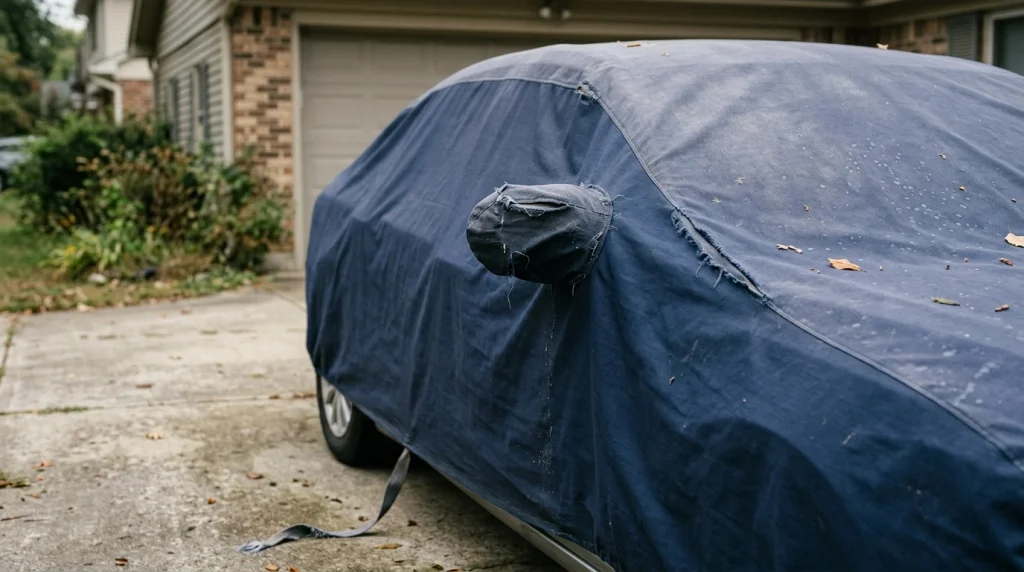
Car covers wear out because sunlight, wind, moisture, dirt, and repeated handling gradually stress their materials. Incorrect cleaning and storage can accelerate that damage.
A car cover is a protective fabric barrier designed to shield a parked vehicle from environmental exposure. Its construction may include woven fibers, synthetic layers, breathable membranes, coatings, elastic hems, and reinforced seams.
Each component faces different stresses during everyday use.
What causes premature car cover damage?
- Ultraviolet exposure: Extended sunlight can weaken susceptible fibers, fade fabric, and affect protective finishes.
- Wind movement: Loose covers can flap against body panels, stressing seams and creating friction.
- Trapped moisture: Damp storage can encourage mildew, odors, and deterioration.
- Dirt and contamination: Sand, grit, and debris can abrade the cover and potentially damage vehicle paint.
- Harsh cleaning products: Bleach, solvents, and unsuitable detergents can damage fabrics or coatings.
- Physical stress: Pulling, dragging, and stretching can weaken stitching, mirror pockets, and elastic edges.
Damage often starts in predictable locations. Pay attention to mirror pockets, roof corners, bumper edges, and areas around tie-down straps.
Does car cover material affect durability?
Yes. Fabric construction determines how a cover responds to sunlight, water, abrasion, and repeated cleaning.
Manufacturers produce covers for different conditions, so a lightweight garage cover should not automatically be treated as an outdoor weather cover.
| Cover material | Typical application | Main care concern |
|---|---|---|
| Polyester | Indoor and outdoor covers, depending on treatment | UV exposure, coating compatibility, and abrasion |
| Polypropylene nonwoven | Lightweight, breathable protective covers | Tearing, prolonged exposure, and fabric stress |
| Polycotton | Primarily indoor protection in suitable designs | Moisture retention, staining, and washing conditions |
| Multilayer synthetic fabric | Weather-resistant outdoor protection | Delamination, seam wear, and coating damage |
| Stretch or satin-style fabric | Fitted indoor protection | Snags, overstretching, and unsuitable heat |
These are general material characteristics, not guarantees for every product. Coatings, fabric weight, construction, and manufacturer specifications can change performance considerably.
For example, a breathable outdoor polyester cover may handle everyday weather better than an indoor stretch cover. That does not mean all polyester covers provide identical protection.
Section Takeaway: Match the cover to your parking environment and prevent friction, contamination, and moisture buildup. Proper material selection reduces avoidable wear before maintenance even begins.
How Should You Clean a Car Cover Without Damaging It?
Clean your car cover using the instructions for its exact material, a suitable mild cleaning product, and thorough rinsing. Avoid bleach, abrasive brushes, and unapproved machine-washing settings.
Cleaning removes particles that can wear the material or transfer onto the vehicle. However, washing too aggressively can cause more damage than ordinary dirt.
Step-by-step car cover cleaning
- Read the care label: Confirm whether hand washing or machine washing is permitted.
- Remove loose debris: Shake away leaves and gently brush off dry dust without grinding grit into the fabric.
- Choose a clean washing area: Use a clean surface that will not transfer sand, oil, or chemicals onto the cover.
- Rinse the fabric: Use cool water to loosen surface contamination when allowed by the manufacturer.
- Apply suitable cleaner: Use the recommended mild soap or detergent and gently clean stained areas.
- Rinse thoroughly: Remove leftover cleaner that could attract dirt or affect the fabric.
- Dry correctly: Follow the material-specific drying instructions and confirm complete dryness before storage.
Bird droppings and tree sap deserve prompt attention. Allowing contamination to harden makes removal more difficult and may encourage excessive scrubbing.
For stubborn stains, repeat a gentle treatment rather than immediately switching to a strong solvent.
Can you put a car cover in the washing machine?
Some car covers are machine washable, while others require hand washing. The correct method depends on fabric, size, coatings, and the manufacturer’s instructions.
Covercraft’s material-specific care reference shows why universal washing rules are unreliable. Certain fabrics permit machine drying, while others require air-drying.
- Machine-washable cover: Use only approved water temperatures, detergents, and washer types.
- Hand-wash-only cover: Avoid machine agitation that may stress coatings or stitching.
- Large cover: Do not force it into a washer that cannot accommodate the material safely.
- Unknown care instructions: Contact the manufacturer rather than guessing.
What cleaning mistakes shorten cover life?
Avoid common shortcuts that can weaken fabric or reduce its protective performance.
- Using household bleach, fabric softener, or chemical degreasers without approval.
- Scrubbing aggressively with stiff brushes.
- Dragging the cover across rough concrete during washing.
- Washing at temperatures above the manufacturer’s recommendations.
- Using a tumble dryer when the cover requires air-drying.
- Applying waterproofing sprays without confirming product compatibility.
Air-drying in a shaded, ventilated area is a sensible default when the manufacturer specifies it. Some materials permit machine drying at designated settings, so always check the label.
Turn the cover during air-drying when practical. Seams, reinforced areas, mirror pockets, and elastic hems may retain moisture after the main panels feel dry.
Section Takeaway: Gentle, material-specific cleaning helps preserve fabric and coatings. The safest washing and drying methods are the ones approved for your exact cover.
How Can You Prevent Sun, Wind, and Rain From Damaging a Car Cover?
Protect an outdoor car cover by choosing weather-appropriate material, securing it correctly, and checking it after severe conditions. Proper fit reduces unnecessary movement and stress.
Outdoor covers operate in a demanding environment. Even a well-made cover needs regular attention when exposed to strong sunlight, wind, rain, or debris.
Prevent UV damage during outdoor parking
Sunlight can gradually weaken materials that lack suitable ultraviolet resistance. A cover designed for outdoor use should specify protection appropriate for prolonged exposure.
- Choose suitable fabric: Look for documented outdoor and UV-resistant construction.
- Use covered parking: A garage or carport can reduce exposure when available.
- Inspect exposed panels: Check the roof and hood sections for fading, thinning, or brittleness.
- Avoid unnecessary exposure: Store the cover indoors when it is not being used.
Color fading alone does not always mean protection has failed. However, fading combined with brittle texture, cracking, or tearing warrants closer inspection.
How do you stop a car cover from flapping in the wind?
Use the cover’s designated straps, elastic hems, and tie-down points to reduce movement. Never use improvised attachments that could scratch paint or damage the fabric.
A loose cover can behave like a sail. Repeated lifting and rubbing may stress seams and contact points.
- Confirm that the cover matches the vehicle’s dimensions and body shape.
- Position mirror pockets and reinforced openings correctly.
- Fit the front and rear elastic hems securely.
- Fasten supplied straps using the manufacturer’s instructions.
- Check that no hardware rubs directly against painted panels.
- Remove or protect the cover when weather exceeds its recommended use conditions.
Pay particular attention to exposed vehicles parked near open fields, coastal roads, or windy driveways. Wind loads can be unpredictable during storms.
A car cover is not a substitute for secure storm shelter. Remove it if the manufacturer advises doing so for the expected conditions.
What should you do after heavy rain?
Inspect the cover, check for water accumulation, and allow trapped moisture to escape. Do not assume a water-resistant outer fabric means the entire assembly is completely dry.
- Look for standing water or sagging fabric.
- Check whether straps and hems remain secured.
- Inspect the underside for condensation.
- Allow the cover and vehicle to dry when practical.
- Remove leaves or debris that may hold moisture against the material.
Water-resistant and waterproof are not interchangeable terms. Breathability and moisture management also matter, especially when temperature and humidity change.
Should you cover a wet or hot car?
Avoid leaving a wet vehicle under a cover for prolonged periods, particularly when the cover manufacturer warns against it. Trapped moisture can contribute to unwanted condensation and mildew.
Also allow hot exhaust components and other heated surfaces to cool before fitting the cover. This is especially important around exhaust outlets and aftermarket components.
The same principle applies to winter conditions. If a cover freezes to the vehicle, do not pull it loose aggressively.
Allow safe thawing according to the manufacturer’s instructions instead of risking fabric tears or paint damage.
Section Takeaway: Outdoor durability depends on UV resistance, a secure fit, and moisture management. Inspect the cover after unusual weather rather than assuming it remains correctly positioned.
How Should You Store a Car Cover to Make It Last Longer?
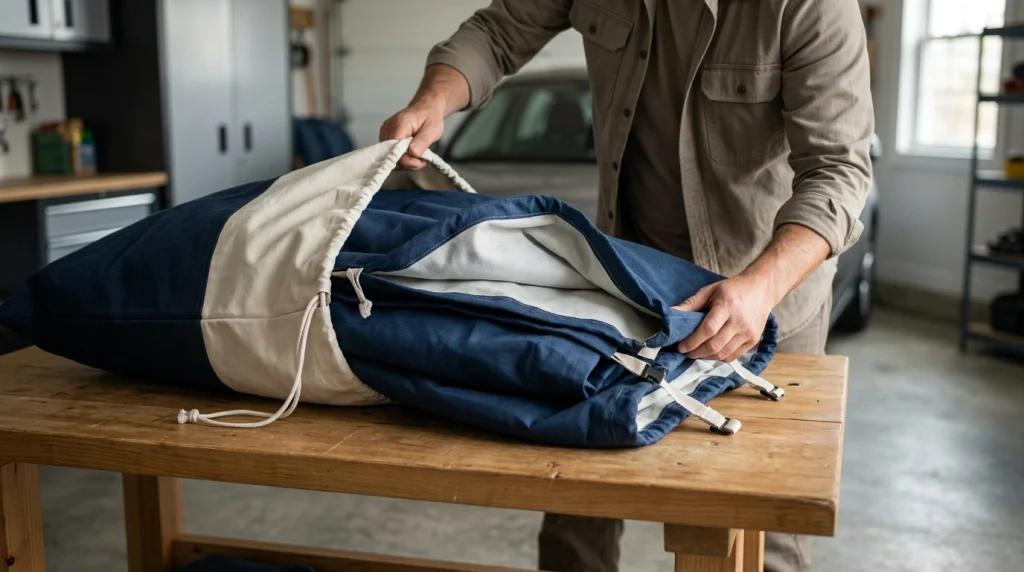
Store a car cover clean and completely dry, loosely folded or rolled, and protected from humidity, direct heat, chemicals, and sharp objects. A clean, breathable storage bag is useful for many covers.
Storage damage is easy to overlook because it happens while the cover is not protecting the vehicle. Moisture and contamination are two major concerns.
How to fold a car cover without damaging it
- Remove surface debris: Shake or brush away loose dirt before folding.
- Check dryness: Inspect both sides, seams, mirror pockets, and reinforced sections.
- Release attachments: Unfasten straps and remove accessories according to the manufacturer’s instructions.
- Keep the lining clean: Avoid dragging the paint-contact side across pavement or the garage floor.
- Fold in broad sections: Avoid crushing thick layers into sharp, compact creases.
- Place in a clean bag: Protect the folded cover from dust and accidental contamination.
- Store above the floor: Select a clean shelf or cabinet away from standing water.
I prefer to think of the paint-contact side like a detailing towel. Once grit reaches that surface, I would clean it before letting it touch vehicle paint again.
That simple comparison helps explain why careful folding matters more than making the smallest possible bundle.
Where should you keep a car cover between uses?
| Storage location | Advantages | Precautions |
|---|---|---|
| Garage shelf | Convenient and keeps the bag off the floor | Protect from dust, spills, and humidity |
| Indoor closet | Usually sheltered from outdoor weather | Avoid excess compression |
| Vehicle trunk | Convenient for portable use | Watch heat, dampness, and dirty cargo |
| Basement or shed | May provide extra storage space | Avoid humidity, rodents, and water exposure |
Can a damp car cover develop mildew?
Yes. Moisture trapped inside folded fabric can create conditions suitable for mildew and unpleasant odors.
Covercraft recommends cleaning, complete drying, and inspection before storage. Its polycotton cover instructions also demonstrate why material-specific care matters.
If the cover becomes wet, spread it out in a suitable drying area before packing it away. Pay special attention to thick hems and stitching.
Do not mask persistent musty odors with fragrance sprays. Clean and assess the material instead.
Section Takeaway: Dry, clean storage protects the fabric and prevents contaminated lining from contacting your paint. Never make convenience more important than complete drying.
How Do You Inspect and Repair a Damaged Car Cover?
Inspect the fabric, stitching, straps, elastic, and inner surface regularly. Minor damage may be repairable, but failing protective coatings or widespread deterioration often justify replacement.
Small faults can spread when the cover experiences wind, stretching, and repeated installation. Early inspection helps you decide whether repair is worthwhile.
What areas should you inspect?
- Roof and hood panels: Look for thinning, pinholes, brittle spots, and cracking.
- Mirror pockets: Check stitching and fabric tension.
- Elastic hems: Look for loss of stretch, broken stitching, or fraying.
- Tie-down straps: Inspect buckles, attachment points, and webbing.
- Seams: Check for separation or stretched threads.
- Inner lining: Look for grit, exposed rough material, or damaged surfaces that could contact paint.
A bright inspection area makes small holes easier to spot. You can examine suspicious thin areas against a light source without pulling aggressively on the fabric.
Can you repair a small tear in a car cover?
Sometimes. A compatible patch, repair tape, or manufacturer-approved stitching method may extend the usefulness of a cover with localized damage.
However, a repair suitable for simple woven fabric may not work for a coated or multilayer cover.
- Identify the material and inspect the size of the tear.
- Read the manufacturer’s repair or warranty guidance.
- Clean and dry the affected area using the approved method.
- Apply only a compatible patch or repair material.
- Check that the repair does not leave abrasive edges facing the vehicle.
- Inspect the repair after the next few uses.
Avoid placing rough adhesive edges or exposed fasteners against painted surfaces. Do not assume household glue will bond safely to specialized fabrics.
When should you replace a car cover?
Replace a cover when it can no longer provide reliable protection or when damage risks harming the vehicle. Repairing every defect is not always practical.
- Widespread brittleness: Fabric cracks or tears under normal handling.
- Extensive seam failure: Multiple structural seams separate repeatedly.
- Damaged inner lining: Exposed rough materials could contact the paint.
- Failed attachments: The cover cannot remain safely secured.
- Coating deterioration: Protective layers peel, flake, or separate significantly.
- Repeated leaks: The cover no longer performs as designed despite correct use.
Before replacing an expensive cover, check its warranty terms. Some manufacturers provide remedies for qualifying defects, but ordinary wear and misuse may be excluded.
Section Takeaway: Inspect high-stress areas before damage spreads. Repair localized faults only when the method is compatible and the cover remains safe for your vehicle.
What Car Cover Maintenance Schedule Works Best?
A practical maintenance schedule combines quick checks before each use with periodic cleaning and more thorough seasonal inspections. Adjust the routine to your climate and exposure.
There is no universal cleaning interval that applies to every cover. A dusty outdoor driveway requires different attention from a clean indoor garage.
A simple car cover care schedule
| When | Maintenance task | Main purpose |
|---|---|---|
| Before every installation | Check vehicle cleanliness, cover lining, and fit | Prevent scratching and unnecessary friction |
| After dirty or severe weather | Remove debris and inspect seams, moisture, and straps | Catch contamination and damage early |
| Monthly for regular outdoor use | Perform a visual condition check and spot-clean as needed | Identify developing wear |
| At seasonal changes | Inspect panels, hems, coatings, and attachments | Evaluate overall protection |
| Before extended storage | Clean if needed, dry completely, and store properly | Avoid mildew and storage deterioration |
This schedule is a practical starting point, not a manufacturer-mandated service interval. Frequent exposure to salt spray, tree sap, dust, or storms may require additional cleaning.
Does daily car cover use shorten its lifespan?
Daily use increases handling cycles, but it does not automatically cause premature failure. Most avoidable wear comes from improper installation, dragging, friction, dirt, and unsuitable environmental exposure.
Regular users should develop a consistent installation and removal routine. It saves effort and helps prevent repeated damage at the same contact points.
How can you protect your car’s paint while using a cover?
Never treat a cover as a replacement for basic vehicle cleaning. Dirt between fabric and paint can become abrasive when the material moves.
- Keep the vehicle reasonably clean before covering it.
- Remove sand and grit from the cover’s inner surface.
- Use the proper size and fit for the vehicle.
- Keep buckles and metal accessories away from paint.
- Lift and fold the fabric instead of dragging it across panels.
- Avoid using an indoor-only cover in outdoor conditions.
For broader cleaning and maintenance advice, consult Consumer Reports’ car maintenance resources and the Car and Driver automotive guides.
In 2026, the fundamentals remain straightforward: appropriate material, clean contact surfaces, correct fit, and moisture control matter more than complicated maintenance products.
Section Takeaway: A short inspection habit is easier than repairing extensive wear. Match cleaning frequency to actual contamination rather than washing on an arbitrary calendar.
Frequently Asked Questions About Car Cover Lifespan
How many years should a car cover last?
There is no dependable lifespan for every car cover. Durability varies with material quality, sunlight, weather, installation frequency, and maintenance.
An indoor cover stored in controlled conditions may outlast a similar cover exposed outdoors. Follow the manufacturer’s guidance and replace the cover when its protective performance deteriorates.
How often should you wash a car cover?
Wash a car cover when dirt, stains, contamination, or manufacturer instructions make cleaning necessary. Outdoor covers may need more frequent attention than indoor covers.
Regularly remove loose debris and spot-clean when appropriate. Repeated unnecessary washing can also stress certain materials, especially when incorrect methods are used.
Can you use regular laundry detergent on a car cover?
Only if the manufacturer permits that detergent type. Some covers require a mild product, specific detergent formulation, or special washing method.
Avoid bleach, fabric softeners, and strong chemicals unless explicitly approved. Using the wrong cleaner can affect protective coatings, fabric softness, or seam performance.
Should you leave a car cover on during rain?
A properly fitted outdoor cover designed for wet weather may be used during rain within its specified limits. An indoor-only cover is not a suitable alternative.
After heavy rainfall, inspect water accumulation, fit, and moisture underneath. Follow the manufacturer’s instructions for drying and prolonged wet-weather use.
Can a car cover scratch the vehicle’s paint?
Yes, particularly when grit becomes trapped between the cover and the paint or wind repeatedly moves the fabric. Poorly positioned hardware can also damage painted surfaces.
Keep both the vehicle and lining clean, choose the correct fit, and secure the cover properly to reduce abrasion risk.
Is it better to fold or roll a car cover?
Both methods can work when the cover is clean, dry, and handled carefully. Folding is often convenient, while loose rolling may reduce sharp creases in some materials.
Follow any specific folding instructions from the manufacturer. Whichever method you choose, protect the clean inner surface and avoid excessive compression.
Can waterproofing spray extend car cover life?
A compatible, manufacturer-approved treatment may help maintain certain water-repellent finishes. However, a generic waterproofing spray can damage coatings, affect breathability, or interfere with fabric performance.
Check the cover’s care instructions before applying any treatment. Waterproofing products cannot reliably restore severely degraded fabric or failing seams.
Final Takeaway: Make Your Car Cover Last Longer
Extending car cover lifespan starts with proper care, not expensive accessories. Keep the cover clean, dry it correctly, protect it from unnecessary friction, and store it safely.
The next time you remove your cover, check the seams, straps, elastic edges, and inner lining. A few minutes of attention can prevent avoidable wear and help preserve the protection your vehicle depends on.
Start with one habit today: Never fold away a damp or gritty car cover. That simple precaution benefits both the fabric and your vehicle’s finish.
