
How to Use a Car Cover in Humid Climates Without Trapping Moisture

Quick Answer
To use a car cover in humid climates, start with a clean, completely dry vehicle and a breathable, weather-appropriate cover. Secure it properly, inspect beneath it after rain or heavy dew, and remove it whenever moisture remains trapped. The key is preventing persistent condensation, which forms when humid air cools to its dew point.
Six steps for safer covering
- Clean the vehicle: Remove dust, sand, pollen, and other abrasive particles before installing the cover.
- Dry every surface: Check mirrors, trim, seals, wheels, and body-panel gaps for leftover water.
- Choose breathable fabric: Select material designed to release water vapor while resisting outdoor weather.
- Fit it securely: Use the cover’s designated straps or fastening system without pulling the fabric excessively tight.
- Inspect regularly: Check for wet fabric, condensation, standing moisture, and musty smells.
- Dry before reuse: Remove the cover when necessary and let both the car and fabric dry completely.
The essential rule
- Never trap existing moisture: A breathable cover helps manage humidity, but it cannot replace proper drying and ventilation.
Car covers can protect everyday vehicles from sunlight, dirt, tree debris, and changing weather. But humid conditions make proper installation and moisture management especially important.
Whether you’re parking in coastal Florida, along the Gulf Coast, or in another humid region, the same basic principles apply. I’ll walk through cover selection, installation, inspection routines, and practical ways to prevent moisture problems.
In This Guide
- Why Do Car Covers Trap Moisture in Humid Climates?
- What Type of Car Cover Works Best in Humid Weather?
- How Do You Properly Install a Car Cover in Humid Weather?
- How Can You Prevent Condensation and Mold?
- How Should You Use a Cover for Different Parking Situations?
- What Should You Do When Moisture Gets Under the Cover?
- Frequently Asked Questions
Why Do Car Covers Trap Moisture in Humid Climates?
Car covers can trap moisture when humid air condenses against cooler vehicle surfaces or when water cannot evaporate. This problem becomes more likely with non-breathable materials, wet vehicles, and poor ventilation.
A breathable car cover is a protective fabric covering designed to permit some moisture vapor to pass through its material. Breathability helps moisture escape, although it does not guarantee a completely dry vehicle.
How does condensation form beneath a car cover?
Condensation occurs when moisture-containing air cools enough for water vapor to become liquid. Vehicle body panels can create those conditions during overnight temperature changes.
Imagine parking after a warm, humid afternoon. As the roof and hood cool overnight, tiny droplets may appear beneath the fabric.
The National Weather Service explains that dew point represents the temperature at which condensation can occur. The closer a surface gets to that temperature, the greater the chance of moisture forming.
Why does a waterproof cover sometimes make moisture worse?
Water resistance and breathability are different properties. A material may block liquid water effectively while allowing very little water vapor to escape.
That distinction matters when choosing a cover for humid conditions.
- Liquid water: Rain that reaches the exterior of the cover.
- Water vapor: Invisible moisture present in surrounding air.
- Condensation: Liquid droplets created when humid air meets a sufficiently cool surface.
- Trapped moisture: Water that remains beneath the cover because drying is restricted.
A plastic tarp may resist rain but also restrict evaporation. A purpose-made breathable cover offers a more balanced approach.
What damage can persistent moisture cause?
One damp morning does not automatically mean your paint is damaged. Repeated or prolonged dampness deserves more attention, especially around vulnerable materials.
- Water spotting: Minerals and contaminants may leave visible deposits after moisture evaporates.
- Surface corrosion: Exposed metal, chipped paint, and existing rust can become more vulnerable during prolonged damp conditions.
- Mildew: Damp cover fabric and contaminated storage materials can develop unpleasant odors or fungal growth.
- Paint abrasion: Dust or sand caught beneath moving fabric may scratch the finish.
- Slow drying: Seals, trim gaps, and other sheltered locations may retain moisture longer than open panels.
Coastal drivers face another complication: airborne salt deposits. Moisture combined with salt contamination can increase corrosion concerns around exposed metal.
For this reason, regular cleaning remains important even when your vehicle stays covered.
Section Takeaway: Humidity is not the enemy by itself. Persistent moisture, contaminated surfaces, and limited drying opportunities create the more important risks.
What Type of Car Cover Works Best in Humid Weather?
A breathable, water-resistant cover designed for your parking environment is generally the best starting point. Material construction, vehicle fit, and drying performance matter more than thickness alone.
I would prioritize three characteristics: moisture-vapor transmission, appropriate weather protection, and a secure fit. A heavy cover offers little benefit if it stays saturated or rubs against dirty paint.
Breathable versus non-breathable car covers
These materials behave differently when temperatures fluctuate. The comparison below highlights their practical strengths and limitations.
| Cover material | Moisture behavior | Best application | Main limitation |
|---|---|---|---|
| Breathable multilayer synthetic | Allows some vapor to escape; water resistance varies | Humid outdoor parking | Can still become saturated |
| Breathable soft indoor fabric | Permits vapor movement but generally offers limited rain protection | Dry, ventilated garages | Usually unsuitable for exposed outdoor rain |
| Plastic or vinyl tarp | Usually strongly restricts vapor movement | Not recommended as routine direct vehicle covering | Can trap condensation and cause abrasion |
| Breathable UV-resistant outdoor fabric | Balances vapor release with weather resistance | Sunny, humid locations | Performance depends on construction and maintenance |
These are general material characteristics rather than laboratory performance ratings. Actual resistance to water and vapor transmission varies between products.
Which cover features should you prioritize?
Look beyond broad marketing labels such as “all-weather” or “maximum protection.” A useful specification should explain where and how the cover is designed to work.
- Breathable construction: Look for a manufacturer’s description of moisture-vapor management.
- Outdoor water resistance: Choose protection suitable for local rain exposure.
- UV protection: Important for uncovered vehicles exposed to strong sunlight.
- Soft inner surface: Helps reduce friction when the vehicle and cover are clean.
- Secure attachment: Dedicated straps or fastening systems help limit wind movement.
- Correct sizing: Avoid excessive loose fabric or material stretched tightly around body panels.
- Cleanable fabric: Follow instructions for washing, drying, and storage.
Be careful with unsupported claims that a cover is completely waterproof and fully breathable. Ask for meaningful manufacturer specifications when comparing products.
For additional background, Eastwood’s guide to breathable covers explains why fabric choice matters for moisture management.
Does a custom-fit cover work better than a universal one?
A properly fitted cover can reduce unnecessary fabric movement and exposed areas. Custom-fit products may offer better accommodation for vehicle shape, mirrors, and body dimensions.
Universal covers can still work when their dimensions and fastening systems suit the vehicle. The important test is whether the fabric stays secure without excessive stretching or flapping.
Check compatibility with roof racks, spoilers, antennas, charging ports, and other accessories. Never force a cover over sharp or protruding components.
Section Takeaway: Select the cover for the actual parking environment, not just the vehicle’s size. Breathability, water resistance, and stable fit should work together.
How Do You Properly Install a Car Cover in Humid Weather?
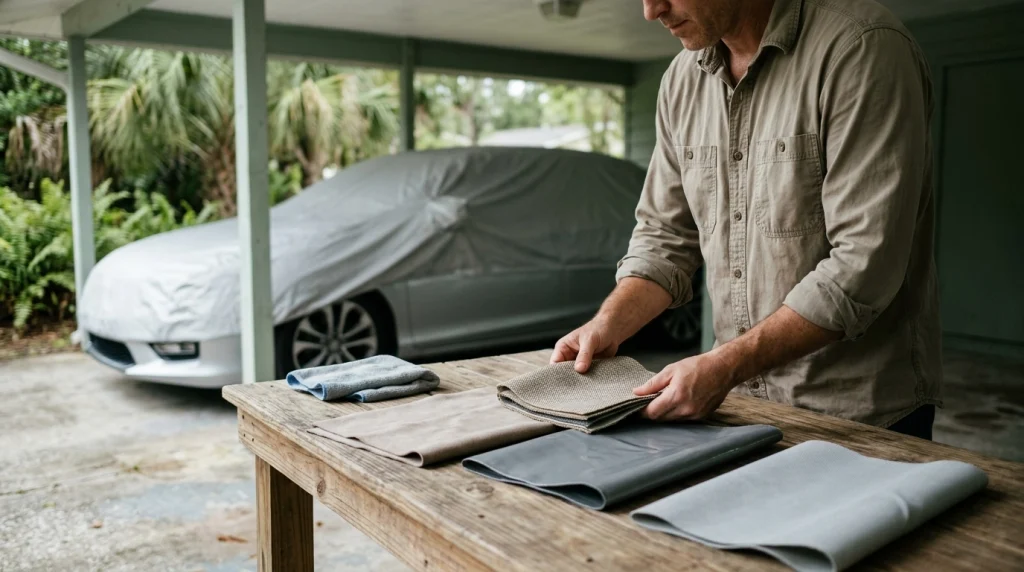
Proper installation starts before the cover touches the vehicle. Both surfaces should be clean and dry, and the car must be cool enough for covering.
A few extra minutes of preparation can prevent many common problems.
Step 1: Choose a suitable parking surface
Park on a stable surface with reasonable drainage. Avoid standing water, saturated soil, and overgrown wet grass whenever possible.
Moisture around the parking area can make drying more difficult. A clean, well-drained driveway or ventilated garage is preferable.
Step 2: Clean the vehicle’s exterior
Remove grit, dust, road film, bird droppings, and other contamination. Even a soft cover can cause scratches when abrasive particles remain underneath.
Pay particular attention to these areas:
- Hood and roof surfaces
- Door handles and mirror housings
- Windshield edges and wiper areas
- Body creases and painted trim
- Wheel arches and lower panels
Use appropriate automotive cleaning products and soft, clean washing materials. Avoid dragging dry towels across gritty paint.
Step 3: Dry the vehicle completely
This is the most important preparation step in humid weather. A freshly washed car may look dry while water remains hidden around seals and trim.
Use clean microfiber drying towels and inspect recessed areas.
- Dry the roof, hood, trunk, and side panels.
- Wipe around mirrors, handles, badges, and trim.
- Check door seals and accessible body-panel gaps.
- Inspect wheel openings and exposed lower surfaces.
- Allow remaining moisture to evaporate before covering.
There is no universal waiting period that guarantees dryness. Temperature, airflow, humidity, and vehicle design affect drying time.
Cover the car only when the relevant surfaces are actually dry.
Step 4: Inspect the cover before installation
Unfold the cover and check its inner surface. Look for dust, moisture, mildew, torn seams, or abrasive debris.
Shake out loose contamination away from the vehicle, following the manufacturer’s care instructions. Clean and dry the cover if its lining feels dirty or damp.
Step 5: Position and unfold the cover carefully
Find the cover’s front and rear labels, if provided. Place it gently over the vehicle according to the manufacturer’s installation method.
- Position the cover without dragging it across the ground.
- Unfold the fabric along the vehicle’s length.
- Arrange the material over mirrors and other approved fittings.
- Pull the sides down gently and evenly.
- Check that the cover does not snag on trim or accessories.
Avoid installation during strong wind when the fabric becomes difficult to control. Never install it over hot exhaust components or other surfaces the manufacturer warns against covering.
Step 6: Secure the fastening system
Use the supplied straps, buckles, or other approved attachment points. The cover should remain stable without excessive tension.
Do not substitute loose ropes or abrasive cords that may rub against the finish. Keep straps clear of moving parts and sensitive components.
For an electric vehicle, follow the vehicle and cover manufacturers’ guidance before covering during charging. Never obstruct required cooling airflow or create a trip hazard around the charging cable.
Step 7: Check the cover after weather changes
Inspect the cover after heavy rain, strong wind, or unusually damp nights. Feel for persistent moisture beneath accessible edges rather than assuming the fabric is dry.
If the cover is wet underneath, remove it carefully and allow both surfaces to dry. Never reinstall a damp cover simply because its outer surface looks normal.
Section Takeaway: Install covers on clean, dry, cool vehicles and secure them according to manufacturer instructions. Regular moisture checks matter as much as correct installation.
How Can You Prevent Condensation and Mold Under a Car Cover?
You cannot eliminate outdoor humidity, but you can reduce prolonged moisture exposure. The most effective approach combines breathable fabric, suitable parking conditions, inspection, and complete drying.
Improve airflow around the parked vehicle
Air movement helps damp surfaces dry when surrounding conditions permit evaporation. A poorly ventilated storage space may stay humid long after outside weather improves.
For indoor parking, consider these measures:
- Repair roof, window, or wall leaks promptly.
- Keep garage drainage routes clear.
- Use ventilation when outdoor conditions make it beneficial.
- Consider a dehumidifier in persistently humid enclosed garages.
- Keep wet cleaning supplies and saturated materials away from stored vehicles.
The Environmental Protection Agency’s moisture guidance recommends keeping indoor relative humidity below 60%, ideally between 30% and 50%.
That recommendation concerns indoor moisture and mold management, not a special automotive requirement. It offers a useful reference when managing a damp garage.
How often should you remove a cover to check for moisture?
There is no universal inspection interval that works for every climate and product. Weather exposure and storage conditions should guide your schedule.
For a car parked outdoors in consistently humid weather, a practical starting routine is:
- After rainfall: Check whether the cover lining or vehicle surface remains damp.
- After heavy overnight dew: Inspect for condensation when practical.
- Every few days: Check a covered vehicle that remains parked outdoors for extended periods.
- After strong winds: Inspect fastening points and signs of rubbing.
- Before longer storage: Verify that both vehicle and cover are clean and completely dry.
These intervals are precautionary suggestions, not manufacturer-specified requirements. Increase inspection frequency whenever moisture repeatedly appears.
Why should a damp cover be dried separately?
A wet cover can transfer moisture back onto a dry vehicle. Folded fabric may also retain water in seams, hems, and multiple layers.
Follow the manufacturer’s cleaning instructions and spread the cover in a suitable drying area. Do not store it in a sealed bag until it is completely dry.
For general mold prevention, the EPA recommends drying damp materials promptly, preferably within 24–48 hours. That is general moisture-control advice rather than a guarantee for every car-cover fabric.
Can you prevent mildew inside the vehicle?
An exterior cover does not control every source of moisture inside the cabin. Wet carpets, leaking seals, damp floor mats, and blocked drains can cause separate problems.
Before extended storage, check for:
- Wet carpeting or trunk liners
- Water collecting beneath removable floor mats
- Damaged weatherstripping
- Blocked sunroof or body drains
- Persistent window fogging
- Musty smells inside the cabin
Address the water source rather than trying to mask odors. A moisture absorber may help in some enclosed storage situations, but it cannot fix a leak.
Follow product safety instructions for any desiccant or moisture-absorbing material used near vehicle interiors.
Does ceramic coating or wax prevent condensation?
Wax, sealants, and ceramic coatings can change how water behaves on painted surfaces. They do not prevent humid air from reaching its dew point.
Maintain the finish according to the product manufacturer’s instructions. Surface protection complements good covering practices but does not replace drying.
Section Takeaway: Control moisture sources, improve the storage environment, and inspect covered surfaces regularly. No coating or fabric can guarantee condensation-free storage in every condition.
How Should You Use a Car Cover for Different Parking Situations?
The right covering routine depends on where the vehicle is parked and how long it will remain unused. Outdoor daily parking, indoor storage, and seasonal storage create different challenges.
Daily outdoor parking in humid weather
Daily drivers need a cover that is convenient to remove and reinstall without touching dirty surfaces. Frequent handling increases the importance of good fit and clean fabric.
If you drive regularly, follow this simple routine:
- Allow the vehicle to cool after driving.
- Check for dirt, dampness, and fresh contamination.
- Install the cover only when conditions are suitable.
- Remove it carefully before your next drive.
- Dry or clean the cover before storing or reusing it.
When rain, road dirt, and humidity make dry installation impossible, temporarily leaving the vehicle uncovered may be preferable. A cover should solve more problems than it creates.
Parking during rainy or monsoon seasons
Frequent rain creates fewer opportunities to dry the cover. Choose outdoor-rated material with suitable rain resistance and manufacturer-documented breathability.
Pay attention to pooling water and saturated fabric. A cover that stays wet for extended periods may need removal and drying when weather permits.
Never remove a wet cover and immediately fold it into a compact storage bag. Allow trapped moisture to escape first.
Using a cover in a humid garage
An indoor garage provides shelter from direct rainfall, but it may still have high humidity. Damp concrete, roof leaks, and poor ventilation can contribute to moisture problems.
Use a breathable indoor cover on a clean, dry vehicle. If garage humidity remains high, improve the environment before relying on the cover.
A dehumidifier can be useful in suitable enclosed spaces. Monitor conditions with a hygrometer, which measures relative humidity.
Long-term vehicle storage in humid climates
A car parked for weeks or months requires more planning than a daily driver. Moisture inspection is only one part of safe storage preparation.
Before longer storage:
- Wash and dry the vehicle completely.
- Remove food waste and damp materials from the cabin.
- Check for existing leaks or corrosion.
- Choose a dry, reasonably ventilated storage location.
- Use a breathable cover approved for the setting.
- Arrange periodic condition checks.
- Follow the owner’s manual for battery, tires, fuel, and storage preparation.
If the vehicle has an existing water leak, address that problem before storage. Covering the exterior will not prevent internal water damage.
What about coastal salt air?
Coastal environments combine humidity with airborne salt contamination. Salt deposits around exposed metal and damaged coatings can make corrosion prevention more important.
Keep the vehicle clean, inspect vulnerable areas, and follow the automaker’s maintenance guidance. For safety-related problems, the National Highway Traffic Safety Administration provides vehicle safety and recall information.
Rinse and dry salt-contaminated exterior surfaces appropriately before covering. Do not leave salty moisture trapped beneath fabric.
Section Takeaway: Match your car-cover routine to rain exposure, ventilation, storage duration, and local contamination. An outdoor cover is not a substitute for preparing the entire vehicle for long-term storage.
What Should You Do When Moisture Gets Under the Cover?
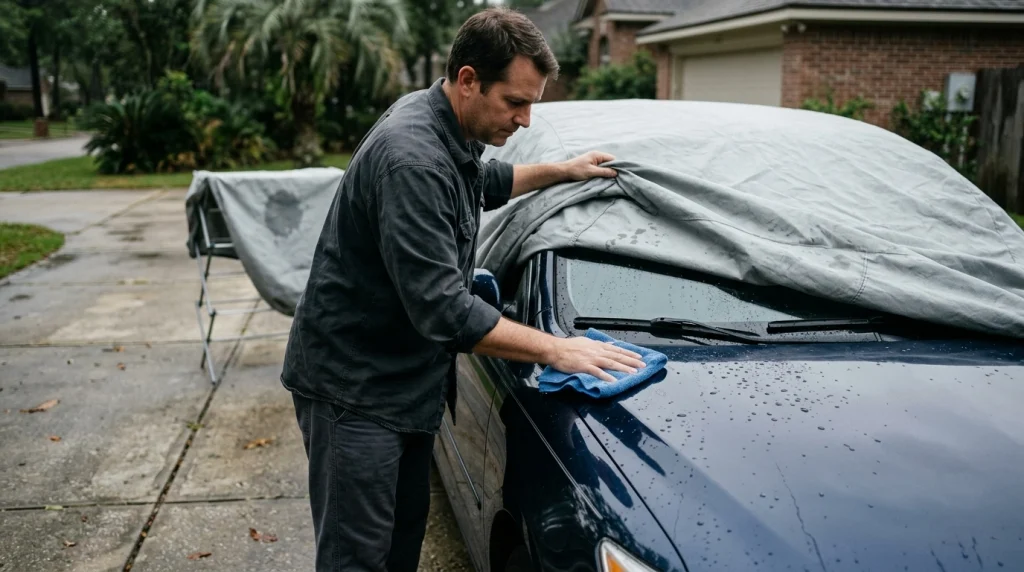
If you discover moisture beneath a car cover, remove the cover when conditions permit and dry both surfaces. Identify the source before covering the car again.
Use the following checks to narrow down common problems.
Common car-cover moisture problems and solutions
| Problem | Possible cause | Recommended action |
|---|---|---|
| Water droplets on paint | Condensation or water entering through fabric | Dry surfaces; inspect cover material and weather conditions |
| Musty-smelling cover | Prolonged damp storage or contamination | Clean and dry according to care instructions; replace if necessary |
| Repeated dampness after rain | Saturated cover, leaks, or condensation | Inspect seams, fabric condition, fit, and moisture patterns |
| Scratch marks or rubbing | Dirty surfaces or loose fabric moving in wind | Clean both surfaces, correct fit, and inspect fastening points |
| Damp garage and cover | Poor drainage, leaks, or high indoor humidity | Fix water sources and improve humidity control |
| Rust around exposed metal | Persistent moisture, coating damage, or salt contamination | Address moisture and have corrosion assessed as appropriate |
How can you tell condensation from rain leakage?
Start by inspecting the location and pattern of moisture. Droplets on cooler panels after a humid night may indicate condensation.
Water concentrated near torn fabric, damaged seams, or repeated rain-exposure points may suggest leakage. However, appearance alone cannot always establish the cause.
Compare conditions after dry nights and rainy periods. Check the cover’s condition and consult the manufacturer’s guidance.
What if mold or mildew appears?
Remove the contaminated cover carefully and identify the moisture source. Follow manufacturer-approved cleaning methods rather than applying harsh chemicals without checking fabric compatibility.
Allow the fabric to dry completely after cleaning. Replace the cover if contamination persists, the material is damaged, or proper cleaning is not feasible.
If mold appears inside the vehicle, investigate water intrusion and affected materials. Extensive contamination may require professional interior cleaning.
When should you stop using a car cover?
A car cover is not the right solution when it repeatedly keeps the vehicle damp or causes finish damage. Evaluate the environment and material before continuing.
Consider removing or replacing the cover when:
- Its lining remains wet for prolonged periods.
- Moisture repeatedly collects underneath despite dry installation.
- The fabric develops persistent mildew contamination.
- The fastening system damages paint or trim.
- Wind repeatedly moves the cover against the vehicle.
- The material shows significant wear, tears, or deterioration.
In some conditions, a ventilated garage or carport offers a more practical alternative. A sheltered parking space may reduce the need for frequent handling of wet fabric.
Section Takeaway: Correct the underlying source of moisture before reinstalling a cover. Persistent dampness is a reason to change your setup, not simply tighten the fabric.
Frequently Asked Questions
Can you use a car cover in high humidity?
Yes. A car cover can be useful in high humidity when it is breathable, properly fitted, and installed on a clean, dry vehicle. Regularly inspect beneath the fabric and remove it whenever moisture remains trapped. Humidity alone does not make every cover unsuitable.
Should I cover my car every night in humid weather?
Only when the vehicle and cover are dry and the conditions support safe use. Heavy dew, frequent rain, and dirty surfaces may make daily installation impractical. A well-maintained sheltered parking area may be preferable when drying opportunities are limited.
Is a waterproof car cover good for humid climates?
Water resistance is useful for outdoor parking, but breathability also matters. Some waterproof materials restrict water-vapor movement and may worsen trapped moisture. Look for a cover designed for humid outdoor conditions and follow its manufacturer’s installation and drying instructions.
How often should I air out my car cover?
Check the cover after significant rain, heavy dew, and other changes in weather. For extended outdoor parking, inspecting every few days is a reasonable precautionary starting point. Remove and dry it whenever condensation or persistent dampness appears.
Can condensation under a car cover damage paint?
Persistent moisture can contribute to water spotting and may worsen corrosion around exposed metal or existing paint damage. Condensation is not automatically harmful after every humid night. The important factors are duration, contamination, finish condition, and the opportunity for surfaces to dry.
Is it safe to put a car cover on a wet vehicle?
It is generally better to wait until the vehicle is dry. Covering wet paint, trim, and seals may slow evaporation and leave water trapped beneath the fabric. Even breathable materials cannot guarantee rapid drying when large amounts of moisture are already present.
Can a car cover prevent rust in coastal areas?
A suitable cover can shield the vehicle from some environmental exposure, but it cannot guarantee rust prevention. Coastal vehicles still need cleaning, drying, paint maintenance, and inspection of vulnerable metal components. Salt contamination and persistent moisture require particular attention.
Final Takeaway: Keep Your Car Covered, Not Damp
Using a car cover in humid climates comes down to a simple routine: clean, dry, cover, inspect, and air out. Choose breathable fabric that suits your weather conditions, secure it properly, and never ignore moisture beneath it.
Before your next installation, check the vehicle’s finish and the cover’s inner surface. If either is damp, dry it first and reconsider the parking conditions if the problem keeps returning.
A good car cover can support long-term exterior care. It works best when moisture management is part of your regular vehicle maintenance routine.
