
How to Keep Rodents Away From a Covered Car

Quick Answer
To keep rodents away from a covered car, remove nearby food and nesting materials, limit access to the parking area, move or inspect the vehicle regularly, and watch the engine bay for early signs of activity. A standard car cover alone cannot block mice or rats from entering underneath, so use it as part of a layered prevention plan based on proven car rodent prevention habits.
Start with these six steps
- Remove food: Keep birdseed, pet food, garbage, snacks, and food wrappers away from the vehicle.
- Clear clutter: Remove cardboard, paper, fabric, leaves, and other easy nesting material around the parking space.
- Reduce access: Repair damaged garage seals and close obvious openings rodents could use.
- Move the car: Regular use makes the vehicle a less quiet and predictable nesting location.
- Inspect often: Check the cowl, engine bay, air-intake area, wheels, and ground beneath the car.
- React early: Stop and arrange an inspection if you find exposed wiring, damaged hoses, or a large nest.
One rule to remember
- Do not depend on one scent, electronic repeller, or ordinary fabric cover as your entire rodent-control strategy.
I treat rodent prevention around a covered car as a storage problem, not just a pest problem. The safer setup removes what attracts rodents, limits where they can enter, and makes the vehicle less comfortable for nesting.
In This Guide
- Why Do Rodents Target Covered Cars?
- How Do You Keep Rodents Away From a Covered Car?
- Which Rodent Deterrents Work Best Around a Covered Car?
- How Can You Tell If Rodents Have Reached Your Car?
- What Should You Do After Finding Rodent Activity?
- What Is the Best Storage Setup for Preventing Rodents?
- Frequently Asked Questions
Why Do Rodents Target Covered Cars?
Rodents investigate covered cars because parked vehicles can provide quiet, sheltered spaces with little disturbance. The risk rises when food, nesting material, vegetation, clutter, or established rodent activity surrounds the parking area.
A rodent-prone covered car is a stored or infrequently used vehicle that mice, rats, or similar animals can approach from below and use for shelter, nesting, or access to enclosed vehicle spaces.
Does a normal car cover stop mice from getting underneath?
No. A conventional car cover protects the vehicle’s exterior, but it normally leaves the underside open.
Mice and rats do not need to chew through the cover to reach the car. They can approach around the tires, wheel wells, suspension areas, splash shields, and openings leading toward the engine compartment.
- Wheel areas: Give rodents a path toward protected underbody spaces.
- Engine bay: Contains sheltered corners, wiring, hoses, insulation, and cavities.
- Cowl area: Can collect leaves and other material near the base of the windshield.
- Air intake: May provide sheltered areas where nesting debris can accumulate.
- Cabin openings: Ducting, damaged seals, or existing openings can sometimes provide access.
Why are parked cars more vulnerable?
A car that sits for days or weeks offers predictable shelter. Regular driving brings vibration, noise, heat cycles, human activity, and frequent inspection.
I pay extra attention to vehicles stored seasonally because nobody is opening the hood every morning. A small nest can develop unnoticed when the car remains covered and untouched.
- Low disturbance: Rodents can explore without the vehicle moving.
- Nearby food: Birdseed, pet food, trash, and garden areas can draw rodents close.
- Nesting supplies: Cardboard, paper, insulation, rags, and leaves can support nesting.
- Protected spaces: Underhood cavities provide more shelter than an exposed driveway.
Does soy-based wiring attract rodents?
Do not make soy-based wire insulation the center of your prevention plan. Rodents naturally gnaw many materials, and current evidence does not support treating soy content as the main reason they chew automotive wiring.
The factors you can control matter more. Focus on access, food, nesting material, clutter, and how long the vehicle remains undisturbed.
How Do You Keep Rodents Away From a Covered Car?
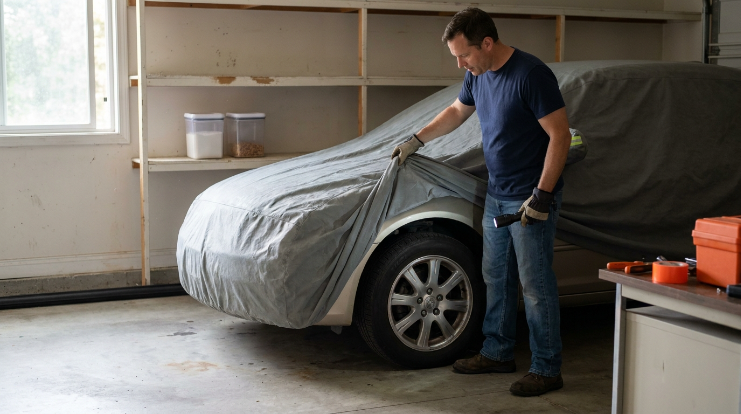
The strongest approach uses several preventive steps together. Start around the parking space, then work inward toward the vehicle.
1. Remove every easy food source
Food near the vehicle gives rodents a reason to visit before they ever discover your engine bay. Garage storage habits therefore matter as much as the car cover.
- Store birdseed and pet food in sealed, rodent-resistant containers.
- Move food-waste garbage away from the vehicle when possible.
- Remove snacks, crumbs, and food wrappers from the cabin.
- Clean spilled seed or dry pet food from the garage floor.
- Avoid storing open animal-feed bags beside the vehicle.
Do not overlook the trunk or cargo area. A forgotten snack bag can become an attraction inside an otherwise clean vehicle.
2. Remove nesting material and hiding places
A cluttered garage gives rodents more places to hide before reaching the car. Clear the immediate storage area first.
- Recycle unused cardboard boxes.
- Store paper and fabric off the floor.
- Remove leaf piles around outdoor parking areas.
- Keep insulation and furniture cushions protected.
- Trim dense vegetation near regularly stored vehicles.
I prefer to see open floor around a stored car. It makes droppings, shredded material, and other warning signs easier to notice during a quick walk-around.
3. Reduce entry points into the garage
An enclosed garage helps only when rodents cannot enter easily. Inspect the building rather than assuming a closed door makes it secure.
- Check the lower garage-door seal for damage.
- Inspect seals along the sides of the door.
- Look around utility penetrations and wall openings.
- Repair damaged door and window weather stripping.
- Keep exterior doors closed when they are not being used.
If rodents are already established inside the building, sealing alone may not solve the problem. You may need traps or professional pest control at the same time.
4. Move or disturb the vehicle regularly
A vehicle that changes position is less predictable than one sitting untouched. Regular use also gives you more chances to catch damage early.
You do not need to start the engine solely to create noise. If the vehicle is stored long-term, follow the manufacturer’s storage and battery recommendations rather than unnecessary short starts.
5. Inspect under the cover and under the hood
A car cover can hide evidence from your normal view. Build a simple inspection into the storage routine.
- At the tires: Look for droppings, shredded material, or tracks.
- Under the car: Watch for bits of insulation, plastic, or nesting debris.
- Under the hood: Check wiring, corners, the cowl, and accessible intake areas.
- Inside the cabin: Look for odors, droppings, or shredded material.
- Around the cover: Check whether anything has been dragged underneath it.
For broader inspection and service habits, the Kelley Blue Book maintenance center provides general vehicle-care guidance for everyday owners.
Section Takeaway: Rodent prevention starts outside the car. Remove food and nesting materials, restrict access, disturb the vehicle periodically, and inspect it often enough to catch activity early.
Which Rodent Deterrents Work Best Around a Covered Car?
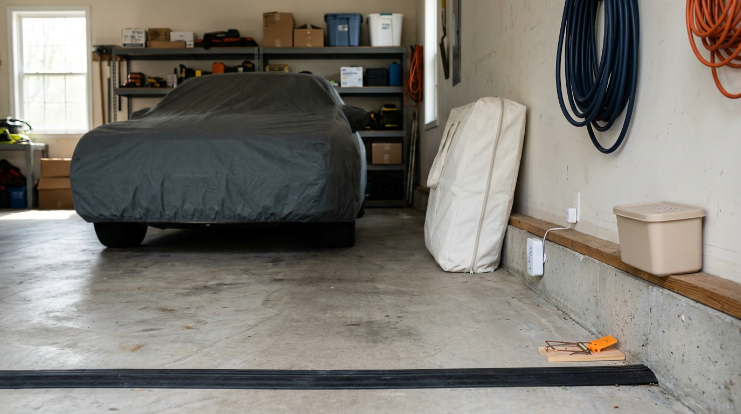
Physical prevention and environmental control should come before gadgets or strong smells. Deterrents work best as supporting tools rather than substitutes for sanitation and access control.
| Method | What It Does | Best Role | Main Limitation |
|---|---|---|---|
| Garage sealing | Reduces routes into the storage area | Primary prevention | Does not remove rodents already inside |
| Snap traps | Controls rodents that enter the area | Garage or storage-area control | Requires careful placement around children and pets |
| Scent or taste repellents | May make selected areas less appealing | Supplementary deterrence | Effects can fade and products may need reapplication |
| Ultrasonic devices | Emit high-frequency sound | Optional secondary measure | Range and real-world effectiveness can be limited |
| Standard car cover | Protects exterior surfaces | Paint and weather protection | Usually leaves the underside accessible |
| Bottom-sealing cover or enclosure | Creates a more complete physical barrier | Higher-risk vehicle storage | Must fit, ventilate, and be used correctly |
Are peppermint oil and other smells enough?
I would never make scent the only defense. Repellent sprays or odors may discourage rodents temporarily, but exposure, weather, and habituation can reduce their usefulness.
Use a repellent only after removing the things rodents want. Food control and physical access control should stay at the top of the list.
Do ultrasonic rodent repellents protect cars?
Ultrasonic devices are widely marketed for garages and engine bays, but their performance is not reliable enough to replace other measures. Obstructions and limited effective range can reduce their value.
If you already use one, treat it as an extra layer. Keep inspecting the vehicle instead of assuming the device is working.
Should you use traps near a stored car?
Traps can address rodents already moving through a garage or storage space. Placement matters because a trap should not create a hazard for children, pets, or anyone walking around the vehicle.
Persistent activity usually means the wider property needs attention. A licensed pest-control professional can help find entry routes and established nesting areas.
Section Takeaway: Favor barriers, cleanliness, inspection, and population control over one-product fixes. Repellents and electronic devices should support the plan, not become the plan.
How Can You Tell If Rodents Have Reached Your Car?
The earliest signs are often debris, droppings, odors, or tooth marks rather than a visible animal. Check before starting a vehicle that has been sitting untouched.
| Warning Sign | Where to Look | What to Do Next |
|---|---|---|
| Droppings | Floor, tires, engine bay, cabin | Inspect for a nest before normal use |
| Shredded paper or insulation | Cowl, air box, engine corners | Locate and safely remove nesting material |
| Chewed insulation | Wiring harnesses and connectors | Arrange professional electrical inspection |
| Strong unusual odor | Cabin, vents, engine compartment | Check ducts, filters, and hidden cavities |
| Unexpected warning lights | Dashboard after known rodent activity | Stop guessing and have the system diagnosed |
What does rodent-damaged wiring look like?
Look for missing insulation, tooth marks, exposed copper, damaged connectors, or small pieces of insulation beneath the vehicle. Damage can affect one wire or several circuits in the same harness.
A partially damaged wire can be harder to spot than a completely severed one. It may create an intermittent warning light or accessory problem instead of an immediate no-start.
Mechanic Alert: If you find exposed conductors, damaged connectors, multiple chewed wires, or electrical faults after rodent activity, have a qualified mechanic inspect the vehicle before normal driving.
Where should you inspect first?
- Engine-bay corners and wiring looms
- The cowl below the windshield
- Accessible air-intake and filter areas
- Around the battery and fuse-box area
- Wheel wells and lower splash shields
- Cabin floors and cargo compartments
- The ground directly beneath the vehicle
A normal maintenance routine helps you notice what has changed. The Edmunds car maintenance resource is useful for keeping broader inspection and service tasks organized.
What Should You Do After Finding Rodent Activity?
Do not rush to start the engine when you find a nest, damaged wiring, or substantial debris. Inspect first, then separate cleanup from mechanical repair.
How should you clean rodent droppings around a vehicle?
Rodent waste can carry disease, so avoid sweeping or vacuuming dry droppings. The CDC rodent cleanup guidance recommends wetting contaminated material thoroughly with an appropriate disinfectant before removal.
- Ventilate the area: Work in a well-ventilated location and follow CDC guidance for vehicle inspection.
- Wear gloves: Use rubber or plastic gloves while handling contaminated material.
- Wet the material: Saturate droppings and nesting debris with an appropriate disinfectant.
- Allow contact time: CDC guidance specifies five minutes, or the disinfectant label’s stated time.
- Wipe it up: Use disposable paper towels rather than dry sweeping or vacuuming.
- Dispose safely: Put contaminated waste into an appropriate garbage container.
- Clean again: Disinfect the affected hard surface after removing the debris.
- Wash hands: Clean gloved hands before glove removal, then wash bare hands afterward.
Interior upholstery, electronics, painted surfaces, and engine components may react badly to some chemicals. Use a product that is compatible with the surface being cleaned.
What if there is a nest inside the air intake?
Do not ignore nesting material near an air filter or intake opening. Debris can obstruct airflow and may contaminate the filter.
CDC vehicle guidance recommends removing contaminated nesting material safely and replacing an affected air filter. A heavy infestation inside ductwork is a good reason to involve a professional.
Can you drive after finding rodent damage?
That depends on what was damaged. A few droppings on the garage floor are different from exposed wiring, chewed hoses, damaged belts, or material packed near moving components.
- Only surface evidence: Clean safely, then inspect the vehicle thoroughly.
- Minor nesting debris: Remove it safely and inspect nearby parts.
- Exposed wiring: Do not treat it as a cosmetic problem.
- Damaged hoses or belts: Have them inspected before normal operation.
- Warning lights or no-start: Arrange diagnosis instead of repeatedly trying the vehicle.
Modern cars rely on interconnected electrical systems. One damaged harness can affect sensors, lighting, starting, communications, or other functions.
Mechanic Alert: Do not attempt complex wiring, battery, belt, hose, or under-vehicle repairs unless you have the correct training and procedures. A qualified technician should assess damage that could affect safe vehicle operation.
Section Takeaway: Treat cleanup and vehicle safety as separate jobs. Disinfect rodent waste correctly, then have mechanical or electrical damage evaluated before driving.
What Is the Best Storage Setup for Preventing Rodents?
As of 2026, my preferred setup is a clean, dry, regularly inspected vehicle stored in a controlled garage with minimal food, clutter, and rodent access. The car cover protects the exterior while the storage environment handles pest prevention.
How should you prepare the car before covering it?
- Clean the cabin: Remove food, wrappers, crumbs, and trash.
- Clean the exterior: Avoid trapping dirt beneath the cover.
- Dry the vehicle: Do not cover wet paint or trim.
- Inspect the engine bay: Look for previous nesting or damage.
- Check the parking area: Remove nearby food and nesting supplies.
- Use the right cover: Match the cover to indoor or outdoor storage conditions.
A clean storage setup also protects the paint and mechanical condition of the car. The Car and Driver auto-maintenance guide provides broader maintenance information for keeping stored and regularly driven vehicles in good condition.
What should you check during long-term storage?
Do not install the cover and forget the car for months. Periodic checks can reveal rodent activity before wiring damage spreads.
- Look around all four tires.
- Check the ground underneath the vehicle.
- Inspect under the hood for fresh debris.
- Look for chewed wiring or hoses.
- Check the cover for damage or contamination.
- Watch for new droppings around the parking space.
- Confirm the storage area remains dry and uncluttered.
Is outdoor storage different?
Yes. Outdoor storage gives you less control over rodents, vegetation, food sources, weather, and surrounding shelter.
Keep the immediate area clear and inspect more frequently. Avoid parking beside trash, dense vegetation, stored animal feed, or piles of materials that provide hiding places.
If rodent pressure is consistently high, consider a more complete storage enclosure designed to restrict access from below. Make sure any enclosure also suits your climate and moisture conditions.
What matters more: the cover or the parking area?
For rodent prevention, the parking environment matters more than a normal cover. A standard cover does not compensate for an infested garage, open food storage, or weeks without inspection.
The cover still has an important job. It protects the exterior when you choose the correct material, keep it clean, and use it according to its instructions.
Section Takeaway: Think of the car cover as exterior protection, not pest control. The strongest rodent defense comes from a clean storage area, restricted access, regular inspections, and prompt response to new activity.
Frequently Asked Questions
Will a car cover keep mice away?
No. A standard car cover normally leaves the underside of the vehicle open, so mice can still approach the wheel wells, underbody, and engine compartment. Use the cover for exterior protection while relying on sanitation, access control, traps where appropriate, and regular inspections for rodents.
What smell keeps rodents away from cars?
Some commercial repellents and strong scents may discourage rodents temporarily, but smells should not be your primary defense. Their effect can fade, and rodents may become accustomed to them. Remove food and nesting materials and restrict physical access first.
How often should I check a covered car for rodents?
There is no universal inspection interval for every storage situation. Check more often when a car sits unused, the property already has rodent activity, or the vehicle is parked near vegetation, food storage, trash, or other attractive shelter.
Can mice damage a car without entering the cabin?
Yes. Rodents can remain in the engine bay, cowl, air-intake area, wheel wells, or underbody and still damage wiring, insulation, hoses, and other components. Cabin droppings are therefore not required for a vehicle to have a serious rodent problem.
Should I leave the hood open to keep mice away?
An open hood may make the engine bay less dark and enclosed, but it is not a complete rodent-control method. It can also be impractical or unsafe in some storage environments. Prioritize controlling access, food, clutter, and existing rodent populations.
Are ultrasonic rodent repellents worth using in a car?
They can be used as a supplementary measure, but do not assume an ultrasonic device makes the vehicle rodent-proof. Real-world performance and range can vary. Keep inspecting the vehicle and maintain the physical prevention steps even when an electronic repeller is installed.
What should I do if a mouse chewed my car wiring?
Avoid driving until the damaged wiring has been assessed, especially if copper is exposed or the vehicle shows warning lights or electrical problems. Rodent damage can involve several circuits, so professional diagnosis is safer than patching an unfamiliar harness yourself.
The simplest strategy is also the most dependable: make the area around your covered car difficult for rodents to enter, uninteresting to feed in, and uncomfortable to occupy.
Keep the space clean, inspect the car regularly, and respond to the first signs of activity. Those habits are far more useful than waiting for chewed wiring to tell you a rodent has moved in.