
How to Get Rid of Musty Smell in Car Cover: Easy Cleaning Guide

Quick Answer
To get rid of a musty smell in a car cover, remove it from your vehicle, inspect for mildew, and wash it with a mild detergent approved for its fabric. Rinse thoroughly, air-dry both sides completely, and store it somewhere clean and dry. If the odor returns, investigate trapped moisture or mold growth. The EPA’s mold cleanup guidance emphasizes that controlling moisture is essential.
Quick Steps to Remove the Smell
- Remove the cover: Take it outdoors and inspect both surfaces for dirt, moisture, and mildew.
- Check the label: Follow the manufacturer’s cleaning instructions before applying any product.
- Wash gently: Use mild detergent, cool or lukewarm water, and a soft sponge.
- Rinse completely: Remove detergent and loosened dirt from both sides.
- Air-dry thoroughly: Check seams, folds, and elastic edges before storing.
- Prevent recurrence: Keep the vehicle and cover dry before installation.
Important: Avoid bleach, strong fragrances, fabric softeners, and heated drying unless the cover manufacturer specifically permits them.
That stale, damp smell when you unfold a car cover usually means moisture has been trapped somewhere. I’ve always considered that odor a warning to inspect the cover before putting it back against clean paint.
The good news is that many mildly musty covers can be refreshed without expensive cleaners. Here’s how to identify the cause, choose a safe cleaning method, and prevent the smell from returning.
In This Guide
Why Does a Car Cover Smell Musty?
A musty car cover usually smells that way because moisture became trapped in its fabric, seams, or folds. Damp conditions allow microorganisms, including mold and mildew, to grow.
A musty odor is a stale, earthy smell commonly associated with damp materials and microbial activity. However, the smell alone cannot confirm that mold is present.
Trapped Moisture After Rain or Washing
Outdoor covers regularly encounter rain, dew, humidity, and condensation. Even a water-resistant cover can retain moisture around stitching or absorbent inner layers.
Folding the material before it dries traps that moisture inside. The resulting odor can become noticeable when you reopen the storage bag.
Poor Airflow in Garages and Storage Bags
A garage doesn’t have to look wet to experience humidity problems. Temperature changes can cause condensation on vehicles and nearby surfaces.
Common situations that encourage stale odors include:
- Closed storage bags: Moisture remains trapped around folded material.
- Humid garages: Limited ventilation slows evaporation.
- Damp vehicle surfaces: Water can remain between the cover and body panels.
- Dirty covers: Organic debris and grime provide material on which microorganisms may grow.
- Thick seams: Multiple fabric layers may dry more slowly than exposed panels.
Is It Mildew or Just a Damp Fabric Smell?
Mildew is a common name for surface fungal growth. It may appear as discolored patches and is often associated with musty odors.
Inspect the cover in good light before washing.
- Musty smell without spots: Often suggests moisture exposure, but hidden contamination remains possible.
- Powdery or fuzzy patches: May indicate fungal growth requiring careful cleanup.
- Persistent dark staining: Could indicate previous growth, embedded contamination, or ordinary discoloration.
- Sticky or deteriorating coating: May indicate material breakdown rather than a simple cleaning problem.
Don’t assume every stain is mold. If growth is extensive or you’re unsure what you’re handling, seek professional advice or replace the cover.
How Do You Remove the Musty Smell From a Car Cover Step by Step?
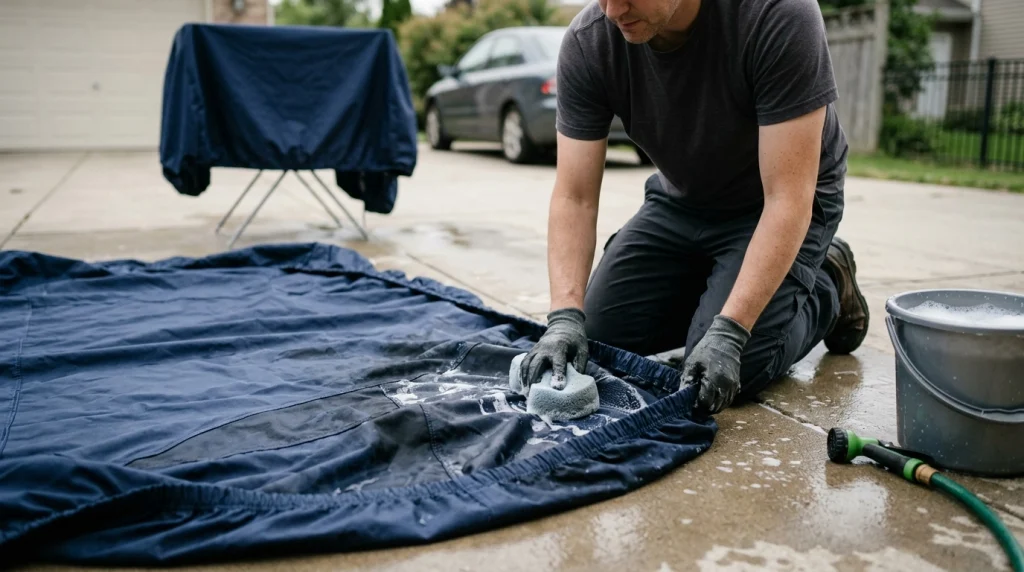
The most reliable approach is gentle washing followed by complete drying. Always check the cover’s care label first, since waterproof membranes and soft paint-contact linings need different treatment.
Step 1: Remove and Inspect the Cover
Carefully lift the cover away from the vehicle instead of dragging it across the paint. Spread it outdoors over a clean surface or suitable drying rack.
Look at both sides, especially around mirrors, seams, and elastic edges. These areas may hold moisture after larger panels appear dry.
You’ll need a few basic supplies:
- A clean bucket and fresh water
- Manufacturer-approved mild detergent
- A soft sponge or microfiber cloth
- A garden hose with gentle water flow
- A clean drying rack or clothesline
- Protective gloves when handling dirty material
If you see visible mold, avoid shaking or dry-brushing the contaminated material near other people. The CDC’s mold cleanup recommendations explain protective equipment and who should avoid mold cleanup.
Step 2: Test the Cleaning Solution
Mix a small amount of approved detergent into water according to its directions. Start with the gentlest cleaning solution permitted by your cover manufacturer.
Test a hidden section before washing the entire cover. Watch for color transfer, coating damage, or unwanted changes in texture.
Skip harsh solvents and household disinfectants unless the manufacturer specifically recommends them. Some chemicals can affect water-repellent treatments and fabric bonding.
Step 3: Gently Wash Both Surfaces
Pre-rinse loose dirt with low-pressure water. Work in manageable sections using your soft sponge and diluted detergent.
Pay attention to these areas:
- Inner lining: Remove dust and contamination that could contact the vehicle’s paint.
- Elastic hems: Gently clean the folds where moisture collects.
- Mirror pockets: Check corners and stitched edges.
- Storage-contact areas: Clean spots exposed to dirty floors or damp bags.
Use light pressure rather than aggressive scrubbing. Excess friction can damage delicate linings or coated surfaces.
Step 4: Rinse Away All Detergent
Rinse the cleaned fabric with fresh water until soap residue disappears. Repeat on the opposite side when necessary.
Detergent left in the material can attract dirt or interfere with some protective finishes. Avoid pressure washers, which may stress fabric layers and seams.
Step 5: Air-Dry the Entire Cover
Hang the cover completely open in a well-ventilated location. Follow the manufacturer’s instructions regarding direct sunlight, since some materials tolerate sun exposure better than others.
Turn or reposition the cover so both surfaces dry evenly. Check folded edges and thick stitched areas by touch before packing it away.
Drying times depend on humidity, airflow, fabric thickness, and temperature. Don’t rely on a fixed number of hours.
For compatible cover designs, CarCovers.com’s cleaning instructions also recommend gentle washing and thorough air drying.
Section Takeaway: Washing removes dirt and potential odor sources, while thorough drying addresses the moisture that allows the smell to return.
Which Cleaning Method Works Best for a Musty Car Cover?
Hand washing is a sensible starting point when you’re unsure how delicate the cover is. Machine washing may be appropriate for some products, but the care label must explicitly allow it.
| Method | Best Situation | Important Limitation |
|---|---|---|
| Air drying | Light damp odor without visible contamination | Won’t remove embedded dirt or mold |
| Hand washing | Most washable covers with everyday grime | Requires enough room for rinsing and drying |
| Machine washing | Covers explicitly labeled machine washable | Agitation may harm unsupported fabrics |
| Approved specialty cleaner | Persistent stains on compatible materials | Must match the coating and lining |
| Replacement | Extensive contamination or damaged layers | Higher cost than routine cleaning |
Can You Use White Vinegar to Remove the Smell?
Some fabric-care guides suggest diluted white vinegar for light odors. However, vinegar isn’t a universal cleaner or a dependable solution for established mold inside porous layers.
Only use it when the cover manufacturer confirms compatibility. Never combine vinegar with bleach or other cleaning chemicals.
What About Baking Soda?
Baking soda can absorb certain odors in some household applications. However, sprinkling powder directly onto a car cover may leave residue in seams and soft linings.
That residue can be difficult to remove before the cover touches paint. I would prioritize proper washing and drying instead of adding loose powder.
Can You Put a Car Cover in the Washing Machine?
Yes, but only when its care instructions allow machine washing. Some manufacturers specify large front-loading machines, gentle cycles, and particular cleaning products.
A household washer may be too small for a bulky outdoor cover. Crowding prevents effective cleaning and may strain the material.
Never assume tumble drying is safe. Follow the specific product’s instructions rather than applying one temperature setting to every cover.
What If the Musty Smell Won’t Go Away After Washing?
A persistent smell suggests the odor source remains or moisture is still present. Inspect the cover, its storage bag, and the parking environment before repeating the same wash.
Check Hidden Fabric Layers and Seams
Multi-layer covers may retain contamination where ordinary wiping cannot reach. Soft fleece-like linings and thick hems deserve particular attention.
Look for recurring spots, discoloration, damaged seams, or material that remains damp unusually long. Don’t repeatedly soak a cover that cannot dry properly.
Inspect the Storage Bag
A freshly washed cover can pick up odors from a dirty storage bag. This is easy to overlook.
Clean the bag according to its care instructions and dry it separately. Replace it if contamination or an unpleasant smell persists.
Check Whether the Car Is the Source
Sometimes the smell seems to come from the cover but originates around the parked vehicle. Moisture trapped underneath can affect both surfaces.
Inspect these areas:
- Wet windshield cowl areas or standing water
- Damp weather seals around doors and windows
- Moisture inside the trunk or cargo area
- Condensation underneath the fitted cover
- Water collecting on the garage floor
If the vehicle interior also smells musty, investigate leaks or damp carpeting separately. Cleaning the cover won’t fix an ongoing water intrusion problem.
Why Does the Smell Return So Quickly?
Rapid odor recurrence usually points to repeated damp conditions, inadequate cleaning, or contamination inside the material. A clean appearance doesn’t prove every layer is free of growth.
The EPA explains that porous materials with mold contamination can be difficult to clean completely. Severe contamination may make replacement the safer choice.
Section Takeaway: If a clean, fully dried cover still smells musty, investigate hidden contamination and the storage environment rather than relying on fragrances.
How Can You Prevent Musty Car Cover Odors?
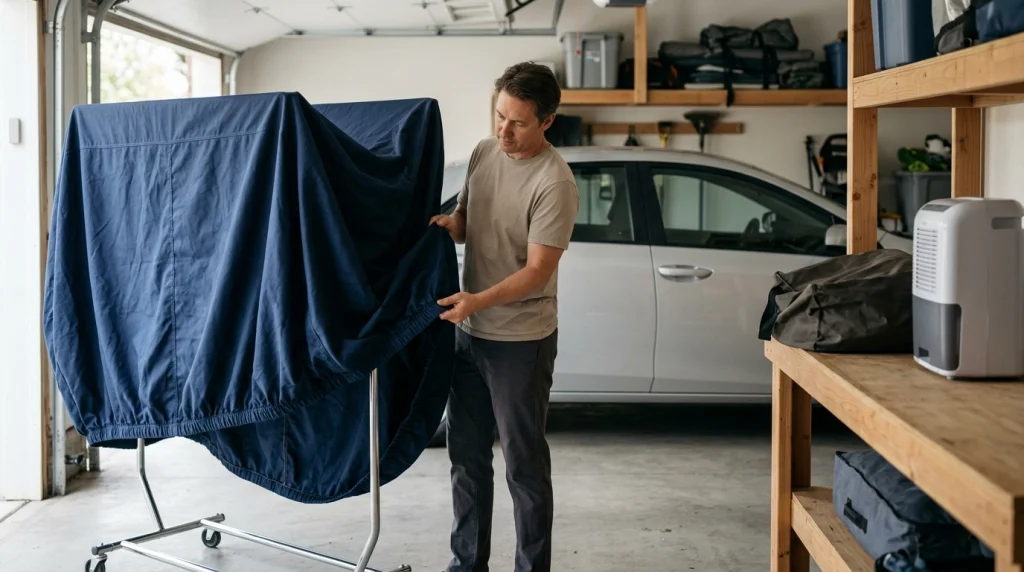
The best long-term solution is keeping both the cover and vehicle dry. A simple routine after rain or washing can prevent repeated odor problems.
Never Fold a Damp Cover
After rain, let the cover dry before storing it. Don’t judge dryness from the large center panels alone.
Check these moisture-prone locations:
- Front and rear elastic hems
- Mirror pockets
- Double-stitched seams
- Inner fabric linings
- Areas where fabric was folded or bunched
Keep the Vehicle Dry Before Covering It
Don’t install a cover immediately after washing the car if water remains around trim or seals. Give the vehicle time to dry properly.
Also ensure the cover’s inner surface is clean. Trapped dirt can rub against clear coat when the fabric moves.
Choose the Right Cover for Your Parking Conditions
Indoor dust covers and outdoor weather-protection covers serve different purposes. Select a design suited to your parking environment and the manufacturer’s moisture-management recommendations.
A well-fitting cover reduces excessive movement, but fit alone won’t eliminate condensation. Proper installation and regular inspections still matter.
Control Garage Humidity
If your garage stays damp, improving ventilation may help. A dehumidifier can be useful where persistent humidity is a problem.
Keep the storage bag off wet concrete and away from leaks. A dry shelf or clean storage cabinet is generally a better location.
Build a Simple Maintenance Routine
You don’t need to wash the cover after every use. Instead, respond promptly to moisture, dirt, and emerging odors.
- After rain: Check for trapped water and dry the cover before storage.
- Before installation: Confirm that the car and inner lining are clean and dry.
- During storage: Keep the folded cover in a dry, protected location.
- When dirty: Wash according to the manufacturer’s instructions.
- When odors appear: Investigate moisture rather than covering the smell with fragrance.
As of 2026, the practical advice remains straightforward: fabric care varies by manufacturer, but moisture control is fundamental. Make the care label your primary reference.
Section Takeaway: Consistent drying, suitable storage, and a clean vehicle are more effective than repeatedly treating an odor after it develops.
When Should You Replace a Smelly Car Cover?
Replace a car cover when contamination cannot be removed safely or the material no longer protects the vehicle properly. Continued use of damaged fabric can create more problems than it prevents.
Signs Cleaning May No Longer Be Enough
- Persistent mold growth: Fuzzy or discolored patches return after appropriate cleaning and drying.
- Deep contamination: Mold appears embedded within absorbent layers.
- Delaminating material: Bonded layers separate or the lining deteriorates.
- Severe fabric damage: Tears, holes, or worn seams reduce coverage and protection.
- Repeated musty odors: The smell persists despite addressing cleaning and storage conditions.
If you have asthma, significant mold allergies, or a weakened immune system, avoid personally handling moldy material. Follow appropriate health guidance or arrange safe disposal and replacement.
Can an Old Car Cover Damage Your Paint?
A dirty or deteriorating cover can create paint-related risks. Embedded grit and rough material may cause surface scratches when the cover moves.
Moisture trapped under a poorly maintained cover also deserves attention. Inspect the vehicle finish and resolve any water issues before using another cover.
If the cover remains structurally sound and cleans successfully, replacement may be unnecessary. Age alone isn’t the deciding factor.
Frequently Asked Questions
Can I remove a musty car cover smell without washing it?
Sometimes. If the smell comes from recent dampness without visible contamination, completely air-drying the cover may help. However, persistent odors or visible growth generally require cleaning or replacement. Drying alone won’t reliably remove embedded dirt or mold.
Does sunlight remove musty smells from car covers?
Sunlight can help dry compatible materials, reducing the moisture that contributes to musty odors. However, sunlight alone doesn’t guarantee mold removal. Some coated or delicate covers may also deteriorate with prolonged direct exposure, so follow the care instructions.
Will vinegar damage a waterproof car cover?
It depends on the fabric and coating. Some manufacturers permit diluted vinegar, while others recommend only specific cleaning solutions. Don’t assume vinegar is safe for every waterproof membrane. Check the care label and test an inconspicuous section if permitted.
How long does a car cover take to dry completely?
Drying time varies with humidity, temperature, airflow, cover size, and material thickness. Lightweight covers may dry considerably faster than padded multi-layer designs. Before storing, check both surfaces, elastic hems, pockets, and seams rather than relying on a fixed drying time.
Can mold from a car cover spread to my car?
A contaminated cover may transfer moisture, debris, or fungal material onto nearby surfaces. That doesn’t automatically mean mold will establish itself on the vehicle. Keep the cover clean, inspect affected areas, and correct persistent damp conditions before reinstalling it.
Is it safe to use bleach on a musty car cover?
Don’t use bleach unless the manufacturer explicitly permits it. Bleach may damage colors, coatings, stitching, or protective layers. Never mix bleach with vinegar, ammonia, or other cleaners. For most routine cleaning, manufacturer-approved mild detergent is a safer starting point.
Should I replace a car cover if it still smells after cleaning?
Consider replacement if the odor persists after approved cleaning and complete drying, particularly when mold or fabric deterioration is visible. First rule out a contaminated storage bag or damp garage. A cover with compromised layers may no longer protect your vehicle reliably.
Final Takeaway
Getting rid of a musty smell in a car cover starts with finding the moisture source. Gentle cleaning, thorough rinsing, and complete air drying can restore many covers affected by ordinary dampness and grime.
The most important habit is simple: never pack away a cover while it’s wet. If contamination persists or the material is deteriorating, replacement is often more sensible than repeated cleaning.
Before putting the cover back on your vehicle, give its inner lining, seams, and storage bag one final inspection. A clean, dry cover is the foundation of dependable paint protection.
