
How to Stop Car Cover Smell: Causes, Cleaning, and Prevention

Quick Answer
To stop car cover smell, remove the cover, identify the odor source, and clean it according to its care label. Rinse away detergent residue and let the entire cover dry before reinstalling or storing it. Musty odors often come from trapped moisture, while chemical smells may originate from new materials or deteriorating coatings. Follow the manufacturer’s car cover cleaning instructions to avoid damaging protective treatments.
Quick odor-removal steps
- Identify the smell: Check whether it is musty, chemical, sour, or smoky.
- Inspect the fabric: Look for moisture, mold, stains, and deteriorating coatings.
- Wash correctly: Use the cleaning product and method permitted by the manufacturer.
- Rinse thoroughly: Remove soap from seams, lining, and layered fabric.
- Dry completely: Check folded edges, elastic hems, and thick sections.
- Store properly: Keep the clean, dry cover in a ventilated, moisture-free location.
A smelly car cover can turn a simple parking routine into an unpleasant experience. I’ve always considered car covers useful protection, but only when the fabric stays clean, dry, and safe for the vehicle’s finish.
In this guide, I’ll explain how to stop car cover smell, identify different odors, choose safe cleaning methods, and prevent the problem from returning. You’ll also learn when washing isn’t enough and replacing the cover makes more sense.
In This Guide
Why Does a Car Cover Start Smelling?
Car covers usually develop unpleasant odors because of retained moisture, accumulated contaminants, manufacturing residues, or aging materials. Identifying the cause matters because different odors require different solutions.
A car cover is a protective fabric or layered covering designed to shield a parked vehicle from dust, weather, sunlight, and debris. Depending on its construction, it may contain woven fibers, nonwoven layers, coatings, and a soft vehicle-facing lining.
Trapped moisture and mildew
Moisture is one of the most common reasons for a musty car cover. Rain, condensation, dew, and humid storage conditions can leave fabric damp.
When a wet cover stays folded, airflow becomes limited. That environment can support mildew or mold growth, particularly when dirt and organic debris are present.
The Environmental Protection Agency’s mold guidance emphasizes moisture control and prompt drying as important ways to prevent mold.
A damp cover may smell earthy even before visible discoloration appears. However, odor alone cannot confirm that mold is present.
Dirt, pollen, and organic debris
Outdoor car covers collect more than ordinary dust. Leaves, pollen, bird droppings, tree residue, and airborne contaminants can settle on their surfaces.
When this debris becomes wet, it can create unpleasant smells. Dirty fabric also retains moisture more easily in heavily contaminated areas.
- Bird droppings: Organic contamination that can create localized odors.
- Tree sap: Sticky residue that traps dirt and may leave persistent smells.
- Wet leaves: Debris that holds moisture against fabric.
- Road grime: Dirt and oily particles transferred from storage surfaces or handling.
The odor may become stronger after rainfall or during warm, humid weather.
New car cover chemical smell
A newly purchased car cover may have a plastic-like, chemical, or packaging odor. This can result from materials, coatings, dyes, or compounds retained during packaging.
Some odors decrease after the cover spends time unfolded in a well-ventilated space. Strong or persistent chemical odors deserve closer attention.
Don’t assume every chemical smell is harmless. If the material remains sticky, changes texture, or causes irritation, contact the manufacturer before using it.
Improper storage
Storing a cover while damp is a common mistake. A tightly packed storage bag can hold moisture against the fabric for extended periods.
Even a clean cover may develop odors when stored beside fuel, solvents, damp cardboard, or other strong-smelling materials.
Section Takeaway: Identify whether the odor comes from moisture, contamination, manufacturing materials, or storage. Cleaning works best when you also eliminate the underlying cause.
How Do You Remove Car Cover Smell Step by Step?
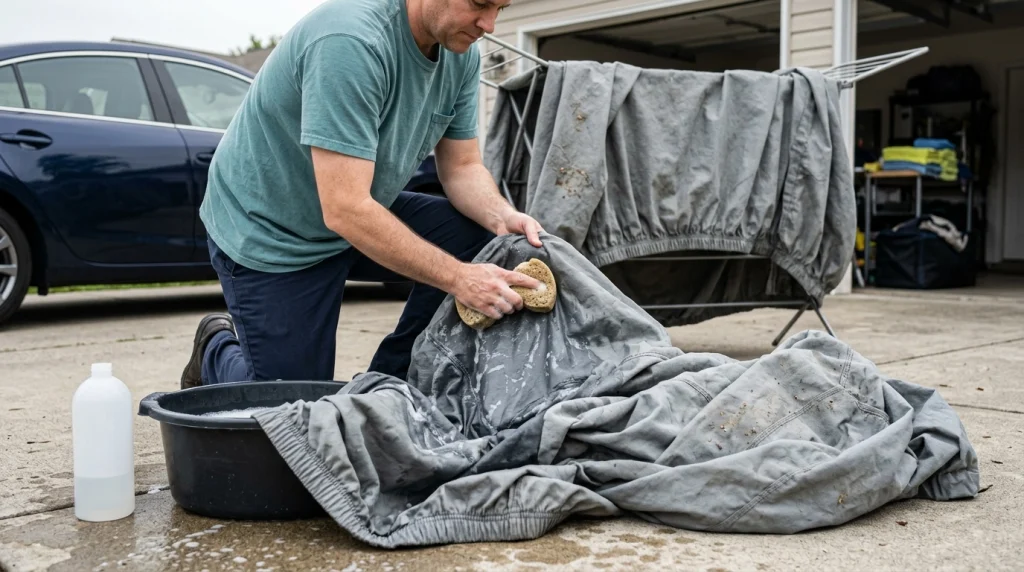
The safest way to remove car cover odor is to inspect the material, follow its approved washing method, and dry it completely. Avoid aggressive cleaners before checking the manufacturer’s instructions.
Step 1: Remove and inspect the cover
Take the cover off your vehicle and spread it over a clean, dry surface. Inspect both sides, especially the fabric that touches your paint.
Look for the following warning signs:
- Visible dark or discolored patches
- Damp seams or elastic hems
- Sticky or peeling waterproof coatings
- Accumulated dirt and organic debris
- Localized stains with strong odors
- Ripped fabric or deteriorating inner lining
If the cover has widespread visible mold, avoid vigorous indoor brushing or shaking. Handle it outside and consider replacement if contamination is extensive.
Step 2: Check the manufacturer’s care label
Before adding water or detergent, identify the cover’s material and cleaning requirements. Not every car cover tolerates machine washing.
For example, Covercraft specifies different washing temperatures and drying methods for its individual fabrics. Some materials permit machine drying, while others require air drying.
Never assume that instructions for one cover apply to another.
Step 3: Remove loose dirt
Gently remove loose leaves, dust, and debris outdoors. Avoid dragging the cover across rough concrete or contaminated ground.
If the manufacturer allows rinsing, use a gentle flow of water. Focus on contaminated areas without forcing dirt deeper into the lining.
Step 4: Wash with an approved mild cleaner
Choose a mild detergent compatible with your exact cover fabric. Follow the manufacturer’s recommended concentration, water temperature, and washing method.
For a cover approved for hand washing:
- Fill a clean container with water at the approved temperature.
- Add the recommended amount of compatible cleaner.
- Gently wash contaminated sections using a soft cloth or sponge.
- Pay attention to seams and folds where dirt accumulates.
- Avoid aggressive scrubbing of delicate coatings or linings.
- Rinse until the cleaning solution has been removed.
If machine washing is permitted, use an appropriately sized washer without a damaging agitator. Oversized SUV or truck covers may require a commercial front-loading machine.
Don’t use chlorine bleach, fabric softener, or harsh solvents unless the manufacturer specifically permits them. These products may damage protective finishes and fabric components.
Step 5: Rinse thoroughly
Leftover detergent can create its own unpleasant smell. It may also leave residue on fabric that eventually touches your vehicle.
Some Covercraft cleaning instructions specifically call for two water-only rinses. Follow your product’s directions rather than relying on a universal rinse count.
Check thick seams, corners, and inner layers for trapped suds.
Step 6: Dry the entire cover
Complete drying is critical. A freshly washed cover can develop another musty smell if you fold it before the lining and seams dry.
Spread the cover over a clean drying rack or suitable support with good airflow. Follow any restrictions concerning direct sunlight, heat, or tumble drying.
- Check both sides: The inner lining can remain damp after the exterior feels dry.
- Inspect seams: Thick stitching may retain water longer.
- Check elastic hems: Moisture can collect inside folded edges.
- Avoid high heat: Use machine drying only when explicitly permitted.
- Wait before folding: Store the cover only when every section feels dry.
Step 7: Check the vehicle before reinstalling
Wash or wipe away dirt on your vehicle as needed. A clean cover placed over contaminated paint can collect new debris.
Make sure the vehicle’s exterior is dry according to the cover manufacturer’s installation guidance. Check that the lining is free of grit before pulling it over painted surfaces.
Section Takeaway: Thorough cleaning removes contaminants, but drying prevents the same moisture-related odor from returning. Always follow fabric-specific care instructions.
How Do You Treat Different Car Cover Odors?
Not every smelly cover needs identical treatment. A musty cover may require moisture control, while a strong chemical odor could indicate a material problem.
How to remove a musty car cover smell
A musty smell commonly suggests retained moisture or microbial contamination. Inspect the fabric for stains, persistent dampness, and any visible growth.
If the cover is in good condition, wash it with an approved cleaner and dry it completely. Clean its storage bag as well if the bag has absorbed the odor.
For persistent mildew, avoid assuming household disinfectants are automatically fabric-safe. Waterproof treatments and soft linings may react poorly to products designed for hard surfaces.
Consult the manufacturer’s cleaning instructions before attempting additional treatments.
How to remove a new car cover smell
Unfold the new cover in a sheltered, ventilated area. Keep it away from sharp objects, exhaust sources, and dirty surfaces.
Allow fresh air to circulate through both sides. If the product permits washing, follow its care label before the first installation.
Avoid covering the smell with perfume or heavy fragrance sprays. These products can leave residues and may not be compatible with the fabric.
If the smell is unusually strong or persists despite ventilation, ask the seller or manufacturer whether it is expected for that material.
How to remove a sour or dirty-fabric smell
Sour odors may come from accumulated organic material, contaminated water, or incomplete cleaning. Look for obvious stains and inspect both fabric surfaces.
Pre-rinse when allowed, wash with a compatible cleaner, and rinse thoroughly. Make sure the cover dries away from contaminated surfaces.
How to handle gasoline or solvent smells
Fuel and solvent odors require extra caution. A cover contaminated with a flammable liquid should not be placed in a household washer or dryer.
Keep it away from ignition sources and follow appropriate local disposal or professional cleaning guidance. Strong fuel contamination may make replacement the safest choice.
Do not try to eliminate these odors with heat, fragrance, or household chemical mixtures.
Which Cleaning Method Works Best for a Smelly Car Cover?
The best cleaning method depends on the material, odor source, and manufacturer’s instructions. There is no universal treatment suitable for every car cover.
The following comparison helps narrow your options.
| Method | Best Use | Important Limitation |
|---|---|---|
| Fresh-air ventilation | Mild new-product or storage odors | Does not remove embedded dirt or mold |
| Approved hand washing | Localized dirt and odor | Requires thorough rinsing and drying |
| Approved machine washing | Washable covers with widespread dirt | Only for fabrics and machines specified by maker |
| Full air drying | Preventing moisture-related odors | Doesn’t remove existing contamination alone |
| Replacement | Severe mold, damage, or persistent contamination | Requires buying another compatible cover |
Should you use vinegar or baking soda?
Vinegar and baking soda often appear in household odor-removal advice. However, that doesn’t make either product appropriate for every automotive cover.
Acidic cleaners may be incompatible with certain coatings, while baking soda particles can leave unwanted residue in fabric and seams. Neither should be treated as a universal mold-removal solution.
Use them only if the cover manufacturer confirms compatibility. Never mix cleaning chemicals in an attempt to create a stronger odor remover.
Can you use an odor-eliminating spray?
Odor sprays may temporarily change how a cover smells without removing its underlying contamination. Fragrances can also transfer to the vehicle-facing lining.
Avoid spraying unknown products on coated or delicate fabrics. If the manufacturer offers an approved cleaner, that is the safer starting point.
Is machine washing better than hand washing?
Machine washing can clean a large washable cover more evenly. However, an incompatible washing machine can damage stitching, coatings, or fabric layers.
Hand washing provides more control over targeted areas. Neither method is automatically better; the care label determines which is appropriate.
How Can You Prevent Car Cover Smell From Returning?
Preventing car cover odor is easier than repeatedly cleaning contaminated fabric. Focus on moisture management, clean handling, and suitable storage conditions.
Never store a damp cover
This is the single habit I’d prioritize. A cover may appear dry on the outside while retaining moisture along its edges.
After rainfall or washing, inspect its lining and seams. If it remains damp, let it finish drying before packing it away.
The EPA recommends prompt drying of wet materials to limit mold development. That general moisture-control principle is especially relevant when storing fabric.
Choose storage that stays dry
Use a clean storage bag or container suitable for the cover. Keep it away from standing water, leaking roofs, and chemicals.
Storage conditions matter more than adding scented products.
- Choose a dry shelf rather than a damp garage floor.
- Keep the storage bag clean and odor-free.
- Avoid sealing damp fabric inside plastic.
- Inspect the cover after prolonged storage.
- Keep fabric away from gasoline, paint thinner, and solvents.
Keep the vehicle clean
A dirty vehicle can transfer contaminants to the cover’s underside. This is particularly important when dust, tree residue, or bird droppings accumulate.
Before covering a vehicle for extended storage, clean and dry its exterior. Never drag a dirty cover across painted panels.
Match your cover to the parking environment
An indoor dust cover and an outdoor weather-resistant cover serve different purposes. Choosing the wrong type can make moisture management harder.
For example, a cover intended for a clean garage may not tolerate repeated outdoor rain exposure. An outdoor product should suit the local climate and the manufacturer’s recommended use.
Look for appropriate breathability, weather protection, and washing requirements when comparing materials. Covercraft’s car cover range illustrates how construction and intended use vary between products.
Breathable does not mean a cover can never trap water. Always follow the installation and drying instructions for your particular product.
Inspect the cover regularly
Car covers don’t need a complicated maintenance schedule. A quick inspection when installing or removing the fabric helps reveal problems early.
- After rain: Check for retained water and contaminated areas.
- After heavy pollen: Remove accumulated debris using an approved method.
- Before long storage: Confirm the fabric and bag are completely dry.
- Before reuse: Check the lining, seams, and coatings for damage.
- When odor appears: Investigate immediately rather than masking the smell.
As of 2026, the basic preventive approach remains straightforward: use the right cover, keep it clean, and avoid storing moisture.
Section Takeaway: Keeping your cover dry and storing it correctly are the most important long-term odor-prevention habits. Regular inspections also help protect your vehicle’s finish.
When Should You Replace a Smelly Car Cover?
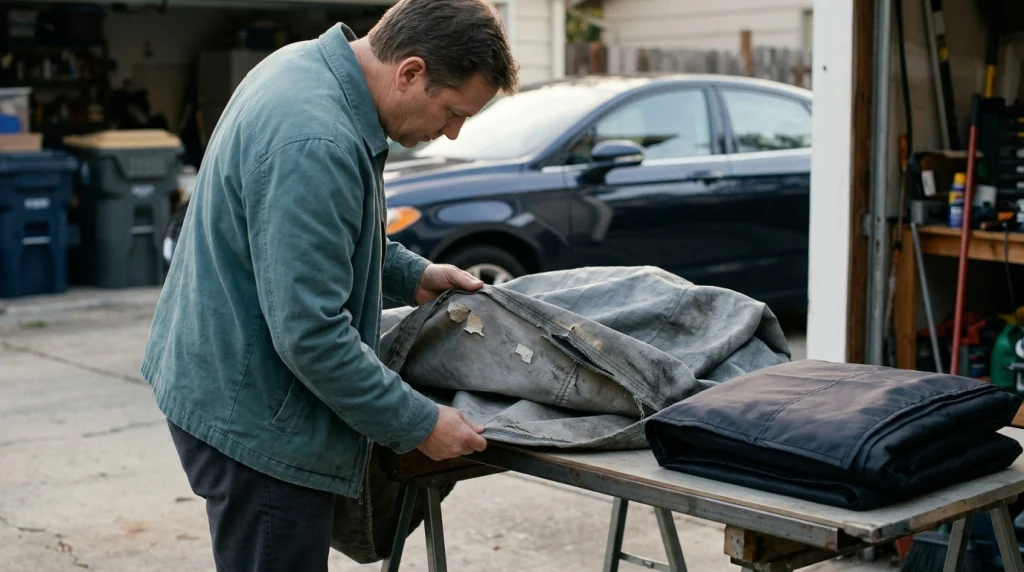
Consider replacing a car cover when cleaning cannot remove contamination or the material has deteriorated. Continued use may create more problems than the cover prevents.
Signs the cover may no longer be usable
- Persistent musty odor: A strong smell returns despite approved cleaning and complete drying.
- Extensive mold growth: Contamination covers large areas or appears embedded in layered fabric.
- Sticky lining: The surface touching the vehicle has begun to deteriorate.
- Peeling coating: Protective material flakes, cracks, or transfers residue.
- Structural damage: Torn panels, loose seams, or damaged attachment points compromise the fit.
- Fuel contamination: The cover has absorbed gasoline or other hazardous substances.
Can a damaged car cover affect vehicle paint?
Yes. Grit, degraded coatings, or damaged inner fabric can create risks for the vehicle’s finish, especially when the cover moves across painted surfaces.
A cover shouldn’t leave sticky deposits or loose material behind. Stop using it if the vehicle-facing surface is damaged.
For visible mold that doesn’t clean away safely, consult the manufacturer’s guidance. The EPA’s mold cleanup information also explains why eliminating the moisture source matters.
What should you look for in a replacement?
Choose a cover designed for your vehicle’s dimensions and typical parking location. Fit, fabric construction, weather protection, and cleaning requirements all matter.
Before buying, check:
- Compatibility with your vehicle’s body shape
- Indoor or outdoor suitability
- Manufacturer-approved washing methods
- Drying requirements
- Quality of the vehicle-facing lining
- Storage and maintenance instructions
Don’t select a replacement based only on advertised waterproofing. A cover that suits your parking environment and maintenance routine is usually a more practical choice.
Frequently Asked Questions About Car Cover Smell
Why does my car cover smell bad after rain?
Rain can leave moisture trapped inside fabric, seams, and folded edges. If the cover remains damp, contaminants and microbial growth may produce musty odors. Remove the cover when appropriate, inspect it, clean it according to its label, and dry it completely before storing or reinstalling.
How do I get rid of the chemical smell from a new car cover?
Unfold the cover in a sheltered, well-ventilated area and allow air to circulate through both sides. If washing is permitted, follow the manufacturer’s directions. Contact the seller if the odor remains unusually strong or the material shows sticky, peeling, or damaged surfaces.
Can I wash my car cover in a washing machine?
Some car covers are machine washable, but others require different care. Check the manufacturer’s instructions for machine size, cycle, detergent, temperature, and drying method. Large covers may require commercial equipment, while delicate fabrics may need air drying.
Will baking soda remove car cover odor?
Baking soda can absorb some household odors, but it isn’t universally suitable for automotive cover materials. Powder may remain in fabric layers or seams. Check the manufacturer’s guidance before applying it, and prioritize approved washing and complete drying instead.
Can I put a car cover on a wet car?
It depends on the cover’s design and manufacturer instructions. Moisture trapped between a vehicle and an unsuitable cover can contribute to condensation-related problems. For routine storage, keeping the vehicle and cover dry is the safer approach unless the product specifically allows otherwise.
How long does it take for car cover smell to disappear?
There is no reliable universal timeframe. Mild packaging odors may decrease with ventilation, while mildew-related smells require cleaning and moisture control. Thick covers may also need longer drying periods than lightweight materials. Judge the result by cleanliness, dryness, and remaining odor rather than the clock.
Should I replace a car cover that smells like mildew?
Not necessarily. A structurally sound cover with limited contamination may respond to manufacturer-approved cleaning. Consider replacement if mold is extensive, odors repeatedly return, or the lining and protective coatings have deteriorated. Never reinstall a contaminated cover against clean vehicle paint.
Final Takeaway: Keep Your Car Cover Clean, Dry, and Odor-Free
Stopping car cover smell starts with finding its cause. Moisture-related odors usually call for approved cleaning and thorough drying, while chemical odors and damaged coatings require a different approach.
Check the care label, avoid aggressive household chemicals, and inspect the vehicle-facing lining before every installation. These small habits help keep your cover useful without creating new problems for your car.
If the odor repeatedly returns or the fabric begins deteriorating, consider replacing the cover. Protecting your vehicle’s finish is more important than extending the life of damaged fabric.
