
How to Stop Bugs Under a Car Cover: Practical Prevention Guide

Quick Answer
To stop bugs under a car cover, remove food, moisture, leaves, and clutter around the vehicle first. Keep both the car and cover clean and dry, improve the cover’s fit around the lower body, and inspect the parking area regularly. For general vehicle-care guidance, you can also reference Consumer Reports.
Start With These Steps
- Clean the area: Sweep away leaves, crumbs, dead insects, cardboard, and other pest-friendly debris.
- Remove moisture: Fix standing water, damp floors, wet covers, and other water sources near the car.
- Clean the vehicle: Remove food wrappers, spills, sap, and insect residue before covering it.
- Improve the fit: Keep the cover secured close to the vehicle instead of leaving large loose openings near the ground.
- Inspect regularly: Look beneath the cover, around the tires, and inside sheltered corners before an infestation grows.
- Treat carefully: If pest control is needed, identify the insect first and follow the pesticide label exactly.
Bugs under a car cover usually aren’t there because something is wrong with the vehicle. The cover and parked car simply create shade, shelter, and undisturbed hiding places for insects.
My approach is simple: I treat the car cover as paint protection, not pest control. This guide explains how to make the entire parking setup less attractive to ants, spiders, roaches, beetles, and other unwanted insects.
In This Guide
Why Do Bugs Hide Under a Car Cover?
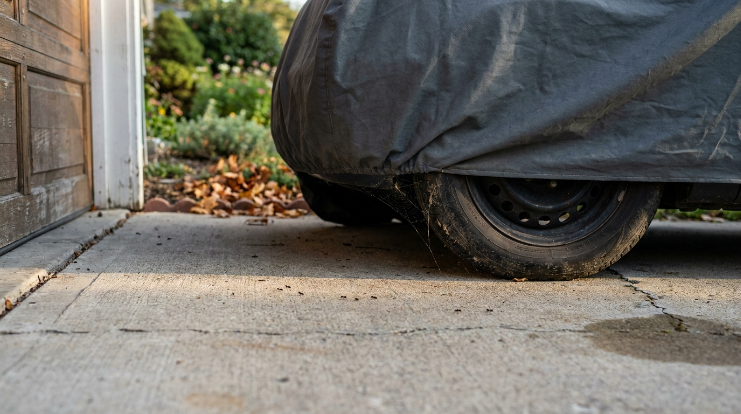
Bugs usually hide under a car cover because the space gives them shelter from sunlight, wind, rain, predators, and regular disturbance. Moisture and nearby food sources can make the area even more appealing.
A bug problem under a car cover means insects or other small arthropods are using the protected space around the covered vehicle for shelter, feeding, hunting, or nesting.
The cover creates a protected micro-environment
A cover blocks direct sunlight and reduces airflow around parts of the vehicle. Loose fabric near the rocker panels and tires also creates dark hiding places.
This doesn’t mean a car cover causes insects. It means existing insects may find the covered space more comfortable than exposed pavement.
- Shade: The covered area stays protected from direct sunlight.
- Shelter: Fabric shields insects from weather and predators.
- Low disturbance: Cars stored for days or weeks may remain untouched.
- Moisture: Wet pavement, condensation, and nearby vegetation can support insect activity.
- Food: Crumbs, garbage, dead insects, sap, and organic debris may attract pests.
Outdoor parking increases exposure
An outdoor car sits inside an existing ecosystem. Ants, spiders, beetles, earwigs, and other insects can approach from soil, lawns, trees, mulch, drains, and vegetation.
A normal cover rarely forms a sealed barrier against the ground. Bugs can simply crawl underneath the lower edge.
Garages can have the same problem
Indoor parking doesn’t automatically eliminate pests. Insects can enter through worn door seals, wall gaps, vents, drains, windows, and openings around utility lines.
That’s why I start with the parking area instead of treating the cover itself.
What Bugs Are Common Around Covered Cars?
The exact pest depends on your climate and parking area. Ants, spiders, cockroaches, beetles, earwigs, and flying insects are among the possibilities around stored vehicles.
| Pest | What May Attract It | Typical Clue | Best First Step |
|---|---|---|---|
| Ants | Food residue, sugary spills, nearby colonies | Visible trails around tires or pavement | Remove food and trace the trail toward its source |
| Spiders | Shelter and other insects | Webs near mirrors, wheels, or cover folds | Remove webs and reduce other insect activity |
| Cockroaches | Food, moisture, clutter, dark hiding areas | Repeated nighttime sightings | Remove food, water, and nearby hiding places |
| Earwigs and beetles | Damp debris, vegetation, protected spaces | Insects hiding beneath lower cover edges | Dry the area and remove organic debris |
| Flying insects | Light, standing water, vegetation | Insects collecting in folds or sheltered corners | Remove standing water and nearby attractants |
Spiders deserve special attention because removing spiders without addressing their food source may not solve the problem. If plenty of small insects remain around the car, predators may return.
The pest tells you what to fix. Identification should come before treatment.
How Do You Stop Bugs Under a Car Cover?
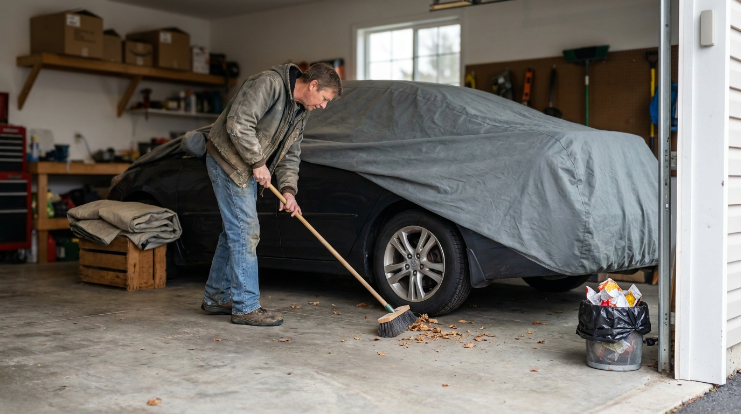
The most effective approach is layered prevention. Remove what attracts insects, reduce their access, improve storage conditions, and then use targeted pest control if needed.
1. Clean underneath and around the vehicle
Sweep or vacuum the parking space before covering the car. Pay attention to leaves, grass clippings, dead insects, food scraps, cardboard, and other organic material.
Outdoor parking may require repeated cleanup. Wind can quickly push debris beneath a covered vehicle.
2. Remove food from the vehicle
Don’t leave fast-food bags, drink cups, candy wrappers, pet treats, or other food inside a stored car. Clean spills from cupholders and carpet as well.
For broader maintenance information, Kelley Blue Book is a useful general automotive resource.
3. Keep the car and cover dry
Don’t install a cover over a wet vehicle unless its manufacturer specifically allows that use. A damp parking area also creates conditions many pests prefer.
- Fix leaking garage plumbing.
- Remove buckets or containers holding water.
- Clear clogged drains where practical.
- Dry a wet cover before long-term storage.
- Move outdoor parking away from persistently soggy ground when possible.
4. Reduce nearby hiding places
Keep cardboard boxes, leaf piles, unused fabric, firewood, dense weeds, and stored trash away from the vehicle. These areas can support pest populations before bugs ever reach the cover.
My rule is simple: if I can’t easily inspect the floor around the car, there’s too much clutter.
5. Inspect garage entry points
Check the bottom garage-door seal and the edges around doors and windows. Also inspect openings around pipes, vents, and other wall penetrations.
Sealing the building is usually more useful than trying to seal every gap around a conventional fabric car cover.
6. Inspect the covered car regularly
Lift the lower edges and look around the tires, wheel wells, mirrors, windshield cowl, and lower body. A five-minute check can reveal activity before insects become established.
Section Takeaway: Cleanliness, dryness, fewer hiding places, and regular inspection do most of the prevention work. The cover should support that strategy rather than replace it.
Should You Spray Insecticide Under a Car Cover?
Don’t automatically spray pesticide on the car, engine bay, or cover. Identify the pest first, then use only products labeled for the intended location and application.
Integrated pest management starts with prevention and monitoring before chemical control. That approach also reduces unnecessary pesticide exposure.
Avoid spraying vehicle components at random
Automotive surfaces contain paint, rubber, plastics, electrical connectors, upholstery, sensors, and ventilation openings. A pesticide designed for household surfaces may not be appropriate for those materials.
- Don’t spray directly into cabin air intakes.
- Don’t coat electrical connectors or wiring.
- Don’t spray hot engine or exhaust components.
- Don’t apply a pesticide to painted surfaces unless its label allows that use.
- Keep pesticide products away from children and pets.
Use targeted control around the parking area
If insects keep returning, target the source rather than soaking the cover. Depending on the identified pest, labeled baits or monitoring traps around a garage may be more appropriate.
Always follow the product label. For a persistent infestation, a licensed pest-control professional can identify the species and locate its source.
Does the Type of Car Cover Make a Difference?
Yes, but no conventional cover should automatically be considered insect-proof. Fit, lower-edge design, storage location, and how the cover contacts the ground all affect how easily pests can enter.
Car and Driver is one authority that regularly evaluates automotive covers and other car-care products.
A loose cover leaves more sheltered space
Excess fabric can create folds and gaps near the tires and lower body. Those spaces may provide convenient hiding places for insects.
Use the supplied straps, elastic hems, or retention system according to the cover manufacturer’s instructions.
A fitted cover is not the same as a sealed enclosure
A fitted cover can reduce loose fabric, but most still remain open underneath the vehicle. Small insects can approach from the pavement and crawl upward.
Some specialized storage systems provide much more complete perimeter protection. These may make sense for seasonal or collector-car storage with recurring pest problems.
Breathability still matters
Don’t solve an insect problem by wrapping the car in an unsuitable airtight sheet. Moisture management remains important during storage.
Choose a cover designed for your actual environment. Indoor dust protection and outdoor weather protection have different requirements.
What Should You Do If Bugs Get Inside the Car?
If bugs have reached the cabin or engine area, remove the attractant before treating individual insects. Otherwise, the problem may return immediately.
Start with a careful inspection
- Remove the cover and inspect both sides.
- Check the floor around all four tires.
- Look around doors, weather seals, and the trunk opening.
- Inspect carpets, floor mats, cupholders, and seat gaps.
- Check the windshield cowl and accessible engine-bay corners.
- Look for food, moisture, nesting material, webs, or insect trails.
Vacuum loose debris from the cabin and clean sticky residue. Wash a dirty reusable cover according to its manufacturer’s care instructions.
Don’t disassemble the vehicle unnecessarily
If insects repeatedly emerge from dashboard vents, electrical housings, or areas requiring trim removal, the source may be difficult to reach safely.
Mechanic Alert: If accessing the infestation requires electrical work, dashboard disassembly, or work around hybrid or EV high-voltage components, use a qualified technician instead.
Check vehicle safety before returning it to service
Insects usually cause more nuisance than mechanical damage, but unusual warning lights or damaged wiring deserve proper diagnosis. NHTSA remains a useful resource for vehicle safety and recall information.
As of 2026, I still prefer prevention over repeatedly treating a covered vehicle. A clean parking area is easier to manage than an established infestation.
Frequently Asked Questions
Why do I keep finding bugs under my car cover?
Your covered car may provide shade, shelter, moisture, and a quiet hiding place. Nearby vegetation, food residue, standing water, clutter, or an existing garage infestation can keep supplying new insects even after you remove the ones beneath the cover.
How do I keep ants from getting under my car cover?
Remove food and sugary residue from the vehicle first. Clean the pavement, follow visible ant trails toward their source, and use an appropriately labeled ant-control method around the parking area rather than randomly spraying the car.
Will a tighter car cover keep insects out?
A better-fitting cover can reduce folds and large openings, but most normal car covers remain open beneath the vehicle. Tiny insects can still crawl from the ground toward the wheels, suspension, lower body, and engine compartment.
Do dryer sheets keep bugs away from a covered car?
I wouldn’t rely on dryer sheets as the main solution. Results can be inconsistent, while sanitation, moisture control, exclusion, regular inspection, and pest-specific control address the conditions that allow insects to remain around the vehicle.
Can spiders damage my car?
Most spiders found around a covered car are more of a nuisance than a mechanical threat. Webs can collect around mirrors and sheltered openings, while recurring spiders often suggest that other insects are providing a nearby food source.
Should I put mothballs under my car cover?
Don’t use mothballs or another pesticide in a location or manner that its label doesn’t allow. Pesticide vapors can create exposure concerns, so use products only for their labeled pests, spaces, and application methods.
How often should I check a covered car for bugs?
Check it more frequently when you’ve already noticed insect activity, during long storage periods, or after wet weather. Once the area stays clean and pest activity disappears, you can include a quick inspection whenever you remove or reinstall the cover.
The bottom line: To stop bugs under a car cover, work on the environment first. Keep the car clean, remove food and standing water, clear surrounding clutter, improve garage exclusion, secure the cover properly, and inspect the vehicle regularly.
A car cover can protect your finish, but it isn’t a complete pest barrier. Make the parking space unattractive to insects, and you’ll usually have far fewer bugs waiting underneath the next time you uncover the car.