
Car Cover Damaging Paint: Can a Cover Scratch or Ruin Your Finish?

Quick Answer
A car cover can damage paint, but usually only when dirt gets trapped underneath, the cover moves against the surface, the material is rough, or moisture stays trapped for too long. A clean, properly fitted, paint-safe cover used on a clean vehicle is much less likely to cause trouble and can help protect the finish from weather and contamination. Current car cover testing from Car and Driver also emphasizes choosing the right cover for the vehicle and storage conditions.
What usually damages the paint?
- Trapped grit: Dust and sand can become abrasives between the cover and clear coat.
- Loose fit: Wind can repeatedly move a loose cover across painted panels.
- Dirty cover: Contamination inside the fabric can rub against the finish every time you install it.
- Rough material: An unsuitable inner surface may create more friction than a paint-safe lining.
- Trapped moisture: Poor ventilation can leave the vehicle damp and promote water spotting or other finish problems.
Best prevention
- Cover a clean, dry car with a clean, breathable cover that fits securely without flapping.
If you’re worried about a car cover damaging paint, you’re asking the right question. A cover can save your finish from sun, dust, tree debris, bird droppings, and weather, yet careless use can create the scratches you’re trying to prevent.
I look at a car cover as a tool rather than automatic protection. Used correctly, it helps; used over a dirty car or allowed to flap in wind, it can become another source of paint wear.
In This Guide
- Can a Car Cover Really Damage Your Paint?
- What Causes a Car Cover to Scratch Paint?
- Can Moisture and Weather Under a Car Cover Harm Paint?
- Indoor vs. Outdoor Car Covers: Which Is Safer for Paint?
- How Do You Use a Car Cover Without Scratching Paint?
- What Should You Do if a Car Cover Already Scratched the Paint?
- Car Cover and Paint Damage FAQ
Can a Car Cover Really Damage Your Paint?
Yes, a car cover can contribute to paint damage. The important distinction is that a clean, suitable cover normally doesn’t scratch stationary clean paint by simply touching it.
Problems start when something creates friction or contamination between the two surfaces. Dirt, wind, poor fit, rough fabric, or careless removal can turn normal contact into abrasion.
What does “car cover paint damage” mean?
Car cover paint damage is scratching, swirling, hazing, staining, or other finish deterioration caused or worsened by conditions between a vehicle’s painted surface and its cover.
Most modern automotive finishes have a clear outer coating over the color layer. Fine scratches commonly affect this outer surface first rather than immediately cutting through every paint layer.
- Micro-scratches: Tiny marks that become noticeable under direct light.
- Swirl marks: Fine curved scratches that make dark paint look hazy.
- Scuffing: Repeated rubbing can dull a localized area.
- Water spotting: Moisture and minerals left on the finish can leave visible deposits.
- Deeper scratches: Larger grit or aggressive movement can cause more obvious damage.
This is why I wouldn’t judge a cover only by thickness. Fit, cleanliness, inner-surface softness, breathability, and how the cover is handled matter just as much.
There is also another side to the equation. Leaving a vehicle completely uncovered exposes it to contamination that may create its own paint problems.
Consumer Reports, for example, warns that wet leaves and organic debris can damage automotive finishes when allowed to remain on a vehicle. Their guidance on falling leaves and vehicle paint illustrates why correctly used physical protection can be valuable.
Section Takeaway: A car cover is not automatically bad for paint. Damage usually occurs when contamination, friction, moisture, or poor fit turns the cover into an abrasive surface.
What Causes a Car Cover to Scratch Paint?
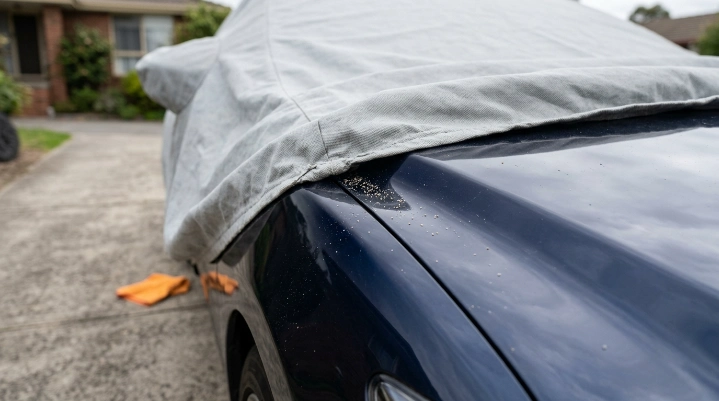
The biggest danger is usually not the fabric alone. It’s what happens between that fabric and your clear coat.
I pay closest attention to six conditions before putting a cover on any vehicle.
1. Dirt and grit trapped underneath
Imagine putting a soft microfiber towel over a grain of sand. If you drag the towel, the sand—not the towel—becomes the part touching the paint.
A car cover can work the same way. Fine road dust, dried mud, pollen, sand, and other particles may act as abrasives when pressure and movement are added.
Kelley Blue Book makes a similar point when discussing gritty wildfire residue: wiping abrasive contamination across paint can create scratches, swirl marks, and a dull appearance. You can see its current guidance on removing gritty ash without scratching car paint.
2. Wind moving a loose cover
A cover that fits like a loose sheet can move constantly outdoors. Even small repeated movements across dusty paint can increase abrasion risk.
Pay particular attention to corners and raised areas.
- Mirror housings
- Fender tops
- Hood edges
- Roof edges
- Spoilers
- Bumpers
These spots often carry more tension or movement because the fabric changes direction around them.
3. Putting a cover on a dirty car
This is the mistake I would avoid first. A car doesn’t need to look filthy for abrasive contamination to be present.
Even a thin layer of road dust can matter if you’re repeatedly installing and removing the cover. A freshly washed car gives the fabric a cleaner surface to contact.
4. A dirty inner lining
Washing the car won’t help much if the inside of the cover contains dirt. A cover dragged across a driveway can pick up exactly the contamination you don’t want against paint.
Store it clean and dry. Don’t throw it uncovered onto a garage floor or dirty trunk area.
5. Incorrect size or shape
A universal cover that’s dramatically too large may bunch and flap. One that’s too small can remain under excessive tension and rub harder around sharp body contours.
A good fit doesn’t need to look vacuum-sealed. It should remain secure while matching the general shape and dimensions of the vehicle.
6. Dragging the cover during removal
Pulling several feet of fabric sideways across a dusty hood is unnecessary friction. Folding or rolling the material away from each panel reduces sliding contact.
| Risk Factor | How It Can Affect Paint | Best Prevention |
|---|---|---|
| Dust or sand | Creates abrasive particles between fabric and paint | Wash or safely clean the vehicle first |
| Loose fit | Allows repeated movement against panels | Use the correct size and secure it properly |
| Dirty lining | Transfers contamination directly to the finish | Clean and properly store the cover |
| Rough inner material | May increase friction on delicate finishes | Choose a paint-safe inner surface |
| Poor removal technique | Drags contamination across large panels | Lift, fold, and roll rather than drag |
Section Takeaway: Dirt plus movement is the combination I worry about most. Keeping both the car and cover clean removes much of the avoidable scratching risk.
Can Moisture and Weather Under a Car Cover Harm Paint?
Moisture deserves attention, especially when a covered vehicle sits outdoors. You want protection from rain without creating a damp environment that stays trapped against the car.
This is where breathability matters.
Water-resistant is not the same as moisture-proof storage
Outdoor covers need to handle precipitation, but the vehicle still benefits from airflow and drying. A cover should not become a long-term wet blanket around the body.
Never intentionally cover a soaking-wet vehicle for extended storage. Let the paint and the cover dry whenever practical.
Condensation can occur even without a leak
Temperature swings can allow moisture to appear beneath a cover even when rain isn’t passing directly through it. Outdoor storage therefore needs more inspection than a dry indoor garage.
After heavy rain or major temperature changes, check underneath. If the car or cover remains wet, let both dry before returning to extended covered storage.
What about hot weather?
Heat itself doesn’t automatically mean a cover will ruin paint. The bigger concern is combining heat with moisture, contamination, unsuitable materials, or a cover not designed for those conditions.
Choose a product specifically intended for outdoor exposure if that’s where the vehicle lives. Indoor dust covers and outdoor weather covers solve different problems.
Don’t cover contaminants and forget about them
Bird droppings, tree sap, leaves, road film, and other deposits should be removed rather than sealed underneath a cover. A cover is not a substitute for paint maintenance.
Edmunds recommends washing a vehicle before long-term storage and addressing contaminants that can affect the finish. Its long-term vehicle storage guidance also recommends cleaning the car before putting it away.
Section Takeaway: For outdoor storage, choose a weather-appropriate breathable cover and periodically check that the vehicle isn’t staying damp underneath it.
Indoor vs. Outdoor Car Covers: Which Is Safer for Paint?
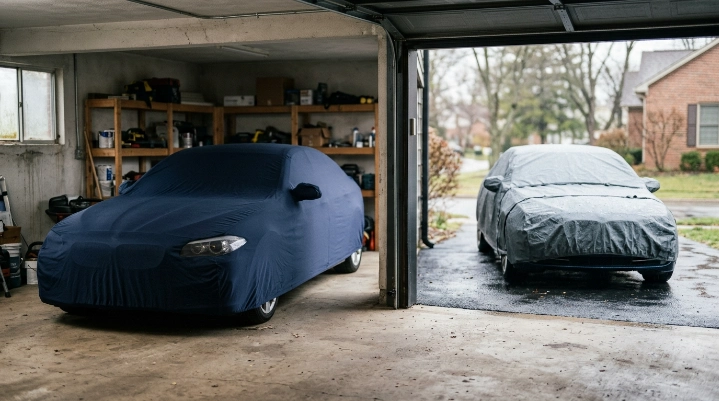
Neither type is automatically safer. The best cover is the one designed for where the vehicle is actually stored.
An indoor garage and an exposed driveway create very different risks.
| Feature | Indoor Cover | Outdoor Cover |
|---|---|---|
| Main purpose | Dust and light contact protection | Weather and environmental protection |
| Typical priority | Softness and dust control | Weather resistance, secure fit, and breathability |
| Wind exposure | Usually minimal | Potentially significant |
| Moisture exposure | Normally lower in a dry garage | Higher from rain, humidity, and condensation |
| Fit importance | Important | Especially important because of wind |
When an indoor cover makes sense
A clean indoor cover can work well for a garage-kept collector car, weekend vehicle, or daily driver that sits for extended periods. Its main job is usually controlling dust and minor contact.
Softness is especially useful here because heavy weather resistance may not be necessary.
When an outdoor cover makes sense
Outdoor storage requires more protection against rain, sun exposure, bird droppings, leaves, and airborne contamination. Secure retention also becomes much more important.
Don’t assume a heavy cover is automatically better. A bulky cover that fits poorly can still move against the finish.
Custom-fit vs. universal car cover
A custom-fit cover follows the vehicle’s shape more closely. That can reduce excess material and movement, particularly around mirrors, bumpers, and body contours.
A universal cover can still work when correctly sized and secured. Check the manufacturer’s vehicle-size recommendations instead of simply buying the largest option available.
Section Takeaway: Match the cover to the storage environment. Indoor covers prioritize clean, gentle dust protection, while outdoor covers need secure fit, weather resistance, and practical moisture management.
How Do You Use a Car Cover Without Scratching Paint?
The safest routine is simple: clean surface, clean cover, controlled installation, secure fit, and careful removal. Most owners can follow it without special tools.
Step 1: Check the paint before covering
Look and feel for obvious dirt before touching the cover to the vehicle. Don’t cover a car just because the dust isn’t obvious from several feet away.
Pay particular attention after highway driving or windy weather.
Step 2: Wash the car when it’s genuinely dirty
Don’t grind dry grit across the paint just to avoid washing it. Use a paint-safe wash method and let the vehicle dry before long storage under a cover.
For a car that only has light dust, use an appropriate low-friction cleaning method instead of rubbing it aggressively with a dry towel.
Step 3: Inspect the inside of the cover
Look for sand, leaves, dried mud, and other debris. Pay extra attention if the cover has touched the ground.
If the manufacturer permits washing, follow its cleaning directions. Different cover materials require different care.
Step 4: Position instead of dragging
Start from a consistent location and gradually unfold or roll the cover over the vehicle. Avoid pulling a large section sideways across painted panels.
That small habit reduces unnecessary sliding contact.
Step 5: Secure it correctly
Use the cover’s intended retention system. That might include an elastic hem, straps, buckles, or other attachment points.
Don’t improvise with hard objects that can strike the body in wind.
Step 6: Check the cover after severe weather
A cover can shift during storms. Inspect its position after strong winds and check for trapped moisture after heavy rain.
If it has partly detached, don’t simply drag it back into place over a dirty vehicle.
Step 7: Remove it carefully
Release straps first, then fold or roll the material in controlled sections. Try to keep the dirty exterior of the cover away from its clean inner lining.
Store the cover in a clean bag or protected area when you’re finished.
- Do: Use the correct size.
- Do: Keep the vehicle clean.
- Do: Keep the inner fabric clean.
- Do: Inspect outdoor covers regularly.
- Don’t: Drag the cover across dusty paint.
- Don’t: Cover mud, sand, or obvious road grime.
- Don’t: Leave a loose cover flapping in strong wind.
- Don’t: store the cover wet and dirty.
Section Takeaway: The safest car-cover routine reduces both contamination and movement. Those two factors matter more than simply buying the thickest cover you can find.
What Should You Do if a Car Cover Already Scratched the Paint?
First, stop using the cover until you know what caused the marks. Otherwise, you may polish the paint and immediately create the same scratches again.
Wash and dry the vehicle before judging the damage.
Inspect the paint under strong light
Sunlight or a bright inspection light can reveal swirls and fine scratches better than dim garage lighting. Look at the panel from several angles.
Then check whether the defect appears superficial or clearly cuts deeper into the finish.
Light clear-coat marks may be correctable
Some shallow scratches can be reduced with appropriate polishing or scratch-removal techniques. Car and Driver notes that minor surface scratches confined to the clear coat can sometimes respond to polishing products.
Don’t assume every scratch should be aggressively compounded. Polishing removes a small amount of material, so repeated unnecessary correction isn’t good maintenance.
Deep scratches need different treatment
A scratch that reaches the color layer, primer, or bare metal isn’t just a polishing job. Paint repair may be required, especially where metal is exposed.
Mechanic Alert: If you’re unsure how deep the damage is, or the repair requires machine polishing, sanding, or repainting, have an experienced detailer or qualified body-repair professional inspect it before removing more clear coat.
Find the cause before putting the cover back
Inspect both surfaces. The location of the damage can offer useful clues.
- Random swirls across many panels: Check for contaminated fabric or a dirty car.
- Marks on mirrors and corners: Look for excessive tension or movement.
- Repeated marks on one panel: Inspect that section of the cover for embedded debris.
- Damage after windy days: Review fit and retention.
- Spots after wet storage: Check drying and moisture conditions.
Correct the underlying problem before returning to the same routine. Otherwise, paint correction only treats the symptom.
Section Takeaway: Diagnose first and polish second. Fix the dirty cover, poor fit, movement, or storage problem before spending time correcting the paint.
Car Cover and Paint Damage FAQ
Do car covers scratch clear coat?
They can. Scratching is most likely when dirt or grit sits between the clear coat and cover, or when wind and handling move that contamination across the surface.
Should I put a car cover on a dusty car?
I wouldn’t if you can safely clean the vehicle first. Dust may contain abrasive particles, and covering it gives those particles another surface that can move against the paint.
Can I put a car cover on a wet car?
For extended storage, it’s better to let the vehicle dry first whenever practical. Outdoor covers should also allow reasonable moisture management because rain, humidity, and condensation can create damp conditions underneath.
Will a soft car cover scratch paint?
Soft fabric lowers one risk, but it doesn’t eliminate contamination. A soft lining with sand trapped in it can still move abrasive particles across the clear coat.
Are custom-fit covers better for paint?
A good custom fit can reduce loose material and movement, which is particularly useful outdoors. However, a clean, correctly sized semi-custom or universal cover can also work when it stays securely positioned.
Should I cover my daily driver every night?
It depends on where you park and how clean the car remains. Repeatedly covering a dirty daily driver may create more rubbing opportunities, while a clean vehicle exposed to trees or weather may benefit more from a cover.
Is it better to leave a car uncovered than use a cheap cover?
Sometimes. A badly fitting, rough, dirty cover that constantly flaps may create unnecessary risk. Compare that risk with your actual environment before deciding whether uncovered parking or a better-quality cover makes more sense.
A car cover damaging paint isn’t inevitable. In most cases, the best defense is straightforward: keep the contact surfaces clean, minimize fabric movement, choose the correct cover for your environment, and don’t ignore trapped moisture.
If I had to reduce this entire guide to one rule, it would be this: never let a dirty surface rub repeatedly against your paint. Follow that principle and a suitable car cover is far more likely to function as protection than become the source of the problem.
“`