
How to Prevent Humidity Under a Car Cover: 7 Practical Steps

Quick Answer
To prevent humidity under a car cover, start with a completely dry vehicle and a dry cover. Use breathable material, improve airflow, avoid damp parking surfaces, and check the vehicle periodically during storage. If the car will sit for an extended period, these long-term vehicle storage practices can help you plan beyond the cover itself.
Quick steps to control humidity
- Dry the car: Don’t cover paint, glass, wheels, seals, or trim while moisture remains.
- Dry the cover: Never reinstall a cover with a damp inner surface, seams, or elastic hems.
- Choose breathability: Use a proper vehicle cover that lets trapped water vapor escape.
- Improve airflow: Ventilate humid garages and avoid sealing the vehicle into a damp space.
- Check the ground: Wet grass, soil, standing water, and persistently damp concrete add moisture around the vehicle.
- Inspect regularly: If droplets return, remove the cover and solve the moisture source before reinstalling it.
My simple rule
- If the mirror housings, door seals, wheels, or cover lining can still drip, the cover stays off.
Humidity under a car cover can appear even when rain never gets through the fabric. Temperature changes, wet surfaces, poor airflow, and damp ground can all leave water beneath a covered vehicle.
I’ve found that prevention comes down to controlling moisture before the cover goes on. This 2026 guide explains what causes the problem, which cover features matter, and what to do when you find condensation.
In This Guide
- Why does humidity form under a car cover?
- How do you prevent humidity under a car cover?
- What type of car cover handles humidity best?
- Does your parking location make humidity worse?
- What should you do if you find moisture under the cover?
- How do you control humidity during long-term storage?
- Frequently Asked Questions
Why Does Humidity Form Under a Car Cover?
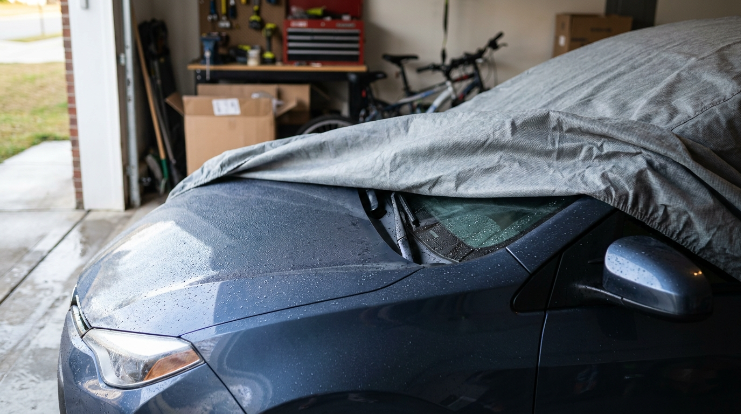
Humidity builds under a car cover when moisture enters or forms around the vehicle faster than it can escape. A wet car, humid air, damp cover, and limited ventilation are common contributors.
Definition: Humidity under a car cover is water vapor held in the air between the vehicle and its cover. When a cool vehicle surface reaches the surrounding air’s dew point, some vapor can become liquid condensation.
- Wet vehicle: Water remains around mirrors, trim, badges, weather seals, wheels, and body gaps after washing or rain.
- Damp cover: Moisture stored inside the fabric can return directly to the vehicle.
- Temperature change: Warm humid air can condense when body panels cool overnight.
- Poor evaporation: Limited air movement makes existing moisture take longer to leave.
- Damp surroundings: Wet ground or a humid garage keeps supplying moisture to the air around the car.
This is why droplets beneath the fabric don’t automatically prove that a cover leaks. The water may have condensed underneath it.
Condensation can also appear unevenly. A hood, roof, windshield, or metal panel may cool differently from nearby surfaces.
Why covering a freshly washed car can cause problems
A car can look dry while hidden areas still hold water. Mirror housings and weather stripping are two places I always check before covering a vehicle.
- Open and close doors after drying to expose trapped water around seals.
- Check the trunk or hatch opening.
- Dry underneath mirror housings.
- Inspect fuel-door edges and exterior handles.
- Make sure wheels and wheel arches aren’t dripping.
Give those areas enough time to stop releasing water. Putting a cover over them too early gives humidity a head start.
How Do You Prevent Humidity Under a Car Cover?
The best prevention method is simple: control moisture before covering the vehicle and preserve enough airflow for water vapor to escape afterward. Don’t depend on the cover alone.
- Start with a dry vehicle. Dry the paint, glass, trim, wheels, mirrors, seals, and water-holding gaps before installation.
- Make sure the cover is dry. Feel both sides and check seams, straps, elastic hems, and thicker fabric areas.
- Use breathable cover material. Avoid treating an ordinary plastic sheet or tarp as a substitute for a purpose-made vehicle cover.
- Choose the correct fit. Excessively loose fabric can shift, while a badly fitted cover may allow weather to enter around exposed areas.
- Reduce moisture around the car. Deal with leaks, standing water, damp flooring, and poor garage ventilation.
- Let the area breathe. Improve ventilation in enclosed storage where humid air repeatedly collects.
- Inspect periodically. Remove the cover when persistent condensation appears and let everything dry before reinstalling it.
Car covers also vary substantially in construction and intended use. Current car cover testing from Car and Driver shows why choosing a cover for the actual storage environment matters.
Don’t confuse water resistance with moisture control
A cover has two different jobs outdoors. It should limit weather exposure while still allowing moisture from beneath the fabric to escape.
A material that blocks outside water but holds existing moisture against the vehicle doesn’t solve the entire problem.
- Indoor storage: Prioritize breathability, softness, cleanliness, and proper fit.
- Outdoor storage: Balance weather resistance, breathability, secure fit, and UV exposure.
- Humid storage: Address both the cover and the surrounding air.
My approach is to think of the cover as one part of the storage system. The vehicle, fabric, ground, air, and temperature all affect moisture.
What Type of Car Cover Handles Humidity Best?
A breathable cover designed for your parking environment is usually the strongest starting point. Breathability gives water vapor a path away from the vehicle instead of holding it inside a nearly sealed space.
That doesn’t mean one cover type works everywhere. Indoor dust protection and outdoor weather protection create different requirements.
| Cover or Situation | Humidity Concern | Better Approach |
|---|---|---|
| Breathable indoor cover | Garage air can still become humid | Keep the garage dry and ventilated |
| Weather-resistant outdoor cover | Must manage rain exposure and trapped vapor | Choose a breathable model intended for outdoor use |
| Plastic tarp or sealed sheet | Limited vapor escape | Use a purpose-made automotive cover instead |
| Loose oversized cover | Weather can enter and fabric may move | Use the correct vehicle size and fastening system |
| Wet cover | Moisture starts inside the covered space | Dry it completely before reuse |
Does a thicker cover prevent humidity better?
Not automatically. Thickness alone doesn’t tell you how well a material releases water vapor.
Look at the manufacturer’s stated indoor or outdoor use, material construction, breathability, fit, and care instructions. Marketing terms such as “all-weather” shouldn’t replace those details.
- Match the cover to where the vehicle is parked.
- Keep the paint-contact surface clean.
- Replace covers with damaged seams or deteriorated material when they no longer perform as intended.
Does Your Parking Location Make Humidity Worse?
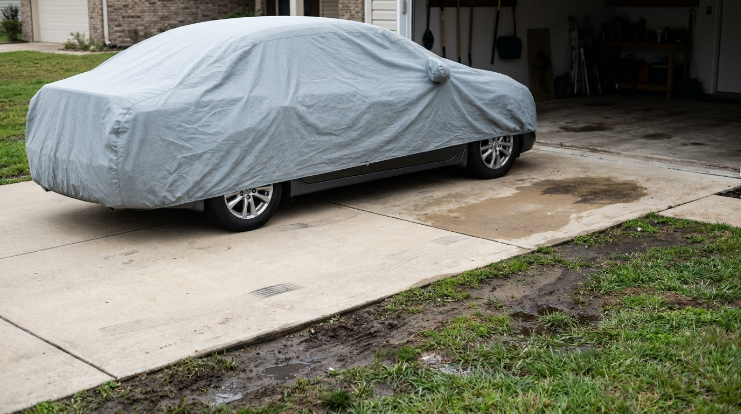
Yes. The area beneath and around the vehicle can strongly affect moisture under a cover, even when the cover itself is dry.
Indoor storage generally offers better protection from rain and direct weather. Edmunds also recommends garage storage when possible in its long-term car storage guidance.
Garage storage
A garage can still have a moisture problem. Roof leaks, wet floors, poor ventilation, and water entering around doors can keep humidity elevated.
- Repair obvious water leaks.
- Remove standing water rather than letting it evaporate indoors.
- Allow wet concrete to dry before prolonged covered storage.
- Improve ventilation where practical.
- Consider a dehumidifier when the garage repeatedly stays damp.
Outdoor storage
Outdoors, the parking surface matters more. Wet grass and saturated soil can keep the air immediately around a parked vehicle damp.
A paved, well-drained location is preferable when you have a choice.
- Avoid low spots where rainwater collects.
- Keep the vehicle away from irrigation spray.
- Don’t install the cover during rain if the car is already wet.
- Recheck the underside after major weather changes.
Morning condensation after a cool night can occur without a leak. Repeated dampness that cannot dry is the condition you need to solve.
What Should You Do If You Find Moisture Under the Cover?
Remove the cover and let both the car and cover dry completely. Don’t simply wipe the visible droplets and immediately cover the vehicle again.
Next, identify whether the moisture came from condensation, rain intrusion, a damp cover, leftover wash water, or the parking environment.
- Remove the cover carefully: Avoid dragging a wet or dirty inner surface over the paint.
- Dry the vehicle: Wipe visible water and open water-holding areas to help them drain.
- Air-dry the cover: Spread or hang it so air reaches both surfaces.
- Inspect the pattern: Look at where and how the water appears.
- Correct the source: Improve airflow, change parking location, or address cover damage.
- Reinstall only when dry: Both surfaces should be ready before they touch again.
Condensation or leaking cover?
The moisture pattern can offer clues, although it doesn’t always give a perfect diagnosis.
| What You Notice | Possible Source | First Check |
|---|---|---|
| Fine droplets across several cool panels | Condensation | Humidity, temperature changes, and airflow |
| Wetness after covering a washed car | Trapped wash water | Mirrors, seals, handles, trim, and wheels |
| Localized wet spot after rain | Possible fabric or seam issue | Cover condition and manufacturer’s care guidance |
| Dampness returning in a garage | Environmental humidity | Floor, leaks, ventilation, and standing water |
Persistent moisture deserves attention because prolonged damp conditions can encourage corrosion, musty odors, and other storage problems. Drying the vehicle promptly is the safer response.
How Do You Control Humidity During Long-Term Storage?
Long-term storage requires more than putting on a cover and walking away. Prepare the vehicle, storage space, and cover as one system.
Consumer Reports’ advice for cars that aren’t driven frequently also highlights that vehicles can develop maintenance problems while sitting for long periods.
Before covering the vehicle
- Wash away dirt, bird droppings, sap, and other contamination.
- Let the car dry completely.
- Check mirrors, seals, wheel areas, and panel gaps for retained water.
- Make sure the cover is clean and completely dry.
- Check the storage area for leaks or persistent dampness.
- Use the cover recommended for that environment.
During storage
Don’t assume the conditions beneath the cover stay unchanged. Weather, seasons, garage ventilation, and ground moisture can change while the car sits.
- Inspect the vehicle periodically.
- Look for condensation, musty smells, staining, or damp cover material.
- Let the car and cover air out if moisture appears.
- Keep leaves and standing water away from the parking area.
- Follow the vehicle manufacturer’s storage guidance for other maintenance needs.
A car stored for weeks or months has needs beyond humidity control. Battery condition, tires, fluids, pests, and corrosion also deserve attention.
For the cover itself, never fold it into storage while damp. Drying it completely prevents you from carrying yesterday’s moisture into the next installation.
Frequently Asked Questions
Can a car cover cause condensation?
A car cover can contribute to persistent condensation when moisture becomes trapped beneath it and evaporation is slow. However, the cover isn’t always the original moisture source.
A wet vehicle, damp ground, humid air, and temperature changes can all create water beneath a cover.
Should I put a car cover on a wet car?
No. Let the vehicle dry before installing the cover.
Pay special attention to mirrors, door seals, handles, badges, trunk edges, wheels, and other areas that can hold water after the visible paint looks dry.
Are breathable car covers waterproof?
Breathability and waterproofing describe different properties. A breathable cover is designed to let water vapor escape, while weather resistance describes how it handles outside conditions.
Check the manufacturer’s intended use instead of assuming every breathable cover offers the same rain protection.
Can I use a plastic tarp instead of a car cover?
A plastic tarp isn’t my choice for routine vehicle storage. It can restrict vapor escape, fit poorly, move against the paint, and lack the soft paint-contact surface found on purpose-made covers.
Use a properly sized automotive cover designed for your storage environment.
Why is my car wet under the cover when it didn’t rain?
Condensation is a likely possibility. Humid air beneath the cover can form droplets when vehicle surfaces cool enough for water vapor to condense.
Also check whether the vehicle or cover was damp before installation.
Will a dehumidifier help in a garage?
A dehumidifier can help when the garage itself remains persistently humid. It works best after obvious sources such as roof leaks, standing water, and water entering beneath doors have been addressed.
You still need a dry vehicle and breathable cover.
How often should I check a covered car?
There isn’t one interval that fits every climate or storage space. Check more often after rain, strong temperature swings, or whenever the garage feels damp.
If moisture repeatedly appears, stop covering the car until you identify and correct the cause.
The main takeaway: preventing humidity under a car cover starts before the fabric touches the vehicle. Keep the car and cover dry, use breathable material, control surrounding moisture, and give trapped vapor a way to escape.
If you keep finding water underneath despite following those steps, treat it as a storage-environment or cover-condition problem rather than simply wiping the car and covering it again.
“`