
Can You Put a Car Cover in the Dryer?
Quick Answer
Yes, some car covers can go in a clothes dryer, but others must air-dry. The correct method depends on the cover’s fabric, lining, elastic edges, and manufacturer instructions. When you’re unsure, hang the cover to dry in a clean, shaded, well-ventilated area instead of risking heat damage.
Before drying your car cover
- Check the label: Follow the care instructions supplied with your specific cover.
- Identify the fabric: Different polyester, flannel, multilayer, and stretch-fit materials have different drying requirements.
- Avoid high heat: Excessive heat can affect elastic hems, coatings, seams, and fabric shape.
- Use air drying when uncertain: This is the safer default when the manufacturer does not clearly permit machine drying.
- Dry it completely: Never fold or store a damp cover, because trapped moisture can encourage mildew and unpleasant odors.
The safest next step
- Look up the care instructions for your cover’s exact make and material before choosing a drying method.
A wet car cover can take up a surprising amount of space, especially after washing or a heavy rainstorm. Putting it in the dryer might seem like the quickest way to get it ready for your vehicle again.
However, not every car cover is built to handle the heat and tumbling action of a household dryer. In this guide, I’ll explain how to choose a drying method, which materials need extra care, and how to store your cover without damaging it.
In This Guide
Can You Put a Car Cover in the Dryer?
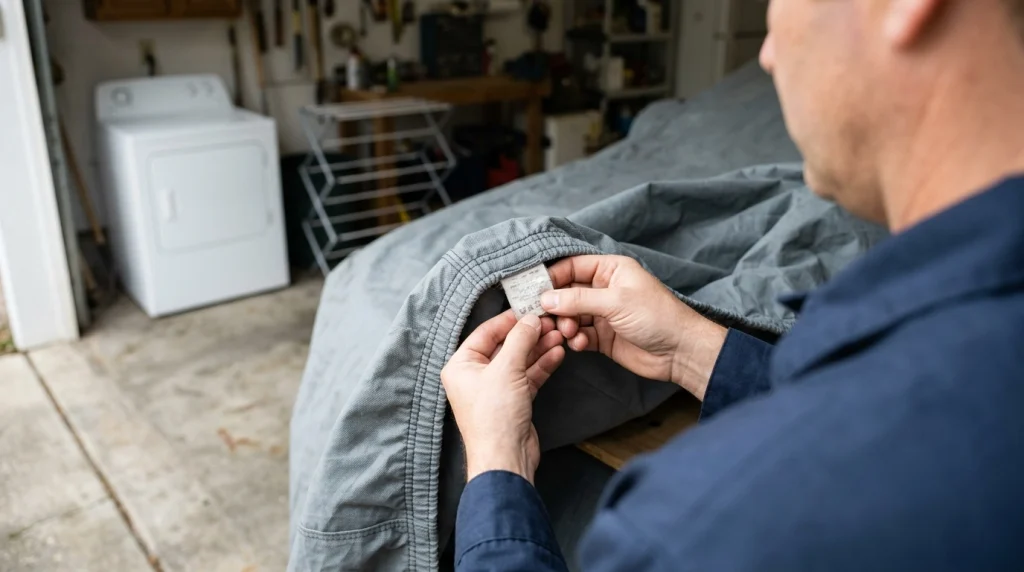
Yes, you can put certain car covers in a dryer if their manufacturer specifically allows machine drying. Other covers must air-dry to preserve their material, shape, and protective features.
A car cover is a protective fabric covering designed to shield a parked vehicle from contaminants such as dust, bird droppings, tree sap, and sunlight. Depending on its construction, it may use a single woven fabric, several protective layers, a soft inner lining, or elastic edges.
Why the manufacturer’s instructions matter
Two covers can look similar while having different care requirements. One may tolerate controlled machine drying, while another may contain materials that lose their shape or performance when exposed to heat.
For example, Covercraft’s published care chart permits low-heat machine drying for certain polycotton and flannel covers. Its instructions specify different drying methods for other fabrics, including several that require air drying. Read the manufacturer’s car cover care chart before selecting a setting.
Use these checks before starting:
- Read the care label: Look for instructions that explicitly permit tumble drying and identify the recommended temperature.
- Check the model: Find the product’s care guide if the label is missing or unclear.
- Inspect the construction: Look for a soft backing, elastic hems, laminated layers, or special surface treatments.
- Choose the safer method: If the instructions are unavailable, air-dry the cover rather than guessing.
Don’t assume that a cover is dryer-safe simply because it feels thin or resembles ordinary polyester clothing.
Which Car Cover Materials Can Go in the Dryer?
Whether a car cover can be tumble-dried depends on its specific construction, not just the general name of its fabric. Manufacturer care charts provide the most reliable starting point.
Polycotton and flannel covers
Some polycotton and flannel covers permit low-heat machine drying. Covercraft’s care chart lists low heat for its gray polycotton and tan flannel covers.
That permission does not automatically apply to every cover made from cotton, polyester, or flannel. Check the exact product instructions and avoid increasing the heat to speed up the process.
Multilayer car covers
Many multilayer covers are designed to air-dry. Their layered construction may combine a soft backing with other materials intended to provide protection from dust, sunlight, or moisture.
For example, Covercraft’s instructions for its three-layer moderate-climate cover call for air drying rather than machine drying. Similar caution applies to its five-layer softback all-climate cover, which the manufacturer says should be air-dried completely before storage.
Stretch-fit and soft-lined covers
Stretch-fit covers deserve particular attention because their fit depends on the material retaining its intended shape. Excessive heat may affect the fabric or elastic edges.
Covercraft’s Form-Fit care guidance recommends air drying and avoiding high heat. If your cover has a stretchy fabric or delicate lining, don’t put it in a dryer unless its own instructions explicitly allow it.
Quick fabric comparison
| Cover type | Suggested drying method | Important consideration |
|---|---|---|
| Polycotton | Low-heat dryer if permitted | Follow the exact fabric care chart. |
| Flannel | Low-heat dryer if permitted | Do not assume all flannel covers are dryer-safe. |
| Multilayer cover | Usually air-dry unless instructions say otherwise | Protect the layers and inner backing. |
| Stretch-fit cover | Air-dry unless machine drying is approved | Preserve elasticity and fit. |
| Unknown material | Air-dry | Confirm the manufacturer’s instructions first. |
This table is a practical guide, not a substitute for the instructions supplied with your specific cover. When the manufacturer’s guidance differs from a general recommendation, follow the product-specific directions.
What Happens If You Put a Car Cover in the Dryer?
Using an unsuitable dryer setting can damage a car cover or shorten its useful life. The extent of the damage depends on the material, the temperature, the drying time, and the cover’s construction.
1. The cover may shrink or lose its fit
Heat can cause certain fabrics to shrink or change shape. A cover that no longer fits properly may leave parts of the vehicle exposed or become difficult to install.
Don’t try to correct a tight-fitting cover by stretching it aggressively. That could put extra strain on the seams and elastic edges.
2. Elastic edges may lose their stretch
Many car covers use elastic around the front and rear hems to help secure the fabric around the vehicle. Excessive heat can affect elastic components, depending on their material and construction.
If the hem becomes loose, the cover may fit poorly or move more easily in the wind. Air drying is the safer option when the manufacturer doesn’t approve machine drying.
3. Protective layers or coatings may be affected
Some covers use specialized finishes or multiple fabric layers. An unsuitable drying temperature could affect the material’s integrity or the performance of certain protective treatments.
However, damage isn’t inevitable every time a cover enters a dryer. The risk depends on the product, which is why the recommended temperature and drying method matter.
4. Seams and the inner lining may deteriorate
The outer fabric, inner lining, and stitching may respond differently to heat and repeated tumbling. If one component changes shape more than another, stress can develop around seams or fitted edges.
A damaged or roughened lining can also become less suitable for contact with a vehicle’s paint. Inspect the inside surface before putting the cover back on your car.
Practical tip
If you’ve already dried the cover, let it cool completely before inspecting it. Check the seams, elastic, lining, and overall fit, and don’t use it on the vehicle if you find melted areas, damaged stitching, or rough material that could contact the paint.
How Do You Air-Dry a Car Cover Properly?
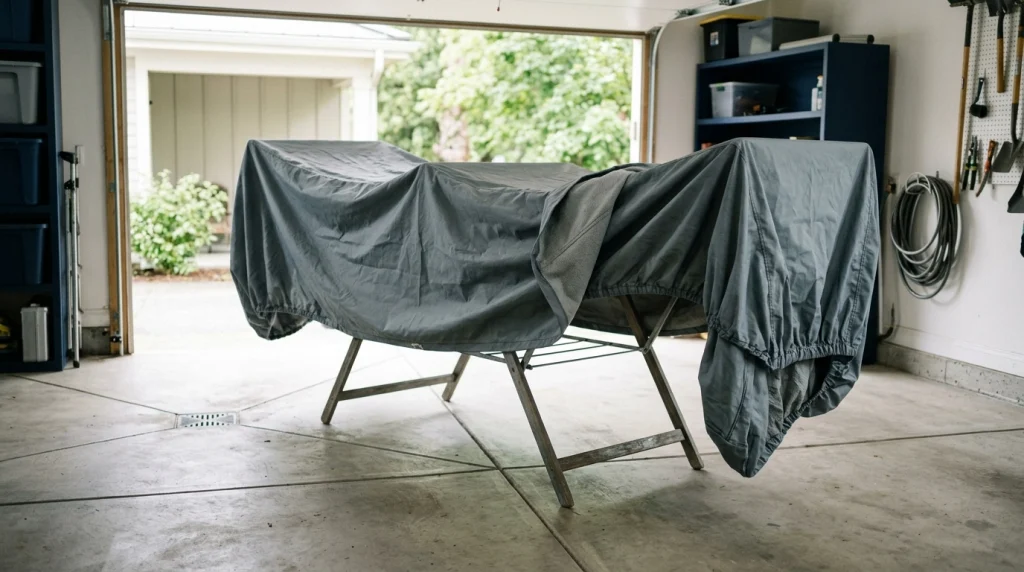
Air drying is a straightforward way to dry a car cover when machine drying is not permitted or the instructions are unclear. The goal is to remove moisture without exposing the material to unnecessary heat or contamination.
Step 1: Remove excess water gently
After washing, allow excess water to drain naturally. You can gently press sections of the fabric if necessary, but avoid forceful twisting or wringing that could strain the seams and fitted edges.
Step 2: Choose a clean drying area
Spread the cover over a clean clothesline, suitable drying rack, or another clean support that can handle its weight. Avoid rough surfaces, sharp edges, dirty floors, and areas where oil or other contaminants could transfer to the fabric.
A shaded, well-ventilated location is generally a sensible choice. Good airflow helps moisture escape without relying on direct, intense sunlight.
Step 3: Spread out the material
Arrange the cover so air can circulate around as much of the fabric as possible. Avoid leaving thick folds or tightly bunched sections that hold moisture.
If the cover is large, such as one designed for an SUV or pickup truck, use enough support to prevent excessive stretching under its wet weight. Follow any specific handling instructions supplied by the manufacturer.
Step 4: Allow every section to dry
Check both sides, including the seams, hems, and folded areas. A surface may feel dry while moisture remains in thicker sections or the inner lining.
Drying time varies with humidity, airflow, fabric thickness, and how much water the cover holds. Don’t rely on a fixed number of hours to determine when it’s ready.
Step 5: Check before folding
Once the cover feels dry, inspect the inner surface and seams for lingering dampness. Fold it only when the entire cover is dry.
Section takeaway: Air drying works best when the cover has good airflow, clean support, and enough time to dry completely. Patience is better than using an unapproved heat setting.
Dryer vs. Air Drying: Which Is Better?
Neither method is automatically best for every car cover. Machine drying can save time when the manufacturer permits it, while air drying avoids the direct heat and tumbling action of a clothes dryer.
| Factor | Machine drying | Air drying |
|---|---|---|
| Drying speed | May be faster when approved | Depends on airflow and humidity |
| Heat exposure | Yes | No dryer heat |
| Material compatibility | Only if the care guide allows it | Generally suitable when done carefully |
| Equipment needed | Suitable dryer | Clean rack, line, or support |
| Main concern | Unsuitable heat or tumbling | Slow drying or trapped moisture |
When should you choose a dryer?
Choose machine drying only when the product’s care instructions explicitly permit it. Use the stated temperature and settings rather than assuming that low heat is safe for every material.
Also consider the cover’s size. A large cover may not tumble freely in a small household dryer, even if the fabric itself allows machine drying.
When should you choose air drying?
Air drying is the better default for unknown materials, multilayer covers with air-dry instructions, and stretch-fit covers that need to retain their shape. It’s also useful when you don’t have a suitable dryer available.
For more detailed material-specific guidance, consult the manufacturer’s official car cover support resources. Check the instructions for your exact product rather than applying one fabric’s rules to another.
How Should You Wash and Store a Car Cover?
Proper drying starts with proper washing. Cleaning a cover incorrectly can cause problems even if you choose the right drying method afterward.
Wash it according to the care label
- Remove loose dirt: Shake off dust and debris before washing.
- Choose the right washer: Use a machine large enough for the cover to move freely, following the manufacturer’s instructions.
- Use the recommended cleaner: Avoid bleach, fabric softener, or other additives unless the care guide explicitly permits them.
- Select the proper cycle: Use the specified water temperature and wash setting.
- Rinse thoroughly: Remove detergent residue according to the product’s washing instructions.
Covercraft’s general cleaning instructions recommend a gentle cycle when available, appropriate cleaning products for the fabric, and avoiding fabric softener. Its guidance also calls for two water-only rinses to remove cleaner residue.
Those instructions illustrate why you should consult the specific care chart rather than treating every car cover like ordinary laundry. Other manufacturers may specify different washing and rinsing procedures.
Make sure the cover is completely dry
Moisture trapped in folded fabric can contribute to mildew, musty smells, and unpleasant storage conditions. A cover that feels dry on the outside may still hold moisture inside thick layers or seams.
Check the entire cover before putting it away, especially if you live in a humid climate or have washed a heavy, multilayer design.
Store it in a clean, dry place
Once the cover is fully dry, fold it according to the manufacturer’s guidance and place it in a clean storage bag or suitable container. Keep it away from standing water, excessive heat, sharp objects, and chemical spills.
Before installing it again, inspect the vehicle-facing surface for grit and debris. A clean cover helps reduce the chance of dragging abrasive particles across your vehicle’s paint.
Section takeaway: Correct washing, complete drying, and clean storage work together to preserve a car cover. Don’t sacrifice material care just to get the cover back onto the vehicle faster.
Frequently Asked Questions
Can I put a waterproof car cover in the dryer?
Only if its manufacturer explicitly permits machine drying. Waterproof or water-resistant covers can use different fabrics, coatings, and layered constructions, so the word “waterproof” doesn’t tell you whether a dryer is safe. Check the product’s care label and use air drying if the instructions are unclear.
Can I dry a car cover on high heat?
Avoid high heat unless the manufacturer specifically instructs you to use it. High temperatures can damage certain fabrics, coatings, elastic edges, or seams. If machine drying is allowed, follow the recommended setting instead of increasing the heat to shorten the drying time.
Can I put a polyester car cover in the dryer?
It depends on the particular polyester cover and its construction. Some polyester-based products allow machine drying, while others require air drying. A multilayer polyester cover may have different care requirements from a lightweight woven cover, so check the exact model’s instructions.
How long does it take to air-dry a car cover?
There is no universal drying time. A lightweight cover may dry relatively quickly in warm, breezy conditions, while a thick cover can take considerably longer in humid weather. Check the seams, lining, and folded sections to confirm that the entire cover is dry before storing it.
Can I put a wet car cover straight back on my car?
It’s best to let the cover dry completely before folding it away or reinstalling it, unless the manufacturer provides different instructions for your specific product. A damp cover can trap moisture against the vehicle and may create conditions that encourage mildew or unwanted odors during prolonged use.
What should I do if I accidentally put my car cover in the dryer?
Let the cover cool completely, then inspect its shape, stitching, elastic edges, surface coating, and inner lining. Compare its fit and condition with how it looked before drying. If you notice melting, significant shrinkage, damaged seams, or a roughened inner surface, contact the manufacturer before using it again.
Can I use a hair dryer to dry my car cover?
Air drying is generally preferable to directing concentrated heat at the fabric. A hair dryer can create localized hot spots, especially when held close to the material. If you need to speed up drying, improve airflow in a clean, ventilated area rather than applying concentrated heat.
Final Takeaway: Check Before You Dry
So, can you put a car cover in the dryer? Yes, but only when the instructions for your specific cover permit it. Some products allow low- or medium-heat machine drying, while others need to air-dry completely.
If you’re uncertain about the material, choose a clean, shaded, well-ventilated drying area. Allow enough time for the seams, lining, and thicker sections to dry before folding and storing the cover.
That simple precaution can help preserve the cover’s fit and condition while keeping it ready for its next use. When in doubt, follow the manufacturer’s care instructions rather than risking unnecessary heat damage.