
How to Remove Mildew From a Car Cover: Safe Step-by-Step Guide

To remove mildew from a car cover, first check the cover’s care label and manufacturer cleaning instructions. Brush or rinse away loose contamination, wash with an approved mild cleaner, rinse thoroughly, and dry the cover completely before putting it back on your vehicle or into storage.
Quick mildew-removal steps
- Check the label: Confirm which detergent, water temperature, washing method, and drying method your cover allows.
- Move outdoors: Handle a visibly mildewed cover where there is good airflow.
- Remove loose debris: Shake, gently brush, or rinse away surface dirt before washing.
- Wash gently: Use the cleaner and washing method approved for that specific cover fabric.
- Rinse thoroughly: Remove cleaner residue from the fabric, seams, hems, and lining.
- Dry completely: Do not fold, bag, or reinstall the cover while any section remains damp.
One important warning
- Don’t automatically use bleach, fabric softener, high heat, or strong household chemicals. They can damage protective coatings or layered cover materials.
Mildew on a car cover usually points to one underlying problem: the fabric stayed damp too long. Cleaning the spots matters, but removing the moisture problem matters just as much.
As of 2026, my approach is simple. I treat the manufacturer’s care label as the final word, clean the mildest way that works, and never store the cover until every seam and hem feels dry.
In This Guide
- Why Does Mildew Grow on a Car Cover?
- How Do You Remove Mildew From a Car Cover?
- What Should You Use to Clean Mildew From a Car Cover?
- Can You Machine-Wash and Dry a Mildewed Car Cover?
- What If the Mildew Smell or Stains Won’t Come Out?
- How Do You Keep Mildew From Coming Back?
- Frequently Asked Questions
Why Does Mildew Grow on a Car Cover?
Mildew develops when moisture remains around contaminated fabric long enough for fungal growth to establish. A damp folded cover, humid garage, wet vehicle, or poor airflow can create those conditions.
Definition: Mildew is a common term for surface fungal growth that often appears as light, gray, white, or dark spotting and may produce a musty odor.
Where does the moisture come from?
I don’t assume rain is the only culprit. A cover can become damp even when the vehicle never sits through a storm.
- Storing the cover wet: Folding damp fabric traps moisture between layers.
- Covering a wet car: Water can remain around mirrors, trim, door seals, emblems, and panel gaps.
- Condensation: Humid air can condense on cooler vehicle surfaces beneath a cover.
- Damp garages: Wet floors, roof leaks, poor ventilation, and high humidity can slow evaporation.
- Organic contamination: Dust, pollen, leaves, bird residue, and other debris can remain embedded in dirty fabric.
The U.S. Environmental Protection Agency emphasizes that controlling moisture is central to controlling mold. That principle applies here even though a car cover isn’t a building surface.
If you remove the spots but keep folding the cover damp, the same problem can return. Fix the drying and storage routine at the same time.
Is mildew the same as ordinary dirt?
No. Normal road dust usually shakes or rinses away without producing a persistent musty smell.
Mildew may leave speckled staining and odor even after the loose surface material is removed. Severe growth can also be difficult to remove from porous material completely.
How Do You Remove Mildew From a Car Cover?
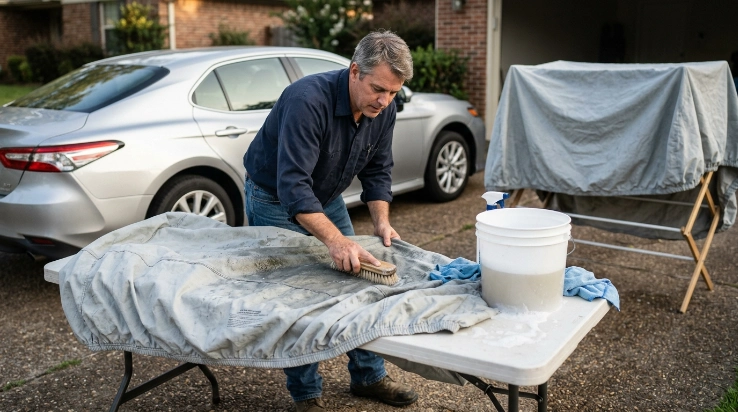
Start with the gentlest cleaning method approved for your exact cover. Don’t copy a cleaning recipe from another fabric unless your manufacturer allows the same products and temperatures.
Step 1: Remove the cover from the vehicle
Take the cover to an open, well-ventilated area. Avoid aggressively shaking a heavily contaminated cover near your face.
If the vehicle underneath is damp, let the car dry separately. Don’t put a freshly cleaned cover back onto wet paint.
Step 2: Read the care instructions
Find the sewn-in label, original instructions, or manufacturer’s online care guide. Look specifically for approved cleaners, water temperature, washer type, and drying method.
Covercraft, for example, publishes different wash and drying settings for different car-cover fabrics. Its general instructions also prohibit fabric softener.
Step 3: Remove loose dirt before washing
Shake off leaves and loose debris outdoors. A gentle garden-hose rinse can also remove surface contamination if the cover’s instructions permit it.
- Don’t scrape the fabric with a hard tool.
- Don’t use a stiff wire brush.
- Avoid grinding dried grit deeper into a soft inner lining.
- Keep the paint-contact side away from dirty pavement.
Step 4: Treat the affected areas gently
Use the approved mild cleaner with a soft cloth, sponge, or soft brush. Work it into the mildewed area without attacking the fabric or waterproof coating.
Let the cleaning action do the work. Hard scrubbing can shorten the life of delicate coatings and laminated materials.
Step 5: Wash the rest of the cover
Visible mildew is a good reason to clean more than one isolated dot. Dirt and moisture can remain in nearby fabric even when you can’t see obvious growth.
Pay attention to elastic hems, seams, straps, mirror pockets, and the inside surface. Those areas can trap both dirt and moisture.
Step 6: Rinse until the cleaner is gone
Cleaner residue shouldn’t remain trapped in the fabric. Rinse according to the manufacturer’s directions and give seams extra attention.
Some manufacturers call for additional rinse cycles. Follow those instructions rather than guessing.
Step 7: Dry the cover completely
This is the step I would never rush. A cover that feels dry across the main panels may still hold water in hems and thicker seams.
- Open the cover fully instead of leaving it bundled.
- Keep both sides exposed to moving air when possible.
- Turn or reposition it if one area stays damp.
- Check seams and elastic sections before storage.
- Use machine heat only when the manufacturer permits it.
Don’t fold the cover because the clock says it should be dry. Fold it when the entire cover is actually dry.
Section Takeaway: Safe mildew removal is a full process: identify the material, remove contamination, wash gently, rinse well, and dry completely. Skipping the drying step is one of the easiest ways to end up with the same problem again.
What Should You Use to Clean Mildew From a Car Cover?
The safest cleaner is the one approved by the manufacturer for your particular cover fabric. Mild detergent or mild soap is common, but that doesn’t make every household cleaner safe.
I would be especially cautious with bleach, concentrated degreasers, strong solvents, and unapproved stain removers. A chemical can remove a stain while also damaging water resistance, color, adhesive layers, or soft lining.
| Cleaning option | General approach | Main caution |
|---|---|---|
| Manufacturer-approved mild detergent | Usually the safest starting point when listed in the care instructions | Use the specified amount, water temperature, and rinse method |
| Mild soap and water | Useful for hand washing or spot cleaning when approved | Soap recommendations vary by cover material |
| White vinegar | Sometimes suggested as a household mildew cleaner | Don’t use unless the cover maker confirms compatibility |
| Chlorine bleach | Avoid as a default mildew treatment | Many cover-care instructions prohibit bleach |
| Fabric softener | Not needed for mildew removal | Some manufacturers specifically prohibit it |
| Strong degreaser or solvent | Generally a poor first choice | May damage coatings, color, bonding, or fabric |
Can you use bleach on a car cover?
Don’t use bleach unless your cover’s manufacturer explicitly says it is safe. Covercraft’s current general car-cover cleaning instructions specify no bleach for the fabrics in its cleaning chart.
That matters because a car cover isn’t just ordinary laundry. Many designs rely on specialized fibers, coatings, soft backings, or bonded layers.
Can you use vinegar?
Vinegar is widely discussed for household mildew, but I wouldn’t automatically put it on a vehicle cover. Acidity and concentration can interact differently with coatings, dyes, elastic, and laminated materials.
If your manufacturer recommends a specific mildew treatment, use that instead. When it doesn’t, ask the manufacturer before experimenting on an expensive cover.
Can You Machine-Wash and Dry a Mildewed Car Cover?
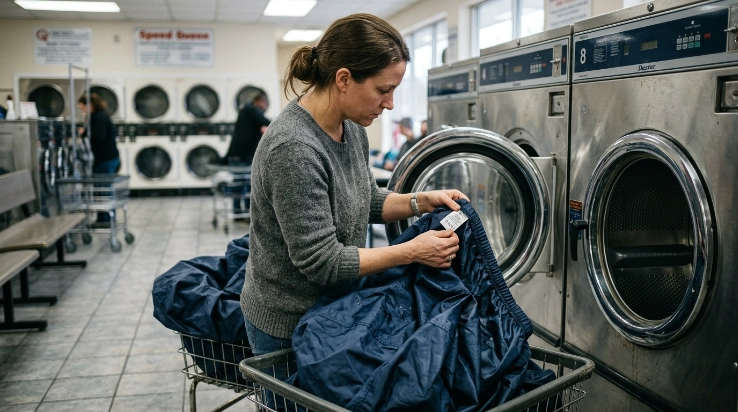
Some car covers can be machine-washed, but the correct machine and drying method depend on the material. Never assume that a cover which fits inside your household washer is safe to wash there.
Covercraft’s published instructions illustrate the differences. Some fabrics permit home washers, while others call for large commercial front-loading machines without agitators.
Why can an agitator be a problem?
A large cover becomes heavy and awkward once saturated. Wrapping around a central agitator can place stress on seams and fabric.
Large SUV and pickup covers can also overwhelm a small washer. A spacious drum gives the material more room to move and rinse.
What water temperature should you use?
Use the exact temperature listed for your cover. Don’t assume hot water is better because you’re dealing with mildew.
Different Covercraft fabrics, for example, specify different temperatures. Some call for cold water while others allow warm water.
Can a car cover go in the dryer?
Only when the manufacturer permits it. Some materials allow controlled machine drying, while others require air drying.
High heat can be especially risky for coated, laminated, elasticized, or synthetic materials. When the instructions say air dry, treat that as a requirement.
What If the Mildew Smell or Stains Won’t Come Out?
A lingering stain doesn’t always mean active mildew remains. Fungal growth can discolor porous material even after cleaning.
The EPA notes that mold can leave staining and cosmetic damage behind. Porous materials can also be difficult to clean completely once contamination penetrates them.
What if the cover still smells musty?
First, make sure it has dried completely. Damp seams can keep producing a musty smell even when the large fabric panels seem dry.
- Open the cover again and increase airflow.
- Check the lining, hems, elastic, straps, and pockets.
- Repeat the approved wash process if contamination remains.
- Inspect the storage bag for odor or mildew too.
- Clean and dry the storage location before putting the cover back.
If the smell returns every time the cover gets slightly damp, inspect the fabric more closely. Persistent contamination may be deeper than a simple surface cleaning can solve.
When should you replace the cover?
Replacement makes sense when the cover can no longer be cleaned adequately or the material has deteriorated. I also wouldn’t keep putting a badly contaminated inner surface against good automotive paint.
- Persistent contamination: Mildew remains widespread after appropriate cleaning.
- Damaged lining: The paint-contact surface has become rough, stained, or degraded.
- Failed material: Layers separate, tear, crumble, or lose structural integrity.
- Damaged seams: Stitching or bonded areas fail during normal handling.
- Poor moisture performance: The cover repeatedly stays saturated or no longer performs as designed.
Before blaming every moisture problem on the cover itself, check the storage environment too. Even a good replacement can develop problems in the same damp conditions.
How Do You Keep Mildew From Coming Back?
The best mildew treatment is preventing the fabric from staying wet. Cleanliness helps, but moisture control is the bigger long-term habit.
Never store a damp car cover
Covercraft recommends cleaning and fully drying a vehicle cover before storage to help prevent mold and mildew. It also recommends breathable storage options rather than trapping moisture inside unventilated plastic.
You can review its vehicle-cover storage guidance when setting up your own routine.
Dry the vehicle before covering it
The paint can look dry while water remains hidden around trim. I check the places that hold water longest before pulling a cover over a daily driver.
- Side mirrors and mirror housings
- Door handles and door seals
- Trunk and hatch edges
- Fuel door
- Emblems and exterior trim
- Spoilers and body seams
- Wheel openings
Keep the cover itself clean
Outdoor covers collect pollen, road dust, bird residue, leaves, and airborne grime. Periodic cleaning prevents that contamination from building up in the fabric.
It also protects your paint. Consumer Reports’ automotive detailing guidance emphasizes careful cleaning practices because trapped dirt can damage vehicle finishes.
Improve airflow in damp storage areas
If your garage regularly feels damp, investigate why. Roof leaks, water entering around doors, wet floors, and poor ventilation can keep both the car and cover humid.
Moisture control is also central to the EPA’s mold and moisture guidance. Cleaning without addressing the moisture source often leads to recurring growth.
Choose the right cover for the environment
An indoor dust cover and an outdoor weather cover solve different problems. Breathability, fit, weather resistance, and intended storage environment all matter.
Current Car and Driver car-cover testing also considers factors such as fit, moisture protection, durability, and indoor-versus-outdoor use.
Section Takeaway: Keep the vehicle dry, keep the cover clean, give damp fabric airflow, and never seal a wet cover in storage. Prevention is easier than repeatedly removing mildew from porous fabric.
Frequently Asked Questions
Can I put a mildewed car cover back on my car?
It’s better to clean and completely dry the cover first. Putting contaminated, damp fabric back against the vehicle can transfer dirt, odor, and moisture while giving the underlying problem more time to continue.
Will sunlight remove mildew from a car cover?
Airflow and drying can help remove the moisture that supports mildew, but don’t assume prolonged direct sunlight is safe for every fabric. UV exposure can affect some materials, so follow the cover manufacturer’s drying instructions first.
Can I pressure-wash a mildewed car cover?
I wouldn’t pressure-wash a cover unless its manufacturer explicitly approves that method. High-pressure water may stress seams, coatings, soft backing, or bonded layers, while a normal hose and approved washing method provide more control.
Can I wash a car cover in a regular washing machine?
It depends on the fabric and cover size. Some covers allow a large household washer, while others require a commercial front-loader without an agitator, so check the manufacturer instructions before loading it.
Why did mildew grow even though I use a waterproof car cover?
Water resistance doesn’t guarantee that every part of a cover stays dry. Condensation, a wet vehicle, humid air, damp ground, rain entering around edges, or storing the cover wet can still create moisture problems.
How do I remove a musty smell from a car cover?
Wash the cover using its approved cleaner, rinse thoroughly, and dry every section completely. If odor remains, inspect seams, lining, storage bags, and the storage area for hidden dampness or contamination before repeating the approved cleaning process.
Should I replace a badly mildewed car cover?
Consider replacement if widespread mildew, odor, or contamination remains after proper cleaning, especially when the inner surface touches the vehicle’s paint. Replacement is also sensible when the fabric, lining, seams, or protective layers have deteriorated.
Final takeaway: Removing mildew from a car cover isn’t about finding the strongest chemical in your garage. Use the cover maker’s approved cleaning method, rinse it thoroughly, dry it completely, and fix whatever allowed moisture to stay trapped in the first place.
If mildew keeps returning, inspect the vehicle, cover, storage bag, and parking environment together. Solving the moisture source is what turns a temporary cleanup into a lasting fix.
