
How to Prevent Condensation Under a Car Cover

Quick Answer
To prevent condensation under a car cover, make sure both the vehicle and cover are completely dry before installation. Use a breathable cover, improve airflow around the parked vehicle, avoid damp ground, and uncover the car when moisture cannot escape. Current car cover testing from Car and Driver also shows why choosing a cover suited to your storage environment matters.
Quick Steps to Stop Condensation
- Dry the car: Remove water from paint, mirrors, trim, seals, wheels, and body gaps.
- Dry the cover: Never reinstall a cover while its inner surface still feels damp.
- Choose breathability: Use fabric that allows water vapor to escape instead of sealing moisture inside.
- Improve airflow: Give humid air somewhere to go, especially inside garages and enclosed storage areas.
- Check the ground: Avoid parking over wet grass, saturated soil, standing water, or persistently damp concrete.
- Inspect regularly: If droplets keep appearing, uncover the vehicle and find the moisture source before covering it again.
Finding droplets underneath a car cover can make it look like the cover is leaking. In many cases, the water formed underneath rather than passing through the fabric.
I’ve learned to treat condensation as an environment problem first. The cover matters, but the car, ground, humidity, airflow, and temperature changes matter too.
In This Guide
- Why Does Condensation Form Under a Car Cover?
- How Do You Prevent Condensation Under a Car Cover?
- What Type of Car Cover Helps Prevent Moisture Buildup?
- Does Parking Location Make Condensation Worse?
- What Should You Do If You Find Moisture Under the Cover?
- How Do You Prevent Condensation During Long-Term Storage?
- Frequently Asked Questions
Why Does Condensation Form Under a Car Cover?
Condensation forms when moisture in the surrounding air meets a vehicle surface cold enough for that water vapor to become liquid droplets. A cover can slow evaporation if that moisture has nowhere to escape.
Condensation under a car cover is moisture that changes from water vapor into liquid water within the small space between the vehicle and its cover.
The National Weather Service explains dew point as the temperature at which water vapor turns into liquid droplets. That basic process explains why a covered car can become wet without rain penetrating the fabric.
A temperature change can create water overnight
Imagine parking a warm vehicle during a humid afternoon. The air trapped around it contains invisible water vapor.
As the vehicle cools overnight, its roof, hood, glass, and other surfaces can reach the dew point. Moisture then begins collecting on those cooler surfaces.
- Warm humid air: Moisture surrounds the parked vehicle.
- Cooling body panels: Metal and glass lose heat after sunset.
- Dew point reached: Water vapor turns into droplets.
- Limited evaporation: Poor airflow keeps those droplets beneath the cover.
The car may already contain hidden water
A car can look dry while still holding water. I always check the places where a towel misses during a quick drying job.
- Mirror housings
- Door handles and seals
- Window trim
- Badges and emblems
- Fuel-door edges
- Trunk and hatch openings
- Wheel arches
Water can slowly drain from these areas after the cover goes on. That moisture may then remain underneath for hours.
Section Takeaway: A car cover does not have to leak for water to appear underneath. Humid air, temperature changes, and hidden wash water can create the same result.
How Do You Prevent Condensation Under a Car Cover?
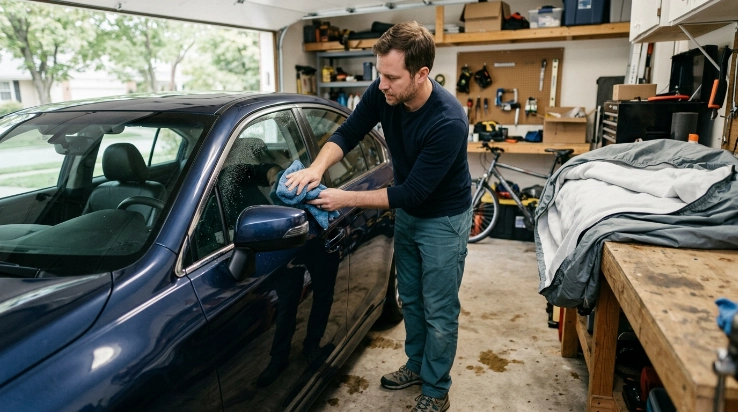
The most effective strategy is simple: reduce moisture before covering the vehicle, then give remaining water vapor a way to escape. Prevention works better than repeatedly drying a wet car afterward.
1. Never cover a wet vehicle
Dry the obvious surfaces first. Then check the places that continue releasing water after the paint looks finished.
My quick test is a clean microfiber towel around mirror edges, weatherstripping, door handles, and the trunk opening. If the towel picks up water, I wait longer.
2. Let a hot car cool before covering it
A vehicle parked after driving can hold substantial heat in its body panels and engine bay. Covering it immediately can create a warm, humid pocket as temperatures change.
Give the vehicle time to cool in a dry location. This also makes handling the cover easier.
3. Make sure the cover itself is dry
A damp cover can put moisture back onto a completely dry vehicle. Check the inner surface before every installation after rain or washing.
If the cover feels damp, hang or spread it where air can reach the fabric. Do not store it tightly folded while wet.
4. Use airflow instead of sealing the car in
Moisture becomes troublesome when it stays trapped. A breathable cover and reasonable airflow help water vapor leave the covered space.
- Open garage vents when appropriate.
- Correct persistent garage humidity.
- Keep the vehicle away from standing water.
- Follow the cover manufacturer’s installation instructions.
- Remove the cover periodically if the environment stays damp.
Section Takeaway: Start with a dry car, a dry cover, and an environment that allows moisture to escape. Those three habits prevent most repeat condensation problems.
What Type of Car Cover Helps Prevent Moisture Buildup?
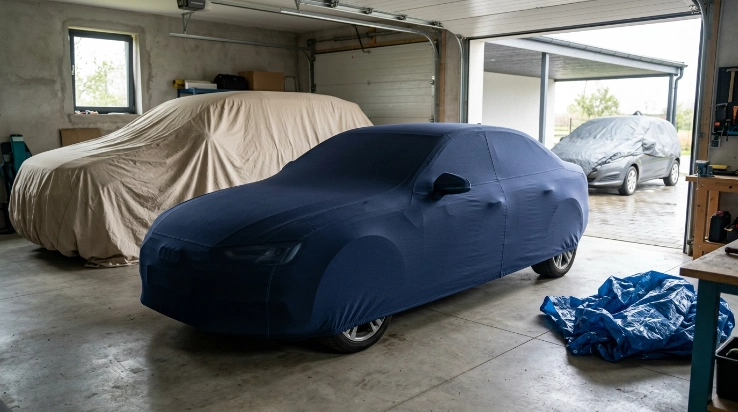
A breathable cover is usually the better choice when condensation is your concern. Breathability allows water vapor to move through the material instead of remaining trapped against the vehicle.
That does not mean every breathable cover is suitable for every location. Indoor and outdoor storage place different demands on the fabric.
| Cover or Situation | Moisture Consideration | Best Approach |
|---|---|---|
| Breathable indoor cover | Allows vapor to escape more easily | Good for a clean, dry garage |
| Weather-resistant outdoor cover | Must balance rain protection with vapor release | Use a model designed specifically for outdoor conditions |
| Plastic tarp or sealed sheet | Can greatly restrict evaporation | Avoid as a substitute for a proper fitted cover |
| Loose oversized cover | Wind can introduce moisture and move fabric against paint | Use the correct size and intended tie-downs |
Breathable does not mean rainproof
These terms describe different jobs. A breathable material can release vapor while still offering useful weather resistance, depending on its construction.
A completely sealed material sounds appealing outdoors. However, stopping outside water means little if moisture already beneath the material cannot escape.
Fit matters too
The cover should match the vehicle closely enough to remain secure. Excess loose fabric can shift in wind and create other paint-care problems.
As of 2026, car-cover designs still vary widely. Check the manufacturer’s intended indoor or outdoor use instead of relying only on words such as “all-weather.”
Does Parking Location Make Condensation Worse?
Yes. The surface beneath the car and the surrounding airflow can strongly influence how much moisture remains around a covered vehicle.
Grass and soil can be moisture sources
Grass and damp soil release moisture into the air around the vehicle. This becomes especially noticeable overnight when temperatures fall.
For repeated or long-term storage, I prefer a dry paved surface. Standing water near the parking space is another warning sign.
A garage can still be humid
Indoor parking does not guarantee a dry environment. Leaks, damp concrete, poor ventilation, or recent washing can leave a garage humid for long periods.
- Check the roof and walls for leaks.
- Look for water entering beneath the garage door.
- Inspect the floor for persistent dark or damp areas.
- Allow wet floors to dry before long storage.
- Improve ventilation when the garage holds humid air.
Outdoor temperature swings matter
A clear afternoon can turn into a cool, damp night. That change can cause condensation even when no rain falls.
If your vehicle repeatedly becomes wet beneath the cover at the same time of day, pay attention to weather changes. The pattern can help separate condensation from an actual leak.
What Should You Do If You Find Moisture Under the Cover?
Remove the cover rather than leaving the vehicle trapped in a damp environment. Let both the car and cover dry before reinstalling anything.
Next, identify the moisture pattern. That can tell you whether you are dealing with condensation, existing water, or rain intrusion.
| What You See | Likely Explanation | First Check |
|---|---|---|
| Fine droplets across roof and glass | Condensation | Humidity, temperature changes, and airflow |
| Wet area directly beneath a seam after rain | Possible water intrusion | Seam, tear, fabric condition, or wind entry |
| Moisture soon after washing | Hidden wash water | Mirrors, trim, seals, badges, and openings |
| Cover lining feels wet before use | Cover stored damp | Dry the cover completely |
Do not cover the car again immediately
Reinstalling the cover while either surface remains damp resets the problem. Give the vehicle and fabric enough airflow to dry completely.
Check the paint once dry. Persistent moisture combined with damaged paint or exposed metal deserves attention because corrosion needs moisture to progress.
How Do You Prevent Condensation During Long-Term Storage?
Long-term storage requires more preparation because a small moisture problem can continue unnoticed. Start with the cleanest, driest environment you can reasonably provide.
Kelley Blue Book’s long-term vehicle storage guidance recommends secure covered storage when possible. A garage also gives you more control over rain, wind, and surrounding moisture.
Use a pre-storage checklist
- Wash the vehicle: Remove dirt, road residue, bird droppings, and other contamination.
- Dry everything: Pay special attention to seams, mirrors, trim, wheels, and weatherstripping.
- Check the floor: Do not begin storage over standing water or a persistently wet surface.
- Inspect the cover: Make sure the inside is clean and fully dry.
- Confirm the fit: Install the cover according to its instructions.
- Inspect periodically: Look underneath during changing weather or high-humidity periods.
Condensation is only one part of storing a vehicle. Battery condition, tires, fuel, rodents, fluids, and brakes also deserve attention when a car will sit for weeks or months.
The broader Edmunds long-term car storage checklist covers those additional systems.
Do moisture absorbers replace ventilation?
No. A moisture absorber or dehumidifier may help in an enclosed garage, but it should address the environment rather than compensate for a wet car or unsuitable cover.
I would fix an active leak, damp floor, or wet cover first. Those problems can overwhelm small moisture-control products.
Section Takeaway: Long-term storage works best when you control moisture before covering the vehicle. Periodic checks matter because storage conditions can change after the car is parked.
Frequently Asked Questions
Is condensation under a car cover normal?
Occasional condensation can occur when humid air and vehicle temperature change enough to reach the dew point. Repeated or heavy moisture is a sign to check the cover’s breathability, the parking environment, hidden water, and airflow.
Should I remove my car cover if it is wet underneath?
Yes. Remove the cover and allow both the vehicle and cover to dry completely before reinstalling it. Leaving wet surfaces covered slows evaporation and can keep paint, trim, and exposed metal damp longer than necessary.
Can a waterproof car cover cause condensation?
A highly water-resistant cover can still have condensation underneath because condensation does not require rain to pass through the fabric. Moist air already beneath the cover can turn into droplets as the vehicle cools.
Will a breathable car cover completely stop condensation?
No cover can guarantee zero condensation in every environment. Breathability helps water vapor escape, but a wet vehicle, humid garage, damp ground, or large temperature swings can still create moisture.
Can I put a car cover on immediately after washing my car?
I would wait until the car is completely dry. Check mirrors, window seals, door handles, badges, hatch openings, wheel arches, and other areas that can release trapped water after the visible paint has dried.
Does parking a covered car on grass increase moisture?
It can. Damp grass and soil add moisture around the vehicle, especially during humid nights. A dry paved or otherwise moisture-controlled surface is a better choice for regular covered parking or long-term storage.
How often should I check a covered car in storage?
There is no universal schedule for every climate and storage space. Check more frequently during humid weather, temperature swings, heavy rain, or whenever the garage develops dampness, leaks, or poor ventilation.
Final Takeaway: Preventing condensation under a car cover comes down to moisture control. Put the cover on only when the vehicle and fabric are dry, choose a breathable cover suited to the environment, keep the parking area dry, and give trapped water vapor a way to escape.
If you lift the cover and find droplets, do not simply cover them again. Dry everything, identify where the moisture came from, and correct that source before the next installation.