
Car Cover Maintenance Mistakes: 12 Common Errors to Avoid

Quick Answer
The biggest car cover maintenance mistakes are putting a cover over a dirty or wet vehicle, storing the cover damp, using harsh cleaners, ignoring its care label, dragging it across the ground, and allowing a loose cover to flap in the wind. A clean, dry, correctly fitted cover protects paint far better and usually lasts longer. Current car cover testing and care guidance also emphasizes clean surfaces, proper storage, fit, and manufacturer instructions.
Mistakes to avoid first
- Covering dirty paint: Trapped dust and grit can rub against the finish.
- Trapping moisture: A wet car or damp cover can keep moisture against the vehicle.
- Using harsh cleaners: Bleach, strong household cleaners, and unapproved detergents may damage some fabrics or coatings.
- Using high heat: Machine drying can harm certain materials unless the manufacturer specifically allows it.
- Ignoring poor fit: Loose fabric can move repeatedly across the paint in windy conditions.
- Storing it dirty: Contamination picked up today can end up against your paint next time.
My simple rule
- If either the vehicle or the inside of the cover is dirty, wet, or gritty, fix that before installing the cover.
Car cover maintenance mistakes often look harmless until you notice scratches, mildew smells, stretched seams, or a cover that no longer fits properly. Most problems come from contamination, moisture, incorrect cleaning, poor handling, or movement.
I treat a car cover as a piece of protective equipment, not a disposable tarp. A few simple habits can protect both the cover and the daily-driver underneath it.
In This Guide
- What Are Car Cover Maintenance Mistakes?
- Which Cleaning Mistakes Damage a Car Cover?
- Why Is Putting a Cover on a Dirty or Wet Car a Problem?
- How Do Drying and Storage Mistakes Shorten Cover Life?
- Can Poor Fit and Wind Damage the Cover or Paint?
- What Maintenance Routine Prevents These Mistakes?
- Frequently Asked Questions
What Are Car Cover Maintenance Mistakes?
Car cover maintenance mistakes are cleaning, installation, drying, storage, or handling habits that reduce a cover’s ability to protect a vehicle. They can also create new risks for the paint, trim, and cover itself.
Definition: A car cover is a fitted or semi-fitted protective fabric barrier placed over a parked vehicle to reduce exposure to dust, debris, sunlight, moisture, and other environmental contamination.
The cover is only one part of the system
A good cover cannot compensate for dirty paint, trapped moisture, or constant wind movement. The vehicle, the cover, and the storage environment all matter.
That is why I check the contact surfaces first. If the inside fabric feels gritty or the paint is dusty, I do not pull the cover across the vehicle.
- Paint condition: Heavy dust, sand, dried mud, and road grime should be removed first.
- Cover condition: The inner surface should be reasonably clean and free of abrasive debris.
- Moisture: Both surfaces should be dry before long-term covering.
- Fit: The cover should sit securely without excessive tension or large loose sections.
- Environment: Indoor, outdoor, windy, humid, and long-term storage conditions require different levels of care.
Why small mistakes become bigger problems
Every installation creates some contact between the fabric and vehicle. Dirt between those surfaces can turn normal installation and removal into repeated abrasion.
Moisture creates another problem. Even when a fabric is breathable, folding a wet cover or trapping water underneath it makes drying harder.
| Maintenance Mistake | Possible Result | Safer Approach |
|---|---|---|
| Covering heavy dirt | Grit can rub against paint | Clean the vehicle first |
| Storing the cover damp | Odor, mildew, and fabric deterioration | Air-dry completely before storage |
| Wrong detergent | Possible coating or fabric damage | Follow the care label |
| Loose outdoor fit | Flapping and repeated rubbing | Center and secure the cover |
| Dragging on pavement | Dirty or damaged inner surface | Lift and fold it off the ground |
The important point is simple. Maintaining the cover is also part of maintaining the vehicle’s exterior.
Which Cleaning Mistakes Damage a Car Cover?
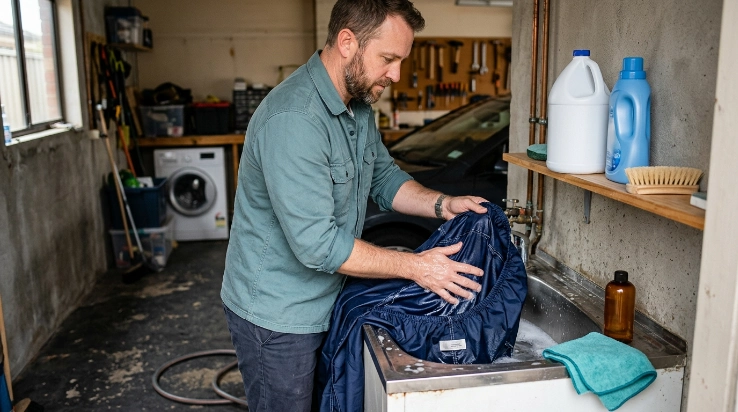
The most common cleaning mistake is assuming every cover can be washed like ordinary laundry. Materials, coatings, stitching, and backing differ, so the manufacturer’s care label should come first.
I would rather spend one minute checking those instructions than ruin an expensive cover in one wash.
1. Using bleach, fabric softener, or aggressive household cleaners
Strong cleaners may affect protective treatments or fabric properties. Fabric softener can also leave residue on materials that were not designed for it.
Use only the cleaning method and detergent type approved by the cover manufacturer. When the instructions call for a mild cleaner, more detergent does not mean better cleaning.
2. Machine washing a cover without checking the label
Some car covers are machine washable. Others require hand washing, oversized commercial machines, or another specific process.
A bulky cover can also be a poor match for a small household washer. Forcing it into the machine may prevent proper cleaning and rinsing.
3. Using a washer with an unsuitable agitator
A traditional center agitator can create concentrated pulling and twisting on some cover materials. Follow the specific manufacturer’s instructions before choosing a machine.
If machine washing is approved, make sure the washer has enough capacity for the cover to move freely.
4. Scrubbing aggressively
Dried bird droppings, tree residue, mud, and stains can tempt you to scrub hard. Aggressive abrasion can be worse than the original spot.
Loosen contamination gently and use the approved cleaning solution. Avoid stiff brushes unless the manufacturer specifically permits them.
5. Leaving detergent behind
Incomplete rinsing leaves cleaning residue in the fabric. It can also attract more dirt during later use.
Rinse thoroughly until obvious soap residue is gone. If your care instructions recommend an extra rinse, follow them.
For the vehicle itself, Edmunds’ car-washing guidance recommends removing loose contamination first and using products intended for automotive finishes.
Section Takeaway: Cleaning a car cover is not the same as washing normal laundry. Read the care label, use approved products, avoid unnecessary abrasion, and rinse thoroughly.
Why Is Putting a Cover on a Dirty or Wet Car a Problem?
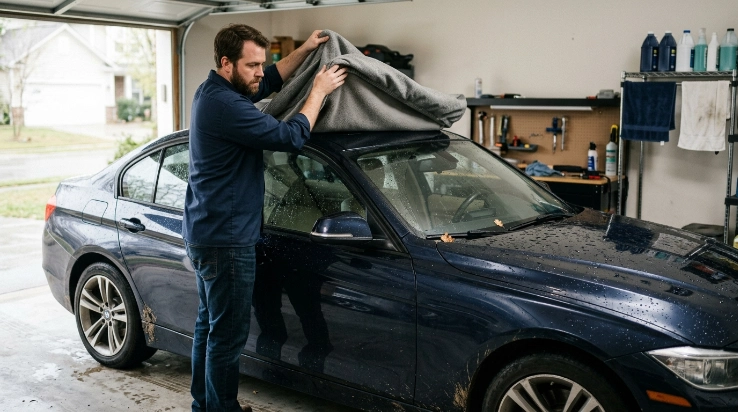
A car cover works best when the paint and inside of the cover are clean. Dust, sand, and road grit trapped between them can increase the chance of fine scratches during movement.
This matters even with a soft cover. Soft material does not make abrasive contamination disappear.
6. Installing the cover over heavy dust or grit
Think about what happens when you remove a large cover. The fabric slides across roof edges, fenders, mirrors, and bumpers before it comes free.
If gritty contamination sits between those surfaces, each movement creates unnecessary contact. I clean visibly dirty paint before covering it for more than a brief period.
- Light garage dust: Assess how much contamination is present before covering.
- Road grime: Wash the vehicle before long-term storage.
- Sand or mud: Remove it rather than trapping it underneath.
- Bird droppings or sap: Clean them from the paint before covering.
Consumer Reports’ exterior-cleaning guidance likewise stresses gentle cleaning practices and avoiding dirt transfer that can damage a vehicle’s finish.
7. Covering a wet vehicle
Do not intentionally trap wash water or rain beneath a car cover for storage. Give the vehicle time to dry, especially around mirrors, trim, seams, wheels, and recessed areas.
Moisture can also come from condensation rather than rain. Humid garages deserve extra attention to airflow and damp surfaces.
8. Assuming “waterproof” means moisture cannot appear underneath
Water can reach a covered vehicle in several ways. Rain may enter around loose edges, moisture may remain after washing, or humid air may condense on cooler panels.
That is why diagnosing moisture matters more than blaming the cover immediately. Check the car, fabric, fit, storage area, and recent weather.
What if you only drove through light dust?
You do not need a full detailing session every time the car moves. Use judgment based on visible contamination and how long the car will remain covered.
My threshold becomes stricter for a freshly polished or dark-colored finish because small marks can be more noticeable. A few extra minutes of preparation is easier than correcting paint later.
Section Takeaway: A cover should not become a way to hide a dirty or wet car. Remove abrasive contamination and let trapped moisture escape before long-term covering.
How Do Drying and Storage Mistakes Shorten Cover Life?
Drying and storage matter because the cover spends much of its life folded rather than installed. Packing it away carelessly can preserve moisture and contamination until the next use.
9. Folding the cover while it is still damp
A damp cover should be opened and allowed to dry completely before storage. Check the inner surface as well as the exposed outer surface.
Do not assume the whole cover is dry because one panel feels dry. Folds, seams, elastic sections, and multi-layer areas can hold moisture longer.
10. Using high heat without permission
Some covers permit machine drying, while others do not. Heat can affect certain coatings, elastic parts, backing materials, or fabric dimensions.
The safest universal instruction is to follow the manufacturer’s drying directions. Air drying is often the conservative choice when machine drying is not approved.
11. Throwing the cover onto the garage floor
The outer surface of a car cover is designed to face contamination. The inner surface should stay as clean as practical because it touches the vehicle.
Dragging or dropping the cover onto concrete can transfer grit to the fabric. That contamination may touch the paint the next time you install it.
A cleaner folding routine
- Remove loose debris: Shake or brush away leaves and dry surface dirt.
- Check for moisture: Dry both sides fully before folding.
- Keep it off the ground: Fold or roll it while maintaining control of the clean side.
- Use clean storage: Place it in its supplied bag or another suitable clean, dry container.
- Choose a dry location: Keep the stored cover away from standing water and persistent dampness.
That routine is simple enough to become automatic. Consistency matters more than making the process complicated.
Can Poor Fit and Wind Damage the Cover or Paint?
Yes. A poorly fitted car cover can move more than intended, while an overly tight cover can place unnecessary stress on seams, mirror pockets, hems, and accessories.
The goal is a secure fit without forcing the material across the vehicle.
12. Ignoring flapping, stretched seams, and damaged tie-downs
A large loose section gives wind more fabric to grab. Repeated movement can wear the cover and increase contact with painted panels.
Check the orientation before assuming the cover is the wrong size. A cover installed backward or off-center can fit badly even when its labeled size is correct.
- Center the cover: Align the roof, bumpers, and mirror areas before pulling the hems into place.
- Check elastic: Replace or repair the cover when worn elastic no longer holds properly.
- Inspect straps: Look for damaged buckles, webbing, stitching, and reinforced attachment points.
- Avoid excessive tension: Never force an undersized cover over mirrors, spoilers, racks, or sharp accessories.
- Check after strong weather: Make sure an outdoor cover has not shifted or partly detached.
Does securing the cover secure the vehicle?
No. A strap or cable may help keep a cover in place or discourage easy removal, but it does not replace normal vehicle security.
Keep doors and windows secured, remove the keys, and follow normal parking precautions. NHTSA’s vehicle theft prevention guidance recommends locking the vehicle, taking the keys, hiding valuables, and choosing well-lit parking when possible.
Section Takeaway: A car cover should stay controlled without being stretched excessively. Persistent flapping, loose hems, strained seams, or damaged straps deserve attention before the next windy day.
What Maintenance Routine Prevents These Mistakes?
You do not need a complicated calendar for car cover care. A short inspection before and after use catches most problems while they are still small.
As of 2026, I prefer condition-based maintenance instead of pretending every cover needs washing on the same schedule. Indoor dust covers and outdoor daily-use covers live very different lives.
Before installing the cover
- Check the vehicle: Look for heavy dust, grit, mud, sap, bird droppings, and moisture.
- Check the cover: Make sure the inner surface is dry and reasonably clean.
- Inspect sharp areas: Antennas, damaged trim, racks, or accessories should not strain the fabric.
- Confirm orientation: Identify the front and rear before pulling the cover across the vehicle.
After removing the cover
- Shake off debris: Remove leaves, loose dirt, and other contamination before folding.
- Look for damage: Check seams, mirror pockets, elastic hems, straps, grommets, and high-contact areas.
- Dry damp sections: Do not pack moisture into a storage bag.
- Keep it controlled: Avoid letting clean interior fabric drag across pavement.
When should you wash it?
Wash the cover when contamination can no longer be removed by light shaking or spot cleaning, or when the manufacturer recommends washing. Heavy pollen, mud, bird residue, and obvious grime are good reasons to inspect it sooner.
Do not choose an arbitrary washing interval if the cover maker specifies something different. Material-specific instructions take priority over generic internet advice.
When should you replace the cover?
Replacement should depend more on condition than age alone. A lightly used indoor cover may age differently from one exposed to daily sun, wind, rain, and handling.
- Damaged inner surface: Replace the cover when the lining becomes rough, deteriorated, or unsafe for paint contact.
- Major fabric weakness: Look for brittleness, thinning, cracking, or repeated tears.
- Failed seams: Widespread seam separation can make the cover unreliable.
- Lost fit: Stretched elastic or permanent sagging can allow excessive movement.
- Persistent leakage: Investigate whether the problem is fabric failure, seams, fit, or condensation.
General vehicle maintenance guidance from Car and Driver follows the same useful principle: regular inspection helps small problems get addressed before they become larger ones.
Section Takeaway: Inspect the cover by condition, not just by date. Clean it when needed, dry it before storage, and stop using it when the lining, seams, fabric, or fit can no longer protect the vehicle reliably.
Frequently Asked Questions About Car Cover Maintenance Mistakes
Can a dirty car cover scratch paint?
Yes. Dirt, sand, or gritty debris trapped on the inner surface can rub against paint while the cover moves during installation, removal, or windy conditions. Keep the vehicle and contact side of the cover reasonably clean before use.
Should I wash my car every time before using a car cover?
Not necessarily. The important issue is contamination, not following a mandatory wash schedule. If the paint has significant dust, sand, mud, road grime, bird droppings, or other abrasive material, clean it before covering the vehicle.
Can I put a wet car cover in its storage bag?
It is better to dry the cover completely first. Folding damp material can trap moisture in seams and layers, which can encourage odors, mildew, and premature deterioration during storage.
Can I wash a car cover in a washing machine?
Only if its manufacturer allows machine washing. Car cover materials vary, and some require a specific machine type, cycle, temperature, or detergent. Read the sewn-in label or manufacturer’s care instructions before washing.
Can I put a car cover in the dryer?
That depends on the cover. Some fabrics allow machine drying under specific conditions, while others require air drying. Do not assume a normal high-heat dryer cycle is safe without checking the manufacturer’s instructions.
How often should I clean a car cover?
There is no single interval for every cover. Inspect it regularly and clean it when dirt, pollen, stains, road grime, or other contamination builds up. Outdoor and daily-use covers normally require closer attention than lightly used indoor covers.
Is a loose or tight car cover worse?
Both can cause trouble. A loose cover can flap and rub in wind, while an overly tight cover can strain seams and become difficult to install without dragging. Aim for the secure fit specified for your vehicle and cover design.
Final Takeaway: Most car cover maintenance mistakes are preventable. Keep both surfaces clean and dry, follow the manufacturer’s cleaning instructions, avoid dragging the cover, store it carefully, and pay attention to fit and wear.
If the cover starts creating more problems than it prevents, inspect it before using it again. A worn, contaminated, or poorly fitting cover should never get a free pass just because it once protected the car well.