
Wrong Size Car Cover: Signs, Risks, and How to Fix the Fit

Quick Answer
A wrong size car cover is usually either stretched too tightly across the vehicle or loose enough to sag and move. A cover that is too small can leave body panels exposed and strain seams, while an oversized cover can shift in wind and rub dirt against the paint. Check your vehicle details and confirm the correct cover fit before trying to force the cover into place.
Signs Your Cover Is the Wrong Size
- Exposed panels: A small cover may not reach below both bumpers or fully cover the sides.
- Stretched seams: Fabric that looks heavily tensioned around mirrors, spoilers, or bumpers is probably too tight.
- Loose fabric: Large folds and sagging sections suggest the cover is oversized.
- Wind movement: A cover that repeatedly lifts or flaps has too much free material or poor retention.
- Difficult installation: You should not need excessive force to pull a correctly sized cover over the car.
Best Next Step
- Use straps only for minor looseness. Replace or exchange a cover that clearly belongs to another vehicle size or body style.
I’ve seen drivers focus heavily on waterproof layers and UV ratings while overlooking fit. Yet fit is what keeps those protective materials positioned where they need to be.
The good news is that identifying a wrong size car cover is simple. This guide explains what to look for, what can go wrong, and how to choose the correct replacement in 2026.
In This Guide
- What Does a Wrong Size Car Cover Look Like?
- Can a Wrong Size Car Cover Damage Your Paint?
- How Do I Know if My Car Cover Is Too Small?
- How Do I Know if My Car Cover Is Too Big?
- How Do You Measure a Car for the Correct Cover Size?
- Can You Fix a Wrong-Size Car Cover or Should You Replace It?
- Frequently Asked Questions
What Does a Wrong Size Car Cover Look Like?
A wrong size car cover does not follow the vehicle closely enough to stay secure without excessive stretching, sagging, or bunching. The problem can appear at the front, rear, mirrors, rocker panels, or roofline.
Definition: A correctly sized car cover should cover the intended exterior surfaces without needing excessive stretching and without leaving large areas of loose fabric that can move freely.
The easiest check is to install the cover on a clean, dry vehicle. Then walk around the car instead of judging the fit from one side.
Pay special attention to the bumper ends, mirrors, wheel arches, lower doors, and any accessories. Roof racks, spoilers, antennas, brush guards, and wide mirrors can change the required shape.
| Fit Condition | What You Will Notice | Best Action |
|---|---|---|
| Too small | Exposed bodywork, tight seams, strained mirror areas, difficult installation | Move to the correct size or vehicle-specific pattern |
| Too large | Sagging fabric, large folds, loose corners, excessive movement | Exchange it unless the looseness is minor and safely adjustable |
| Correct fit | Full intended coverage with controlled tension and minimal loose material | Secure it according to the manufacturer’s instructions |
One common mistake is assuming every sedan, SUV, or pickup within the same general category has the same shape. Vehicle length matters, but roof height, body profile, mirrors, and accessories matter too.
Can a Wrong Size Car Cover Damage Your Paint?
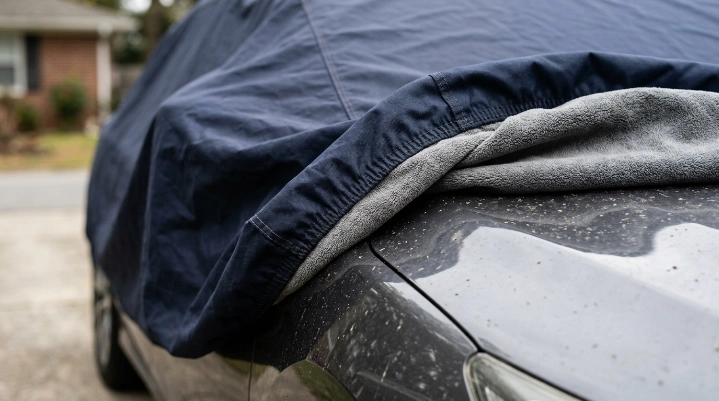
Yes, an incorrect fit can increase the chance of paint problems, especially when a loose cover moves across a dirty surface. The combination of movement and abrasive contamination matters more than looseness alone.
A clean cover moving slightly over clean paint is different from dusty fabric repeatedly rubbing across dusty paint. That is why good car-cleaning practices matter before covering a vehicle.
- Loose covers can move: Wind can repeatedly shift excess fabric over painted surfaces.
- Dirt can act as an abrasive: Dust or grit trapped between the cover and paint can increase scratching risk.
- Tight covers can stress contact points: Mirrors, antennas, spoilers, and sharp body contours may carry excessive tension.
- Poor coverage leaves areas exposed: A short cover defeats part of the reason you installed it.
- Wet contamination needs attention: Leaves, dirt, and moisture should not remain trapped against the finish.
Kelley Blue Book’s exterior-care resources are also useful when deciding how to protect paint beyond simply covering the car. Washing, surface protection, parking conditions, and cover cleanliness all work together.
Does a loose car cover always scratch paint?
No. A loose cover does not automatically scratch a car, but uncontrolled movement increases the opportunity for rubbing.
The risk becomes more concerning when the vehicle or inner cover surface contains sand, dust, dried mud, or other gritty material.
- Install the cover only when practical on a reasonably clean surface.
- Keep the inside of the cover clean.
- Do not drag a dirty cover across the paint.
- Inspect outdoor covers after high winds.
- Follow the cover manufacturer’s washing instructions.
Consumer Reports also notes that environmental debris can harm exterior finishes and discusses car covers as one protection option. Their guidance on leaves and vehicle paint reinforces why keeping contamination away from the finish matters.
How Do I Know if My Car Cover Is Too Small?
A car cover is probably too small if you have to stretch it aggressively just to reach both ends of the vehicle. It should not feel like you are forcing the fabric past its normal shape.
When I check a questionable fit, I start with the corners and mirrors. These areas usually reveal excessive tension quickly.
Common signs of an undersized cover
- One bumper stays exposed: Pulling the cover over the front causes it to lift away from the rear, or vice versa.
- The sides ride high: Lower doors, rocker panels, or portions of the fenders remain uncovered.
- Mirror pockets do not align: Vehicle-specific covers should not require you to pull pockets dramatically out of position.
- Seams look strained: Stitching appears heavily tensioned after installation.
- Elastic hems will not seat properly: The front or rear hem keeps slipping upward.
- Installation requires force: You need hard pulling instead of normal stretching and positioning.
Do not assume the fabric will permanently stretch enough to solve a major sizing error. Repeatedly forcing a small cover can shorten its useful life or damage seams.
Also check whether the vehicle has accessories that were missing from the original fit description. An aftermarket spoiler, roof rack, light bar, or larger bumper can turn an otherwise correct listing into a poor real-world fit.
How Do I Know if My Car Cover Is Too Big?
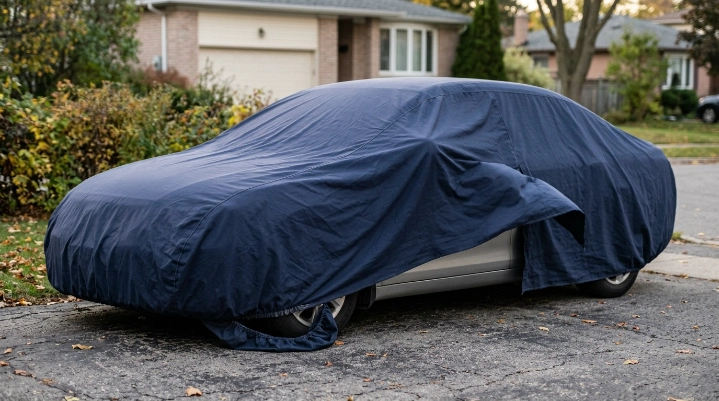
An oversized car cover usually leaves large folds, sagging fabric, or loose sections even after the elastic hems and normal straps are secured. A little working room is normal; excessive free material is not.
Signs your cover is oversized
- Large fabric folds: Material gathers heavily along the doors, hood, trunk, or roof.
- Loose bumper areas: The front or rear corners will not stay tucked around the vehicle.
- Repeated flapping: Sections move noticeably during ordinary wind.
- Fabric reaches the ground: Excess material can contact dirt, water, or debris around the parked car.
- Straps carry all the tension: The cover only looks secure because the straps are pulling large amounts of extra fabric underneath.
A universal cover can naturally look less tailored than a custom-fit model. That alone does not mean the cover is unusable.
The important question is whether it stays controlled and covers the vehicle properly. A cover that behaves like a loose sail outdoors is not a good fit.
Why outdoor use makes oversizing more noticeable
Wind turns extra fabric into moving fabric. That movement can pull at seams, loosen retention points, and bring dirt underneath the cover.
Indoor use is more forgiving because strong wind is absent. Even indoors, however, a huge cover can be inconvenient and easier to drag across the floor.
How Do You Measure a Car for the Correct Cover Size?
Start with your exact year, make, model, trim, and body style whenever the cover manufacturer provides a vehicle lookup. That is often more reliable than choosing only by labels such as medium sedan or large SUV.
For universal covers, compare the manufacturer’s sizing chart with your vehicle’s actual dimensions. Never assume another brand’s size names use identical measurements.
Basic measuring process
- Park on level ground. Make sure you can safely walk around the whole vehicle.
- Measure overall length. Measure from the furthest forward point to the furthest rearward point.
- Check overall width. Follow the cover manufacturer’s instructions on whether mirrors are included.
- Check overall height. Measure from the ground to the highest fixed part of the vehicle.
- List exterior accessories. Note spoilers, racks, antennas, brush guards, spare tires, or other additions.
- Compare the measurements. Match your numbers to the specific manufacturer’s chart rather than guessing by vehicle class.
If your vehicle sits near the boundary between two sizes, contact the cover manufacturer before ordering. The correct choice can depend on fabric stretch, pattern shape, and retention design.
Custom fit vs. universal fit
| Cover Type | How Fit Is Selected | Typical Advantage |
|---|---|---|
| Custom fit | Specific vehicle year, make, model, body style, and available options | Closer contour and more precise component placement |
| Semi-custom | A narrower group of similar vehicle shapes | Middle ground between fit and flexibility |
| Universal | General dimension and body-style ranges | Broad compatibility and simple replacement |
Can You Fix a Wrong-Size Car Cover or Should You Replace It?
You can correct minor looseness with the retention system designed for the cover. You should replace or exchange it when the underlying size or shape is clearly wrong.
Straps are meant to secure a compatible cover. They are not a substitute for several inches of missing coverage or a completely oversized pattern.
When an adjustment may be enough
- The cover reaches all intended body areas.
- Only small sections appear slightly loose.
- The factory elastic hems still sit correctly.
- Manufacturer-supplied straps control normal movement.
- No mirror pocket or body contour is being pulled out of position.
When you should exchange the cover
- The front and rear cannot both be covered correctly.
- The fabric requires excessive force to install.
- Large amounts of material remain loose after normal adjustment.
- Mirror pockets or shaped sections clearly do not match the vehicle.
- The product listing specifies a different body style or dimension range.
I would rather exchange an obviously wrong cover once than fight with it every time the car is parked. A cover that is difficult to install often ends up staying folded in the garage.
Should you add your own bungee cords?
Avoid improvising a heavily tensioned web of cords around the vehicle. Extra tension can pull the cover into areas the manufacturer did not design as load points.
Use the supplied retention system or an accessory approved for that cover. Never route straps where they could interfere with hot components, moving parts, or unsafe areas beneath the vehicle.
Mechanic Alert: If securing the cover would require crawling beneath a vehicle in an unsafe position or lifting the vehicle, do not attempt it. Use a safer attachment method or get professional help.
Frequently Asked Questions
Is it better for a car cover to be slightly too big or too small?
Neither is ideal, but a slightly loose compatible cover may sometimes be manageable with its intended retention system. A cover that is clearly too small can leave areas exposed and place unnecessary tension on seams, mirrors, spoilers, and hems.
Can I use an SUV cover on a sedan?
Only if the manufacturer’s sizing information specifically lists your sedan as compatible. SUV covers often differ in height and body profile, so matching only the overall length can still leave excessive loose material.
Should a car cover touch the ground?
A properly fitted cover generally should not leave large amounts of fabric lying on the ground. Ground contact can pick up water, dirt, grit, and debris that you do not want transferred onto the vehicle.
How tight should a car cover be?
It should be secure without requiring excessive stretching. You want controlled tension around the vehicle, not strained seams, distorted mirror pockets, or fabric pulled so tightly that installation becomes difficult.
Can wind damage a car cover that is too large?
Wind can place extra stress on an oversized cover because loose fabric has more room to move. Repeated flapping may also increase wear on the cover and movement against the vehicle’s surface.
Can I shrink a car cover that is too large?
Do not intentionally shrink a car cover unless its manufacturer specifically allows that treatment. Heat can damage coatings, elastic materials, waterproof membranes, stitching, or laminated fabric layers.
What should I check before buying a replacement?
Confirm your year, make, model, body style, exterior dimensions, and major accessories. Then compare those details with the exact sizing information supplied by the cover manufacturer rather than relying only on labels such as small, medium, or large.
Final Takeaway: A wrong size car cover cannot provide its best protection if it is stretched beyond its intended shape or moving loosely over the vehicle.
Check the fit before long-term use, keep both the car and cover clean, and exchange a clearly incorrect size instead of forcing it to work. A properly sized cover should make protecting your daily driver easier, not create another problem.