
Mirror Damage From Car Cover: Causes, Fixes, and Prevention

Quick Answer
A car cover can damage a side mirror when the cover is too tight, too loose, installed incorrectly, or repeatedly moved by wind. The most common problems are scratches on the mirror housing, stressed mirror-pocket seams, loosened housings, and strain on folding mirrors. If the mirror feels loose or will not fold normally after covering the car, inspect it before driving and consult NHTSA vehicle-safety information when visibility or road safety is affected.
What usually causes mirror damage?
- Tight mirror pockets: An undersized pocket can pull constantly against the mirror housing.
- Loose cover fabric: Wind can make excess material rub repeatedly against the mirror cap.
- Trapped dirt: Dust or grit between the fabric and mirror housing can create fine scratches.
- Rough removal: Pulling the cover sideways can force the pocket against the mirror.
- Folding-mirror strain: A cover can resist automatic folding if it remains tight around the mirror.
First thing to check
- Remove the cover carefully, clean the mirror, and check whether the housing is scratched, loose, cracked, or harder to fold than before.
Mirror damage from a car cover sounds unlikely until you see how much pressure a poorly fitted cover can put around the side mirrors. I pay special attention to this area because mirrors are raised contact points that catch fabric, wind, and tension.
This guide explains how car covers damage mirrors, what different marks mean, what you can safely fix yourself, and how to prevent the problem from returning.
In This Guide
Can a Car Cover Damage Side Mirrors?
Yes. A car cover can damage side mirrors when pressure, movement, contamination, or poor installation concentrates force around the mirror housing.
The risk is usually higher with an incorrect fit or windy outdoor storage. A clean, correctly sized cover should sit around the mirrors without pulling them outward or constantly rubbing their surfaces.
A car-cover mirror pocket is the shaped section of a fitted cover designed to sit over a vehicle’s exterior mirror. Its purpose is to improve fit without forcing the main fabric around the mirror.
What parts of the mirror can be affected?
- Mirror cap: Painted or plastic exterior housing can develop scuffs or fine scratches.
- Mirror glass: Exposed glass can be scratched if dirty material repeatedly touches it.
- Folding hinge: Constant sideways pressure can place unnecessary load on the folding mechanism.
- Mirror mount: Severe pulling can expose an already loose mounting point.
- Turn-signal lens: Mirror-mounted indicator lenses can become scratched or stressed.
- Camera or sensor area: Some newer vehicles integrate cameras, lights, or driver-assistance hardware into the mirror assembly.
A properly operating mirror is more than a cosmetic detail. Clear rearward visibility matters whenever the vehicle is driven.
If damage prevents the mirror from holding its position, inspect it before returning to normal road use. Broader vehicle ownership and safety guidance is available through Kelley Blue Book.
Is visible damage always caused by the cover?
No. I would not blame the cover until I inspect the damage pattern and the condition of the fabric.
Parking impacts, branches, garage walls, automatic car washes, road debris, and previous scratches can produce similar marks.
- Marks matching the edge of a mirror pocket suggest cover contact.
- Fine repeated lines may indicate dirty fabric moving over the housing.
- A fresh crack after strong wind may indicate greater force or an unrelated impact.
- A mirror that was already loose may simply become more noticeable during cover removal.
Section Takeaway: Mirror damage from a car cover usually comes from concentrated pressure or repeated movement, not simply from fabric touching the mirror.
What Causes Mirror Damage From a Car Cover?
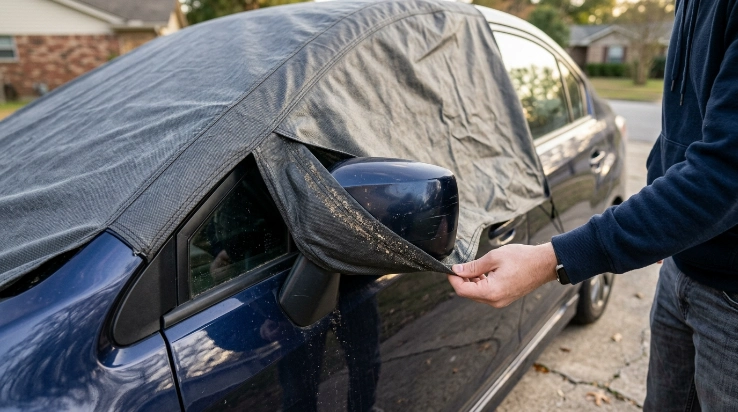
The biggest causes are wrong sizing, tight mirror pockets, loose fabric, dirt, wind, and rough installation. Several of these problems often occur together.
1. The car cover is too small
An undersized cover must stretch farther than intended. The mirrors often become two of the strongest resistance points.
You may notice fabric pulling sideways from the windshield or doors toward each mirror. The mirror pockets can also look stretched flat rather than naturally shaped.
- The cover is difficult to pull over both mirrors.
- One mirror pocket repeatedly slips off.
- The mirror looks pulled outward after installation.
- Seams around the pocket appear stretched.
- The cover barely reaches the front or rear bumper.
2. The cover is too loose
A cover does not have to be tight to cause damage. Excess material can create its own problems.
Wind gives loose fabric enough movement to rub the same raised surfaces repeatedly. Mirrors, fender edges, roof corners, and spoilers often become contact points.
3. Dirt is trapped against the mirror
Soft fabric cannot protect a painted mirror cap when abrasive grit sits between the surfaces. Movement then provides the rubbing action.
I treat the inside of a car cover much like a large detailing towel. Once it touches dirty pavement, I don’t want that contaminated section rubbing clean paint.
4. The mirror pocket is badly designed or positioned
Some universal covers have no dedicated pockets. Others use pockets that do not align well with a specific vehicle.
This can put seam edges directly against painted mirror caps. It can also twist the cover around the housing.
5. The cover is being pulled off incorrectly
Fast removal creates surprisingly high sideways force. This is especially true when the pocket catches behind the mirror housing.
- Release all straps or tie-downs first.
- Free the cover from the bumpers.
- Lift each mirror pocket away gently.
- Move the fabric toward the roof.
- Fold or roll the cover without dragging it across the car.
6. Power-folding mirrors move while covered
Automatic mirrors can create another problem. Some vehicles fold mirrors when locked or through a vehicle setting.
A tight cover may resist that motion if the pockets were installed while the mirrors were extended. The same issue can happen in reverse when mirrors unfold underneath a tight cover.
Mechanic Alert: If a power-folding mirror clicks, grinds, stops midway, or moves differently after being constrained by a cover, avoid forcing it by hand. A qualified technician should inspect the mechanism.
Section Takeaway: Wrong fit creates tension, while excessive looseness creates movement. Either extreme can damage the mirror area.
How Can You Tell What Type of Mirror Damage You Have?
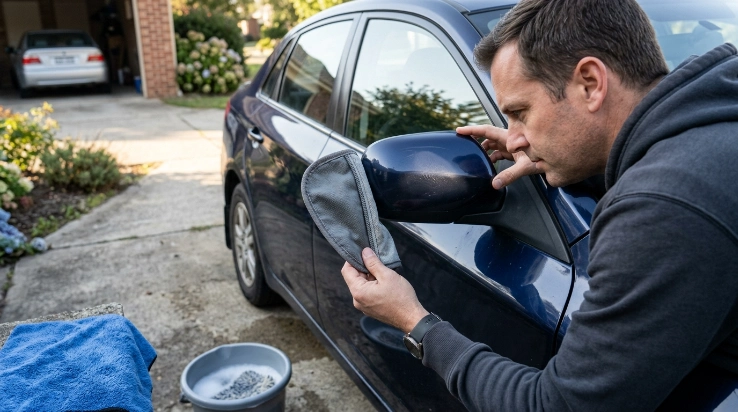
Start by cleaning the mirror and inspecting it in good light. Dirt and fabric residue can look worse than the actual damage.
The location and pattern usually tell you what happened.
| What You Notice | Likely Cause | First Check | Next Step |
|---|---|---|---|
| Fine surface lines | Dirt plus fabric movement | Clean and inspect under bright light | Try the least aggressive detailing method first |
| Dull or hazy patch | Repeated rubbing | Check matching contact point inside cover | Correct fit before continued use |
| Pocket seam mark | Tight or misaligned pocket | Inspect pocket alignment | Use a better-fitting cover |
| Loose mirror housing | Excess force or existing weak mount | Gently check for abnormal play | Have mounting inspected |
| Grinding while folding | Folding mechanism problem | Stop repeated operation | Professional diagnosis |
| Cracked housing | Impact or severe stress | Inspect mounting and glass | Repair or replace damaged parts |
Check the cover as closely as the mirror
Inspect the inside of the mirror pocket with your fingers. It should not contain sand, hardened dirt, exposed rough stitching, or damaged material.
Next, install the clean cover on a calm day. Watch how the pocket sits before fastening anything.
- It should cover the mirror without visibly pulling it sideways.
- The pocket should not require force to install.
- The seam should not dig into the mirror cap.
- Large folds should not flap beside the mirror.
- The mirror should remain in its normal position.
For general information about inspecting vehicle condition before repairs, Edmunds is another useful automotive reference.
How Do You Fix Car-Cover Mirror Damage?
The right repair depends on whether you have residue, light surface scratching, deep paint damage, or mechanical damage. Start with the least aggressive solution.
For dirt, transfer marks, or residue
- Wash the mirror housing with automotive shampoo.
- Rinse away loose contamination before wiping.
- Dry it with a clean microfiber towel.
- Inspect it again in direct or angled light.
Some marks disappear after cleaning. Do not polish first and diagnose later.
For light scratches on a painted mirror cap
A superficial clear-coat mark may respond to normal automotive paint-correction methods. The exact method depends on how deep the scratch is.
Do not aggressively compound the area if you cannot judge paint depth. Mirror caps have small curved surfaces that are easy to overwork.
For cracked plastic or a loose housing
A cracked cap may be cosmetic if the structure underneath remains intact. A loose complete mirror assembly is different.
The mirror should remain stable enough to provide a consistent view while driving. If the mounting point moves, I would have it inspected rather than relying on glue or improvised fasteners.
For damaged powered mirrors
Stop cycling a mirror that grinds, clicks, stalls, or moves only partway. Repeated operation can make diagnosis harder.
Mechanic Alert: Mirror motors, heating circuits, cameras, blind-spot indicators, turn signals, and wiring can all be integrated into modern mirror assemblies. Electrical or structural repairs are best handled by a qualified mechanic when diagnosis extends beyond a simple cap replacement.
For broader vehicle evaluations and repair-cost research, you can also consult Consumer Reports before authorizing major work.
How Do You Prevent a Car Cover From Damaging Mirrors?
The best prevention is simple: use a clean, correctly fitted cover and control movement around the mirrors. Installation technique matters almost as much as the material.
Choose the correct cover size
Match the cover to the vehicle’s body style and dimensions. A vehicle-specific cover usually offers better control around mirrors than an oversized universal cover.
Do not assume tighter means safer. A cover should follow the vehicle’s shape without stretching the mirrors outward.
Keep the car and cover clean
- Remove loose dust before covering the vehicle.
- Keep the paint-side surface of the cover off the ground.
- Wash the cover according to its manufacturer’s care instructions.
- Let both the vehicle and cover dry before installation.
- Check mirror pockets for sand or grit.
Install the mirror pockets gently
I prefer to position the cover loosely first. I then guide each pocket over the mirror instead of stretching the entire cover from one side.
If reaching the second mirror requires a hard pull, I stop. That is a fit warning.
Control wind movement
Outdoor wind can turn a loose cover into a moving abrasive surface. Use the fastening system exactly as its manufacturer intended.
Do not tie ropes directly around mirrors. Mirrors should not become anchor points for the cover.
Know what your folding mirrors will do
Check whether your vehicle automatically folds the mirrors when locked. Decide whether the cover should be installed with the mirrors folded or extended based on the cover’s design.
Do not let a tightly fitted mirror pocket fight the mirror motor. If the normal vehicle setting conflicts with the cover design, resolve that before leaving the vehicle covered.
Remove the cover without dragging it
- Undo straps first.
- Release front and rear hems.
- Lift fabric away from both mirrors.
- Bring the sides toward the roof.
- Roll or fold the material while keeping the clean inner surface protected.
Section Takeaway: Clean surfaces prevent abrasion, correct sizing prevents excess pressure, and controlled fastening prevents wind-driven rubbing.
When Should You Replace the Car Cover?
Replace the cover when it cannot stay clean, properly fitted, and securely positioned without threatening the vehicle. Age alone does not decide when a cover has failed.
I focus on the mirror pockets because they experience repeated stretching during installation and removal.
- Torn mirror pocket: A split seam can expose rough edges or make the cover fit unevenly.
- Stretched pocket: Excess material may flap around the housing.
- Shrunken pocket: A tight pocket can pull against the mirror.
- Rough lining: Damaged material can rub sensitive surfaces.
- Embedded grit: Contamination that cannot be removed makes continued use risky.
- Failed elastic: A loose overall fit increases wind movement.
- Broken straps: Poor securing can let the cover shift across the car.
A worn cover may look fine from ten feet away while the high-stress areas are failing. Check seams, mirror pockets, corners, hems, and tie-down points individually.
If you’re comparing whether a worn cover remains suitable for your vehicle, general automotive testing and ownership information from Car and Driver can complement the cover manufacturer’s instructions.
Frequently Asked Questions
Can a tight car cover break a side mirror?
A severely tight or badly fitted cover can put unwanted pressure on a mirror, especially during installation or removal. A healthy mirror should not normally break from gentle fabric contact, so actual breakage can also indicate an impact, existing damage, or excessive force.
Can a car cover scratch painted mirror caps?
Yes. Scratching becomes more likely when dirt sits between the cover and mirror or when loose fabric repeatedly moves in wind. Keeping both surfaces clean and reducing cover movement lowers the risk.
Should mirror pockets be tight?
Mirror pockets should be shaped closely enough to control excess fabric, but they should not pull the mirrors outward. You should be able to position the pocket without aggressively stretching the cover.
Should I fold my mirrors before putting on a car cover?
Follow the cover manufacturer’s intended fit. Some covers are shaped for extended mirrors, while others work better with mirrors folded. Power-folding mirrors should never be forced to move against a tight cover.
Can wind damage mirrors under a car cover?
Wind can make a loose cover tug or rub around mirror housings. Severe movement also increases stress on cover seams and fastening points, so outdoor covers should be properly sized and secured according to their instructions.
What should I do if my power mirror stopped working after using a cover?
Remove the cover and check for obvious obstruction or external damage. If the mirror clicks, grinds, remains stuck, or no longer responds normally, stop forcing it and have the electrical or folding mechanism inspected.
Can I keep using a cover after it scratched my mirror?
Not until you identify the cause. Clean the cover, inspect its mirror pockets and fit, and correct any loose or tight areas before reinstalling it. Continuing to use an unchanged cover can repeat the same damage.
A car cover should reduce exposure, not create a new repair job. If you notice marks around your mirrors, inspect the cover’s fit, cleanliness, pockets, and wind movement before using it again.
When the cover fits correctly and the contact surfaces stay clean, mirror damage is usually preventable. Treat the mirrors as high-stress areas every time you install or remove the cover.