
Bird Droppings on Car Cover: How to Clean It Safely

Quick Answer
If you find bird droppings on a car cover, remove the contamination promptly instead of letting it dry and bake into the fabric. Soften the droppings with water, lift them without aggressive scrubbing, and follow the cover manufacturer’s cleaning instructions before putting the cover back on your car; the Kelley Blue Book maintenance center is also a useful reference for general vehicle-care practices.
What to do
- Remove gently: Take the cover off without folding the dirty section against its clean inner surface.
- Soften first: Wet dried droppings before trying to lift them from the fabric.
- Blot, don’t scrape: Use gentle pressure instead of grinding dried debris into the cover.
- Check the label: Use only a washing method and cleaner approved for your cover material.
- Dry completely: Don’t reinstall or store a damp cover.
Before reinstalling
- Inspect both sides of the cover and the vehicle paint for dirt, moisture, or residue that could become trapped between them.
Finding bird droppings on a car cover is frustrating, but it also means the cover probably intercepted contamination that otherwise would have landed directly on your paint. The trick is cleaning the cover without damaging its fabric or carrying that contamination onto the vehicle later.
As of 2026, my approach is still simple: soften first, clean gently, follow the fabric-specific instructions, and never reinstall a dirty or damp cover. This guide walks through that process from start to finish.
In This Guide
- What should you do first when bird droppings land on a car cover?
- How do you clean bird droppings off a car cover?
- How do you remove dried bird droppings?
- Should you wash the entire car cover afterward?
- Can a dirty car cover damage your paint?
- How can you prevent bird droppings from becoming a recurring problem?
- Frequently asked questions
What Should You Do First When Bird Droppings Land on a Car Cover?
Deal with the droppings reasonably soon and avoid scraping them while dry. Fresh contamination usually takes less effort to remove than material that has dried into the fabric.
Definition: Bird droppings on a car cover are organic contamination deposited on the cover’s exterior surface while the vehicle is parked. The cover acts as a removable barrier, but that barrier still needs cleaning before repeated contact with the vehicle.
Take the cover off carefully
I prefer removing the cover before doing any serious cleaning. Washing or scrubbing the contaminated area while the cover sits on the vehicle can press moisture and debris toward the paint.
- Start at a clean end: Release the cover without grabbing the contaminated spot.
- Keep dirty fabric outward: Don’t fold the affected exterior against the paint-facing side.
- Avoid dragging: Lift and fold the cover instead of pulling it across painted panels.
- Inspect underneath: Check whether any moisture or contamination reached the inner surface.
If the droppings are fresh and still soft, resist the temptation to smear them with a dry towel. Lift as much as possible while keeping the dirty area contained.
How Do You Clean Bird Droppings Off a Car Cover?
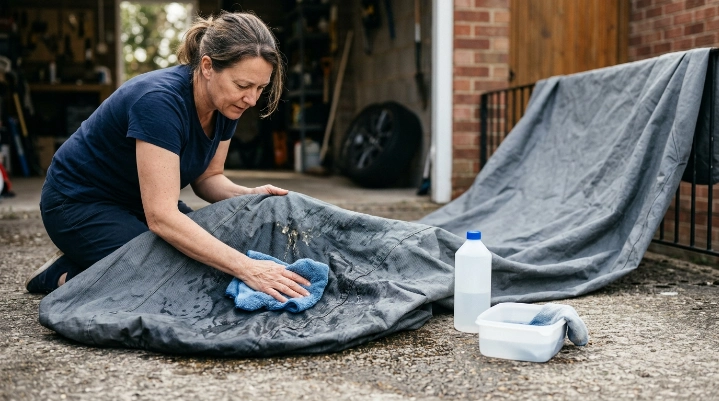
Use water to soften the contamination, then remove it with minimal rubbing. The exact detergent, water temperature, washing method, and drying method should come from your cover manufacturer.
Car cover fabrics differ significantly. A lightweight outdoor polyester cover may have different care requirements from flannel, multi-layer indoor material, or another treated fabric.
Step-by-step cleaning method
- Move the cover to a clean area. Lay it on a clean surface or position it where the dirty section can be treated without touching the vehicle.
- Wet the affected area. Use cool or lukewarm water to loosen the contamination.
- Give it time to soften. Don’t attack a hard deposit immediately.
- Lift loose material. Use a clean, soft cloth or microfiber towel with light pressure.
- Apply approved cleaner if needed. Check the cover label or manufacturer’s instructions first.
- Rinse thoroughly. Remove both the contamination and cleaning-product residue.
- Dry completely. Follow the specified air-dry or machine-dry instructions for your exact fabric.
Covercraft, for example, publishes a dedicated car cover cleaning guide because its fabrics don’t all use identical wash and drying settings. That illustrates why one universal cleaning recipe isn’t appropriate for every cover.
What should you avoid?
- Don’t scrape hardened droppings with a hard plastic or metal edge.
- Don’t scrub aggressively while debris is still dry.
- Don’t assume bleach is safe for the material.
- Don’t add fabric softener unless the manufacturer explicitly permits it.
- Don’t use a harsh stain remover without checking compatibility.
- Don’t reinstall the cover while it’s still damp.
Some manufacturer’s instructions specifically prohibit bleach and fabric softener. Following the label protects both the fabric and any water-resistant or protective treatment applied to it.
How Do You Remove Dried Bird Droppings?
Dried bird droppings need more soaking, not more force. Rehydrating the deposit helps separate it from the cover fibers without turning cleaning into an abrasive process.
The mistake I avoid is attacking a crusted spot with a fingernail, brush, or scraper. It may remove the visible lump quickly, but it can also roughen or damage the cover.
Match the method to the contamination
| Condition | Best First Action | Main Thing to Avoid |
|---|---|---|
| Fresh, soft droppings | Lift excess material, then rinse | Smearing it across a larger area |
| Dry, crusted deposit | Soak until noticeably softer | Dry scraping |
| Several contaminated areas | Consider a full wash | Repeated spot scrubbing |
| Dirty inner surface | Clean before reinstalling | Putting it directly back on paint |
| Stiff, damaged, or deteriorated fabric | Inspect for replacement | Assuming cleaning restores damaged material |
If one wetting cycle doesn’t release the deposit, wet it again. Patience is safer than increasing pressure.
Should You Wash the Entire Car Cover After Bird Droppings?
A full wash makes sense when contamination covers several areas, leaves residue after spot cleaning, reaches the inner surface, or joins other dirt already on the cover. One tiny fresh spot may only require localized cleaning if the manufacturer allows it.
When I would choose a complete wash
- There are several bird-dropping spots.
- The cover also has dust, pollen, mud, or road grime.
- The dirty section still feels contaminated after spot cleaning.
- The paint-facing side has visible dirt.
- The cover is going into storage for an extended period.
Don’t automatically put a large vehicle cover into a small household washing machine. Some covers need a large front-loading or commercial machine because bunching and an agitator can be unsuitable for the material.
Covercraft’s published instructions, for example, specify fabric-dependent settings and recommend larger machines for some covers. Your own cover’s label should take priority over generic internet advice.
Drying matters just as much
A cover that feels dry across its main panels can still hold moisture in hems, seams, mirror pockets, or reinforced areas. Check those thicker sections before folding it away.
For storage, industry guidance also emphasizes cleaning and complete drying; Covercraft provides separate instructions on storing a vehicle cover when it’s not in use. A clean storage bag or dry storage area also helps keep the inner surface away from garage-floor dirt.
Can a Dirty Car Cover Damage Your Paint?
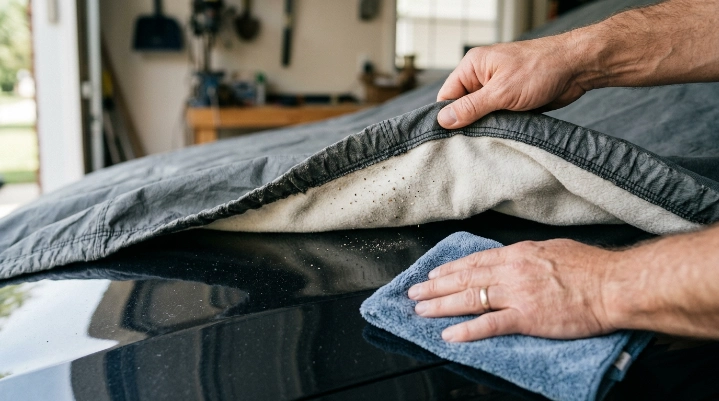
Yes, contamination trapped between a cover and paint can increase the chance of marring or scratching when the cover moves. The cover itself isn’t necessarily the problem; dirt, grit, poor fit, and repeated movement are the bigger concerns.
That’s why I treat a clean cover and a clean vehicle as a pair. If either side is gritty, I fix that before putting them together.
Inspect the paint before reinstalling the cover
- Look for droppings: Check the roof, hood, trunk, mirrors, and glass.
- Check for grit: Dust and sand shouldn’t be trapped beneath the fabric.
- Make sure it’s dry: Don’t knowingly trap standing water or wash residue.
- Check the cover interior: The paint-facing side should be clean.
- Install without dragging: Position the cover carefully over the vehicle.
Edmunds recommends rinsing loose contamination before washing a vehicle because loose particles can contribute to scratches and swirls during contact cleaning. Its step-by-step car washing guide also discusses promptly removing bird droppings from vehicle finishes.
Cover manufacturers make a similar point about the interface between the fabric and paint. Covercraft notes that dirt trapped beneath a car cover can contribute to scratching, especially when the cover moves.
How Can You Prevent Bird Droppings From Becoming a Recurring Problem?
You can’t completely prevent birds from targeting an outdoor vehicle, but parking location and cover maintenance can reduce the inconvenience. The goal is fewer deposits and easier cleanup when they happen.
Choose your parking spot carefully
- Avoid parking directly beneath branches frequently used by birds.
- Watch overhead utility lines and common perching points.
- Move the vehicle when one parking space repeatedly gets contaminated.
- Use covered parking when it’s practical.
A car cover remains useful even when it gets dirty because that contamination would otherwise reach the vehicle. The cover simply becomes another maintenance item.
Build a quick cover inspection into your routine
Before removing an outdoor cover, look over the roof and hood areas for droppings, sap, leaves, or other debris. That five-second inspection tells you whether you can fold the cover normally or need to isolate a dirty section.
- Check the cover before every removal.
- Clean obvious organic contamination promptly.
- Inspect the inside before reinstalling.
- Keep the vehicle itself reasonably clean.
- Store the cover only after it has dried completely.
- Replace material that becomes torn, rough, stiff, or otherwise unserviceable.
A cover works best as a clean barrier, not a permanent layer that never comes off. Periodic removal also gives you a chance to inspect both the paint and the cover itself.
Frequently Asked Questions About Bird Droppings on Car Covers
Can bird droppings ruin a car cover?
They can stain or contaminate the material, especially when left in place for an extended period. Whether they permanently damage the cover depends on the fabric, protective treatment, exposure, and cleaning method, so inspect the area after washing.
Should I clean bird poop off the cover immediately?
Prompt cleaning is preferable because fresh contamination is usually easier to remove than a hardened deposit. You don’t need to scrub aggressively; soften the material with water first and follow the cover maker’s care instructions.
Can I clean bird droppings while the cover is still on the car?
For anything beyond a light surface rinse, I prefer removing the cover first. That reduces the chance of pressing dirty moisture, residue, or abrasive material against the vehicle’s finish while you work.
Can I pressure wash bird droppings off a car cover?
Don’t assume pressure washing is safe for every cover. A concentrated jet can stress fabric, seams, or treatments, so use it only when the manufacturer specifically approves that cleaning method and provides suitable instructions.
Can I use bleach on a dirty car cover?
Only if the manufacturer’s instructions explicitly allow it. Some car-cover care instructions prohibit bleach because cleaners can affect fabrics and treatments differently, making the product label the safest guide.
Can I put a wet car cover back on the vehicle?
It’s better to let the cover dry according to its care instructions before reinstalling it. Also inspect the vehicle for moisture and contamination so you’re not trapping dirt between the cover and paint.
What if a stain remains after the droppings are gone?
A cosmetic discoloration doesn’t automatically mean the cover has stopped working. If the fabric has become brittle, rough, torn, delaminated, or otherwise damaged, however, replacement may make more sense than increasingly aggressive stain removal.
What Is the Safest Way to Handle Bird Droppings on a Car Cover?
The safest routine is straightforward: remove the cover carefully, soften the droppings, lift the contamination gently, wash according to the fabric instructions, and let everything dry before reinstallation. Avoid scraping, harsh chemicals, and improvised cleaning methods that aren’t approved for the material.
Most importantly, inspect the inside of the cover before it touches your paint again. A clean car under a clean, properly fitted cover gives the fabric the best chance to do what you bought it for—keeping everyday outdoor contamination away from the vehicle.
