
Condensation Under Car Cover: Why It Happens and How to Stop It

Quick Answer
Condensation under a car cover usually forms when humid air gets trapped around cooler body panels and reaches its dew point. A damp car, wet ground, large temperature swings, or a cover that cannot release water vapor can make the problem worse. Before long-term storage, follow sensible car storage preparation and make sure both the vehicle and cover are dry.
Most Common Reasons
- Temperature changes: Cooler body panels can cause moisture in warmer air to condense into droplets.
- High humidity: Moist air supplies more water vapor that can collect beneath the cover.
- Wet vehicle: Rain or wash water trapped in seams, mirrors, wheel arches, and trim adds moisture.
- Poor breathability: A cover that restricts vapor escape can keep the car damp longer.
- Damp surroundings: Wet pavement, grass, or a humid garage can continually feed moisture into the air.
What to Do First
- Remove the cover, let the car and cover dry completely, then correct the moisture or ventilation problem before covering it again.
Finding water droplets under a cover can make it look like the cover has failed. In many cases, though, the water did not simply leak through from rain.
The bigger issue is moisture management. Here’s how I’d diagnose condensation under a car cover and keep it from becoming a long-term paint or corrosion problem.
In This Guide
- Why Does Condensation Form Under a Car Cover?
- Can Condensation Under a Car Cover Damage Your Car?
- How Do You Stop Condensation Under a Car Cover?
- Is Condensation Different Outdoors and in a Garage?
- What Type of Car Cover Is Best for Preventing Condensation?
- Frequently Asked Questions
- What Is the Bottom Line?
Why Does Condensation Form Under a Car Cover?
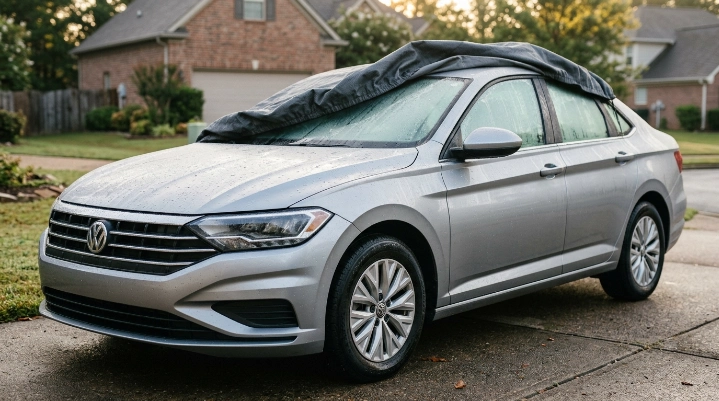
Condensation forms when moist air around the vehicle touches a surface cool enough for water vapor to become liquid. The cover can create a small microclimate where that moisture stays close to the bodywork.
Definition: Condensation is the change of water vapor into liquid water. The dew point is the temperature at which air becomes saturated enough for that condensation to begin.
The National Weather Service explanation of dew point gives a useful way to understand what is happening. Your car’s sheet metal can cool faster than the surrounding air, especially overnight.
Temperature swings are often the trigger
Imagine a car sitting outside after a warm, humid afternoon. After sunset, the roof, hood, glass, and other panels begin losing heat.
If those surfaces cool to the dew point, moisture can appear even when no rain has fallen. A cover does not stop this basic weather process.
- Warm day followed by cool night: The bodywork can become colder than humid surrounding air.
- Morning temperature rise: Moist ground and nearby surfaces can release water vapor as they warm.
- Rapid weather changes: A warm front after a cold night can put humid air around a still-cold vehicle.
The moisture may already be under the cover
A freshly washed car can look dry while still holding water in hidden places. Mirror housings, weatherstripping, panel gaps, wheel arches, and door jambs can retain it.
Putting a cover on immediately can trap that moisture in the covered space. The same thing can happen after driving through rain.
- Wet tires and wheel wells
- Water around mirrors and trim
- Damp convertible tops
- Moisture underneath the vehicle
- Wet pavement, grass, or soil
My first diagnostic rule is simple: if the cover is wet underneath, determine whether the water came from outside or formed underneath before blaming the fabric.
Can Condensation Under a Car Cover Damage Your Car?
A light film of condensation that disappears quickly is different from a car remaining damp for days. Persistent moisture is the situation worth fixing.
Moisture can contribute to corrosion where bare steel is exposed by chips, scratches, damaged seams, or existing rust. Long-term dampness can also encourage musty odors and staining on susceptible materials.
Watch how long the moisture stays
Duration matters as much as the droplets themselves. A breathable setup that dries soon after conditions improve is less concerning than a sealed environment that remains wet.
Current Car and Driver car-cover testing also shows that some outdoor covers can leave traces of moisture or dust around a vehicle after extended use. That is a useful reminder that no cover eliminates every storage variable.
| What You Notice | Likely Explanation | Best First Step |
|---|---|---|
| Fine droplets after a cool night | Dew-point condensation | Let the vehicle air-dry before recovering |
| Water mainly near seams | Possible rain intrusion or worn seams | Inspect cover condition and fit |
| Dampness after washing | Residual water trapped under cover | Dry gaps, jambs, wheels, and cover fully |
| Moisture keeps returning in garage | High ambient humidity or damp floor | Improve ventilation or humidity control |
| Cover feels clammy for several days | Poor drying conditions or low breathability | Remove, dry, and reassess cover choice |
Also check the paint before covering the car. Dirt trapped between fabric and clear coat can become abrasive when the cover moves in wind.
How Do You Stop Condensation Under a Car Cover?
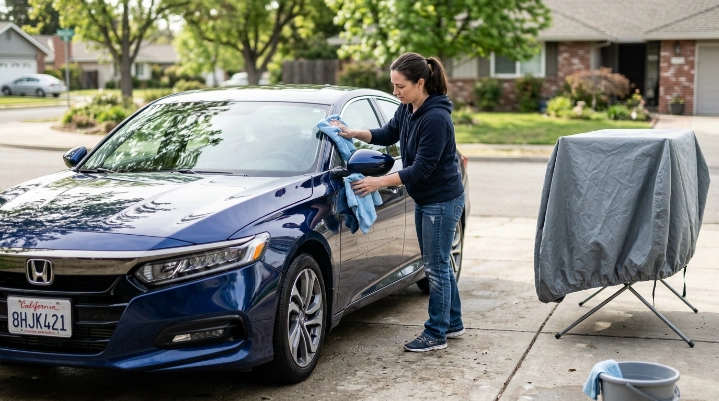
The most effective fix is to reduce trapped moisture while giving water vapor a path to escape. Start with the car, then look at the cover and storage environment.
- Remove the cover. Do not leave the vehicle sealed while visible moisture remains underneath.
- Dry the vehicle completely. Pay attention to mirrors, seals, door jambs, wheel wells, grilles, and trim gaps.
- Dry the cover too. Reinstalling a damp cover simply puts moisture back against the car.
- Use a breathable material. The goal is water resistance combined with vapor escape.
- Check the fit. A correctly sized cover should stay secure without being stretched tightly over the vehicle.
- Keep the car clean. Removing grit reduces the chance of abrasion when the cover shifts.
- Improve the parking environment. Avoid consistently wet ground and address excessive garage humidity.
Do not cover the car immediately after washing
Give it enough time to dry in panel gaps and around the wheels. A quick wipe across the hood does not mean the entire vehicle is dry.
If possible, take a short drive after washing and then let the car cool and dry. Do not cover hot exhaust components or a car that is still dripping underneath.
Let trapped moisture escape
Breathability matters because condensation can form even when a cover keeps direct rain away. Current guidance on breathable versus non-breathable car covers highlights moisture escape as an important advantage for humid conditions and longer storage.
- For frequent drivers: Remove the cover regularly and let both surfaces dry when conditions allow.
- For long-term storage: Check beneath the cover periodically instead of assuming everything remains dry.
- For humid climates: Prioritize ventilation and breathable materials over creating the tightest possible seal.
Do not place plastic sheeting directly over the paint as a substitute for a proper cover. A plastic barrier can restrict evaporation and can also move against dirty paint.
Is Condensation Different Outdoors and in a Garage?
Yes. The physics is the same, but the main moisture sources can be different.
Outdoor storage usually faces larger temperature swings, dew, wet pavement, wind-driven rain, and moisture rising from the ground. Garage storage usually has fewer weather extremes but can still stay humid for long periods.
Outdoor storage
- Park on a firm, well-drained surface when possible.
- Avoid covering the car while the pavement and vehicle are still soaked.
- Secure the cover so wind cannot repeatedly rub loose material against the paint.
- Inspect after heavy rain or major temperature changes.
- Dry the cover before folding or storing it.
Parking over grass or consistently damp soil can expose the lower part of the vehicle to a moisture-rich environment. A paved, draining surface is usually easier to keep dry.
Garage storage
A garage protects against direct rain, but it is not automatically dry. Water from wet cars, concrete floors, poor ventilation, or humid weather can keep relative humidity high.
- Fix leaks around doors, roofs, and walls.
- Allow wet vehicles and floors to dry.
- Improve air movement where practical.
- Use a dehumidifier when persistent indoor humidity justifies one.
- Choose a soft, breathable indoor cover rather than a heavy weather barrier when rain protection is unnecessary.
If a garage is consistently damp, solve that problem first. A more expensive car cover cannot compensate for an environment that never dries.
What Type of Car Cover Is Best for Preventing Condensation?
For condensation control, look for a cover that balances exterior water resistance with the ability to release water vapor. Completely sealing the vehicle is not the goal.
As of 2026, the useful shopping terms remain breathable, water-resistant, soft inner surface, and vehicle-specific or correct fit. Marketing language alone is not enough, so check the material description and intended storage environment.
Breathable versus non-breathable covers
Breathable fabrics allow moisture vapor beneath the cover to escape more readily. That makes them well suited to humid conditions, outdoor storage, and vehicles that sit for longer periods.
Guidance on breathable vehicle covers and condensation specifically notes humidity, dew, seams, and trapped vapor as ways moisture can appear beneath a cover. It also explains why vapor movement matters even when the material resists liquid water.
- Breathable material: Helps trapped water vapor escape.
- Water resistance: Reduces direct moisture penetration without requiring a vapor-tight shell.
- Soft inner face: Reduces rubbing risk against clean paint.
- Correct sizing: Avoids overstretched seams and excessive loose fabric.
- Secure attachment: Reduces flapping in windy outdoor conditions.
Waterproof does not automatically mean better
A material can block liquid water well yet still perform poorly if moisture already underneath cannot leave. This is why storage conditions matter as much as the waterproof claim on a product label.
For an indoor collector car, you may need dust protection and softness more than heavy rain protection. For an outdoor daily driver, weather resistance, secure fit, breathability, and easy removal may matter more.
Frequently Asked Questions
Is condensation under a car cover normal?
Occasional condensation can occur when humid air contacts cool body panels, especially during overnight temperature changes. It should not be ignored if the vehicle remains wet for long periods or the moisture repeatedly returns without drying.
Why is my car wet under the cover when it did not rain?
Rain is not required. Humid air can cool to its dew point against the vehicle, causing water vapor to become droplets on the paint, glass, metal, or inside surface of the cover.
Can condensation under a car cover cause rust?
Persistent moisture can support corrosion where metal is exposed by scratches, chips, seams, or existing damage. Brief condensation that dries quickly is less concerning than a vehicle remaining damp for days at a time.
Should I remove a wet car cover?
Yes, when practical. Remove the wet cover and allow both the vehicle and cover to dry before reinstalling it, especially if moisture is already visible against the paint or trim.
Can I cover a car immediately after washing it?
It is better to wait until the vehicle is thoroughly dry. Water can remain in mirrors, panel gaps, seals, wheel arches, grilles, and door jambs even after the visible body panels have been wiped down.
Will a tarp prevent condensation better than a car cover?
A basic plastic tarp is usually a poor choice directly against automotive paint because it can restrict vapor escape and move against the finish. A purpose-built, correctly fitted breathable car cover is the safer approach for routine vehicle storage.
Will a dehumidifier stop condensation in a garage?
A dehumidifier can help when excessive garage humidity is part of the problem, but it should accompany basic moisture control. Fix water leaks, dry wet floors, improve ventilation, and avoid covering a damp car first.
What Is the Bottom Line?
Condensation under a car cover does not automatically mean the cover is leaking. It usually means moisture, temperature, and airflow have combined to put the vehicle surface at or below the dew point.
The practical solution is simple: keep the car clean and dry, use a breathable correctly fitted cover, and give trapped moisture somewhere to go.
- Never knowingly cover a wet vehicle.
- Dry the cover before putting it back on.
- Choose breathability for humid or long-term storage.
- Inspect the car periodically instead of leaving it covered indefinitely.
- Correct damp garage or parking conditions when moisture keeps returning.
If you find persistent water, visible corrosion, bubbling paint, electrical moisture problems, or unexplained water inside the cabin, have the source inspected rather than treating it as ordinary cover condensation.
“`