
Reflective Car Cover Issues: Problems, Causes, and Fixes

Quick Answer
Reflective car covers aren’t inherently harmful, but they can cause problems when they fit poorly, trap moisture, collect dirt, or move across the paint in wind. A reflective silver surface can help reduce solar heat exposure, yet the cover still needs suitable fabric, airflow, and a clean inner surface; Consumer Reports’ car-cover guidance also stresses better multilayer materials because cheap single-layer covers can trap moisture and scratch paint.
Common reflective car cover issues
- Fine paint marks: Dust or grit under a moving cover can rub against the clear coat.
- Trapped moisture: A wet car, damp cover, or poor airflow can leave moisture against the vehicle.
- Wind movement: Loose reflective covers can flap against mirrors, corners, and body panels.
- Surface deterioration: An aging silver coating may become dull, brittle, powdery, or damaged.
- Water penetration: A sun-focused water-resistant cover may not handle prolonged heavy rain.
- Bright glare: Shiny material can reflect strong sunlight while you’re installing or removing it.
Best first step
- Remove the cover, clean and dry both surfaces, then inspect its lining, seams, coating, and fit before using it again.
Reflective car covers look simple, but I’ve learned to judge them by more than the shiny silver surface. Heat reflection helps, yet fit, cleanliness, ventilation, and fastening often decide whether the cover protects a daily driver or creates another problem.
As of 2026, there are many sun-focused and all-weather reflective covers on the market. This guide explains the most common reflective car cover issues, how to identify their causes, and when I would stop using the cover.
In This Guide
- What Are the Most Common Reflective Car Cover Issues?
- Can a Reflective Car Cover Damage Your Paint?
- Why Does Moisture Build Up Under a Reflective Car Cover?
- Why Do Reflective Covers Get Hot, Glare, or Wear Out?
- How Do You Prevent Reflective Car Cover Problems?
- Frequently Asked Questions
- Final Takeaway
What Are the Most Common Reflective Car Cover Issues?
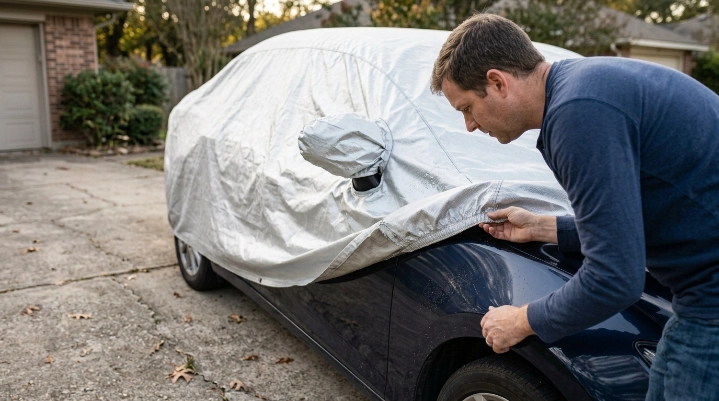
The main problems are paint abrasion, condensation, poor fit, wind movement, water penetration, and deterioration of the reflective outer layer. Most are not caused by reflectivity itself.
Definition: A reflective car cover is a vehicle cover with a light-colored or reflective outer surface designed to send more solar energy away from the vehicle instead of absorbing it.
A silver exterior may perform well in strong sunlight. That benefit does not automatically make the cover waterproof, scratch-proof, wind-proof, or suitable for long-term outdoor storage.
Reflective car cover symptom and cause guide
| What You Notice | Likely Cause | What to Check First |
|---|---|---|
| Fine swirls or scuff marks | Trapped dirt plus cover movement | Inside lining and loose fabric |
| Damp paint after removal | Condensation or covering a wet car | Breathability and drying conditions |
| Constant flapping | Loose fit or weak fastening | Hems, straps, and excess fabric |
| Wet spots beneath cover | Rain penetration or seam wear | Seams and water-resistance rating |
| Silver residue or peeling | Aging reflective coating | Outer fabric and high-wear folds |
| Cabin still feels hot | Incomplete coverage or overall heat exposure | Fit, windows, pavement, and parking location |
I start with that table because it keeps me from blaming the silver coating for every problem. A reflective layer often does its intended job while another part of the cover fails.
A reflective cover is not automatically an all-weather cover
This distinction matters. Some lightweight reflective covers focus mainly on sunlight, dust, and moderate weather rather than severe rain or wind.
I check the manufacturer’s intended environment before leaving one outside continuously. Labels such as water-resistant and waterproof should not be treated as identical.
- Sun protection: Look for a cover designed for sustained ultraviolet exposure.
- Outdoor rain: Check how the fabric and seams manage prolonged moisture.
- Wind: Look for a close fit, elastic hems, and secure fastening points.
- Indoor storage: Prioritize softness, cleanliness, and dust protection.
- Daily use: Choose material you can remove without dragging across the paint.
Section Takeaway: Reflectivity solves one part of outdoor protection. Fit, fabric construction, moisture control, and secure installation matter just as much.
Can a Reflective Car Cover Damage Your Paint?
Yes, a reflective cover can contribute to fine scratches or marring when dirt sits between the fabric and paint. Cover movement then turns that contamination into an abrasive layer.
The same principle applies to clear coat, wax, sealant, and ceramic-coated paint. None should be treated as immune to repeated rubbing.
Dirt is usually the bigger problem
A soft cover touching clean paint is different from that same cover touching pollen, road dust, sand, or dried mud. I don’t cover a dirty daily driver simply because the cover feels soft.
- Road dust: Fine particles can remain abrasive even when they are difficult to see.
- Sand: Windblown grit can collect along rocker panels and lower body sections.
- Pollen: Heavy buildup creates contamination between the fabric and paint.
- Dirty lining: A cover placed on the ground can transfer grit onto the vehicle.
Current Car and Driver car-cover testing starts with clean vehicles and evaluates factors such as fit, waterproofing, and durability. That is a useful reminder that the installation surface matters as much as the cover material.
Wind can turn a loose cover into a rubbing surface
A cover that shifts a few inches repeatedly may rub the same areas for hours. Mirror caps, fender peaks, spoilers, roof edges, and bumper corners are common contact points to watch.
When I check fit, I look at those high points before anything else. A cover should follow the vehicle’s shape rather than billow like a loose tarp.
- Check whether the front and rear hems remain seated.
- Look for excess fabric around mirrors and bumpers.
- Make sure straps are secure without pressing hard against paint.
- Inspect the lining where it contacts sharp body contours.
What should you do if you find new marks?
Stop using the cover until you know the cause. Continuing to install it can make a small problem more noticeable.
- Remove the cover carefully without dragging it along the paint.
- Wash and dry the vehicle using paint-safe methods.
- Clean the inside of the cover according to its care instructions.
- Inspect the lining for grit, rough seams, or damaged material.
- Check whether wind movement or poor fit caused repeated rubbing.
- Replace the cover if its inner surface has become rough or damaged.
If marks remain after normal washing, avoid aggressive polishing unless you’re comfortable assessing clear-coat condition.
Mechanic Alert: Deep scratches, damaged clear coat, peeling paint, or uncertain paint defects are better assessed by a qualified detailer or body professional.
Section Takeaway: A reflective cover usually damages paint through contamination and movement, not because the outer surface reflects sunlight.
Why Does Moisture Build Up Under a Reflective Car Cover?
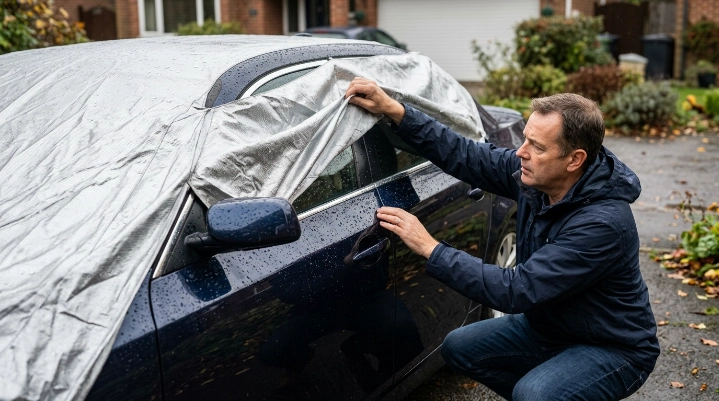
Moisture usually appears because water or humid air gets underneath the cover and cannot escape quickly. Reflective color alone does not prevent condensation.
A breathable cover can help moisture escape, but even good fabric cannot instantly dry a wet car trapped underneath it.
Never cover a wet vehicle for storage
Water hides around mirrors, badges, door handles, trim, spoilers, and weather seals after washing. Those areas can stay damp after the main body looks dry.
- Dry the roof, hood, trunk, and body panels.
- Check mirror housings and door-handle recesses.
- Look around badges, spoilers, and trim gaps.
- Let the car cool and finish drying before installation.
A damp cover creates the same basic problem. I let a wet cover dry completely before folding or reinstalling it.
Water-resistant material still needs airflow
Outdoor covers have to balance competing jobs. They need to limit rain penetration while allowing heat and moisture to escape.
A completely non-breathable plastic sheet may stop direct rain yet hold condensation close to the vehicle. That is why I would not use an ordinary plastic tarp as a long-term substitute for a fitted automotive cover.
- After rain: Check whether moisture collected underneath.
- After washing: Wait until the vehicle is fully dry.
- During humid weather: Inspect covered vehicles periodically.
- During storage: Avoid folding the cover while damp.
For broader vehicle-care fundamentals, Edmunds’ car maintenance resource is a useful reference when you’re deciding how a cover fits into routine exterior maintenance rather than replacing it.
Watch for persistent moisture symptoms
Occasional light condensation is different from a vehicle staying damp repeatedly. Persistent moisture tells me something about the cover, storage conditions, or installation routine needs to change.
- Musty smell from the cover.
- Recurring dampness beneath the same panels.
- Visible mildew on fabric.
- Wet seams long after rainfall.
- Water sitting around trim or panel gaps.
Section Takeaway: Keep the vehicle and cover dry before installation, and choose breathable material suited to the actual weather where the car is parked.
Why Do Reflective Covers Get Hot, Glare, or Wear Out?
A reflective cover can reduce solar heating without staying cold to the touch. It still absorbs some energy and sits in a hot outdoor environment.
Reflective material also ages. Sunlight, folding, wind, dirt, and repeated handling can gradually change its appearance and performance.
Why is the car still hot under a reflective cover?
Reflective covers reduce part of the solar load rather than creating refrigeration. Heat can still reach the vehicle through hot surrounding air, pavement, uncovered areas, and heat already stored in the car.
Research on solar reflective vehicle covers has shown measurable cabin-temperature reductions, so the underlying idea is sound. The size of the benefit depends on coverage, construction, conditions, and how the cover is used.
- Partial coverage: Exposed glass or bodywork still absorbs sunlight.
- Hot pavement: Heat continues radiating around the lower vehicle.
- Poor fit: Gaps can expose more of the body to sunlight.
- Thin construction: Reflective color does not equal thermal insulation.
Can the silver surface create glare?
Yes, a shiny silver surface can reflect bright sunlight toward you while you handle it. The exact effect changes with the sun angle and surface finish.
I find this more of a handling nuisance than a reason to reject reflective covers altogether. Turning the cover away from direct sun while folding it can make the job easier.
Why does a reflective coating start peeling or looking dull?
Outdoor exposure can gradually wear the coating and fabric. High-use folds and edges may deteriorate before broad flat areas.
- Look for cracking or peeling.
- Check for silver residue on your hands or vehicle.
- Inspect areas that fold in the same place repeatedly.
- Watch for brittle fabric around elastic hems.
- Check seams for stretching or separation.
A cosmetic change does not always mean immediate failure. However, powdery material, roughness, holes, or weakened fabric are stronger reasons to retire the cover.
Section Takeaway: A reflective cover can reduce solar exposure without eliminating heat, and its silver surface will eventually age like other outdoor materials.
How Do You Prevent Reflective Car Cover Problems?
The safest routine is simple: use the correct cover on a clean, dry vehicle and keep it secure. Most preventable issues start when one of those conditions is ignored.
Choose the cover for the parking environment
| Cover Type | Best Use | Main Issue to Watch |
|---|---|---|
| Lightweight reflective cover | Sunny, relatively mild conditions | Wind and limited severe-weather protection |
| Breathable outdoor reflective cover | Regular outdoor parking | Fit, fastening, and moisture management |
| Soft fitted indoor cover | Clean garage storage | Dust trapped against paint |
| Loose universal cover | Occasional temporary use | Excess fabric movement |
| Ordinary plastic tarp | Limited utility use, not normal vehicle storage | Poor fit, abrasion, and trapped moisture |
Use this installation routine
- Clean the car: Remove dust, sand, pollen, bird residue, and road grime.
- Dry everything: Don’t trap wash water or rain beneath the fabric.
- Check the lining: Make sure the inner surface is clean and smooth.
- Position from the top: Avoid dragging the cover across pavement.
- Seat the hems: Fit the front and rear sections correctly.
- Secure the cover: Use its intended straps or fastening system.
- Inspect after wind: Look for movement around corners and mirrors.
Keep the cover itself clean
A clean vehicle deserves a clean cover. I never place the paint-facing side directly on a driveway or garage floor.
Follow the manufacturer’s washing instructions because reflective coatings can require different care from ordinary fabric. Harsh cleaning can shorten the life of some materials.
- Shake loose dust away from the vehicle.
- Remove bird droppings and tree residue promptly.
- Dry the cover fully before storage.
- Store it in a clean bag or protected area.
- Inspect seams and lining after washing.
Know when replacement is safer than another repair
Small fastening problems may be repairable. A deteriorating inner surface is harder for me to justify against painted bodywork.
General exterior-care information from Kelley Blue Book’s car advice section is also useful when assessing whether apparent cover damage is limited to contamination or involves the underlying finish.
- Replace it: The lining has become rough or contaminated beyond cleaning.
- Replace it: Large areas of reflective coating are shedding.
- Replace it: Elastic or straps no longer hold the cover securely.
- Replace it: Tears expose significant areas of the vehicle.
- Repair carefully: A minor strap or seam defect can be corrected without creating a rough paint-contact area.
Section Takeaway: Buy for your parking conditions, keep both surfaces clean, control wind movement, and replace the cover once its lining or structure can no longer protect the paint safely.
Frequently Asked Questions
Are reflective car covers bad for car paint?
No. A reflective car cover is not automatically bad for paint, but trapped dirt and repeated movement can create fine scratches. Use it only on clean, dry paint with a clean lining and secure fit.
Do reflective car covers make cars hotter?
A properly designed reflective cover should reduce some solar heat absorption rather than increase it. The car can still become hot from surrounding air, hot pavement, uncovered areas, and heat stored before the cover was installed.
Can you leave a reflective car cover on in the rain?
Only if the cover is designed for outdoor wet-weather use. A lightweight sun-focused cover may resist light moisture without being suitable for prolonged rain, so check the manufacturer’s intended use.
Why is my car wet under a reflective cover?
The moisture may come from condensation, a wet vehicle, a damp cover, rain penetration, or poor airflow. Remove the cover, let everything dry, and inspect the material and seams before reinstalling it.
Can a reflective cover scratch ceramic coating?
Yes, contamination underneath the cover can still create fine marks on ceramic-coated paint. Ceramic coating improves surface protection and maintenance, but it does not make the finish immune to abrasion.
Why is my silver car cover peeling?
The reflective coating may be deteriorating from sunlight, weather exposure, folding, abrasion, or age. Replace the cover if the material becomes rough, brittle, powdery, or starts transferring residue onto the vehicle.
Is a reflective car cover better than a regular car cover?
It can be better for strong sun exposure because the reflective surface is designed to reduce solar absorption. A better overall cover is still the one that matches your climate, fits securely, manages moisture, and has a paint-safe inner surface.
Final Takeaway
Reflective car cover issues usually come down to dirt, moisture, movement, fit, and material wear. The shiny outer surface can help with solar exposure, but it cannot compensate for a dirty car or poorly fitted cover.
My rule is straightforward. If the car isn’t clean and dry, the lining isn’t clean, or the cover can’t stay secure, I don’t install it.
- Use reflective material when sun protection is a priority.
- Choose breathable construction for outdoor storage.
- Avoid dragging fabric over dirty paint.
- Secure loose covers before windy weather.
- Dry wet covers before folding them.
- Replace rough, brittle, peeling, or badly damaged material.
A good reflective cover should reduce exposure without creating a new maintenance problem. Check it periodically, and treat the condition of the cover as seriously as the condition of the vehicle underneath it.
