
Heat Trapped Under Car Cover: Is It Bad for Your Car?

Quick Answer
Some heat trapped under a car cover is normal, especially during hot, sunny weather. A light-colored, breathable outdoor cover usually reduces direct solar heating, but a dark, non-breathable, wet, or poorly fitted cover can hold hot, humid air against the vehicle. Start with a cool, dry vehicle and follow sensible car maintenance practices before covering it.
What increases heat-related problems?
- Non-breathable fabric: Moisture vapor and warm air cannot escape easily.
- Dark cover material: Dark fabric generally absorbs more solar energy than light or reflective material.
- Wet vehicle: Covering damp paint creates a warm, humid space underneath.
- Hot vehicle: Covering immediately after driving can expose the fabric to hot body, engine, and exhaust areas.
- Poor ventilation: Improvised plastic sheets and sealed tarps can slow heat and moisture escape.
Safest approach
- Use a clean, breathable, properly fitted outdoor cover on a vehicle that is cool and completely dry.
If you lift your car cover on a summer afternoon and feel a wave of warm air, it is easy to assume something has gone wrong. I would not judge a cover by that feeling alone.
The important questions are how much sunlight the cover absorbs, whether moisture can escape, and whether the car was hot or wet when you covered it. This guide explains how car cover heat buildup works and when you should intervene.
In This Guide
Is Heat Under a Car Cover Normal?
Yes. Warm air under an outdoor car cover is normal during summer because the vehicle, ground, surrounding air, and cover material all absorb heat.
Feeling warmth underneath does not automatically mean the cover is making your car hotter than leaving it uncovered.
Definition: Heat trapped under a car cover is the warm microclimate that develops in the small air space between the vehicle and cover. Its temperature and humidity depend on sunlight, cover material, airflow, vehicle temperature, and moisture.
Why can a covered car still feel hot?
A cover does not refrigerate your car. Outside temperatures still heat the air surrounding the vehicle.
The cover itself also absorbs some solar energy. How much depends heavily on its color, construction, and exposure.
- Sunlight: Direct solar radiation heats the cover’s outer surface.
- Hot pavement: Asphalt and concrete can radiate heat toward the underside of the vehicle.
- Warm body panels: Metal and glass retain heat after driving or sun exposure.
- Limited airflow: Air beneath a fitted cover moves more slowly than completely open air.
A proper outdoor cover works by blocking direct radiation before much of it reaches the paint and glass. Light or reflective material is especially useful in exposed parking areas.
That is different from wrapping the vehicle in an impermeable plastic sheet. A proper cover should manage both sunlight and moisture.
Does a car cover keep the vehicle cooler?
A suitable sun-oriented cover can reduce direct solar heating of the paint, glass, dashboard, seats, and trim. It creates a physical barrier between the sun and the vehicle.
However, performance depends on the material. A dark or unsuitable cover may absorb considerably more heat.
I focus less on whether the air underneath feels warm and more on what I see when removing the cover. Dry paint, no condensation, and no unusual odor are reassuring signs.
When Does Heat Trapped Under a Car Cover Become a Problem?
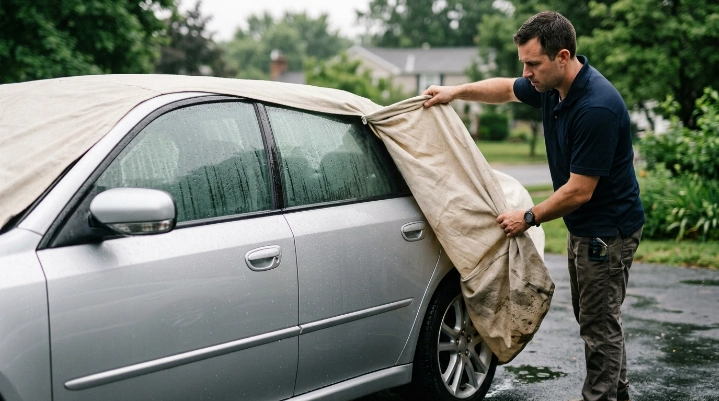
Heat becomes more concerning when it combines with trapped moisture, poor breathability, or an already-hot vehicle. Those conditions can keep the environment under the cover hotter and more humid for longer.
Are non-breathable covers bad in hot weather?
A non-breathable covering can slow the escape of moisture vapor. This is one reason I avoid plastic tarps as substitutes for outdoor automotive covers.
Water does not need to fall directly through the material to become a problem. Humidity, dew, wet pavement, grass, rain splash, and residual wash water can all introduce moisture.
- Condensation: Moisture can collect as temperatures change between day and night.
- Slow drying: Damp surfaces stay wet longer without enough vapor transfer.
- Musty odors: Persistent dampness can encourage mildew around fabrics and enclosed areas.
- Corrosion risk: Long periods of moisture around exposed metal can contribute to rust.
- Water spotting: Mineral-containing moisture can leave deposits as it dries.
A breathable cover is not necessarily completely open to rain. Many outdoor covers balance water resistance with enough vapor transmission to help moisture escape.
Should you cover a car immediately after driving?
No. I let the vehicle cool before installing the cover, especially after highway driving or a long trip.
The hood, engine compartment, brakes, exhaust system, and surrounding components can remain hot after parking.
Cover material should never contact dangerously hot exhaust components. Some synthetic materials can deform or suffer heat damage.
Wait until the vehicle’s exterior surfaces have cooled and the area around the exhaust is no longer radiating significant heat.
What if the car is wet?
A wet car should normally dry before you install a cover. Trapping wash water or rain underneath defeats the cover’s moisture-management job.
This matters even more during hot, humid weather. Heat speeds evaporation, but a poorly breathable cover can prevent that vapor from escaping efficiently.
If unexpected rain soaks both vehicle and cover, remove the cover when conditions allow. Dry the car and the cover separately before reinstalling it.
Can Heat Under a Car Cover Damage Paint?
Normal summer warmth under a suitable cover should not automatically damage healthy, fully cured automotive paint. Problems become more likely when heat appears alongside moisture, contamination, friction, fresh paint, or unsuitable cover material.
Modern clear coat is designed to handle outdoor conditions. That does not make the finish immune to poor storage practices.
Heat versus moisture versus rubbing
Drivers often blame heat when another factor is doing most of the damage. I check the pattern of the marks before deciding what caused them.
| What You Notice | More Likely Cause | What to Do |
|---|---|---|
| Warm, dry paint with no marks | Normal outdoor heat buildup | Continue monitoring the cover and fit |
| Condensation under the cover | Moisture plus inadequate drying | Remove cover and dry both surfaces |
| Fine scratches or swirl-like marks | Dust, grit, loose fit, or wind movement | Clean car and cover; correct the fit |
| Musty smell or persistent dampness | Trapped moisture and limited breathability | Air out vehicle and cover completely |
| Cover sticks or leaves material on paint | Cover deterioration, excessive heat, or contamination | Stop using the cover and inspect the finish |
What about fresh paint or a new coating?
Freshly refinished paint is different from fully cured factory paint. Follow the body shop or coating manufacturer’s curing instructions before putting a cover against it.
The same principle applies to sealants and ceramic coatings. Do not assume a product has cured simply because the surface feels dry.
If you already see blistering, hazing, peeling, or unusual discoloration, avoid aggressive polishing before identifying the cause. A qualified detailer or body shop can assess whether the problem is superficial or within the coating layers.
You can also review proper vehicle washing and drying practices before cleaning a questionable paint surface.
What Type of Car Cover Is Best for Hot Weather?
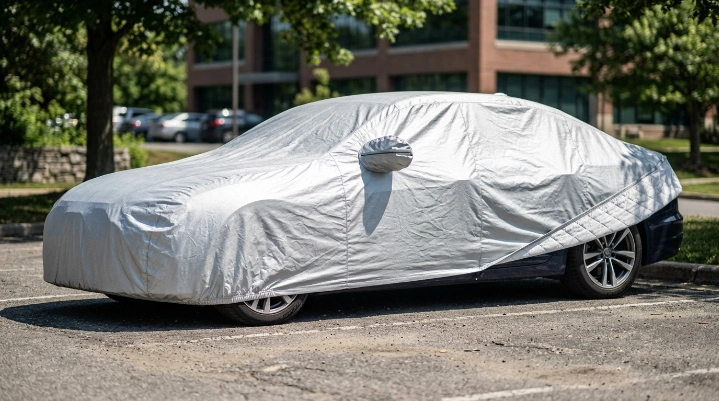
A breathable, ultraviolet-resistant outdoor cover with a light or reflective outer surface is usually the strongest choice for regular sunny-weather parking. Fit and inner-surface quality matter just as much as the layer count.
Should you choose a light or dark car cover?
For exposed summer parking, I prefer light gray, silver, or another light-colored outer surface. Lighter colors generally reflect more incoming sunlight than black or other dark colors.
A dark cover is not automatically unusable. It simply makes heat management more important when the vehicle spends hours in direct sun.
Breathable or fully waterproof?
For most everyday outdoor storage, breathability is a major advantage. The goal is to resist outside water while still allowing trapped vapor to escape.
A completely impermeable sheet may stop rain from passing through from above, yet still hold condensation underneath. That tradeoff is easy to overlook.
- Breathability: Helps moisture vapor escape.
- Sun resistance: Helps the fabric survive prolonged exposure.
- Reflective exterior: Reduces solar absorption.
- Soft inner surface: Reduces direct abrasion against clean paint.
- Secure fit: Limits wind-driven rubbing and excessive movement.
Does fit affect heat?
Yes, although fit is usually more important for controlling movement than cooling. A properly designed cover has enough shape and fabric behavior to work as intended without acting like a sealed plastic bag.
An oversized cover can flap and pull dust across paint. An excessively improvised tight wrapping can interfere with normal moisture movement.
If paint preservation is your priority, Kelley Blue Book’s car-care guidance is also useful for understanding cleaning and finish maintenance.
How Do You Prevent Excess Heat Under a Car Cover?
The easiest solution is to control the conditions before the cover goes on. A clean, cool, dry car gives the cover the best chance to work correctly.
- Park and let the vehicle cool. Do not immediately cover a vehicle after a long drive or while exterior panels remain hot.
- Check that the paint is dry. Remove rain, wash water, dew, and obvious condensation first.
- Remove abrasive dirt. Sand, dust, pollen, and road grime can rub against the finish under a moving cover.
- Use the correct cover. Choose an outdoor-rated, breathable design for outdoor storage.
- Favor a light outer surface. Reflective or light-colored material is preferable for intense direct sun.
- Secure the cover properly. Use its intended hems and straps instead of improvised ropes rubbing against paint.
- Inspect after severe weather. Rain, strong winds, and major temperature swings can change conditions underneath.
- Dry a wet cover separately. Never fold a soaked cover and then reinstall it while still damp.
Should you leave the windows cracked under a car cover?
I would not use open windows as the main cooling strategy. They can allow moisture, dust, insects, and other contamination into the cabin.
Instead, solve the problem at the cover itself. Breathable material, reflective construction, dry installation, and proper fit are more dependable.
How often should you check a covered car?
A car used every day naturally gets inspected whenever you remove the cover. Stored vehicles need more deliberate checks.
I would inspect sooner after heavy rain, extreme heat, high humidity, or strong wind. Look underneath before weeks of unnoticed moisture or rubbing can develop.
- Check for condensation on paint and glass.
- Look for damp areas around the lower edges.
- Smell for mildew or persistent mustiness.
- Inspect the cover’s inner surface for dirt.
- Check whether straps and hems have shifted.
- Look for new rub marks on corners and mirrors.
Hot parked vehicles can also become dangerous for people and animals regardless of whether a cover is installed. Review NHTSA’s parked-vehicle heat safety guidance and never leave a child or pet unattended inside a parked vehicle.
Frequently Asked Questions
Can a car cover make a car hotter?
It can under the wrong conditions, particularly if the cover is dark, non-breathable, or installed over a hot vehicle. A suitable reflective and breathable outdoor cover can instead reduce direct solar heating by preventing sunlight from striking paint and glass directly.
Is condensation under a car cover normal?
Occasional condensation can occur as outdoor temperatures and humidity change. Persistent moisture is a warning sign that the car, cover, parking surface, weather conditions, or cover breathability needs attention.
Should I take my car cover off during extreme heat?
Not automatically. A quality sun-rated cover may provide useful protection, but remove it if you repeatedly find heavy condensation, abnormal cover deterioration, sticking material, or other signs that heat and moisture are not being managed properly.
Can I put a car cover on after driving?
It is better to let the vehicle cool first. Hot exterior surfaces, the engine compartment, brakes, and exhaust components can retain substantial heat after driving and may damage unsuitable cover material.
Can I put a car cover on a wet car in summer?
Avoid it whenever possible. Warm weather can evaporate surface water quickly, but poor airflow beneath the cover may hold that moisture as humid air and condensation instead of allowing it to escape.
Is a plastic tarp safe as a car cover?
A plastic tarp is a poor long-term substitute for a purpose-built car cover. It can trap moisture, fit badly, move in wind, and provide a rougher contact surface than a properly designed automotive cover.
What color car cover is best for hot weather?
Light gray, silver, white, and other light or reflective colors are generally preferable in strong sunlight because they absorb less solar energy than darker materials. Breathability, fit, and ultraviolet resistance still matter.
Bottom line: Warm air under a car cover is not automatically a problem. Heat becomes a concern when the cover also traps moisture, touches a hot vehicle, absorbs excessive sunlight, or rubs contaminated fabric against the finish.
For outdoor parking in 2026, I would choose a breathable, light-colored cover and install it only on a clean, cool, dry car. Check beneath it after rain or severe heat rather than assuming the cover can be left indefinitely without inspection.
