
Car Cover Scratching Ceramic Coating: Why It Happens and How to Stop It

Quick Answer
A car cover can scratch a ceramic coating if dirt gets trapped underneath or the cover moves across the paint. Ceramic coating adds protection, but it does not make paint scratch-proof. Keeping both surfaces clean is essential, which matches Consumer Reports’ car-washing guidance about removing loose debris before touching the finish.
Most Common Causes
- Trapped grit: Fine sand, road dust, and dirt can rub against the coating.
- Wind movement: A loose cover can repeatedly move across the same painted areas.
- Dirty fabric: Contamination inside the cover can become an abrasive surface.
- Poor fit: Excess fabric creates more movement around corners and body lines.
- Rough lining: Some inexpensive materials are less suitable for delicate finishes.
Safest Approach
- Only cover a clean, dry car with a clean, correctly fitted cover.
I understand the worry behind the keyword car cover scratching ceramic coating. You paid for a slick, glossy protective finish, so finding fresh swirls after using a cover feels backwards.
I treat a ceramic-coated daily driver much like freshly polished paint. The coating helps, but careful contact still matters.
In This Guide
- Can a Car Cover Scratch a Ceramic Coating?
- Why Does a Car Cover Leave Marks on Coated Paint?
- How Can You Prevent Car Cover Scratches on Ceramic Coating?
- What Kind of Car Cover Is Safest for Ceramic-Coated Paint?
- What Should You Do if the Coating Already Looks Scratched?
- When Should You Skip the Car Cover?
- Common Questions About Car Covers and Ceramic Coatings
Can a Car Cover Scratch a Ceramic Coating?
Yes, a car cover can leave fine scratches or swirl-like marks on ceramic-coated paint. The coating reduces some minor surface wear, but it cannot stop every form of abrasion.
Definition: A ceramic coating is a liquid protective product that bonds with the vehicle’s finish and forms another layer over the clear coat. Car and Driver’s ceramic coating testing notes that coatings can resist minor scratches but cannot prevent severe abrasion.
This distinction matters. I never treat ceramic coating as a force field around the paint.
Imagine one small grain of sand sitting between the cover and hood. If wind moves the fabric back and forth, that grain can drag across the same area repeatedly.
- The coating may get marked first. Light abrasion can affect the upper protective surface.
- The clear coat may also be affected. Stronger or repeated rubbing can reach beyond the coating.
- Dark paint shows defects sooner. Fine swirls often stand out more under bright light on black, blue, and other dark finishes.
- Gloss can hide some marks. A coated panel may still look shiny while revealing fine defects under direct lighting.
That is why slickness alone does not prove the surface is safe from scratching. Friction still matters when contamination is present.
As of 2026, ceramic coatings remain excellent tools for easier cleaning, water behavior, gloss, and chemical resistance. Physical abrasion still requires good washing and storage habits.
Why Does a Car Cover Leave Marks on Coated Paint?
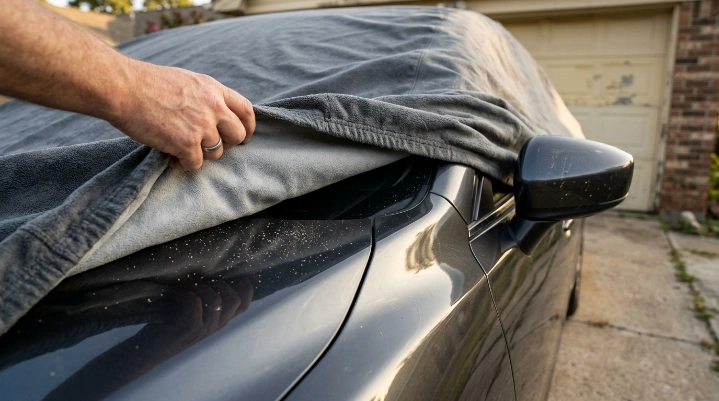
The cover itself is not always the real problem. Most scratching comes from contamination, movement, poor fit, or a combination of those factors.
The pattern of the marks can give you useful clues. I always inspect where the damage appears before blaming the coating.
| What You Notice | Likely Cause | Scratch Risk | Safer Move |
|---|---|---|---|
| Random fine marks | Dust or grit trapped underneath | Moderate to high | Wash the car and cover |
| Marks on corners and mirrors | Loose fabric moving in wind | High with repeated movement | Improve fit or secure the cover |
| Long lines after removal | Cover dragged across dirty paint | Moderate to high | Lift instead of dragging |
| Hazy contact areas | Repeated rubbing or dirty lining | Moderate | Inspect and clean the lining |
Covercraft also warns that dirt under a cover and loose fabric movement can create scratches. That matches what I focus on first when checking a covered vehicle.
A microfiber-soft lining cannot protect the paint if grit is embedded in it. Once contaminated, even gentle fabric can carry abrasive particles.
Wind is often the hidden problem
A loose outdoor cover can behave differently from an indoor dust cover. Gusts repeatedly pull the material across raised body lines.
- Mirror housings receive concentrated rubbing.
- Fender peaks become contact points.
- Spoilers and roof edges can hold tension.
- Hood corners may see constant fabric movement.
If I see marks clustered around those areas, I inspect fit and wind exposure immediately. Repeated movement is often more important than how soft the cover felt when new.
How Can You Prevent Car Cover Scratches on Ceramic Coating?
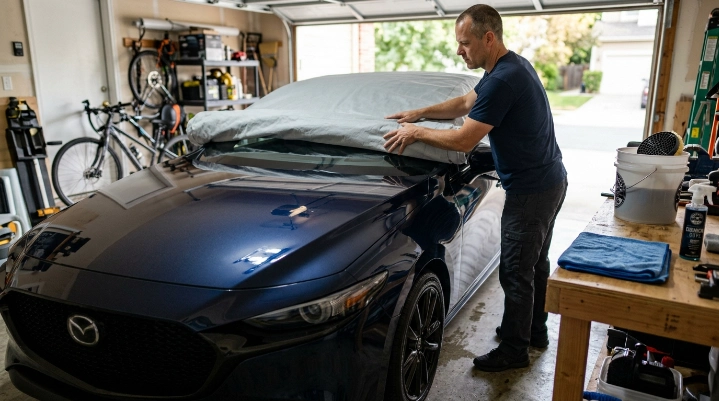
The safest routine is simple: clean car, clean cover, dry surfaces, secure fit. Skipping one of those steps raises the chance of abrasion.
Here is the routine I would use on a ceramic-coated daily driver.
- Check the paint first. Do not cover a car coated in visible dust, pollen, sand, or road film.
- Wash when needed. Use a paint-safe automotive shampoo instead of wiping dry dirt from the surface.
- Dry the vehicle fully. Pay attention to mirrors, trim gaps, handles, spoilers, and panel seams.
- Inspect the inside of the cover. Look for sand, leaves, hardened dirt, or rough contaminated areas.
- Install without dragging. Position the cover gradually instead of pulling a pile of fabric across the hood or roof.
- Secure the fit. Use the manufacturer’s supplied fastening system when conditions require it.
- Check after windy weather. Look for shifted fabric or new rubbing points before leaving the cover in place again.
One mistake I avoid is using a dry detail towel on a dusty coated car just because the paint still feels slick. Slick paint can still have abrasive particles sitting on top.
If the car has only a tiny amount of loose dust, a touch-free removal method may be suitable. When contamination is heavier, a proper wash is the safer choice.
Keep the cover clean too
The car is only half of the contact pair. The cover’s inner surface deserves the same attention.
- Follow the cover manufacturer’s cleaning instructions.
- Do not place the clean side directly on dirty pavement.
- Let the cover dry fully before storage.
- Store it in a clean bag or container.
- Inspect the lining after use near sand, construction dust, or trees.
I also avoid turning installation into a one-person tug-of-war with a large cover. Controlled lifting causes less contact than dragging fabric across several panels.
What Kind of Car Cover Is Safest for Ceramic-Coated Paint?
The safest cover is clean, smooth on the inside, correctly sized, and appropriate for the storage environment. Material alone cannot compensate for a bad fit or dirty surface.
For indoor storage, I prefer a soft and breathable cover that sits securely without excessive loose fabric. Outdoor storage needs stronger weather resistance and better control against wind movement.
| Cover Setup | Best Use | Main Concern |
|---|---|---|
| Soft fitted indoor cover | Clean garage storage | Dust contamination over time |
| Fitted breathable outdoor cover | Routine outdoor parking | Wind movement and outside grit |
| Oversized universal cover | Limited situations | Loose sections rubbing the finish |
| Dirty or damaged cover | None | Embedded debris and rough contact |
Do not assume that thicker automatically means safer. A heavy cover that moves in wind can still rub against a ceramic-coated finish.
Fit matters more than many owners expect
A good fit reduces unnecessary motion without placing harsh tension on sharp body features. The cover should follow the vehicle’s general shape and use its intended securing points.
Watch the fabric around mirrors, antennas, spoilers, and roof accessories. Those areas can create concentrated pressure or movement.
- Too loose: More flapping and sliding can occur.
- Too tight: Installation can involve excessive pulling across the finish.
- Correct fit: The cover stays controlled while remaining practical to install.
For a garage-kept weekend car, protection from dust may be the main goal. For a vehicle outside in wind, stability becomes far more important.
What Should You Do if the Coating Already Looks Scratched?
Do not start polishing immediately. First determine whether you are seeing dirt, residue, coating defects, or a true scratch in the paint system.
I begin with the least aggressive approach. Every polishing step removes or changes material, so guessing can create more work.
- Wash the area carefully. Remove dirt before inspecting the defect.
- Dry with clean microfiber. Use good lighting from several angles.
- Check the scratch gently. A mark that catches a fingernail may be deeper than a light surface defect.
- Inspect coating behavior. Compare gloss and water behavior with nearby panels after cleaning.
- Ask a detailer when unsure. Machine polishing may remove part or all of the coating in the corrected area.
Car and Driver’s 2026 scratch-remover testing notes that light clear-coat scratches are different from deeper damage that catches a fingernail. That simple distinction can keep a minor problem from becoming a bad DIY repair.
Will polishing remove the ceramic coating?
Polishing is abrasive, so correcting scratches can weaken or remove ceramic protection in the worked area. How much changes depends on the polish, machine, pad, pressure, coating, and defect.
For that reason, I would not repeatedly polish a coated panel just to chase tiny marks. Correct the actual defect, then restore protection according to the coating maker’s process.
Mechanic Alert: If the scratch reaches through the clear coat, exposes primer or metal, or requires sanding, have an experienced detailer or body-repair professional inspect it before proceeding.
When Should You Skip the Car Cover?
Sometimes leaving the car uncovered for a short period is safer than placing fabric over contamination. A cover should not become an excuse to rub against dirty paint.
I would delay installing the cover in several common situations.
- The vehicle is dusty or sandy. Wash it before covering when practical.
- The cover itself is dirty. Clean it before putting the contaminated lining against paint.
- The car is still wet. Dry it and follow the cover manufacturer’s moisture instructions.
- Strong wind is moving the cover. Secure it correctly or remove it when the product cannot remain stable.
- The ceramic coating is still curing. Follow the coating maker’s exact instructions before allowing fabric contact.
- The vehicle was recently repainted. Ask the body shop when it is safe to cover the new finish.
New ceramic coatings need particular care. Cure times differ by product, climate, and application system.
Do not rely on a universal waiting period from a forum or video. Follow the actual coating manufacturer’s instructions and your installer’s advice.
Car cover versus ceramic coating
These two products solve different problems. They are not replacements for each other.
- Ceramic coating: Helps with gloss, cleaning, water behavior, and resistance to some environmental contamination.
- Car cover: Creates a physical barrier between the parked vehicle and its surroundings.
- Paint protection film: Adds a thicker physical film where impact and abrasion protection matter more.
Using a ceramic coating and a good cover together can work well. The key is preventing contaminated fabric from becoming the thing that damages the finish.
Common Questions About Car Covers and Ceramic Coatings
Can a soft car cover still scratch ceramic coating?
Yes. Even a soft cover can scratch a ceramic-coated car if dirt, sand, or other abrasive particles become trapped underneath it. A soft lining reduces direct fabric abrasion, but cleanliness and fit remain essential.
Does ceramic coating make a car scratch-proof?
No. Ceramic coating can provide resistance to some light surface wear, but it cannot make automotive paint scratch-proof. Dirt dragged across the surface, branches, tools, rocks, and repeated cover movement can still cause damage.
Should I wash my car every time before using the cover?
You should not put a cover over obvious grit, sand, road film, or heavy dust. Whether a full wash is needed depends on how dirty the vehicle is, but avoiding abrasive contamination is the main goal.
Can wind make a car cover scratch paint?
Yes. Wind can move loose cover material repeatedly across paint, especially around mirrors, fenders, roof edges, and corners. A properly fitted and secured cover reduces this movement.
Is an indoor cover safer than an outdoor cover?
An indoor cover usually faces less wind, rain, and outside contamination, which can reduce scratching risk. It still needs a clean inner surface and proper fit because garage dust can also become trapped underneath.
Can I put a car cover on a newly ceramic-coated car?
Only when the coating maker or installer says the coating has cured enough for contact. Ceramic products have different cure requirements, so following your specific product instructions is safer than using one universal waiting time.
What is the best way to remove a cover without scratching the car?
Release any straps first, then lift and fold the cover progressively instead of dragging it along the paint. Keep the dirty exterior of the cover away from the clean inner lining during removal and storage.
Bottom line: Ceramic coating and a car cover can work together safely, but cleanliness and movement control matter more than marketing claims. Keep the vehicle clean, maintain the cover, use the correct fit, and never assume a coated surface cannot scratch.
If fresh marks keep appearing after you improve those habits, stop using the cover until you identify the contact point. Solving one fit or contamination problem is much easier than correcting an entire vehicle later.
“`
