
Cover Trapping Humidity: Why It Happens and How to Stop It

Quick Answer
A car cover can trap humidity when moist air or water gets underneath faster than it can escape. Condensation, covering a damp vehicle, poor ventilation, wet ground, and non-breathable materials are common causes. A breathable car cover helps moisture escape instead of holding it against the vehicle.
What to check first
- Wet vehicle: Never cover paint, trim, wheels, or seams that are still damp.
- Condensation: Temperature changes can turn humid air beneath the cover into water droplets.
- Poor breathability: Sealed material can slow moisture evaporation even when rain never enters.
- Wet cover: A damp liner can transfer moisture back onto an otherwise dry car.
- Parking surface: Damp soil, grass, or a humid garage can keep the air around the vehicle moist.
Best immediate fix
- Remove the cover, let the car and cover dry completely, then identify where the moisture came from before covering the vehicle again.
Finding a damp car underneath a cover feels backwards. The cover was supposed to keep water away, yet the paint, glass, or trim may be covered in moisture.
I see this as a humidity-management problem rather than just a waterproofing problem. In this guide, I’ll show you how trapped humidity develops, what damage matters, and how I would fix it on an everyday vehicle.
In This Guide
Why Does a Car Cover Trap Humidity?
A car cover traps humidity when moisture enters or forms beneath the fabric but cannot evaporate fast enough. The cover then creates a damp pocket of air around the vehicle.
Trapped humidity means water vapor remains concentrated between the vehicle and its cover. When surfaces become cool enough, some of that vapor can condense into liquid water.
Condensation can happen without rain
Rain does not need to pass through the cover for your car to become wet. Moist air already surrounding the vehicle can supply enough water vapor.
As the body panels cool, their temperature may reach the air’s dew point. Water vapor then condenses on the cooler surface.
- Warm afternoon: Air beneath the cover contains moisture.
- Cool evening: The vehicle and surrounding air lose heat.
- Dew point reached: Water vapor begins condensing on cool surfaces.
- Slow evaporation: Low airflow keeps those surfaces damp longer.
This is why I do not automatically blame a cover’s outer waterproof layer when I see droplets underneath. The water may have formed inside the covered space.
Covering a wet vehicle creates a head start
A recently washed or rain-soaked car already has liquid water in its seams and trim. Covering it immediately makes drying harder.
I pay particular attention to areas that hold water after the visible paint looks dry.
- Mirror housings
- Door handles
- Window seals
- Badges and emblems
- Fuel-door edges
- Trunk and hatch openings
- Wheel and tire surfaces
Water can slowly drain from those areas after the cover is installed. That can make the inside of the cover damp again.
The cover itself may already be wet
A vehicle can be perfectly dry while the cover is not. Reinstalling a damp cover puts stored moisture directly back into the enclosed space.
I treat the inside of a car cover like a large detailing towel. If it is wet or contaminated, it does not touch the car.
Section Takeaway: Humidity underneath a cover usually comes from condensation, existing water, a damp cover, or limited evaporation. Rain penetration is only one possibility.
Is the Moisture Condensation or a Leaking Cover?
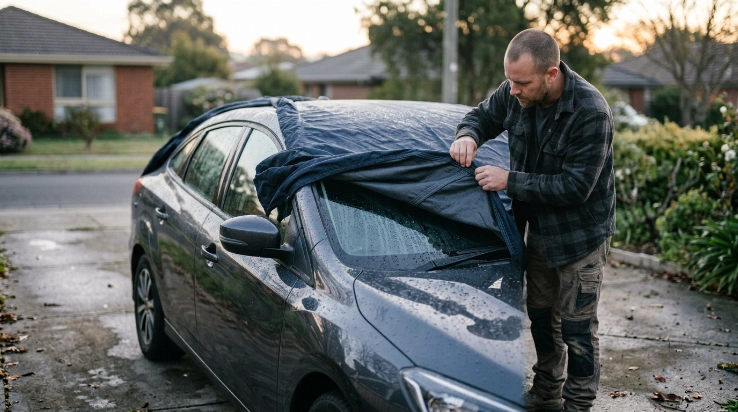
Condensation usually appears as widespread fine moisture or droplets after temperature changes. A leak is more likely when wetness follows rain and repeatedly appears below seams, tears, or saturated sections.
I diagnose the pattern before replacing anything. Otherwise, it is easy to buy another cover and have the same problem the next morning.
| What You Notice | More Likely Cause | First Check |
|---|---|---|
| Fine droplets across roof and glass in the morning | Condensation | Temperature change and airflow |
| Wet patch directly below a seam after rain | Seam leakage | Seam condition and stitching |
| Damp paint immediately after covering a washed car | Existing water trapped underneath | Mirrors, trim, seals, and body gaps |
| Same lower panels stay damp repeatedly | Wet surroundings or poor ventilation | Ground moisture and parking location |
| Cover lining feels damp before installation | Cover stored wet | Dry the cover fully before reuse |
Check the timing
If the car becomes damp after a clear, cool night, condensation moves higher on my list. If the wet spot only appears during rain, I inspect the fabric and seams.
The distinction matters. A replacement waterproof cover will not eliminate condensation caused by humid air.
Check both sides of the cover
Remove the cover carefully and inspect its outer and inner surfaces. Avoid dragging a wet or dirty cover across the paint.
- Outside soaked, inside mostly dry: The weather barrier is probably doing its job.
- Water crossing one seam: Inspect stitching or seam sealing.
- Inside uniformly damp: Condensation or stored moisture becomes more likely.
- Both sides damp for long periods: Drying performance may be inadequate for the environment.
Car and Driver’s 2026 car-cover testing evaluates moisture protection alongside fit, construction, and durability. Those factors work together in real outdoor use.
Can Trapped Humidity Damage a Car?
Yes. Persistent moisture can contribute to corrosion, mildew, staining, and deterioration of already vulnerable surfaces.
A single damp morning does not mean your vehicle is ruined. The concern is moisture that remains trapped repeatedly or for extended periods.
Corrosion is the biggest mechanical concern
Vehicle corrosion becomes more concerning when moisture combines with contaminants. Road salt is especially important because it can accelerate corrosion on exposed metal.
NHTSA-hosted vehicle care information identifies road salt, dirt, and moisture accumulation among common corrosion causes. That is why I never put a long-term cover over a salty, dirty winter vehicle.
- Wash away road salt before extended storage.
- Dry body seams and lower panels.
- Inspect exposed chips where bare metal may exist.
- Keep the underside reasonably clean before seasonal storage.
Brake rotors can also develop surface rust while a vehicle sits in damp conditions. Some light rotor surface oxidation after storage can be normal, but anything affecting braking performance deserves professional inspection.
Mechanic Alert: If you find heavy corrosion on brake components, brake lines, structural areas, or suspension mounting points, have a qualified mechanic inspect the vehicle.
Paint usually suffers indirectly
Healthy automotive clear coat is designed to tolerate normal environmental moisture. Persistent dampness becomes more troublesome when contamination, failing paint, scratches, chips, or minerals are also present.
Repeated water drying on a surface can leave spotting. Existing paint defects may also become easier to notice once moisture collects around them.
Mildew can affect the cover and nearby surfaces
A cover that stays damp can develop a musty smell or visible mildew. Organic contamination and poor drying make that problem more likely.
I stop using a moldy cover until it has been cleaned according to its manufacturer’s instructions and dried completely.
- Do not fold a damp cover into its storage bag.
- Do not leave wet leaves or debris trapped on it.
- Do not place a contaminated liner back against clean paint.
- Replace the cover if contamination cannot be removed safely.
Section Takeaway: The danger is not a brief encounter with humidity. Repeated trapped moisture, especially with dirt or salt, creates the conditions I want to eliminate.
How Do You Stop a Car Cover From Trapping Humidity?
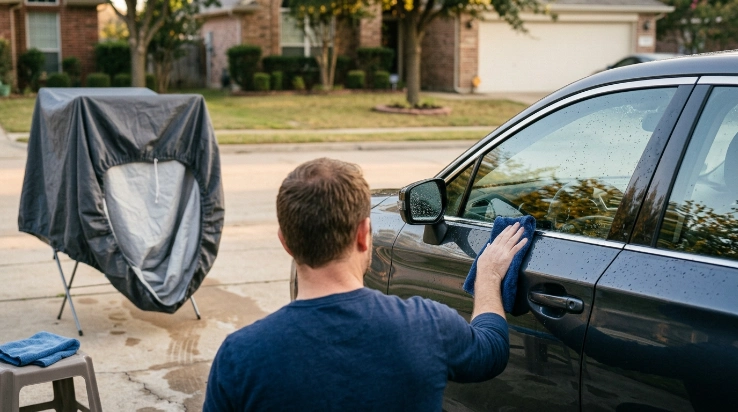
Start by drying the vehicle and cover completely, then improve breathability, fit, and storage conditions. The goal is to reduce how much moisture enters and shorten how long any condensation stays.
I use the following routine when a covered vehicle keeps turning up damp.
- Remove the cover. Give the vehicle open airflow instead of trapping the current moisture.
- Dry the vehicle completely. Check paint, glass, mirrors, seals, trim, wheels, and hidden gaps.
- Dry the cover separately. Do not reinstall it while its inner surface feels damp.
- Inspect the fabric. Look for blocked vents, worn coatings, leaks, dirt, or mildew.
- Check the fit. Excess loose fabric can collect water and move across the vehicle.
- Inspect the parking area. Look for wet ground, standing water, poor garage airflow, or other moisture sources.
- Recheck after the next cool night. This tells you whether condensation is still developing.
Never cover immediately after washing
This is one of the simplest fixes. Give trapped wash water enough time to drain from body gaps before installing the cover.
After hand drying, I often wait and check the mirrors and trim again. Those areas can release another small stream of water several minutes later.
Keep the cover clean
Dirt does more than threaten paint. Contaminated fabric can also hold water longer and make the liner slower to dry.
Follow the cover manufacturer’s cleaning directions. Materials and waterproof treatments differ, so one washing method does not suit every cover.
Inspect the car during long-term storage
I would not cover a car for several months and assume nothing changes underneath. Periodic inspection catches dampness, pests, dirt, and developing corrosion sooner.
- Look at roof and hood surfaces.
- Check lower door and rocker areas.
- Inspect exposed metal and fasteners.
- Smell for musty odors.
- Check the liner for moisture.
This takes only a few minutes. It can prevent a small moisture problem from becoming a storage problem.
Section Takeaway: Dry first, cover second. Then inspect periodically instead of treating a car cover as a set-it-and-forget-it storage system.
Which Car Cover Type Handles Humidity Best?
A breathable cover that suits your actual parking environment is usually the better choice for humidity control. Breathability allows water vapor beneath the cover to escape more readily.
That does not mean every breathable cover is appropriate outdoors. Weather resistance, construction, fit, and secure fastening still matter.
| Cover Type | Best Use | Humidity Concern |
|---|---|---|
| Breathable indoor cover | Dry garage storage | Garage humidity can still condense on cool metal |
| Breathable outdoor cover | Driveway or outdoor parking | Needs both weather protection and vapor release |
| Low-cost single-layer cover | Limited applications depending on material | May manage moisture poorly |
| Plastic tarp or sealed sheet | Not my choice for routine vehicle storage | Minimal vapor escape and poor paint-friendly fit |
Consumer Reports has also warned that cheaper single-layer covers can risk trapping moisture. Material quality and construction matter alongside the waterproof label.
Waterproof and breathable are not the same thing
A waterproof barrier focuses on stopping liquid water from passing through. Breathability describes how readily water vapor can move out of the covered space.
For vehicle storage, I want sensible rain protection without creating a sealed humid pocket around the car.
Fit still matters
A breathable cover can still cause trouble when it hangs loosely or traps large pools of rainwater. Correct sizing keeps the fabric closer to its intended shape.
- Use the manufacturer-approved size for your vehicle.
- Keep straps and hems in good condition.
- Inspect mirror pockets and protruding accessories.
- Avoid letting excess fabric sag into water-catching depressions.
A snug cover also moves less in ordinary wind. That helps reduce rubbing when small amounts of dust are present.
Does the Storage Environment Make Humidity Worse?
Yes. A good cover can still struggle when the surrounding parking area remains damp, poorly ventilated, or exposed to large temperature swings.
I always inspect the environment before deciding the cover itself has failed.
Grass and damp soil can keep the area moist
A vehicle parked over wet grass or soil sits above a continuous moisture source. Evaporation from the ground increases moisture around the lower vehicle.
A paved, well-drained surface is easier to manage. Standing water beside or beneath the vehicle is a warning sign.
A garage is not automatically dry
Unheated garages can experience significant temperature changes. Humid air can enter whenever doors open, while cold vehicle surfaces may encourage condensation.
Look for other clues before blaming the car cover.
- Condensation on garage windows
- Damp concrete
- Musty odors
- Visible mold on stored items
- Rust appearing on tools
- Water intrusion after heavy rain
If the entire garage has a moisture problem, changing the vehicle cover alone may not solve it.
Salt exposure makes damp storage more concerning
Winter vehicles can carry salt and grime into storage areas. I wash that contamination away before longer storage rather than sealing it underneath a cover.
NHTSA-hosted technical guidance also recommends cleaning vehicles after operation on salt-treated roads because road salt can contribute to severe corrosion.
That matters around seams, fasteners, underbody parts, and existing paint damage. Moisture gives those contaminants more opportunity to remain active.
Section Takeaway: The cover is only one part of the system. Ground moisture, garage ventilation, temperature swings, dirt, and road salt can all change what happens underneath it.
Frequently Asked Questions
Why is my car wet under the cover when it did not rain?
Condensation is a likely cause. Humid air trapped around the vehicle can cool until water vapor turns into droplets on colder paint, glass, or metal. Remove the cover, let everything dry, and see whether the pattern returns after another cool night.
Can a waterproof car cover trap humidity?
Yes, particularly when its construction provides poor vapor release or ventilation. Waterproofing addresses liquid water entering from outside, while humidity can already exist beneath the cover. Breathability helps that water vapor escape after conditions change.
Should I cover a car immediately after washing it?
No. Dry the car first and allow water hidden around mirrors, badges, seals, handles, wheels, and body gaps to drain. A vehicle that looks dry from several feet away can still release trapped wash water underneath the cover.
Can humidity under a car cover cause rust?
Persistent moisture can contribute to corrosion, especially where metal is exposed or contaminants such as road salt remain. Clean and dry the vehicle before storage, and have significant structural, brake-line, or suspension corrosion inspected by a qualified mechanic.
Is some condensation under a car cover normal?
Occasional condensation can occur when temperature and humidity change. What matters is how quickly the moisture disappears. Repeated wetness that remains trapped for long periods suggests you should inspect the cover, storage environment, and your covering routine.
Should I remove my car cover to let the car breathe?
If the vehicle or cover is damp, remove it and allow both to dry completely. During long storage, periodic inspection is also sensible because it lets you catch moisture, contamination, pests, or developing corrosion before they become bigger problems.
Will a breathable cover completely prevent condensation?
No cover can control the surrounding weather or eliminate every temperature-driven condensation event. Breathability helps by allowing water vapor and trapped moisture to escape more readily instead of remaining sealed around the vehicle.
What Should You Do If Your Cover Keeps Trapping Humidity?
If your car keeps getting damp underneath its cover, do not simply add another waterproof layer. First determine whether the water is condensation, rain leakage, stored moisture, or moisture coming from the parking environment.
My rule is simple: the car should be clean and dry, the cover should be clean and dry, and the material should suit where the vehicle is parked.
- Dry the car completely before covering it.
- Use a breathable cover suited to indoor or outdoor storage.
- Keep road salt and dirt out of long-term storage.
- Never store the cover while it is wet.
- Inspect underneath periodically.
- Investigate repeated damp areas instead of ignoring them.
A car cover should shorten your maintenance list, not create another moisture problem. Fix the humidity source first, and the cover can go back to doing what it was meant to do: protecting the vehicle while it sits.
