
Car Cover Storage Issues: Causes, Fixes, and Prevention

Quick Answer
The most common car cover storage issues are trapped moisture, paint scratches, mildew, dirt transfer, poor fit, wind movement, and damage from storing the cover while it is still wet. Start with a clean, dry car and a clean, dry cover, then use a cover designed for your storage environment. This car cover testing guide also shows why fit and cover type matter.
Common problems to check
- Moisture underneath: Condensation or a damp cover can leave the vehicle wet for long periods.
- Paint scratches: Dirt trapped between the paint and cover can act like fine sandpaper.
- Mold or odors: Folding and storing a damp cover can encourage mildew and unpleasant smells.
- Poor fit: A loose cover can move across the paint while an overly tight cover can put stress on edges and trim.
- Dirty cover: Dust picked up from the garage floor can transfer directly onto the vehicle later.
Best first step
- Remove the cover, inspect both surfaces, let everything dry fully, and clean away loose dirt before covering the vehicle again.
I used to think putting a cover on a parked car ended the storage problem. I learned that a cover can create new problems when the car, cover, or storage area is not prepared first.
In this guide, I’ll show you how I deal with car cover storage issues in 2026. We’ll cover moisture, scratches, mildew, fit, cover storage, and long-term vehicle preparation.
In This Guide
- What car cover storage issues are most common?
- Why does moisture build up under a car cover?
- Can a car cover scratch the paint during storage?
- How do fit, wind, and cover material cause problems?
- How should you store a car cover when it is not in use?
- What else should you check before long-term car storage?
- Frequently Asked Questions
What Car Cover Storage Issues Are Most Common?
Most car cover storage problems come from moisture, contamination, movement, or incorrect cover choice. The cover itself is rarely the whole problem.
A car cover storage issue is any problem affecting the vehicle or cover while the car is parked and protected. That includes damage caused by trapped dirt, water, poor airflow, loose fabric, or bad storage habits.
Quick symptom and cause guide
| What you notice | Likely cause | What I would check first |
|---|---|---|
| Water droplets under cover | Condensation, damp fabric, or poor airflow | Remove cover and dry car and cover fully |
| Fine marks in paint | Dust or grit trapped underneath | Inspect paint and inner cover surface |
| Musty smell | Cover stored or installed damp | Check fabric for mildew and moisture |
| Cover moving or flapping | Loose fit or weak securing straps | Confirm sizing and attachment points |
| Cover coating cracking | Age, heat, sunlight, or poor storage | Inspect outer layer and seams |
| Dust on paint after removal | Dirty cover or inadequate dust protection | Clean both cover and vehicle |
One mistake I made early on was treating the cover like a clean item just because it looked clean. After sitting on a garage floor, the inside can pick up grit that is hard to see.
That dirt goes straight against the clear coat the next time the cover goes on. It is a simple problem with an equally simple fix.
- Keep the inner surface clean. Never drag it across the garage floor.
- Dry it before storage. Damp fabric belongs nowhere near long-term vehicle storage.
- Check the fit. Fabric should not whip against the body.
- Match the environment. Indoor and outdoor storage create different demands.
Why Does Moisture Build Up Under a Car Cover?
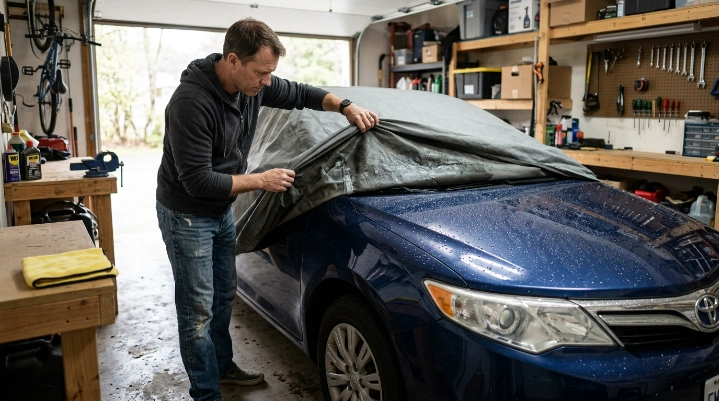
Moisture gets trapped when water or humid air enters the space between the cover and vehicle but cannot escape quickly. A wet car, wet cover, humid garage, or poorly ventilated cover can all contribute.
This is the car cover issue I take most seriously. A cover should protect the vehicle from water, not keep existing moisture trapped against it.
Never cover a wet vehicle for storage
If I have just washed the car, I wait until the body, mirrors, trim, wheels, and hidden edges are dry. Water likes to stay around door handles, mirror housings, badges, and weather stripping.
Covering those areas too soon can trap moisture. Give the vehicle time to dry first.
- Dry the paint with a clean towel.
- Open doors or the trunk briefly if water is trapped around seals.
- Check mirror housings and trim gaps.
- Make sure the storage surface is not holding standing water.
- Do not install a cover that still feels damp.
Waterproof and breathable are not the same thing
A highly water-resistant outer layer can help outdoors. However, the cover also needs to suit the conditions where you use it.
For indoor storage, I usually care more about softness, dust protection, fit, and breathability than extreme rain protection. For outdoor storage, weather resistance becomes much more important.
Kelley Blue Book recommends covered protection when a vehicle will sit unused for an extended period and notes that a secure garage is preferable when available. Their long-term car storage guidance also covers the other systems that need attention while the vehicle sits.
What should you do if you find condensation?
Remove the cover instead of leaving the moisture trapped. Let the vehicle and cover dry completely before reinstalling it.
- Move the cover away from the vehicle.
- Check the roof, hood, trunk, glass, and lower body panels.
- Look at the inner cover surface for damp areas.
- Allow both surfaces to air-dry.
- Check whether the cover matches indoor or outdoor use.
- Improve ventilation around the parked vehicle when possible.
Section Takeaway: A car cover should go onto a dry vehicle while the cover itself is also completely dry. If moisture repeatedly appears underneath, address the environment or cover choice instead of simply covering the car again.
Can a Car Cover Scratch the Paint During Storage?
Yes, a cover can contribute to scratches when dirt gets trapped underneath or the fabric moves repeatedly across the paint. The risk usually comes from contamination and movement rather than soft fabric touching clean paint.
This surprised me the first time I noticed fine marks after storage. The cover felt soft, but the paint and inner fabric were not as clean as I thought.
Dirt is often the real problem
Think about a few grains of sand trapped beneath a soft towel. Moving that towel repeatedly can still mark a smooth surface.
The same idea applies to a car cover. Dust, pollen, dried mud, and tiny grit particles can become abrasive.
- Wash or safely clean a dirty vehicle before extended storage.
- Do not cover heavy road dust or dried mud.
- Keep the inside of the cover away from dirty floors.
- Do not drag the cover across the vehicle during removal.
- Follow the cover maker’s washing instructions.
How I remove a cover without dragging it
I prefer folding the sides upward toward the roof before lifting the cover away. That reduces how much material slides across painted panels.
- Release straps or securing points.
- Fold the lower edges upward.
- Bring each side toward the center of the roof.
- Lift the bundled cover instead of pulling it along the body.
- Store it with the clean inner surface protected.
Car and Driver’s 2026 cover testing also warns that debris collected by a cover can later contact the vehicle and recommends keeping both the cover and vehicle clean. Proper sizing matters too.
Check the paint before blaming the cover
Not every mark found after storage was caused during storage. Strong lighting can reveal existing swirl marks that were already there.
I inspect the paint under good light before covering a car for a long period. That gives me a useful baseline when the cover comes off later.
Section Takeaway: Clean paint plus a clean inner cover surface is the safest combination. Dirt between those two surfaces is one of the easiest car cover storage issues to prevent.
How Do Fit, Wind, and Cover Material Cause Problems?
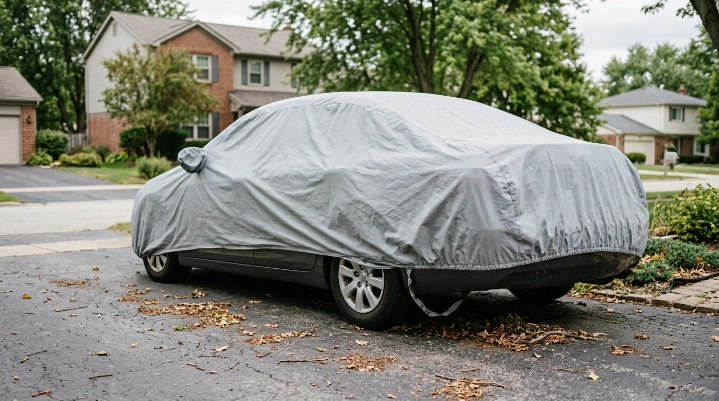
A cover that is too loose can move across the vehicle, while one that is too tight can strain seams and catch on mirrors or trim. Proper fit matters even when the car is stored indoors.
I prefer a cover that follows the basic shape of the car without needing to be stretched aggressively. It should also stay controlled when air moves around it.
Problems caused by a loose cover
- Fabric movement: Repeated motion can rub dusty material across paint.
- Poor weather protection: Wind can lift sections of an outdoor cover.
- Debris entry: Loose edges make it easier for dust and leaves to get underneath.
- Attachment stress: Straps can take more load when excess fabric catches the wind.
Problems caused by an overly tight cover
- Mirror stress: Tight fabric may pull against mirror pockets.
- Seam strain: Stretching beyond the intended size can weaken seams.
- Difficult removal: The cover may need to be dragged instead of lifted.
- Sharp-edge wear: Antennas, spoilers, and trim can press hard against the fabric.
If you have added a spoiler, roof rack, antenna, or another exterior accessory, take that into account when sizing. The factory body dimensions may no longer tell the full story.
Indoor cover versus outdoor cover
| Storage situation | Main priorities | Common mistake |
|---|---|---|
| Clean enclosed garage | Soft lining, dust control, breathability | Using a bulky outdoor cover unnecessarily |
| Open carport | Secure fit, moisture control, weather resistance | Underestimating wind-driven rain |
| Outdoor driveway | Weather protection, secure attachments, correct sizing | Using a lightweight indoor-only cover |
No cover turns poor outdoor storage into perfect indoor storage. It is one layer of protection, not a climate-controlled building.
How Should You Store a Car Cover When It Is Not in Use?
Store a car cover clean, completely dry, loosely folded or rolled, and protected from dirt. A breathable storage bag or clean shelf in a dry area works better than dropping it on the garage floor.
This part is easy to overlook. I used to spend more time protecting the car than protecting the thing touching the car.
Dry the cover before packing it away
A wet cover sealed inside a bag can develop musty odors and mildew. Even a slightly damp cover deserves more drying time.
Spread it out in a clean, ventilated place. Do not pack it away until both sides feel dry.
Keep the clean side clean
The inner surface will eventually touch your paint again. Treat it like a clean detailing towel.
- Do not place it directly on concrete.
- Keep it away from oily tools and chemicals.
- Protect it from sawdust and workshop debris.
- Do not place heavy boxes on top.
- Keep sharp objects away from the fabric.
Fold it without making the next installation harder
I like to fold the cover so I know which section belongs at the front. That makes the next installation faster and reduces unnecessary dragging.
A storage bag also keeps the bundle controlled. Do not force a damp or dirty cover into the bag just because it fits.
Inspect it before putting it back on the car
- Look for trapped leaves or grit.
- Check seams for tearing.
- Inspect elastic edges.
- Check straps and buckles.
- Look for mildew or unusual stains.
- Feel the inner surface for hardened dirt.
Replace a badly damaged cover rather than trying to make it last forever. Protection becomes questionable once the inner layer, seams, or securing system has failed.
Section Takeaway: The safest place for a removed car cover is somewhere dry, clean, and protected from the garage floor. Whatever sticks to the inside may eventually touch your paint.
What Else Should You Check Before Long-Term Car Storage?
A car cover only protects part of the vehicle. Long-term storage can also affect the battery, tires, fuel system, brakes, fluids, and interior.
This is where I separate “covering a car” from “storing a car.” They are not the same job.
Clean the vehicle first
Bird droppings, road grime, tree residue, and dirt should not sit on paint for months. Start storage with a clean exterior.
Edmunds also recommends cleaning a vehicle before extended storage and using a suitable cover when indoor storage is unavailable. Their long-term vehicle storage checklist covers battery, tires, fuel, and other preparation steps.
Check these areas before leaving the vehicle
- Battery: Plan how you will prevent excessive discharge during an extended storage period.
- Tires: Set pressure according to the vehicle manufacturer’s specification and inspect them before driving again.
- Fuel: Follow the vehicle manufacturer’s guidance for long-term fuel storage.
- Fluids: Check for leaks and proper levels before and after storage.
- Interior: Remove food, trash, and anything likely to attract pests.
- Parking area: Look for water leaks, rodent access, or falling objects.
Do not forget rodents
A covered car can still attract mice or other pests. The cover does not seal the underside of a normal vehicle.
Before starting a car that has sat for a long time, inspect the engine bay and surrounding area for nests or chewed wiring. Also check places where pests could have entered.
Inspect the car when storage ends
Do not pull off the cover and immediately drive away after a long storage period. Give the vehicle a basic inspection first.
- Remove the cover carefully.
- Look underneath the vehicle for fluid leaks.
- Inspect tires and check pressure.
- Check the engine bay for pest activity.
- Confirm fluid levels.
- Check the battery condition.
- Test brakes carefully before normal driving.
Mechanic Alert: If you find damaged wiring, major fluid leaks, brake problems, or another condition requiring work beyond basic inspection, have a qualified mechanic check the vehicle before driving it.
Section Takeaway: A good cover protects the exterior, but proper long-term storage protects the entire vehicle. Treat the cover as one step in a complete storage routine.
Frequently Asked Questions
Can leaving a car covered for months damage the paint?
It can if dirt or moisture remains trapped between the cover and paint. Start with clean, dry surfaces and use a properly fitted cover suited to the storage environment.
Should a car cover be completely waterproof?
That depends on where the vehicle is stored. Outdoor storage needs stronger weather protection, while indoor storage often places more value on softness, dust control, fit, and breathability.
Why is my car wet underneath the cover?
The vehicle may have been covered while damp, condensation may be forming, or the storage area may have high humidity. Remove the cover and dry everything fully before reinstalling it.
Can I put a car cover on a dusty car?
I avoid it, especially for extended storage. Dust and grit can become trapped between the fabric and paint, where movement may create fine scratches or swirl marks.
Should I wash a car cover before storing it?
Clean it when dirt has built up, following the manufacturer’s care instructions. More importantly, make sure the cover is completely dry before folding or placing it inside a storage bag.
Where should I keep my car cover when I am driving?
Keep it in a clean, dry storage bag or protected compartment. Avoid putting the inner surface directly on a dirty trunk floor where grit can stick to it.
Is an indoor garage better than using a car cover outdoors?
A secure garage generally gives the vehicle better protection from rain, wind, sunlight, and airborne debris. A suitable outdoor cover remains useful when protected indoor storage is not available.
Final Takeaway: Most car cover storage issues are preventable. Keep the vehicle clean, keep the cover clean and dry, use the right fit, and never treat the cover as a substitute for proper long-term vehicle preparation.
I follow one simple rule now: anything that touches the paint should be clean, dry, and under control. That small habit prevents most of the car cover problems I have learned to watch for.
