
Car Cover Causing Rust? Why It Happens and How to Stop It

Quick Answer
Yes, a car cover can contribute to rust if it traps water, condensation, road salt, or humid air against the vehicle. A properly fitted, breathable cover used on a clean, dry car can protect against weather instead, which is why proper vehicle storage and covering matters.
Common reasons a cover may encourage rust
- Wet vehicle: Covering a car before it dries can hold moisture against metal and painted surfaces.
- Poor ventilation: A non-breathable cover may slow evaporation and keep humid air trapped underneath.
- Road salt: Salt left on the body or undercarriage can speed corrosion when moisture is present.
- Damaged paint: Chips and scratches expose metal that can rust much faster when damp.
- Loose fit: A flapping cover can rub paint and create new areas where corrosion may begin.
What I would do first
- Remove the cover, let the car and cover dry fully, clean away salt or dirt, and inspect paint chips, seams, wheel arches, and lower body panels.
I understand why this problem feels confusing. A car cover is supposed to prevent damage, not leave you wondering whether it caused the rust you just found.
I’ve learned that the cover itself usually isn’t the whole problem. The trouble starts when moisture, dirt, salt, poor airflow, and damaged paint come together underneath it.
In This Guide
Can a Car Cover Cause Rust?
Yes, but usually indirectly. A car cover can create conditions that encourage corrosion when it keeps moisture against exposed or poorly protected metal.
Definition: Automotive rust is corrosion that forms when iron or steel reacts with oxygen and moisture. Salt and other contaminants can make that corrosion happen faster.
Modern cars have paint, primers, seam sealers, coatings, and corrosion protection. Those layers work well until they become scratched, chipped, worn, or damaged.
That’s where a wet cover can become part of the problem.
Rust needs more than a cover
I would not blame a cover simply because rust appeared while the car was covered. I first look for the conditions underneath it.
- Moisture: Rain, dew, condensation, or wash water stayed on the vehicle.
- Exposed metal: Paint chips, scratches, seams, or worn coatings gave corrosion a place to start.
- Contaminants: Road salt, mud, or mineral residue remained on the surface.
- Time: The vehicle stayed damp for hours or days without enough airflow.
One mistake I’ve seen is covering a car right after washing it. The paint may look dry while water remains around mirrors, trim, door gaps, and body seams.
Putting a cover on at that point slows the drying process. That trapped dampness can stay much longer than expected.
Road salt makes the situation worse
Winter-driven vehicles deserve extra care. Consumer Reports notes that road salt accelerates rust and recommends cleaning vehicles regularly during salt season.
A cover placed over a salty, damp vehicle can hold that contamination in place. I always treat salt removal as more important than simply hiding the vehicle under a cover.
Why Does Moisture Get Trapped Under a Car Cover?
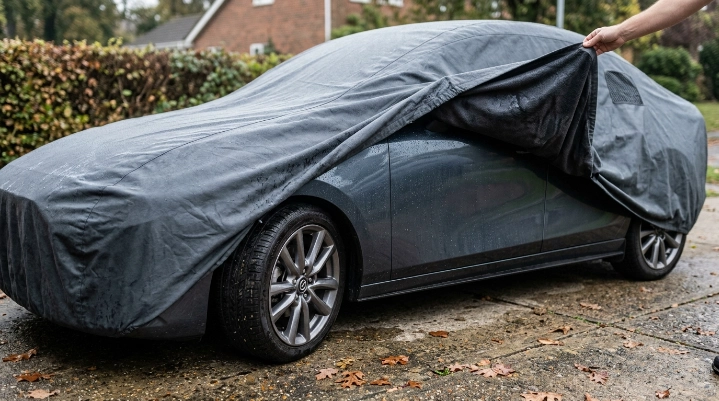
Moisture gets trapped when water enters faster than it can escape. Humidity and temperature changes can also create condensation even when rain never reaches the car.
Condensation can form overnight
The car’s metal body changes temperature with the surrounding air. A cool body panel can collect moisture when warm, humid air reaches it.
This is similar to water forming on the outside of a cold drink. The water came from the air, not from a leak.
A breathable cover gives that moisture a better chance to escape. A poorly ventilated cover can keep the area underneath damp.
Waterproof does not always mean moisture-proof
This is where many car owners get caught. A material can resist rain from the outside yet still provide poor vapor movement from the inside.
- External water resistance helps stop rain from soaking through.
- Breathability helps water vapor escape from underneath.
- Ventilation lets humid air move away from the vehicle.
For outdoor parking, I look for all three qualities instead of focusing only on the word “waterproof.”
A wet cover can stay damp
Another problem appears after heavy rain. Some covers hold water in their fabric or inner lining for a long time.
If I remove a wet cover, I dry it before putting it back on. Placing the same damp cover over the vehicle simply starts the moisture cycle again.
How Can I Tell if My Car Cover Is Causing Rust?
Look at where the corrosion appears and what the area feels like when you remove the cover. Repeated dampness under the cover is a stronger clue than rust alone.
I start with the lower edges of the vehicle because water often collects or drains there.
| What You Notice | Likely Cause | What to Check |
|---|---|---|
| Moisture under the cover each morning | Condensation or poor airflow | Cover breathability and ventilation |
| Rust near a paint chip | Exposed metal staying damp | Stone chips, scratches, and damaged coating |
| Rust around wheel arches | Water, mud, or road salt | Inner arch lips and lower seams |
| Fine scratches where the cover moves | Loose cover or trapped dirt | Fit, straps, and cover cleanliness |
| Heavy flaking or holes in metal | Advanced corrosion | Professional structural inspection |
Check the hidden areas
Visible body panels are only part of the inspection. Rust often starts where water sits unnoticed.
- Door bottoms
- Rocker panels
- Wheel arches
- Trunk and hatch seams
- Hood edges
- Fasteners and brackets
- Undercarriage components
Consumer Reports recommends checking blistered paint, visible rust, wheel wells, door bottoms, and hidden areas when inspecting a vehicle.
If you find heavy scaling, perforation, or rust around suspension mounting areas, don’t treat it as a cosmetic cover problem.
Mechanic Alert: Structural corrosion around suspension, steering, brake, frame, or load-bearing areas should be inspected by a qualified mechanic. Do not scrape or repair critical structural rust without knowing how much metal remains.
What Type of Car Cover Is Least Likely to Cause Rust?
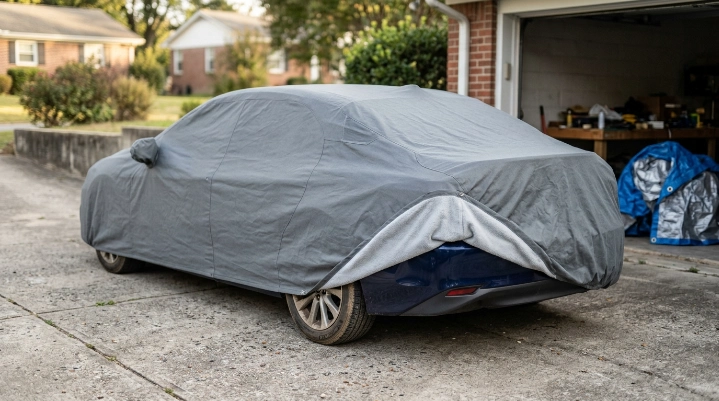
A breathable, properly fitted cover designed for your parking environment is usually the safest choice. The best indoor cover and the best outdoor cover are not always the same.
For outdoor parking
I prioritize weather resistance without turning the car into a sealed plastic package. Good ventilation matters in humid areas.
- Water-resistant outer layer: Helps shed rain and snow.
- Breathable construction: Lets trapped vapor escape.
- Secure fit: Reduces movement in wind.
- Soft inner surface: Reduces paint abrasion.
- Vents: Help humid air move out.
For garage storage
An indoor car usually does not need a heavy waterproof shell. A soft, breathable dust cover is often more suitable.
I also avoid covering a damp car simply because it is parked indoors. Garages can remain humid, especially after a wet vehicle is driven inside.
Avoid tarp-style shortcuts
I would not use a basic plastic tarp as a long-term substitute for a fitted car cover. It can trap moisture and move against the paint.
A loose tarp also has hard edges and eyelets that may contact the body. That creates another damage risk.
How Do I Use a Car Cover Without Causing Rust?
The biggest improvement comes from changing the routine. I only cover a vehicle when the car and cover are both clean enough and dry enough for storage.
- Wash off salt and grime. Pay attention to lower body panels and wheel arches.
- Dry the vehicle completely. Check mirrors, trim, door seams, trunk edges, and other water traps.
- Repair exposed paint chips. Bare steel needs protection before moisture reaches it repeatedly.
- Use the correct cover. Match indoor or outdoor use and choose a breathable design.
- Secure the cover properly. Stop excessive flapping without pulling the fabric dangerously tight.
- Dry a wet cover separately. Never put a soaked cover straight back onto the vehicle.
- Inspect the car regularly. Look for dampness, paint rubbing, mold, and early corrosion.
Don’t ignore the undercarriage
A body cover does little to protect the underside from salt already stuck to the vehicle. That salt can remain active whenever moisture returns.
This matters because underbody rust can affect more than appearance. NHTSA-hosted manufacturer guidance has documented cases where corrosion can progress from superficial rust to structural concerns.
If rust is spreading around safety-related components, use NHTSA vehicle safety resources to check relevant safety information and arrange a professional inspection.
My simple moisture check
After a humid night or rainstorm, I lift one edge of the cover and feel the air and surfaces underneath. I want them dry, not clammy.
If dampness keeps returning, I change the storage setup rather than accepting it. In 2026, there are enough breathable cover options that constant trapped moisture should not be treated as normal.
Car Cover and Rust FAQ
Should I put a car cover on a wet car?
No. Let the car dry completely first, including water around trim, mirrors, door gaps, and seams. Covering a wet vehicle can slow evaporation and keep dampness against areas where paint or protective coatings are already damaged.
Can a waterproof car cover still cause rust?
Yes. Waterproofing describes how well the cover blocks outside water, but it does not automatically guarantee good breathability. A cover that blocks rain yet traps condensation underneath can still create a damp environment.
Does a car cover cause rust in a garage?
It can if the garage is humid or the car is covered while wet. Indoor storage reduces weather exposure, but condensation and trapped wash water can still create problems if air cannot circulate.
Can a dirty car cover damage paint and lead to rust?
Yes. Dirt trapped between the cover and paint can act like an abrasive when the fabric moves. If that rubbing damages the protective finish deeply enough to expose metal, repeated moisture can allow corrosion to begin.
How often should I remove a car cover?
There is no universal schedule for every climate. I inspect a frequently covered outdoor vehicle after major rain, high humidity, strong wind, or snow so I can catch trapped moisture, movement, and contamination early.
Should I cover my car during winter?
A proper outdoor cover can help protect a clean vehicle from snow, ice, and contaminants. However, wash away road salt first and let the car dry because a cover cannot undo corrosion risks from salt already sitting on wet metal.
What should I do if rust has already started?
Small surface rust or paint chips should be cleaned and repaired before corrosion spreads. Bubbling paint, deep scaling, holes, or rust around structural and safety-related parts deserves a professional inspection instead of a quick cosmetic touch-up.
Should You Stop Using a Car Cover?
Not necessarily. A good cover used correctly can protect a vehicle from sunlight, dust, bird droppings, tree debris, weather, and other outdoor exposure.
The problem is using the wrong cover in the wrong conditions.
- Never cover a wet or salty vehicle for long-term storage.
- Choose breathable material rather than relying on waterproofing alone.
- Keep both the vehicle and the inside of the cover clean.
- Secure the cover so it cannot flap across the paint.
- Inspect hidden rust-prone areas regularly.
- Take serious corrosion to a qualified professional.
If you suspect your car cover is causing rust, remove it and dry everything first. Then fix the moisture source, inspect damaged paint, and decide whether your current cover is truly suited to your climate and parking situation.
That simple routine has saved me more trouble than treating a cover as something I can install and forget. A car cover should help your maintenance routine, not replace it.