
Wind Damage From Car Cover: How It Happens and How to Stop It

Quick Answer
Wind damage from a car cover usually happens when the cover becomes loose, flaps against the body, or moves trapped dirt across the clear coat. A snug, clean, properly secured cover greatly lowers the risk, while repeated flapping is a warning that you should tighten or remove it. Covercraft’s paint-protection guidance also identifies dirt and loose, moving covers as common scratch risks.
What to check first
- Check the fit: Excess fabric gives wind more room to lift and move the cover.
- Clean the paint: Dust and grit can become abrasive when fabric rubs across them.
- Secure the straps: Use the cover’s intended underbody straps, buckles, or tie-down system.
- Watch for flapping: Repeated slapping or billowing means the cover is moving too much.
- Remove it when needed: Severe wind can make uncovered, sheltered parking safer than leaving a loose cover installed.
Fast prevention tip
- Before every windy period, walk around the vehicle and check the hems, straps, mirror areas, and corners for movement.
A car cover is supposed to protect your paint, so seeing it whip around in the wind can be unsettling. The good news is that most wind-related cover problems are preventable with the right fit, clean surfaces, and sensible securement.
When I’m checking a covered daily driver, I focus on movement first. A cover that stays close to the body is much less concerning than fabric that repeatedly lifts, snaps, and slides across dusty paint.
In This Guide
- Can a Car Cover Cause Wind Damage?
- What Damage Can Wind Cause With a Car Cover?
- Why Does Wind Get Under a Car Cover?
- How Do You Secure a Car Cover in Wind?
- When Should You Remove a Car Cover Before a Windstorm?
- How Do You Check and Fix Wind Damage From a Car Cover?
- Frequently Asked Questions About Wind Damage From Car Covers
Can a Car Cover Cause Wind Damage?
Yes. A car cover can contribute to paint damage when wind makes the fabric slide, flutter, or slap repeatedly against the vehicle.
The risk increases when dirt is trapped between the cover and paint. Those particles can move across the clear coat as the fabric shifts.
Definition: Wind damage from a car cover is wear caused when moving air lifts or shifts the cover enough to rub paint, stress the cover, or pull against mirrors, trim, straps, and other contact points.
Wind itself is only part of the problem
A gust touching the outside of a properly fitted cover doesn’t automatically damage your car. Trouble starts when wind creates repeated movement.
Think of the difference between a fitted sheet and a loose tarp. Extra material catches more air and can move farther across the surface underneath.
- Loose fabric can flutter across the hood, roof, doors, and trunk.
- Trapped grit can create fine scratches as the cover moves.
- Lifted hems allow more air and debris underneath.
- Stressed attachment points can eventually tear or loosen.
As of 2026, current car-cover guidance still stresses proper sizing and secure installation. Car and Driver’s current car-cover testing guide also emphasizes that an overly loose fit can move in strong wind.
Section Takeaway: Wind becomes a paint risk when it creates movement. A clean vehicle and snug cover reduce both friction and contamination.
What Damage Can Wind Cause With a Car Cover?
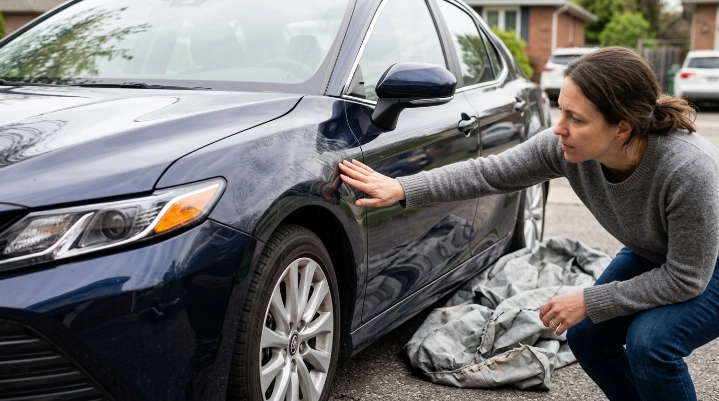
The most common problem is light paint marring, but strong movement can also damage the cover itself. Mirrors, sharp body edges, antennas, and straps may experience concentrated stress.
Fine scratches and swirl marks
Clear coat is the transparent top layer protecting your vehicle’s color coat. Fine dust can scratch that layer when rubbed repeatedly against it.
A clean cover on clean paint is much safer. A dusty car under a flapping cover is a different situation.
- Light haze visible under direct sunlight
- Circular or irregular swirl marks
- Fine straight scratches near body lines
- Repeated rubbing marks near mirrors or corners
Wear on the cover
Wind can also stretch seams and work elastic hems loose. Buckles, straps, and reinforced openings may show wear before the main fabric fails.
Inspect those areas after a windy day. Small tears can quickly become larger once air starts entering through them.
Stress around protruding parts
Side mirrors, antennas, spoilers, roof accessories, and sharp bumper corners can hold the cover in place while another section pulls away. That puts stress on a small area.
Never cinch a generic cover so tightly that it bends an antenna or constantly pulls against a mirror housing.
AAA’s automotive guidance similarly notes that a cover may scratch paint when the finish is dirty or the cover moves in the wind.
Section Takeaway: Look beyond scratches. Wind can damage the cover, attachment points, and vehicle parts wherever moving fabric concentrates force.
Why Does Wind Get Under a Car Cover?
Wind usually gets underneath through a loose hem, poor fit, open gap, or incorrectly installed section. Once air enters, the cover can start behaving like a small sail.
The cover is too large
A universal cover may fit many vehicles, but that flexibility can leave extra material. Loose sections create pockets where wind can enter and inflate the fabric.
A model-specific or correctly sized cover generally follows the body more closely. Less unused fabric means less room for billowing.
The cover isn’t fully installed
One unsecured corner can be enough to start the lifting process. Check that the front and rear hems sit where the manufacturer intended.
Mirror pockets should also be properly seated when the cover includes them.
Straps are loose or missing
Some outdoor covers use one or more underbody straps. Others combine elastic hems, buckles, or separate wind straps.
Use only the attachment method intended for that cover. Improvised ropes can rub paint, damage plastic trim, or create pressure points.
The vehicle is parked in an exposed location
Open lots, exposed driveways, hilltops, and spaces between buildings can experience more turbulent airflow. Even a well-fitted cover deserves extra inspection in those locations.
Section Takeaway: Wind needs an entry point. Correct sizing, full installation, and properly tensioned attachment points help keep air from getting underneath.
How Do You Secure a Car Cover in Wind?
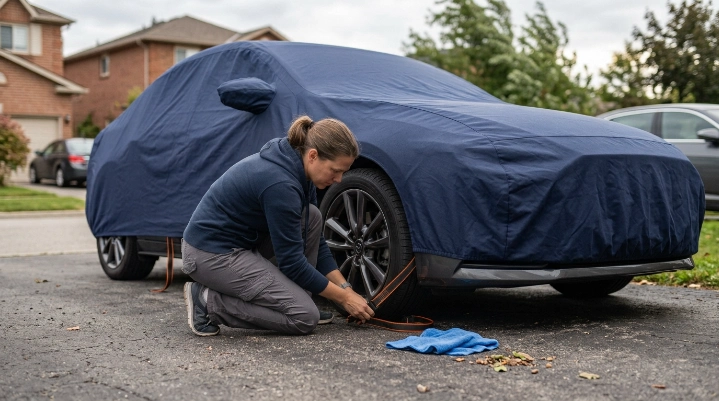
Start with the manufacturer’s built-in system rather than adding random cords. Your goal is to reduce movement without forcing hard hardware against painted surfaces.
- Clean and dry the vehicle. Remove loose dust, sand, leaves, and grit before installing the cover.
- Inspect the cover. Shake out debris and check the inner surface, seams, straps, and buckles.
- Confirm the orientation. Identify the front and rear before pulling the cover into place.
- Seat the mirror areas. Position mirror pockets or fitted sections without excessive stretching.
- Pull the front and rear hems into position. Make sure neither end is sitting halfway up a bumper.
- Fasten every intended strap. Route underbody straps according to the cover manufacturer’s instructions.
- Remove obvious slack. The fabric should follow the vehicle’s shape without being overstretched.
- Walk around the car. Look for open gaps, dangling straps, exposed corners, or loose fabric.
- Recheck during changing weather. If the cover starts slapping the body, correct it or remove it.
Don’t overtighten the cover
Tighter isn’t always safer. Excessive tension can strain seams and put unnecessary force on mirrors or other protruding components.
You want secure contact and controlled movement, not drum-tight fabric.
Keep hard fasteners away from paint
A buckle banging against a door can cause more obvious damage than the cover fabric. Position all hardware so wind can’t pull it into painted panels.
When I inspect an outdoor setup, I lightly move the loose areas by hand. If a large section can slide several inches across the panel with little resistance, I look for a fit or securement problem.
Section Takeaway: Secure the cover using its designed attachment system, eliminate excessive slack, and keep buckles or other hard parts away from the body.
When Should You Remove a Car Cover Before a Windstorm?
Remove the cover when you can’t keep it securely fitted or when gusts repeatedly lift and slap the fabric. A car cover should not be treated as a substitute for a garage or solid shelter.
Use visible cover behavior rather than guessing. Movement tells you what the wind is doing to your particular vehicle, cover, and parking location.
| What You See | Likely Risk | Best Action |
|---|---|---|
| Cover remains snug with no visible lifting | Lower movement risk | Continue monitoring |
| Edges occasionally lift | Air and debris may enter | Reposition and secure the cover |
| Large sections billow | High rubbing and attachment stress | Remove the cover if secure fit cannot be restored |
| Fabric repeatedly slaps the paint | Higher abrasion risk | Remove it and use shelter if available |
| Straps, seams, or buckles are failing | Cover may detach or damage the vehicle | Stop using the cover until repaired or replaced |
Covered parking beats fabric during severe weather
A garage, carport, or sturdy parking structure physically shields the vehicle from wind-driven objects. A fabric cover cannot provide the same protection.
If hail is also expected, solid shelter becomes even more important. Kelley Blue Book’s hail-protection guidance identifies covered parking as the preferred protection before a storm.
Section Takeaway: If the cover cannot stay controlled, remove it. Repeated flapping is a practical warning sign that protection has turned into potential damage.
How Do You Check and Fix Wind Damage From a Car Cover?
Wash the car first, then inspect it in bright indirect light or with a detailing light. Dirt can hide scratches and can also create new marks if you rub the surface while inspecting it.
Check the highest-contact areas
- Hood and front fenders
- Roof edges
- Mirror housings
- Door shoulders and body lines
- Trunk or hatch edges
- Front and rear bumper corners
Look for dull patches, fine lines, or repeated marks matching the areas where the cover was moving.
Decide whether the scratch is superficial
Some light clear-coat marks can improve with gentle polishing. Deeper scratches need a different repair approach.
A useful screening method is the fingernail test. Cars.com’s paint-repair guidance explains that scratches catching a fingernail may be too deep for ordinary consumer correction products.
Don’t keep polishing a deep scratch aggressively. Removing too much clear coat can create a bigger problem.
Inspect the cover before reinstalling it
Find out why the movement happened before putting the same cover back on. Check for stretched elastic, torn seams, failed straps, worn buckles, or incorrect sizing.
Mechanic Alert: If wind damage loosened a mirror, trim piece, sensor, antenna assembly, or other vehicle hardware, have a qualified mechanic inspect it rather than attempting structural or electrical repairs yourself.
Section Takeaway: Clean first, inspect both the paint and the cover, and correct the cause before using the cover again.
Frequently Asked Questions About Wind Damage From Car Covers
Can a car cover scratch paint in windy weather?
Yes. A loose cover can slide across the paint as wind moves it, and trapped dust or sand can increase abrasion. Keeping both the vehicle and cover clean while maintaining a snug fit lowers the risk.
Should I use a car cover during high winds?
Only if the cover remains securely fitted and the manufacturer considers it suitable for outdoor use. If the cover starts billowing, lifting, or slapping the vehicle, removing it is usually safer than letting it continue rubbing the paint.
Do car-cover straps prevent wind damage?
They can reduce movement when they’re part of the cover’s intended design and are installed correctly. Straps cannot compensate for a badly oversized cover, damaged hems, or a setup where fabric continues to flap across the vehicle.
Is a custom-fit car cover better in wind?
A properly sized model-specific cover usually leaves less loose material than an oversized universal cover. That can reduce billowing, but proper installation and securement still matter even with a custom-fit product.
Can wind blow dirt underneath a car cover?
Yes. Open hems and lifted sections can allow airborne dust, sand, pollen, and other debris underneath. Those contaminants become more concerning when the cover then moves across the paint.
What should I do if my car cover keeps blowing off?
Stop repeatedly reinstalling it without finding the cause. Confirm the size, orientation, elastic hems, straps, and attachment points, then replace the cover if its fit or securement system cannot keep it controlled.
Is leaving my car uncovered better than using a loose cover?
In severe wind, an uncovered vehicle in the safest available location may be preferable to a cover that repeatedly whips against the paint. Whenever possible, move the car to a garage, carport, or other solid shelter.
The main rule is simple: a protective car cover should stay controlled. Keep the paint clean, choose the right size, secure the cover correctly, and treat repeated flapping as a reason to act rather than ignore it.
If your current cover constantly moves even after proper installation, don’t force it to work. A better-fitting outdoor cover or sheltered parking can prevent a small annoyance from becoming paint, trim, or cover damage.