
How to Wash a Car Cover Properly: Step-by-Step Guide

Quick Answer
To wash a car cover properly, first check its care label because materials need different cleaning methods. Shake off loose debris, use the approved mild cleaner, choose a gentle wash method, rinse thoroughly, and dry the cover completely before storage or reinstalling it. Manufacturer instructions, such as the Covercraft car cover cleaning guide, should always override generic washing advice.
Quick washing steps
- Check the label: Confirm the permitted detergent, water temperature, machine type, and drying method.
- Remove debris: Shake off leaves, dust, sand, and other loose contamination before adding water.
- Wash gently: Use a large washer without an agitator when machine washing is permitted.
- Use mild cleaner: Avoid bleach, fabric softener, or strong household cleaners unless specifically approved.
- Rinse completely: Remove detergent residue instead of leaving cleaner trapped in the fabric.
- Dry fully: Never fold, store, or reinstall a damp car cover.
Learning how to wash a car cover properly is less about scrubbing harder and more about protecting the fabric. I treat the cover’s care label like a vehicle owner’s manual because one wrong dryer setting can undo years of careful use.
In this 2026 guide, I’ll walk you through machine washing, hand washing, rinsing, drying, stain removal, and storage. The same routine also helps keep dirt from returning to your vehicle’s paint.
In This Guide
- What Should You Check Before Washing a Car Cover?
- How Do You Wash a Car Cover in a Washing Machine?
- How Do You Wash a Car Cover by Hand?
- What Detergent and Water Temperature Should You Use?
- How Should You Dry and Store a Car Cover?
- What Car Cover Washing Mistakes Should You Avoid?
- Frequently Asked Questions
What Should You Check Before Washing a Car Cover?
Before washing anything, identify the cover’s brand, material, and care instructions. A polyester outdoor cover may need different care from flannel, polycotton, or a multi-layer indoor cover.
Definition: A car cover is a fitted or semi-fitted protective fabric barrier placed over a parked vehicle to reduce exposure to dust, debris, sunlight, moisture, and environmental contamination.
Inspect both sides first
Spread the cover somewhere clean and inspect the exterior and vehicle-facing side. Pay extra attention to the lower edges because they collect road dust, sand, and mud quickly.
I learned to check these lower sections before throwing a cover into a washer. Grit hidden in the hem can stay there through a weak wash and end up close to the paint later.
- Loose dust: Shake it away before washing.
- Leaves and twigs: Remove them by hand.
- Dried mud: Soften it with water rather than scraping aggressively.
- Bird droppings: Wet and soften them before applying pressure.
- Tree sap: Check the manufacturer’s stain-cleaning instructions before using solvents.
- Damaged seams: Repair serious tears before machine washing when possible.
Check whether machine washing is allowed
Do not assume “fabric” automatically means machine washable. Large covers may need a commercial front-loading machine, while some specialty covers require hand washing.
Also check for a center agitator. Several cover manufacturers specifically require large machines without an agitator for particular products.
Section Takeaway: Identify the fabric and read its care instructions before choosing detergent, water temperature, or a washing machine.
How Do You Wash a Car Cover in a Washing Machine?
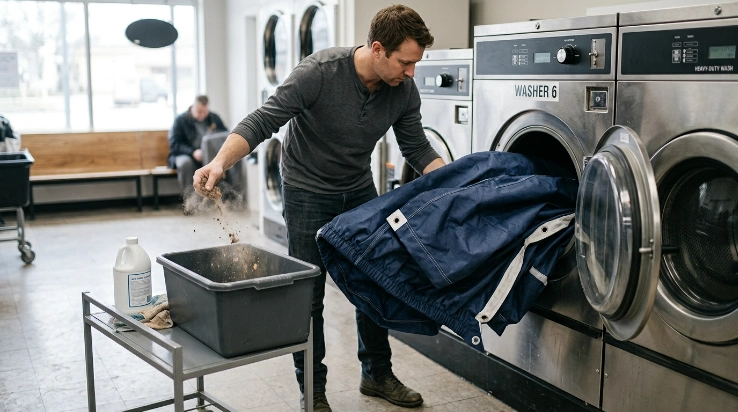
If the manufacturer permits machine washing, use enough washer capacity for the cover to move freely. Forcing a large SUV or truck cover into a small machine can prevent proper cleaning and rinsing.
Step-by-step machine washing process
- Shake the cover outside. Remove loose dust, leaves, sand, and other debris before loading it.
- Inspect the care label. Confirm machine type, cycle, detergent, water temperature, and drying instructions.
- Use a suitable washer. Choose a large front-loading or non-agitator machine when required.
- Add the approved cleaner. Measure it carefully instead of assuming extra detergent means extra cleaning.
- Select the recommended cycle. A gentle cycle is common, but your cover’s instructions come first.
- Rinse thoroughly. Run any extra rinse specifically requested by the manufacturer.
- Remove the cover promptly. Do not leave the wet fabric compressed inside the washer for hours.
Covercraft’s current car cover care instructions, for example, call for a large washer, gentle cycle when available, no fabric softener, and two water-only rinses. Its exact temperature and drying instructions then change by fabric.
What if the cover is too large for your washer?
Do not cram it inside. A commercial front-load machine gives a large cover more room to circulate and rinse properly.
Keep the clean side off a laundromat floor while loading and unloading it. That small habit matters because the inner material will eventually touch your vehicle.
Section Takeaway: A washing machine is safe only when the cover manufacturer approves it and the machine is large enough for the fabric to move freely.
How Do You Wash a Car Cover by Hand?
Hand washing is useful when machine washing is prohibited or impractical. It also gives you more control over heavily contaminated areas.
Option 1: Wash the removed cover
- Place the cover on a clean surface that will not contaminate the inner lining.
- Rinse loose dust and grit away with clean water.
- Mix the manufacturer-approved cleaner at the specified dilution.
- Apply it gently with a soft sponge or cloth.
- Work stubborn dirt gradually instead of aggressive scrubbing.
- Rinse until no detergent or cleaner remains.
- Dry the cover using its approved method.
For dried bird droppings, soaking is more useful than scraping. Give water time to soften the contamination before lifting it gently.
Option 2: Clean an outdoor cover on the vehicle
Some manufacturers allow certain covers to be cleaned while installed inside-out on the vehicle. This method is not universal, so confirm permission first.
WeatherTech’s car cover instructions, for example, provide an on-vehicle cleaning option for its outdoor custom-fit cover. Its instructions specify applying diluted cleaner, rinsing until suds disappear, and allowing the cover to air dry.
Never use the vehicle itself as a washing rack unless the manufacturer recommends that method. Dirt trapped between a cover and paint can turn pressure from washing into abrasion.
What Detergent and Water Temperature Should You Use?
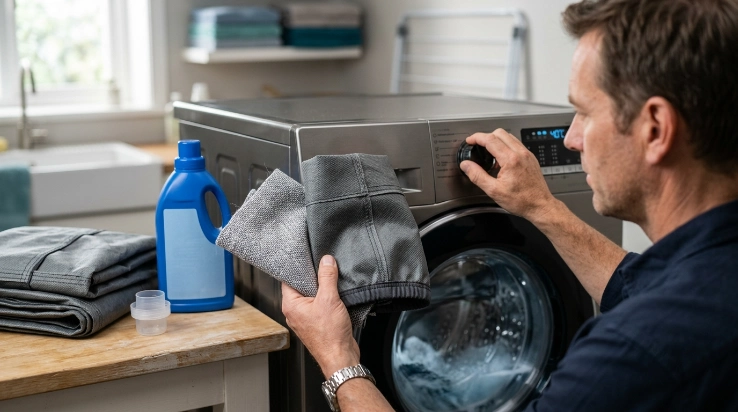
There is no single detergent or temperature that works for every car cover. The safest answer is whatever your exact cover manufacturer specifies.
The table below shows why. These are examples from Covercraft’s published instructions, not universal settings for every brand.
| Covercraft Fabric | Washer | Water | Drying |
|---|---|---|---|
| Gray Polycotton | Large home or commercial | Warm | Low machine heat |
| Tan Flannel | Large home or commercial | Warm | Low machine heat |
| 5-Layer Indoor | Commercial | Cold | Air dry |
| Form-Fit | Large home or commercial | Cold | Air dry |
| 3-Layer Moderate Climate | Commercial | Cold | Air dry |
| WeatherShield HP | Large home or commercial | Cold | Medium machine heat |
Why fabric softener is a bad default choice
Do not treat a car cover like ordinary bedding. Covercraft and WeatherTech both specifically warn against fabric softener in their published car-cover instructions.
Bleach is another product I would never add unless the cover maker explicitly permits it. Protective finishes, backing materials, stitching, and coatings vary widely.
More detergent is not better
Extra cleaner can make complete rinsing harder. Use the manufacturer’s amount and focus on removing residue thoroughly.
Section Takeaway: Water temperature, machine type, cleaner, and dryer settings depend on the exact material. The label beats generic internet advice every time.
How Should You Dry and Store a Car Cover?
Drying is part of washing, not an optional final detail. A cover should be completely dry before you reinstall or store it.
Air drying
Air drying is required for many multi-layer and specialty covers. Support the wet fabric carefully so you do not drag its clean inner surface across dirt or pavement.
Give thick seams, elastic hems, mirror pockets, and folded edges extra time. Those areas can remain damp after the broad panels feel dry.
Machine drying
Use a dryer only when the manufacturer’s instructions allow it. Some fabrics permit low or medium heat, while others specify air drying.
Do not choose high heat simply to finish faster. Heat settings that are acceptable for one cover can be unsuitable for another.
Store the clean cover correctly
- Dry it fully: Never pack a wet cover into a storage bag.
- Inspect it: Look for worn seams, holes, weak elastic, or rough inner material.
- Keep it clean: Fold it without letting the inner surface touch dirty pavement.
- Use dry storage: Keep it away from standing water and persistent dampness.
- Avoid sharp objects: Tools and exposed metal edges can tear stored fabric.
Covercraft’s storage guidance likewise recommends cleaning and fully drying a cover before storing it.
What Car Cover Washing Mistakes Should You Avoid?
The biggest mistake is assuming every cover can be treated like household laundry. Material-specific instructions exist because car-cover fabrics and protective treatments are different.
1. Washing without checking the label
This can expose the cover to the wrong machine, detergent, temperature, or dryer setting. Find the label before adding water.
2. Using fabric softener automatically
Fabric softener is specifically prohibited in multiple manufacturer instructions. Skip it unless your exact cover maker says otherwise.
3. Using bleach or aggressive stain removers
A harsh cleaner can affect fabric, color, backing, or protective treatments. Use the approved cleaner rather than experimenting with stronger chemistry.
4. Scraping dried contamination
Soften dried mud and bird residue before removal. Scraping hard debris can damage fibers or force contamination deeper into the fabric.
5. Using a washer with too little capacity
A packed washer cannot circulate water effectively around a large cover. Move to a suitable commercial front loader when your manufacturer’s instructions require one.
6. Leaving cleaner behind
A clean-looking cover can still contain detergent residue. Follow any extra-rinse directions and keep rinsing hand-washed fabric until the cleaner is gone.
7. Putting the clean side on the driveway
This defeats much of the work you just did. Dirt picked up by the vehicle-facing surface can later sit directly against paint.
The same contamination principle matters when cleaning the vehicle itself. Consumer Reports’ car-washing guidance emphasizes gentle products and techniques that reduce the risk of scratching the finish.
8. Storing or reinstalling the cover damp
Wait until the entire cover is dry, including seams and thicker sections. The vehicle should also be clean and dry before the cover goes back on.
Section Takeaway: Most washing mistakes come from using the wrong chemistry, too much heat, inadequate rinsing, rough handling, or ignoring material-specific instructions.
Frequently Asked Questions
Can you put a car cover in the washing machine?
Yes, if the manufacturer says the cover is machine washable. Check the required machine type, capacity, cycle, water temperature, detergent, and drying method before washing because these specifications differ among materials.
Can I use regular laundry detergent on a car cover?
Only use the detergent type approved by the cover manufacturer. Some covers permit a mild laundry detergent, while other materials have more specific cleaner requirements.
Can you use fabric softener when washing a car cover?
Do not use fabric softener unless your exact manufacturer explicitly permits it. Major car-cover instructions from Covercraft and WeatherTech specifically say not to use fabric softener on covered products.
Should I wash a car cover with hot or cold water?
Check the care label because there is no universal temperature. For example, different Covercraft fabrics currently specify either cold or warm water depending on the material.
Can you put a car cover in the dryer?
Some car covers can be machine dried at an approved temperature, while others must air dry. Never assume that a standard or high-temperature dryer cycle is safe.
How often should you wash a car cover?
There is no ideal washing interval for every owner. Clean the cover when dirt, mud, pollen, bird residue, road grime, or other contamination builds up, while following any maintenance schedule provided by its manufacturer.
Can I put the car cover back on while it is slightly damp?
It is safer to let the cover dry completely first. Also make sure the vehicle is clean and dry so you do not deliberately trap contamination or moisture between the fabric and paint.
Final takeaway: The best way to wash a car cover properly is simple: check its label, remove loose debris, wash gently with the approved cleaner, rinse completely, and follow the correct drying instructions.
Take an extra minute to inspect the clean inner surface before reinstalling it. A clean cover on a clean, dry vehicle gives the fabric the best chance to do the job it was bought to do.